




The Earnings‑Call Reveal: What John Ternus Said
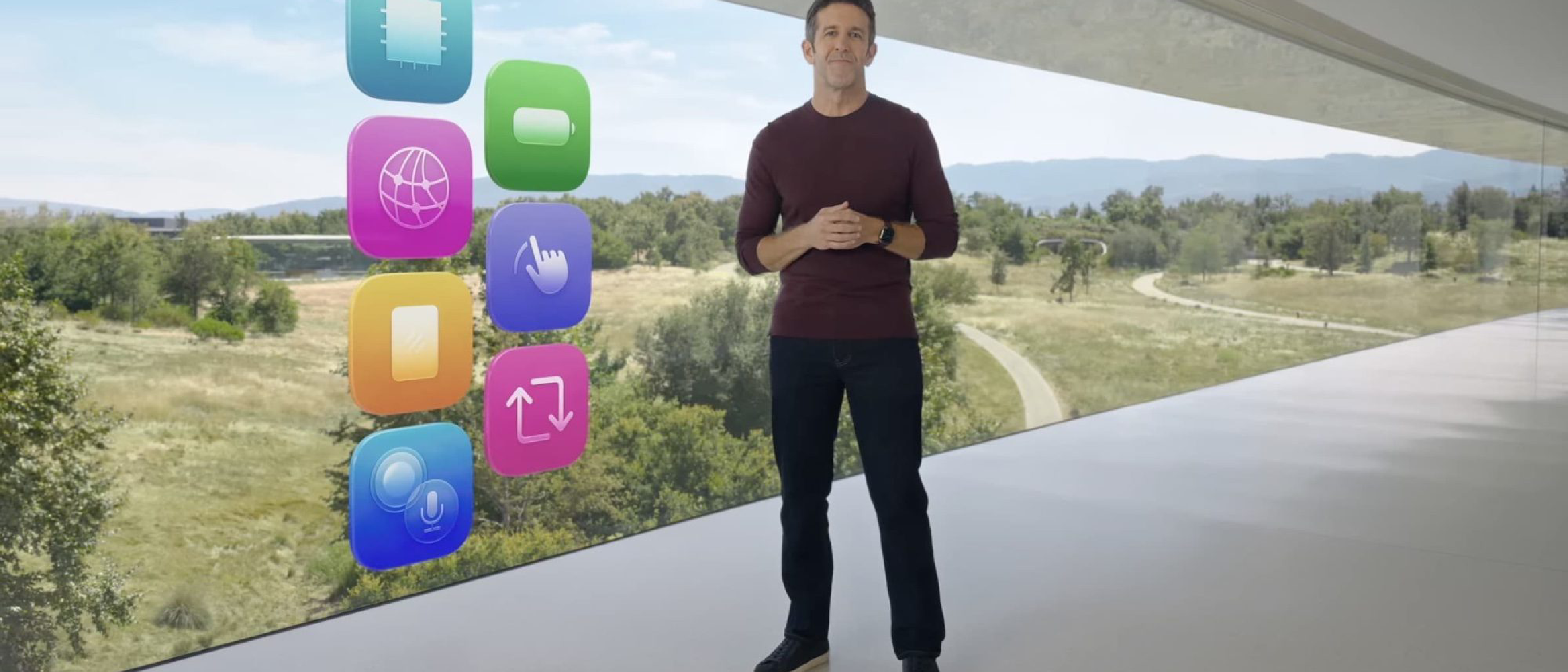
During Apple’s most recent quarterly earnings call, CEO John Ternus fielded a barrage of questions about Siri’s artificial‑intelligence capabilities. The core message was clear: the Siri that ships today is only the first iteration of a much larger vision. Ternus described Siri AI as “primarily request‑based today” but emphasized that Apple has built it on a “modern, orchestrator‑driven architecture” that leaves ample room for expansion.
Key takeaways from the call:
- Request‑based foundation – Siri still relies on explicit user prompts, but the underlying platform is designed for richer interactions.
- Agentic ambitions – Apple hinted at “agentic capabilities,” suggesting future versions may act more autonomously, handling multi‑step tasks without repeated user input.
- Privacy‑first stance – Any expansion will be bounded by Apple’s long‑standing privacy model, with on‑device processing and strict data‑access controls.
- Rapid iteration – The mention of iOS 27.2 as a recent update signals that Apple intends to iterate quickly, rather than treating Siri as a static feature.
The announcement marks a shift from the perception that Siri has been stagnant for years. Instead, Apple is positioning its voice assistant as a core AI platform that can power new services and deepen integration across its ecosystem.
Why It Matters: Strategic Implications for Apple
Competitive Pressure
Apple’s rivals—Google, Amazon, and Microsoft—have all invested heavily in conversational AI. Google Assistant and Amazon Alexa already support proactive, context‑aware actions, while Microsoft’s Copilot is weaving AI into productivity suites. Siri’s perceived lag has been a liability in Apple’s broader AI narrative.
By committing to a more flexible, orchestrator‑driven backend, Apple can:
- Close the feature gap – Offer multi‑turn dialogues, proactive suggestions, and deeper app integration.
- Leverage hardware advantage – Apple Silicon’s neural‑engine performance makes on‑device inference feasible, preserving privacy while delivering speed.
- Create new revenue streams – An advanced Siri could underpin subscription‑based services, similar to Apple One bundles, or enable premium AI‑enhanced apps.
Ecosystem Cohesion
Apple’s ecosystem thrives on seamless hand‑off between devices. An upgraded Siri that can maintain context across iPhone, iPad, Mac, Apple Watch, and Vision Pro would reinforce that advantage. Imagine starting a task on an iPhone, continuing it on a Mac, and completing it on a Vision Pro headset—all without re‑issuing commands.
User Trust and Privacy
Apple’s brand is built on privacy. The company’s emphasis on “protecting security and privacy” while expanding Siri’s capabilities is a differentiator. In an era where AI models often rely on cloud‑based data aggregation, Apple’s on‑device approach could become a compelling selling point for privacy‑conscious consumers.
Technical Breakdown: The Orchestrator‑Driven Architecture
Core Components
- Orchestrator Layer – Acts as a decision engine, routing user intents to the appropriate specialized modules (e.g., calendar, music, smart‑home). This layer is designed to be extensible, allowing new capabilities to be plugged in without overhauling the entire stack.
- Modular Skill Pods – Individual AI models that handle specific domains (weather, messaging, navigation). Each pod can be updated independently, enabling rapid feature rollout.
- On‑Device Neural Engine – Utilizes Apple Silicon’s Neural Engine for low‑latency inference, reducing reliance on cloud calls and keeping data local.
- Privacy Guardrails – A sandboxed environment that enforces data minimization, encryption, and user‑consent checks before any information leaves the device.
Agentic Capabilities Explained
When Ternus referenced “agentic capabilities,” he alluded to AI agents that can:
- Plan and execute multi‑step tasks – e.g., “Book a flight, reserve a hotel, and add the itinerary to Calendar” without the user having to confirm each step.
- Maintain contextual awareness – Remember user preferences across sessions, such as preferred seat class or dietary restrictions.
- Self‑optimize – Adjust behavior based on usage patterns while respecting privacy constraints.
Implementing true agency requires a combination of reinforcement learning, hierarchical planning, and robust safety checks. Apple’s orchestrator model provides a controlled environment where these techniques can be tested incrementally.
Comparison with Competitors
| Feature | Siri (Current) | Siri (Planned) | Google Assistant | Amazon Alexa |
|---|---|---|---|---|
| Request‑based | ✅ | ✅ (baseline) | ✅ | ✅ |
| Multi‑turn dialogue | Limited | Planned | ✅ | ✅ |
| Proactive suggestions | Limited | Planned | ✅ | ✅ |
| On‑device inference | ✅ (limited) | Expanded | ❌ (cloud‑heavy) | ❌ (cloud‑heavy) |
| Agentic autonomy | ❌ | Planned | ✅ (some) | ✅ (some) |
| Privacy‑first design | ✅ | ✅ (enhanced) | ❌ | ❌ |
Apple’s roadmap aims to match or exceed the functional breadth of its rivals while preserving its privacy ethos.
Industry Impact: Ripple Effects Across AI, Security, and Services
AI Governance and Regulation
Apple’s explicit mention of “security and privacy” aligns with emerging global AI regulations (e.g., EU AI Act). By building agentic features within a privacy‑preserving framework, Apple can set a benchmark for compliant AI assistants. This stance may influence policy discussions, especially as regulators scrutinize “autonomous” AI agents.
Security Considerations
The move toward more autonomous agents expands the attack surface. Apple will need to safeguard the orchestrator and skill pods against malicious manipulation. Recent incidents like the Zoom Annotation Flaw—where AI‑generated prompts were exploited for remote code execution—highlight the importance of rigorous sandboxing. Apple’s on‑device approach reduces exposure, but internal testing must be exhaustive.
Service Innovation
Ternus hinted that “intelligence is going to be another opportunity” for services growth. Potential avenues include:
- AI‑enhanced health insights – Siri could analyze health data from Apple Watch and suggest lifestyle adjustments.
- Enterprise productivity – Integration with Apple Business Chat and third‑party SaaS could enable AI‑driven meeting scheduling and document summarization.
- Content creation – Leveraging generative AI for music, video, or code suggestions directly within Apple apps.
These possibilities echo trends seen in other platforms, such as YouTube’s new AI slop policies, where content creators must adapt to AI‑generated media guidelines. Apple’s controlled ecosystem may give it a smoother path to enforce similar standards.
Future Outlook: Timeline and Milestones
While Apple did not disclose exact dates, the following speculative roadmap aligns with the information disclosed and typical Apple product cycles:
| Quarter | Milestone |
|---|---|
| Q4 2026 | Release of Siri‑AI SDK for developers, enabling third‑party skill pods. |
| Q1 2027 | iOS 27.3 introduces limited multi‑turn dialogue support in core apps. |
| Q2 2027 | Vision Pro integration: contextual hand‑off of Siri requests across devices. |
| Q3 2027 | First “agentic” feature rollout—automated travel planning with user‑approval checkpoint. |
| Q4 2027 | Expansion of on‑device neural models, reducing cloud latency by >30%. |
Apple’s iterative approach suggests that each milestone will be accompanied by extensive beta testing, likely through the Apple Beta Software Program. Developers will play a crucial role, especially if Apple opens the orchestrator to third‑party extensions.
Frequently Asked Questions
Q1: Will Siri become fully autonomous like a digital assistant that can act without prompts? A: Apple’s “agentic capabilities” aim for limited autonomy—handling multi‑step tasks with user consent. Full autonomy without any user input is not on the immediate roadmap.
Q2: How will privacy be maintained as Siri processes more data on‑device? A: Apple will continue to use on‑device neural engines, differential privacy, and encrypted storage. Data that must be sent to the cloud will be anonymized and subject to strict consent flows.
Q3: Can third‑party developers create their own Siri skills? A: The upcoming Siri‑AI SDK is expected to let developers build modular skill pods that run within Apple’s orchestrator, subject to App Store review and privacy guidelines.
Q4: How does this roadmap compare to Google’s Gemini or Amazon’s Alexa AI? A: Apple differentiates itself by emphasizing on‑device processing and privacy, whereas Google and Amazon rely more heavily on cloud inference. Functionally, Apple is catching up on multi‑turn dialogue and proactive suggestions.
Q5: Will the new Siri features be available on older devices? A: Core improvements that rely on the Neural Engine will be limited to devices with Apple Silicon (A15 Bionic and later). Older hardware may receive software‑only enhancements.
Connecting the Dots: Related Reads
- The Zoom Annotation Flaw demonstrated how AI‑driven prompts can become attack vectors, underscoring
underscoring the importance of robust sandboxing and input validation when AI agents can generate or act on code‑like instructions. As Apple pushes Siri toward greater autonomy, the company will need to adopt safeguards similar to those employed in the OpenAI Red Teaming process, where adversarial prompts are systematically tested to harden the system against manipulation.
Anticipating Developer Ecosystem Reactions
The upcoming Siri‑AI SDK is poised to become a hot topic at the next WWDC. Developers will likely ask:
How will Apple enforce privacy compliance for third‑party skill pods? Apple plans to require that every pod runs within a signed container that enforces the same on‑device data‑handling policies as native Siri modules. Runtime attestations will verify that no unauthorized network calls are made without explicit user consent.
Will there be a revenue‑share model for premium skill pods? While Apple has not confirmed specifics, industry analysts predict a tiered model where basic pods are free, and advanced, compute‑intensive pods could be monetized through the App Store’s in‑app purchase framework, similar to the model used for Siri Shortcuts.
How will backward compatibility be handled? Apple’s orchestrator is designed to degrade gracefully. On older hardware lacking a Neural Engine, the orchestrator will fall back to lightweight cloud inference, still respecting the same privacy constraints but with higher latency.
Potential Pitfalls and Mitigation Strategies
Context Drift – As Siri retains more context across sessions, there’s a risk of “context bleed,” where information from one user interaction unintentionally influences another. Apple’s privacy guardrails will need to implement strict session boundaries and automatic context expiration.
User Consent Fatigue – Frequent prompts for permission could erode the user experience. Apple may adopt a “progressive disclosure” approach, where consent is requested only when a skill pod attempts to access a new data domain, and the user can set persistent preferences in Settings.
Regulatory Scrutiny – Autonomous agents that make decisions on behalf of users (e.g., financial transactions) could fall under emerging AI liability frameworks. Apple’s strategy of keeping core decision‑making on‑device and requiring explicit user confirmation for high‑impact actions should help mitigate legal exposure.
Conclusion: Siri’s Evolution Is Now a Strategic Imperative
John Ternus’s remarks signal that Siri is transitioning from a reactive voice command system to a foundational AI platform that can orchestrate complex, multi‑modal experiences across Apple’s hardware lineup. By leveraging an orchestrator‑driven architecture, on‑device neural processing, and a privacy‑first philosophy, Apple aims to close the functional gap with Google Assistant, Alexa, and Microsoft Copilot while preserving its brand differentiators.
The roadmap outlined—spanning SDK release, incremental multi‑turn dialogue, Vision Pro integration, and the first agentic feature—suggests a disciplined, iterative rollout rather than a single, monolithic launch. If Apple can balance rapid innovation with rigorous security and privacy safeguards, Siri could become a decisive competitive advantage, powering new services, deepening ecosystem lock‑in, and reinforcing Apple’s reputation as the steward of user data in an AI‑driven world.
Expanded FAQ
Q6: Will Siri’s new capabilities support languages beyond English at launch? A: Apple’s initial rollouts will focus on the 15 languages currently supported by Siri. The modular skill‑pod design, however, allows language teams to add support incrementally, so we can expect broader multilingual coverage throughout 2027.
Q7: How will Siri handle ambiguous requests that could have multiple valid outcomes? A: The orchestrator will employ a confidence‑scoring system. When confidence falls below a configurable threshold, Siri will ask clarifying questions rather than guessing, preserving user trust and reducing erroneous actions.
Q8: Can Siri’s agentic features be disabled entirely by the user? A: Yes. Apple will expose a toggle in Settings → Siri & Search → “Enable autonomous actions.” When turned off, Siri will revert to the traditional request‑based mode, ensuring users retain full control.
Q9: Will the on‑device models be updatable without a full OS upgrade? A: Apple plans to deliver model updates via incremental OTA patches, similar to how the Neural Engine receives security updates today. This approach enables rapid improvements without waiting for major iOS releases.
Q10: How does Apple’s approach align with the upcoming EU AI Act? A: By keeping data processing on‑device, providing transparent user consent flows, and limiting high‑risk autonomous actions to user‑approved contexts, Apple’s Siri roadmap is well‑positioned to meet the EU’s “high‑risk AI” compliance requirements.
Stay tuned for our deep‑dive coverage of the Siri‑AI SDK preview at WWDC 2027, where we’ll break down the developer tools, sandbox model, and sample code that will let you start building the next generation of voice‑first experiences.
Source: Original Article