







Why It Matters
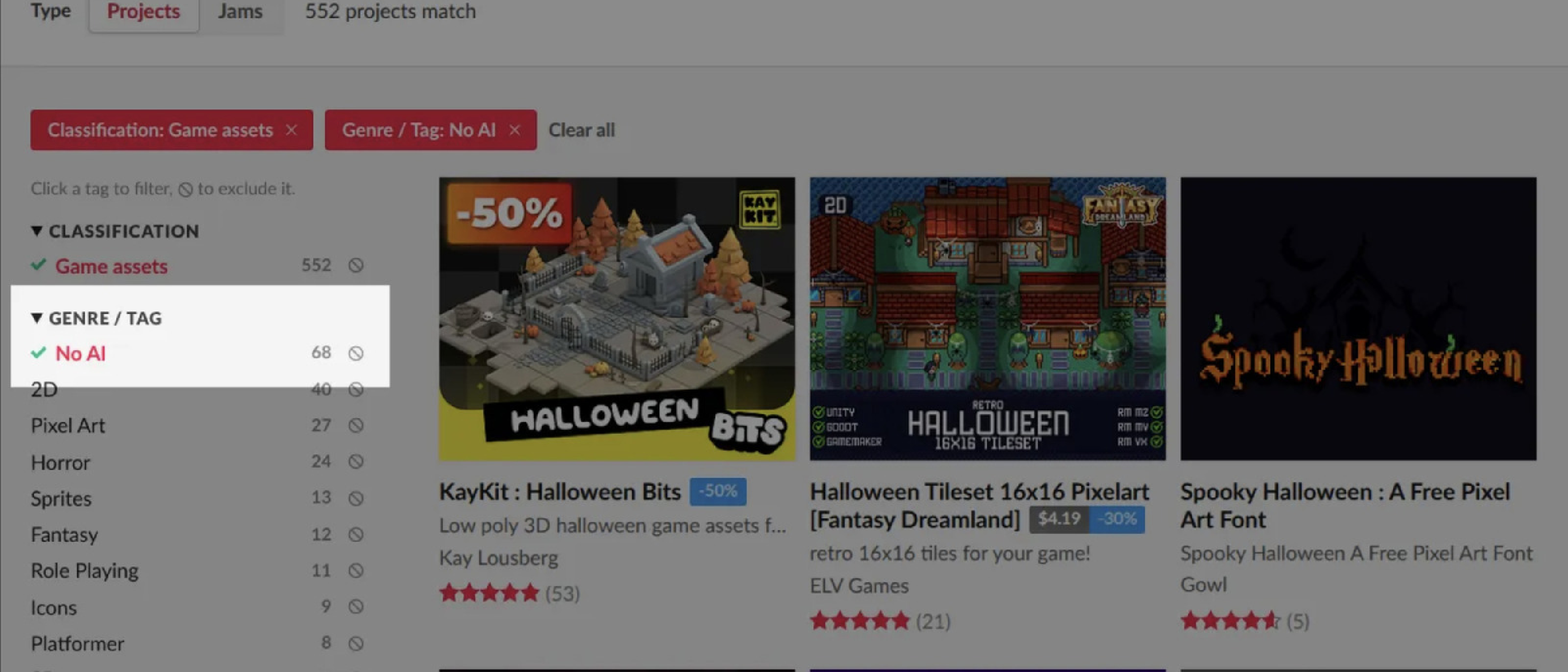
The indie game ecosystem thrives on discovery. Thousands of developers upload prototypes, demos, and full releases each day, and players rely on platform search and browsing to find the next hidden gem. When a platform introduces a filter that removes AI‑generated content, it fundamentally alters the visibility landscape. For creators, it signals a new compliance requirement; for players, it offers a cleaner, more intentional browsing experience. The impact is amplified by the sheer scale of Itch.io’s catalog—over 1.77 million projects before the filter, dropping to fewer than 425,000 when “No AI” is selected. This change forces the community to confront the question: how much AI should be visible, and how should it be disclosed?
Industry Impact
Shifting Marketplace Dynamics
- Visibility for Non‑AI Projects: Developers who build games entirely from scratch now have a dedicated audience segment that actively filters out AI‑generated assets. This can increase organic reach for those projects.
- Pressure on AI‑Powered Tools: The filter indirectly pressures tool developers to provide clear attribution mechanisms. If a tool automatically tags AI‑generated assets, creators can avoid being filtered out.
- Community Standards: By enforcing a “No AI” option, Itch.io nudges the community toward a culture of transparency. This aligns with broader industry conversations about ethical AI use.
Comparison with Steam
Steam, the larger marketplace, has similar disclosure rules but lacks a filtering mechanism. Gamers on Steam must rely on manual inspection of project pages, which is error‑prone. Itch.io’s proactive filter offers a user‑friendly alternative that could set a precedent for other platforms.
Cross‑Industry Resonance
The move echoes trends beyond gaming. For instance, Netflix’s AI‑driven recommendation system has sparked discussions about algorithmic transparency, as explored in the article on Netflix AI Discover: Stop Endless Scrolling for You . Similarly, automotive manufacturers like Mercedes‑Benz are integrating AI into HUDs, raising questions about disclosure and user trust, as detailed in Mercedes‑Benz Unveils Holographic HUD: Beyond Traditional Car Screens . These parallels illustrate that AI disclosure is becoming a cross‑sector imperative.
Technical Breakdown
How the Filter Works
The “No AI” filter operates by querying metadata tags assigned to each project. When a developer uploads a game, the platform’s ingestion pipeline checks for a gen_ai_disclosure flag. Projects lacking this flag are considered non‑AI and are displayed when the filter is active. The filter is applied at two levels:
- Browsing Menu: Users can toggle the filter in the main navigation, instantly narrowing the displayed catalog.
- Search Functionality: The search engine respects the filter, ensuring that query results exclude AI‑tagged projects.
Policy Enforcement
Itch.io’s policy prohibits “uploading excessive amounts of automatically generated or AI‑generated content” and labels such behavior as spam. However, the policy does not specify penalties for failing to disclose AI usage. This ambiguity leaves room for inconsistent enforcement, which may explain why AI‑sloppy projects still appear and disappear sporadically.
Impact on Game Jams
Game jams hosted on Itch.io often have divergent stances on AI. Some jams explicitly forbid AI, while others encourage it as a creative tool. The new filter provides jam organizers with a straightforward way to enforce their rules by pre‑filtering submissions that do not comply with disclosure requirements.
Hardware Considerations
While the filter is a software feature, it indirectly affects hardware usage. Indie developers often repurpose old hardware for rapid prototyping. The article on Convert Old Laptop SSD to a Fast USB‑C External Drive highlights how hardware upgrades can improve development workflows. With clearer AI disclosure, developers may choose to invest in better hardware to reduce reliance on AI‑generated assets.
Future Outlook
Potential for Standardization
If other platforms adopt similar filters, we could see an industry‑wide standard for AI disclosure. This would streamline compliance and reduce the burden on developers to manually tag content. Standardization could also facilitate automated moderation, ensuring that AI‑generated content meets quality thresholds before publication.
Community‑Driven Enforcement
The community may develop tools to flag non‑compliant projects. Open‑source scripts could scrape project metadata and report violations, creating a layer of peer oversight that complements platform policies.
Evolution of AI Tools
As AI tools become more sophisticated, the line between human and machine creation will blur. Developers may increasingly rely on AI for asset generation, narrative assistance, or procedural content. Transparent disclosure will become essential to maintain trust, especially as players become more discerning about the origins of the games they play.
Regulatory Implications
Governments are beginning to draft regulations around AI transparency. A platform like Itch.io, which already implements a disclosure filter, could serve as a model for compliance. Future legislation may require mandatory disclosure, making the current filter a precursor to legal obligations.
FAQ
Q: Does the “No AI” filter remove all AI‑generated content?
A: The filter removes projects that have been tagged with a gen_ai_disclosure flag. Projects that do not disclose AI usage but contain AI‑generated assets may still appear.
Q: How do I add a disclosure tag to my project?
A: When uploading or editing a project, include a gen_ai_disclosure field in the metadata. This flag signals to the platform that AI was used.
Q: Are there penalties for not disclosing AI usage? A: Itch.io’s policy labels excessive AI content as spam but does not specify penalties for missing disclosure tags. Enforcement is currently inconsistent.
Q: Can I opt out of the filter? A: Yes, the filter is optional. Users can toggle it on or off in the browsing menu or search settings.
Q: Will other platforms adopt similar filters? A: It’s uncertain, but the trend toward transparency suggests that larger marketplaces may follow suit, especially if community demand grows.
Source: Original Article