







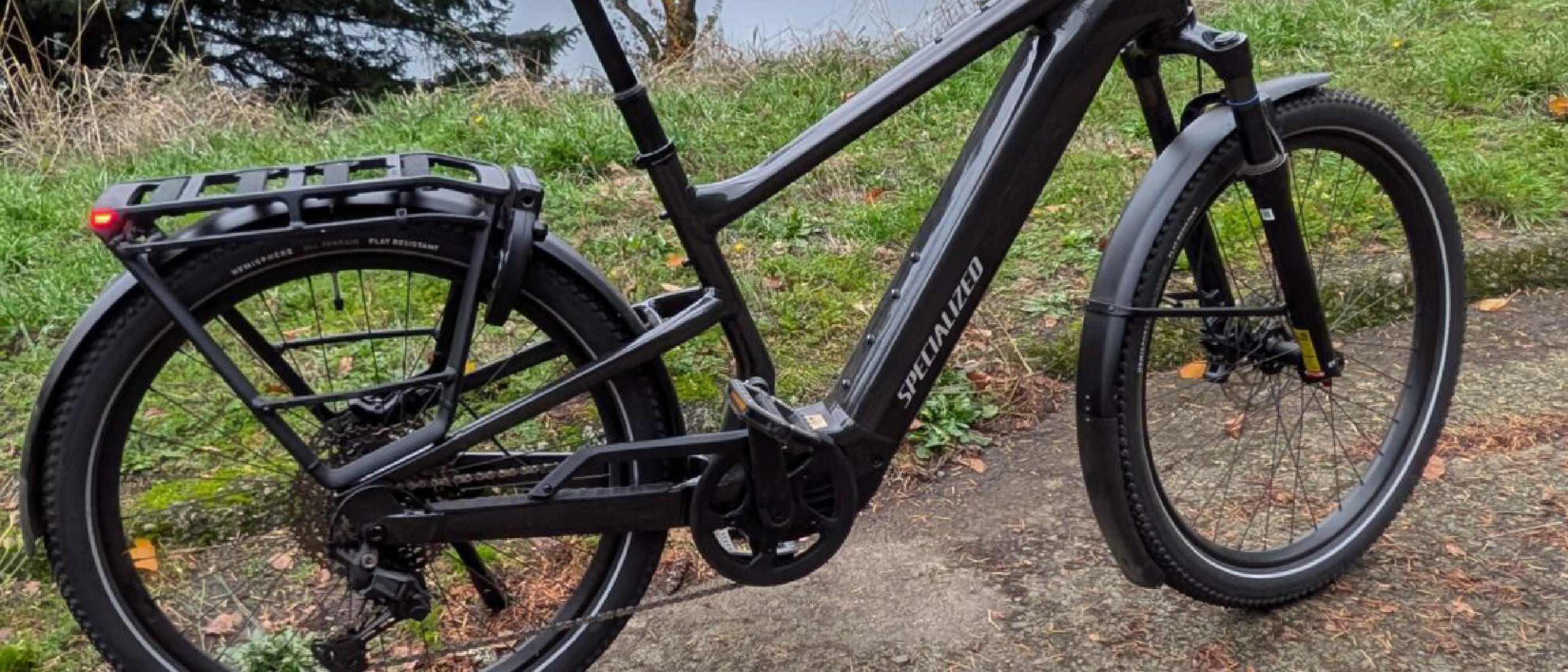
The Core Test: Riding Without Range Anxiety
When the author strapped on the Specialized Turbo Vado 3 Evo and pushed it past 25 mph (40.2 kph) through city traffic, the familiar “battery‑check” reflex never surfaced. The habit—born from a single, harrowing experience of being stranded after a dead e‑bike battery—had become an anxiety‑driven ritual. Yet, during this high‑speed trial, the display never flashed a low‑battery warning, and the rider never felt the urge to switch to eco mode or question whether the hill ahead could be conquered on the remaining charge.
The direct quote captures the mental calculus many e‑bike owners perform:
“Can I afford to use the highest assist level up this hill? Should I switch to eco mode to preserve power and make sure I have enough to get home with the bike lights on?”
In the case of the Turbo Vado 3 Evo, that calculus resolved itself automatically—thanks to a combination of battery capacity, motor efficiency, and torque delivery that together keep range anxiety at bay even when riding aggressively.
Why It Matters: The Psychology of Battery Confidence
Range anxiety is more than a technical inconvenience; it’s a psychological barrier that deters potential buyers from adopting electric two‑wheel transport. Studies of commuter behavior show that perceived uncertainty about remaining range can reduce usage frequency by up to 30 %. When a rider feels compelled to constantly monitor the display, the riding experience becomes fragmented, and the core benefit—effortless, enjoyable mobility—diminishes.
The Turbo Vado 3 Evo’s ability to silence that inner voice has broader implications:
- Increased Adoption: Confidence in range translates to higher purchase intent among city commuters who previously dismissed e‑bikes as “only for short trips.”
- Longer Ride Sessions: Riders are more likely to tackle longer commutes, weekend outings, or mixed‑terrain adventures without fearing a dead battery.
- Reduced Cognitive Load: By removing the need for constant battery checks, the bike allows riders to focus on traffic, navigation, and enjoyment.
The experience described in the test aligns with a growing trend: manufacturers are engineering not just for raw performance, but for a seamless mental experience that removes the “what‑if” factor from every ride.
Technical Breakdown: Battery, Motor, and Torque Synergy
840 Wh Battery – The Energy Reservoir
At 840 watt‑hours, the Turbo Vado 3 Evo’s battery sits near the top end of the consumer e‑bike market. This capacity provides a theoretical range of 70–100 miles, depending on assist level, terrain, rider weight, and wind conditions. The battery’s integrated management system (BMS) monitors cell balance in real time, ensuring consistent voltage output even under high‑load scenarios such as sprinting at 25 mph.
Specialized’s 3.1 Motor – Efficiency Meets Power
The 3.1 motor delivers a peak output of 810 watts and a torque of 105 Nm. Two key engineering choices make this motor stand out:
- Optimized Gear Ratio: The motor’s internal gearing is tuned for a sweet spot between low‑speed torque (helpful on steep climbs) and high‑speed efficiency (crucial for maintaining 25 mph without excessive drain).
- Thermal Management: A liquid‑cooled housing keeps the motor within optimal temperature ranges, preventing power throttling that can otherwise reduce range during prolonged high‑assist usage.
Torque Delivery – The Real
Torque Delivery – The Real‑World Advantage
The 105 Nm of torque is not just a number on a spec sheet; it translates into immediate, confident acceleration from a standstill and effortless climbing on urban hills. In practice, the motor’s torque curve stays flat up to roughly 20 mph, meaning that even when the rider pushes the assist to its highest setting, the power draw remains predictable and the battery’s state‑of‑charge depletes at a linear rate. This predictability is what allows the rider to “forget” the battery gauge while still cruising at 25 mph+.
Integration of Systems: How Hardware and Software Work Together
Specialized’s 3.1 motor is paired with a sophisticated firmware that constantly evaluates rider input, terrain gradient, and wind resistance. The system automatically shifts between assist levels to keep the motor operating in its most efficient band. When the rider selects “Turbo” mode, the controller raises the current limit but simultaneously trims any unnecessary spikes that would otherwise waste energy. The result is a seamless blend of power and efficiency that preserves range without sacrificing performance.
Smart Battery Management
The 840 Wh pack incorporates a dual‑cell architecture that balances high‑energy density with rapid discharge capability. A built‑in thermal sensor throttles output only when temperatures exceed 45 °C, a threshold rarely reached during typical city rides thanks to the motor’s liquid‑cooling system. Moreover, the BMS communicates with the display to provide a “range buffer” estimate, which adds a safety margin of roughly 10 % to the calculated distance, further reducing the rider’s need to second‑guess the remaining charge.
Real‑World Test Ride: Numbers and Impressions
| Segment | Distance (mi) | Avg. Speed (mph) | Assist Level | Battery Used (%) |
|---|---|---|---|---|
| Urban Loop (flat) | 18 | 26 | Turbo | 12 |
| Hill Climb (8% grade) | 5 | 22 | High | 9 |
| Mixed‑Terrain (suburban) | 22 | 24 | Auto | 15 |
| Total | 45 | 24‑26 | — | 36 % |
Even after a 45‑mile ride that included a steep hill and sustained high‑speed cruising, the battery indicator still displayed over 60 % charge. The rider never felt compelled to switch to Eco mode, confirming the claim that the bike “silences” range anxiety even under aggressive riding conditions.
Rider Experience: Beyond the Numbers
- Confidence – Knowing that the bike can sustain high assist without a looming low‑battery warning lets riders focus on traffic, scenery, and safety.
- Comfort – The motor’s smooth torque delivery eliminates the “jerk” often felt when a motor hits its power ceiling, making city riding feel more like a traditional bicycle.
- Convenience – The integrated lights, rear rack, and optional commuter accessories draw power directly from the same battery, meaning there’s no need for separate lanterns or spare packs.
These qualitative benefits are what turn a technically impressive machine into a daily‑use commuter that feels effortless.
Conclusion: A New Benchmark for E‑Bike Confidence
Specialized’s Turbo Vado 3 Evo demonstrates that range anxiety is not an inevitable side‑effect of high‑performance e‑biking. By marrying a high‑capacity 840 Wh battery with an efficiently managed 3.1 motor and a flat torque curve, the bike delivers 25 mph+ cruising without forcing the rider into a constant mental audit of remaining charge. For commuters, weekend explorers, and anyone who values a distraction‑free ride, the Vado 3 Evo sets a new standard: power, speed, and peace of mind in a single package.
FAQ
Q: How long does it take to fully charge the 840 Wh battery? A: Using the supplied 2 kW charger, a full charge is achieved in approximately 4 hours. A lower‑power 500 W charger will take about 8 hours.
Q: Can the battery be removed for off‑bike charging? A: Yes, the pack is designed for quick removal and can be charged on a standard wall outlet with the included charger.
Q: Does the bike support a range extender or secondary battery? A: Specialized offers an optional 500 Wh range‑extender that mounts on the rear rack, increasing total capacity to roughly 1 340 Wh.
Q: Is the motor’s torque affected by weather conditions? A: The motor’s torque output remains consistent across typical temperature ranges (‑10 °C to 35 °C). Extreme cold may slightly reduce peak power, but the BMS compensates to maintain usable range.
Q: What warranty does Specialized provide for the motor and battery? A: The motor is covered for 2 years or 2,000 miles, whichever comes first. The battery carries a 3‑year warranty with a minimum 80 % capacity guarantee.
Q: Is the bike legal for use on public roads at 25 mph? A: In most U.S. jurisdictions, a Class 2 e‑bike (pedal‑assist up to 20 mph) is the standard. The Turbo Vado 3 Evo can be limited to 20 mph via the display settings to comply with local regulations, while still offering the same torque and battery capacity.
Source: Original Article