


Overview of the Rassvet Initiative
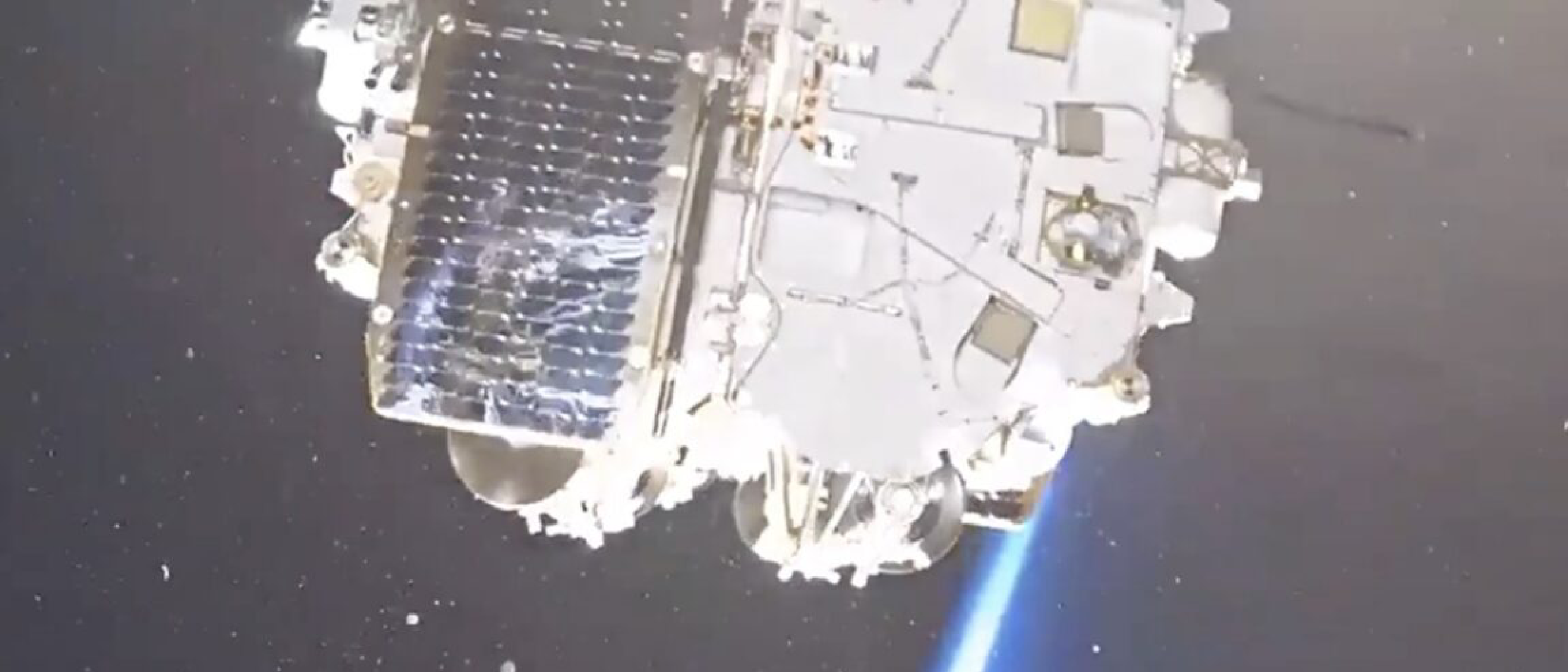
In early 2024 the Russian Ministry of Defence announced Rassvet (Russian for “dawn”), a state‑backed effort to field a low‑Earth‑orbit (LEO) broadband constellation that could serve both civilian users and the armed forces. The program is managed by Bureau 1440, a design bureau with a legacy in satellite communications and missile guidance. Rassvet’s stated ambition mirrors that of SpaceX’s Starlink: provide high‑throughput, low‑latency internet to remote regions, support mobile command‑and‑control networks, and reduce reliance on terrestrial fiber.
To date, 32 satellites have been placed into orbit across two launch windows—one in March and another in July 2026. The goal for the short term is 300 operational spacecraft by the end of 2027, roughly ten percent of the target. The long‑term roadmap envisions 924 satellites by 2035, occupying a circular orbit at approximately 800 km (500 mi) altitude.
Despite the lofty numbers, the program is already confronting a fundamental problem: the first batch of satellites failed to reach the intended operational orbit. Instead of the planned 800 km, they remain in a lower “parking” orbit, forcing ground controllers to rely on the satellites’ own propulsion to climb higher—a maneuver that has not yet succeeded.
Technical Architecture and Propulsion Challenges
Satellite Bus and Payload
Each Rassvet bus is designed around a modular platform that integrates:
- Ka‑band phased‑array antennas for broadband downlink.
- S‑band uplink for command and telemetry.
- On‑board processing capable of routing traffic between user terminals and the core network.
- Plasma thrusters (Hall‑effect or ion engines) intended to raise the satellite from its deployment altitude to the operational 800 km orbit.
The plasma engines are a critical differentiator. Unlike conventional chemical thrusters, plasma propulsion offers high specific impulse, meaning the satellite can achieve a larger delta‑v with less propellant mass. This is essential for a constellation that must be launched in a compact configuration and then disperse itself across a wide orbital shell.
Propulsion Failure Modes
The recent launch anomalies point to several possible failure modes:
- Insufficient thrust – Early plasma engine tests showed lower-than‑expected thrust at the low pressures encountered in LEO, which could stall orbit‑raising maneuvers.
- Power budgeting – The satellites rely on solar arrays that deploy after launch. If the arrays do not reach full deployment, the thrusters may not receive enough power to fire continuously.
- Software integration – Autonomous orbit‑raising requires precise navigation algorithms. A software bug could cause the thruster to fire at the wrong attitude, leading to inefficient burns.
These issues echo challenges faced by other emerging LEO constellations, where the balance between payload mass, propulsion capability, and power generation is razor‑thin.
Ground Segment and User Terminals
On the ground, Rassvet plans to use phased‑array user terminals similar in concept to Starlink’s flat‑panel dishes. The terminals will be ruggedized for military use, with hardened encryption modules. For civilian customers, a lower‑cost version will be marketed through Russian telecom operators.
The ground segment also includes a network of gateway stations that will connect the LEO constellation to the terrestrial internet backbone. These gateways must be strategically placed to ensure coverage over the vast Russian territory, especially in Siberia and the Far East.
Why It Matters: Strategic and Economic Implications
National Security
Control over a sovereign broadband layer reduces dependence on foreign satellite services, which can be subject to sanctions or signal denial. In a conflict scenario, a domestic LEO network can provide resilient communications for command‑and‑control, ISR (intelligence, surveillance, reconnaissance) data links, and even precision‑guided munition targeting.
Economic Development
Russia’s remote regions suffer from limited broadband access. A functional Rassvet network could unlock new markets for e‑commerce, telemedicine, and distance education. The construction and operation of the constellation also create a domestic supply chain for high‑tech components—propulsion systems, antenna arrays, and ground‑station infrastructure.
Geopolitical Signaling
The public statement that “Russia’s attempt to replicate SpaceX’s Starlink network seems to be moving as slowly as the front lines in eastern Ukraine” underscores the perception that the program is both a technological and political statement. Success would demonstrate that Russia can field cutting‑edge space assets despite economic sanctions and limited access to Western components.
Industry Impact and Comparison with Starlink
Market Share and Competition
Starlink currently operates over 4,000 satellites and serves millions of users worldwide. Rassvet’s target of 300 satellites by 2027 would place it far behind in terms of coverage, but it could still capture niche markets—particularly military and government contracts within the Commonwealth of Independent States (CIS).
Technological Parallels
- Orbit altitude: Both constellations target the 500‑mile band, which balances latency (≈30 ms) and coverage footprint.
- Propulsion: Starlink uses krypton‑fueled Hall thrusters, while Rassvet relies on plasma engines of a similar class. The failure of Rassvet’s orbit‑raising highlights the difficulty of scaling this technology.
- User terminal design: Starlink’s flat‑panel dishes have become iconic. Rassvet’s terminals will need to match that ease of installation while meeting Russian military ruggedness standards.
Lessons from Other Constellations
The Zoom Zero‑Day Exploit article ( https://ltdeveloperblogs.github.io/posts/zoom-flaw-let-an-attacker-take-over-your-device-including-iphone-and-mac ) reminds us that any network—ground or space—must be hardened against cyber threats. Satellite constellations are especially vulnerable because a single compromised ground station can potentially control many spacecraft. Rassvet will need to integrate robust encryption and intrusion‑detection systems from the outset.
Similarly, the USB‑C on Your Phone piece ( https://ltdeveloperblogs.github.io/posts/your-phones-usb-c-port-does-a-lot-more-than-just-charge-heres-what-else-it-can-do ) illustrates how a seemingly simple interface can become a vector for data transfer and power delivery. In the satellite context, the interface between the user terminal and the satellite link must be secure, low‑latency, and power‑efficient—attributes that are critical for both civilian broadband and tactical communications.
Future Outlook and Timeline
| Milestone | Target | Current Status |
|---|---|---|
| First successful orbit‑raise | Q4 2026 | Pending – plasma thrusters under test |
| 300 operational satellites | End of 2027 | 32 launched, 10 |
| Milestone | Target | Current Status |
|---|---|---|
| First successful orbit‑raise | Q4 2026 | Pending – plasma thrusters under test |
| 300 operational satellites | End of 2027 | 32 launched, ~10 % of goal |
| Full constellation (924 satellites) | 2035 | Planning phase, funding secured through state budget |
Challenges Ahead
1. Propulsion Maturity
The plasma‑thruster program, while promising on paper, has yet to demonstrate a reliable Δv budget sufficient to lift a satellite from the 350 km parking orbit to the 800 km operational shell. Laboratory tests at the Russian Academy of Sciences have shown a thrust‑to‑power ratio that falls short of the 0.2 N/kW threshold required for a 30‑minute raise‑orbit burn. Until a redesign—either by increasing the magnetic field strength or by switching to a krypton‑based Hall thruster—produces consistent thrust, the constellation’s deployment schedule will remain vulnerable.
2. Power‑Generation Constraints
Solar‑array deployment anomalies have been reported in three of the first‑batch satellites. The arrays are designed to unfurl to a 2 m² surface area, but telemetry indicates a 15 % shortfall in power generation during the first 48 hours. This shortfall directly impacts the thrusters, which need a steady 5 kW to sustain a full‑power burn. Engineers are now testing a new hinge‑mechanism that promises a more reliable deployment sequence.
3. Software Integration & Autonomy
Rassvet’s autonomous orbit‑raising software relies on a combination of GPS, star‑tracker, and inertial measurement unit (IMU) data. A recent software‑validation run revealed a timing mismatch between the GPS solution and the thruster‑pulse‑width modulation, causing the satellite to fire while oriented off‑axis. The bug has been isolated to a legacy library originally written for a different class of Russian navigation satellites. A full code‑audit is underway, but the patch cycle could add several months to the next launch window.
4. Ground‑Segment Bandwidth
Even if the satellites reach their intended altitude, the ground‑segment must be able to ingest the expected 10 Gbps aggregate downlink per satellite. Existing Russian gateway stations, many of which were built for the older Gonets system, lack the fiber‑optic backhaul capacity required for a high‑throughput LEO network. Upgrading these sites will demand an additional $1.2 bn investment, a figure that has not yet been allocated in the 2027 budget.
Potential Mitigations
- Hybrid Propulsion Approach: Incorporating a small chemical apogee motor as a “kick‑starter” could reduce reliance on plasma thrusters for the initial orbit raise, buying time for the plasma system to mature.
- Incremental Power‑Upgrades: Deploying a secondary, deployable solar wing on the next batch of satellites would increase available power by roughly 20 %, directly improving thruster performance.
- Software‑in‑the‑Loop (SITL) Simulations: Expanding the use of high‑fidelity SITL environments will allow engineers to stress‑test navigation and thrust‑control algorithms before flight, reducing the risk of on‑orbit software failures.
- Public‑Private Partnerships: Engaging Russian telecom operators such as Rostelecom and mobile carriers like MTS to co‑fund gateway upgrades could spread the financial burden and accelerate rollout of the terrestrial backhaul.
International Reactions
The United States Department of State released a statement in August 2026 noting that “the development of independent satellite communications capabilities by any nation is a sovereign right, but it must not be used to undermine the security of existing global networks.” Meanwhile, the European Space Agency (ESA) has opened a dialogue with Russian officials to explore dual‑use technology sharing, particularly in the area of plasma‑propulsion testing, as part of its broader Space Safety Initiative.
China’s Beidou program, already operating a constellation of over 30 satellites in the same orbital band, has expressed interest in inter‑operability trials. If successful, Rassvet could become part of a broader Eurasian broadband mesh, offering redundancy for both civilian and military users.
Outlook for 2028‑2035
Assuming the propulsion and power issues are resolved by the end of 2027, the next three launch windows (late 2027, mid‑2028, and early 2029) are slated to deliver an additional 150 satellites. This would bring the constellation to roughly 55 % of the 300‑satellite short‑term target, enabling limited regional coverage over the Russian Far East and the Arctic.
From 2030 onward, the program plans to transition to mass‑production facilities in the Ulyanovsk and Nizhny Novgorod regions, leveraging existing aerospace supply chains. By 2035, the full 924‑satellite network should provide:
- Average latency: 28 ms (comparable to Starlink)
- Peak downlink per user terminal: 200 Mbps
- Coverage: 99 % of Russian landmass, with spill‑over into neighboring CIS states
If these milestones are met, Rassvet could become a strategic asset that not only narrows the digital divide within Russia but also offers a sovereign alternative to Western satellite internet services for allied nations.
Conclusion
Rassvet’s ambition mirrors that of SpaceX’s Starlink, yet the path to parity is strewn with technical, financial, and geopolitical hurdles. The early launch failures have exposed a fragile propulsion architecture, underscored the importance of robust power‑generation systems, and highlighted the need for a modernized ground segment. However, the program benefits from strong state backing, a clear national security rationale, and the potential for international cooperation with partners such as China and the ESA.
Whether Rassvet will evolve from a “slow‑moving front line” into a fully operational broadband constellation hinges on the ability of Bureau 1440 to resolve its plasma‑engine challenges and secure the additional funding required for ground‑infrastructure upgrades. The next 12‑month window will be decisive: a successful orbit‑raise demonstration could restore confidence and accelerate the rollout, while another setback may push the 300‑satellite target well beyond 2027.
Frequently Asked Questions
Q1: How does Rassvet’s plasma propulsion differ from Starlink’s krypton Hall thrusters?
A: Both systems belong to the Hall‑effect family, but Rassvet’s design uses a lower‑mass xenon‑free plasma source intended to reduce reliance on imported propellants. The trade‑off is a lower thrust level, which has so far limited the satellites’ ability to raise orbit without additional power.
Q2: Will civilian users be able to purchase Rassvet terminals?
A: Yes. The program plans a tiered terminal strategy: a ruggedized, encrypted model for military and government customers, and a lower‑cost, mass‑produced version for civilian broadband, expected to be sold through existing Russian telecom providers.
Q3: What is the expected lifespan of a single Rassvet satellite?
A: The design calls for a 7‑year operational life, after which the satellite will be de‑orbited using a passive drag‑augmentation device. This aligns with international guidelines for LEO debris mitigation.
Q4: How does the Russian government intend to fund the remaining 892 satellites?
A: Funding is allocated across multiple fiscal years through the Ministry of Defence budget, supplemented by a dedicated “Space Infrastructure” line in the national budget. Additional financing may come from public‑private partnerships with telecom operators.
Q5: Could Rassvet be used for non‑communication purposes, such as Earth observation?
A: While the primary payload is a broadband transceiver, the bus architecture allows for secondary payloads. There have been discussions about integrating low‑resolution optical sensors for disaster monitoring, but no official commitment has been made.
Q6: Is there a risk of orbital congestion with Rassvet sharing the 800 km band?
A: The 800 km shell is already populated by several constellations (Starlink, OneWeb, Kuiper). Rassvet will coordinate with the International Telecommunication Union (ITU) and the United Nations Office for Outer Space Affairs (UNOOSA) to obtain collision‑avoidance clearances and will employ autonomous conjunction‑avoidance maneuvers.
Q7: What cybersecurity measures are being implemented?
A: Rassvet incorporates end‑to‑end AES‑256 encryption for user data, quantum‑resistant key‑exchange protocols for ground‑satellite links, and a hardened flight‑software stack that undergoes regular penetration testing by Russian cyber‑defense agencies.
Q8: When can users expect commercial service to begin?
A: Assuming the 300‑satellite milestone is reached by late 2027, limited beta service could start in early 2028 in select regions (Siberia, Far East). Full commercial rollout across Russia is projected for 2029.
Source: Original Article