
Variable Aperture: A First for iPhone?
Apple’s rumored iPhone 18 Pro Max is set to become the first iPhone to feature a variable‑aperture lens. According to a Weibo post by leaker Ice Universe, the Pro Max will carry a lens that can adjust its aperture, while the smaller iPhone 18 Pro is expected to retain a fixed ƒ/1.78 aperture. This marks a significant departure from the fixed‑aperture design that has defined iPhone cameras since the iPhone 14 Pro.
The variable‑aperture claim is supported by the inclusion of Sony’s IMX905 sensor, which is known to support aperture changes. If Apple implements this feature, it would allow users to manually or automatically adjust depth of field—sharper subjects with a blurred background, or a broader focus when needed.
Technical Breakdown
How Variable Aperture Works
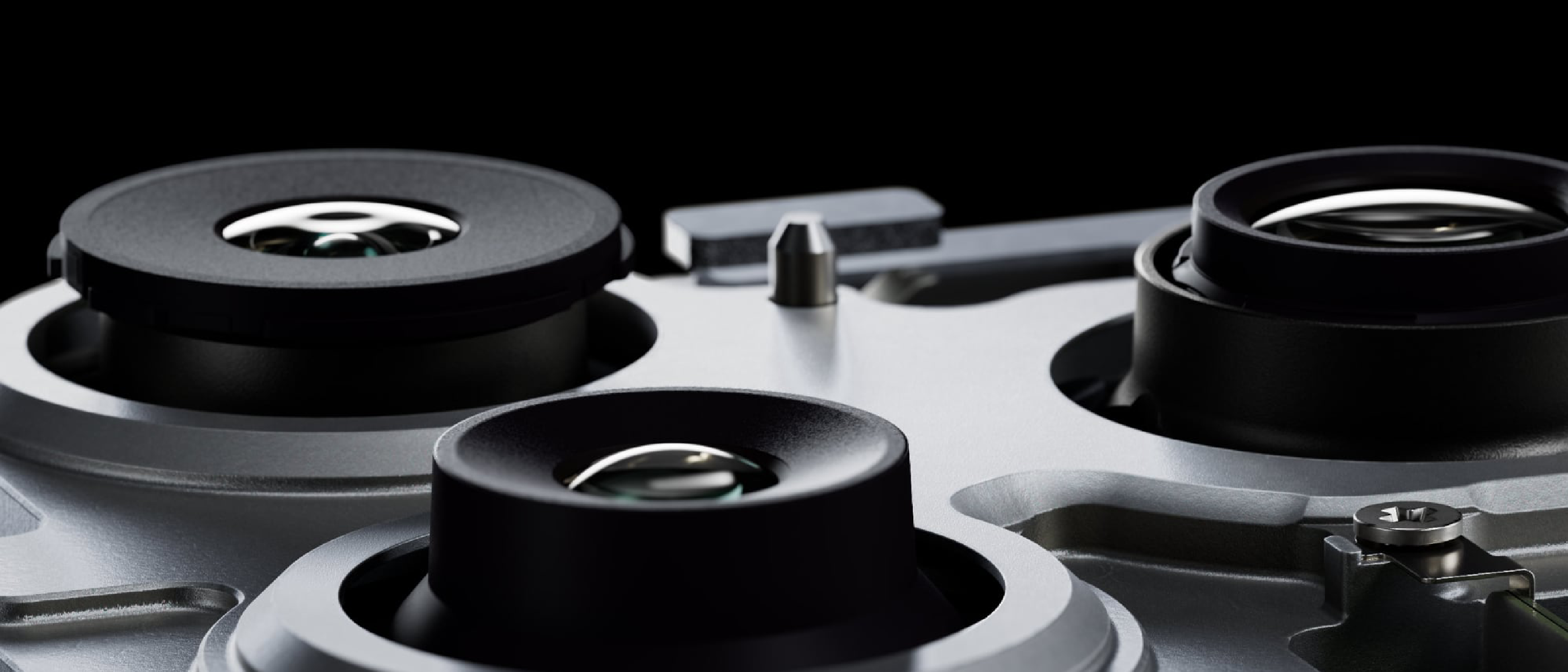
A variable‑aperture lens uses a movable diaphragm or a set of adjustable optics to change the amount of light entering the sensor. In practice, this means:
- Dynamic depth‑of‑field control: Users can choose a wide aperture for low‑light performance or a narrow aperture for greater depth of field.
- Auto‑mode flexibility: The camera system can adapt aperture based on scene lighting, similar to DSLR behavior.
- Potential for new computational photography: Variable aperture could feed more accurate data into image‑processing pipelines, improving bokeh and noise handling.
Sony IMX905 Integration
The IMX905 sensor is a 1‑inch, 12‑megapixel CMOS sensor that supports variable aperture. Apple’s partnership with Sony for the sensor suggests:
- Higher light‑gathering capability: The larger sensor size already improves low‑light performance.
- Enhanced optical design: The sensor’s compatibility with variable‑aperture optics may reduce the need for additional lenses.
Firmware and Software Considerations
Implementing a variable‑aperture system requires tight integration between hardware and software:
- Lens‑control firmware: Precise motor control to adjust the aperture smoothly.
- Camera app UI: Options for manual aperture selection or automatic mode.
- Image‑processing algorithms: Adjusting exposure, noise reduction, and depth‑map generation to account for changing aperture values.
Why It Matters to Consumers
Photography Powerhouse
For enthusiasts and professionals, a variable‑aperture lens on a smartphone could:
- Bridge the gap with mirrorless cameras: Offering depth‑of‑field control that was previously exclusive to larger lenses.
- Improve low‑light performance: Wider apertures allow more light, reducing noise without raising ISO.
Design Trade‑offs
Ice Universe noted that the Pro Max may become heavier, “like a brick,” to accommodate the larger sensor and additional optical components. This could affect:
- Ergonomics: A heavier phone may be less comfortable for one‑hand use.
- Battery life: More power may be required to drive the motorized aperture and larger sensor.
Market Differentiation
Apple’s strategy of adding exclusive features to the Pro Max aligns with past moves:
- iPhone 15 Pro Max: Introduced a tetraprism telephoto lens exclusive to the Max model.
- iPhone 18 Pro Max: Variable aperture could become the next differentiator, encouraging buyers to opt for the larger model.
Industry Impact
Competitor Response
If Apple succeeds with a variable‑aperture iPhone, competitors may need to:
- Invest in similar optics: Samsung, Google, and Huawei could explore variable‑aperture designs to stay competitive.
- Enhance software: Leverage computational photography to compensate for fixed‑aperture limitations.
Supply Chain Adjustments
The move to a larger sensor and variable‑aperture lens will:
- Increase demand for Sony IMX905: Potentially affecting supply for other devices.
- Require new manufacturing steps: Apple’s suppliers, such as Tata Electronics, may need to adapt to new assembly processes.
Regulatory and Safety Considerations
Variable‑aperture systems involve moving parts. Apple will need to ensure:
- Reliability: Long‑term durability of the motorized aperture.
- Safety: Compliance with standards for moving optical components in consumer devices.
Future Outlook
Potential for Foldable iPhone Ultra
Rumors suggest an **i
Phone Ultra** could debut alongside the iPhone 18 Pro models in September 2024. While the Ultra is expected to focus on foldable display technology, its camera system remains a mystery. If Apple introduces variable aperture in the Pro Max, it’s plausible that the Ultra could inherit or even surpass this feature, given its premium positioning. However, the engineering challenges of integrating a variable-aperture lens into a foldable form factor—such as maintaining optical alignment during folding—could delay or alter these plans.
Evolution of iPhone Camera Differentiation
Apple’s history of reserving flagship camera features for its largest Pro model suggests a deliberate strategy to drive sales of the most expensive iPhone variant. The iPhone 18 Pro Max’s variable aperture could follow this pattern, reinforcing the Pro Max as the “ultimate” iPhone for photography. However, this approach also risks alienating users who prefer the smaller Pro form factor but still want cutting-edge camera capabilities.
If the variable aperture proves successful, Apple may expand it to the standard Pro model in future iterations, similar to how the ProRes video feature trickled down from the Pro Max to the Pro. Alternatively, Apple could double down on exclusivity, using the variable aperture as a long-term differentiator for the Pro Max line.
Computational Photography vs. Hardware Innovation
Apple’s reliance on computational photography has allowed it to achieve impressive results with fixed-aperture lenses. Features like Night Mode, Deep Fusion, and Photonic Engine have compensated for hardware limitations, raising questions about the necessity of a variable aperture. However, the introduction of this feature suggests Apple is exploring ways to push hardware boundaries further, potentially reducing its dependence on software tricks for certain scenarios.
The variable aperture could also enable new computational photography techniques. For example:
- Adaptive bokeh: The system could dynamically adjust aperture and depth mapping to create more natural-looking background blur.
- Multi-exposure fusion: Combining images taken at different apertures to optimize dynamic range and detail.
- AI-driven aperture selection: Machine learning models could predict the ideal aperture for a given scene, balancing sharpness, depth of field, and noise.
User Experience and Accessibility
One of the biggest challenges for Apple will be making the variable aperture intuitive for users. Unlike DSLRs, where aperture control is a fundamental part of photography, most smartphone users are accustomed to point-and-shoot simplicity. Apple will need to strike a balance between manual control and automation:
- Manual mode: Advanced users could select aperture values (e.g., ƒ/1.4, ƒ/2.8, ƒ/5.6) via a slider or dial in the Camera app.
- Automatic mode: The system could default to aperture adjustments based on scene detection (e.g., wide aperture for portraits, narrow aperture for landscapes).
- ProRAW and ProRes integration: Variable aperture could be exposed in professional-grade formats, allowing for greater post-processing flexibility.
Apple may also introduce a “Pro Camera” mode, similar to the ProRAW and ProRes features, to give users granular control over aperture, shutter speed, and ISO.
Challenges and Potential Pitfalls
Optical and Mechanical Complexity
Variable-aperture lenses introduce several engineering challenges:
- Precision and durability: The diaphragm or optical elements must move smoothly and consistently over thousands of cycles without degradation.
- Optical alignment: Any misalignment could introduce distortion, vignetting, or focus issues.
- Dust and moisture resistance: Moving parts could compromise the iPhone’s IP68 rating if not properly sealed.
Apple’s track record with precision engineering (e.g., the tetraprism telephoto lens in the iPhone 15 Pro Max) suggests it can overcome these hurdles, but the variable aperture will be a new test.
Power Consumption and Thermal Management
Motorized aperture adjustments and larger sensors could increase power consumption, potentially impacting battery life. Additionally, the IMX905’s 1-inch sensor may generate more heat than smaller sensors, requiring improved thermal management. Apple could mitigate these issues by:
- Optimizing firmware: Reducing unnecessary aperture adjustments in auto mode.
- Enhancing thermal design: Using advanced materials or vapor chambers to dissipate heat.
- Battery improvements: Increasing the Pro Max’s battery capacity to compensate for higher power draw.
Cost and Supply Chain Risks
The IMX905 sensor and variable-aperture lens are likely more expensive than the components used in the iPhone 18 Pro. This could:
- Increase the Pro Max’s price: Potentially pushing it closer to the rumored $1,500+ price point of the iPhone Ultra.
- Create supply bottlenecks: Sony’s production capacity for the IMX905 may limit availability, especially if demand for the Pro Max exceeds expectations.
Apple’s partnership with Tata Electronics for assembly could help mitigate some supply chain risks, but the variable aperture remains a potential chokepoint.
User Adoption and Perception
For many users, the benefits of a variable aperture may not be immediately obvious. Apple will need to:
- Educate consumers: Highlighting the feature’s advantages through marketing, tutorials, and in-app guidance.
- Demonstrate real-world impact: Showcasing side-by-side comparisons of images taken with different apertures to justify the upgrade.
- Avoid gimmickry: Ensuring the feature enhances photography rather than feeling like a novelty.
If users perceive the variable aperture as a niche feature with limited practical value, it could fail to drive sales of the Pro Max.
Conclusion: A Bold Step Forward or an Unnecessary Gimmick?
The rumored variable-aperture lens in the iPhone 18 Pro Max represents one of Apple’s most ambitious camera innovations in years. If executed well, it could redefine smartphone photography, offering DSLR-like control in a pocketable device. However, the feature’s success hinges on Apple’s ability to balance hardware complexity with user-friendly software, all while justifying the Pro Max’s premium price and larger size.
For professional photographers and enthusiasts, the variable aperture could be a game-changer, enabling creative control previously reserved for dedicated cameras. For casual users, the benefits may be less apparent, especially if Apple leans heavily on automation. Regardless, the move signals Apple’s willingness to push the boundaries of smartphone camera technology, even if it means leaving some users behind with the smaller Pro model.
As the September 2024 launch approaches, all eyes will be on Apple to see whether the variable aperture lives up to the hype—or whether it becomes another footnote in the company’s long history of camera experimentation.
FAQ
1. What is a variable-aperture lens?
A variable-aperture lens allows the user (or the camera system) to adjust the size of the lens opening, controlling the amount of light that reaches the sensor. This affects depth of field (how much of the image is in focus) and low-light performance.
2. Why is Apple adding this to the iPhone 18 Pro Max?
Apple is likely introducing the variable aperture to differentiate the Pro Max from the standard Pro model, offering a feature that appeals to photography enthusiasts and professionals. It also aligns with Apple’s strategy of reserving flagship camera features for its largest and most expensive iPhone.
3. Will the iPhone 18 Pro get a variable aperture?
Current rumors suggest the iPhone 18 Pro will retain a fixed ƒ/1.78 aperture, similar to previous Pro models. The variable aperture is expected to be exclusive to the Pro Max.
4. How will the variable aperture affect photo quality?
The variable aperture could improve photo quality in several ways:
- Better low-light performance: Wider apertures (e.g., ƒ/1.4) allow more light, reducing noise.
- Creative control: Users can adjust depth of field for portraits or landscapes.
- Dynamic range: Narrower apertures (e.g., ƒ/5.6) can increase sharpness across the frame.
However, the actual impact will depend on Apple’s implementation and software optimization.
5. Can I manually adjust the aperture on the iPhone 18 Pro Max?
It’s unclear whether Apple will offer full manual control or rely on automated adjustments. Given Apple’s focus on simplicity, the feature may be primarily automated, with manual control available in a “Pro” mode.
6. Will the variable aperture make the iPhone 18 Pro Max heavier?
Yes. Ice Universe’s leak suggests the Pro Max may become heavier to accommodate the larger sensor and additional optical components. This could affect ergonomics and one-handed use.
7. How does the variable aperture compare to computational photography?
Computational photography (e.g., Night Mode, Deep Fusion) uses software to enhance images, while a variable aperture is a hardware feature. The two can complement each other—for example, the camera could use a wide aperture for low-light shots and then apply noise reduction in post-processing.
8. What are the risks of a variable-aperture lens?
Potential risks include:
- Mechanical failure: Moving parts could wear out over time.
- Dust/moisture ingress: Compromising the iPhone’s IP68 rating.
- Increased cost: Higher production costs could raise the Pro Max’s price.
9. Will other smartphone manufacturers follow Apple’s lead?
If the variable aperture proves popular, competitors like Samsung, Google, and Huawei may explore similar designs. However, they may also focus on improving computational photography to achieve comparable results without hardware changes.
10. When will the iPhone 18 Pro Max be released?
The iPhone 18 Pro Max is expected to launch in September 2024, alongside the iPhone 18 Pro and the rumored iPhone Ultra.
Source: Original Article