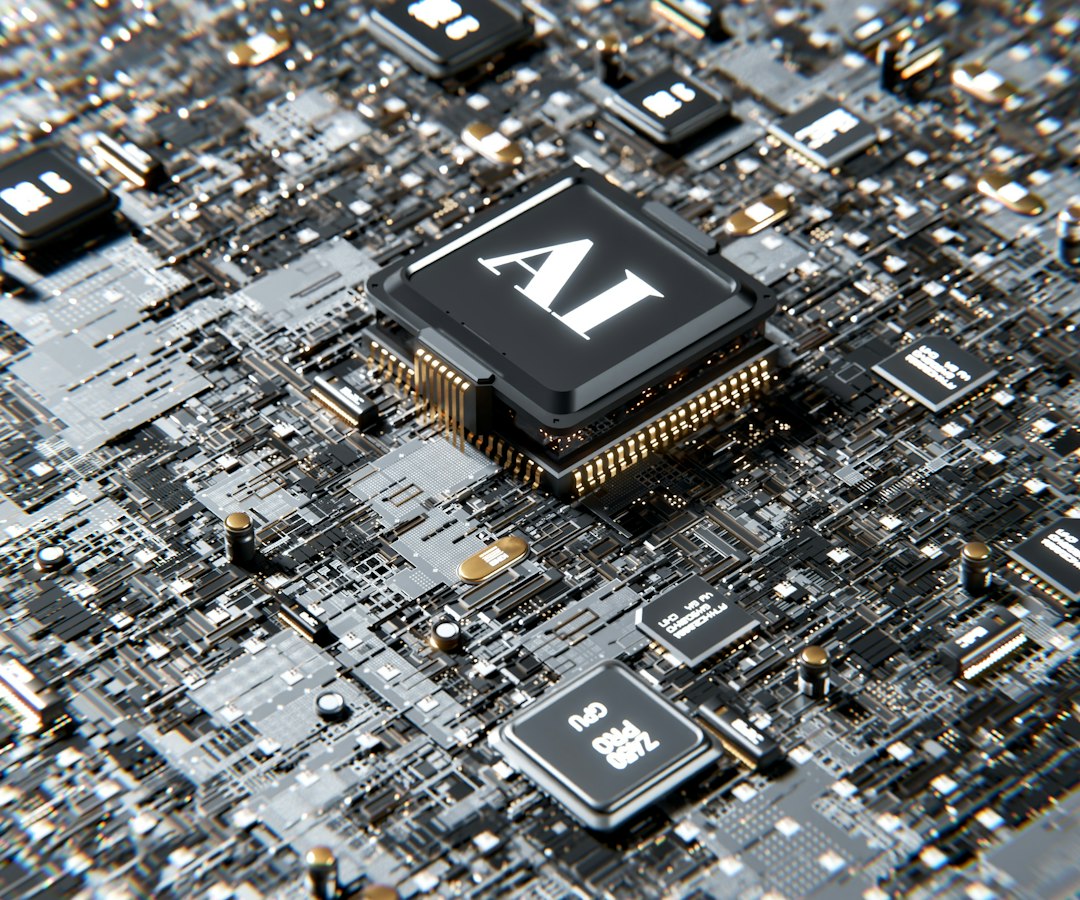







The artificial intelligence gold rush has, thus far, been defined by a singular, towering bottleneck: the hardware layer. While the world marvels at the capabilities of Large Language Models (LLMs), the underlying reality is that these models are almost entirely tethered to Nvidia’s ecosystem. This dependency isn’t just about the physical H100 or B200 GPUs; it is about the software moat known as CUDA. For years, CUDA (Compute Unified Device Architecture) has acted as the invisible glue, allowing GPUs to function as general-purpose processors and providing the foundation for industry staples like PyTorch and TensorFlow.
Enter Infinity, a bold new inference startup that has just secured $15 million in funding at a $100 million valuation. Backed by a powerhouse coalition including Touring Capital, Principal VC, and researchers from both OpenAI and Anthropic, Infinity is not trying to build another chip. Instead, they are building the intellectual bridge that allows any chip to compete with Nvidia. By automating the most grueling part of hardware optimization—the writing of low_level kernels—Infinity is positioning itself as the universal translator for AI inference.
Founded by Jeremy Nixon—a former Google Brain researcher and a pivotal figure in the AGI House community—Infinity represents a shift toward what Nixon calls “automated invention.” The company is targeting the critical gap between high_level AI research and low_level hardware execution, ensuring that state_of_the_art models can run efficiently on diverse architectures without requiring an army of specialized engineers to rewrite code for every new piece of silicon.
The Technical Moat: Understanding CUDA and Its Constraints
To understand why Infinity’s mission is so critical, one must first understand why Nvidia has remained virtually untouchable despite dozens of challengers emerging in the AI chip space. The secret isn’t just raw TFLOPS; it is CUDA. CUDA allows developers to program GPUs with relative ease compared to traditional hardware languages. Because PyTorch and TensorFlow were built atop CUDA, almost every modern AI model is natively optimized for Nvidia hardware from day one.
When a company develops a new AI chip—such as those produced by D-Matrix—they face a daunting task called “kernel development.” To make an LLM run fast on non_Nvidia hardware, engineers must write highly specific low_level code that tells the chip exactly how to move data through its memory and compute units. This process is slow, expensive, and requires deep expertise in computer architecture. It creates a massive barrier to entry; even if you build a chip that is theoretically faster than an H100, it remains useless if it takes two years to write the software libraries needed to run Llama 3 or GPT derivatives on it.
This systemic lock_in creates an environment where hardware innovation is stifled by software inertia. If developers cannot easily port their models to new chips, they will continue buying Nvidia GPUs regardless of price or power efficiency simply because it “just works.” This cycle has led to significant concerns regarding centralized control over AI infrastructure and safety protocols who decides when ai is too dangerous . By decoupling model execution from specific proprietary software stacks, Infinity aims to shatter this monopoly and democratize access to high_performance inference across all silicon providers.
Introducing Ignition: The Self_Optimizing Research Agent
The centerpiece of Infinity’s strategy is Ignition, an AI research agent designed specifically for automated hardware optimization. Ignition does not merely assist human coders; it replaces several manual steps in the deployment pipeline through an iterative loop of creation and measurement.
First, Ignition writes the low_level code required for inference on alternative chips (non_Nvidia architectures). Rather than relying on static templates or manual heuristics, Ignition leverages its understanding of different chip architectures—even those with proprietary designs—to generate candidate kernels tailored for specific workloads tokens per second being a primary metric here).
Once the code is written, Ignition enters a rigorous testing phase where it debugs errors and measures actual performance on the physical hardware via real_world benchmarks. If the resulting performance does not meet target thresholds or if bottlenecks are detected in memory bandwidth or compute utilization, Ignition automatically rewrites its own code based on those telemetry results. This creates a self_optimizing feedback loop where the system continuously learns how to squeeze more performance out of any given piece of silicon without human intervention into every line of C++ or Assembly code).
This approach transforms kernel development from a months_long engineering project into an automated process managed by an agentic system. By automating this replication of state_of_the_art research results across various chips, Infinity ensures that when a new breakthrough occurs in model architecture (such as new attention mechanisms), those gains can be realized globally across all supported hardware instantly rather than waiting for manual porting efforts across multiple vendors).
Market Implications and Business Model Innovation
The financial structure behind Infinity’s growth reflects its confidence in its technical efficacy]$. Rather than charging massive upfront license fees typical of enterprise software companies (like Palantir or Snowflake), Infinity has adopted a performance based pricing model}$. They take a percentage cut based on actual performance gains and cost savings achieved through their optimizations$. Specifically, they measure success through changes in tokens per second—the gold standard metric for LLM inference efficiency$.
This alignment ensures that Infinity only succeeds when its customers succeed$. If Ignition manages to double the throughput of an existing cluster without adding more hardware$, those savings translate directly into revenue for both parties$. This model lowers the risk for early adopters like D_Matrix while incentivizing Infinity’s team—currently consisting of 26 specialists across design$, operations$, and engineering$—to push for maximum efficiency$.
Furthermore$, this strategy positions Infinity as an essential partner for cloud service providers (CSPs) who are desperate to reduce their reliance on Nvidia$. Companies like AWS$, Azure$, and Google Cloud have developed their own custom silicon (TPUs$, Trainium$, Inferentia$), but they still struggle with software flexibility$. A universal inference library would allow these providers to offer more flexible pricing packages$ since they could shift workloads between different types of chips seamlessly based on cost or speed requirements without breaking compatibility$. In many ways$, this mirrors how other tech giants are shifting their strategies toward diversified ecosystems meta bets big on india although here$ focus is purely architectural rather than geographic$.
The Broader Impact on Artificial Intelligence Infrastructure
The long term goal described by Jeremy Nixon involves treating AI systems as “meta technology.” When he speaks about “automated invention,” he refers to using AI not just as a tool for generating text or images$, but as an engine capable of inventing better ways for computers themselves to function]$. If we can automate how we optimize silicon usage$, we accelerate everything from edge computing (running LLMs locally on devices) up until massive data center clusters$.
If successful$, Infinity could catalyze a surge in specialized AI accelerators$. Currently$ many startups avoid building niche chips because they fear they cannot compete with NVIDIA’S ecosystem]$. With Ignition handling THE heavy lifting of kernel development$ we may see more chips optimized specifically for vision transformers$, audio processing$, or sparse matrix multiplication without those companies needing thousands of compiler engineers]$. This would lead to significantly lower energy consumption across global data centers$ addressing one of THE most pressing environmental concerns associated with modern generative AI$.
Moreover$, this movement aligns with broader trends where regulatory bodies are scrutinizing concentrated power within tech sectors when any administration cracks down. By breaking THE software lock created by CUDA$ Infinity provides THE technical means FOR enterprises TO diversify THEIR infrastructure stacks$\ reducing systemic risk AND potentially lowering THE overall cost OF intelligence FOR end users throughout THE global economy$.
FAQ Section
What exactly does infinity do?
Infinity builds tools that automate the creation of low_level code required To run Large Language Models (LLMs) on non_Nvidia AI chips$\ removing THE need FOR manually writing complex kernels To achieve high performance during inference}$.
What is Ignition?
Ignition IS An AI research agent THAT writes$\ tests$\ debugs$\ AND optimizes low_level code FOR diverse chip architectures$\ using A self_learning loop TO improve tokens per second throughput}$.
Why does this matter if there are already other GPUs?
Most other GPUs lack THE robust software ecosystem THAT Nvidia possesses via CUDA$. Most models ARE written FOR CUDA$; running THEM elsewhere usually requires slow manual rewriting$\ WHICH slows down innovation AND keeps prices high}$.""""""""""""""""")))))))))**)}$)}$)}$)}$)}$)}$)}$)}$)}$)}$)}$)}$)}$
Source: Original Article