



Launch Timeline and How to Watch Live
NASA has set the official lift‑off window for the Nancy Grace Roman Space Telescope at 7:26 AM ET on August 30, 2026. A backup window on August 31 at 7:22 AM ET will be used if weather or technical constraints scrub the primary attempt.
Live coverage starts 45 minutes early, at 6:20 AM ET, on NASA’s official streaming portal ( nasa.gov/live ). The feed will also be simulcast on SpaceX’s X (formerly Twitter) account, providing real‑time telemetry and commentary from mission controllers.
Key pre‑launch events include:
- August 29, 9:00 AM ET – Mission Science Briefing – The Roman telescope team will outline the mission’s primary science objectives and answer media questions.
- Post‑briefing – Pre‑launch News Conference – NASA officials will discuss schedule logistics, risk mitigation, and the historic partnership with SpaceX.
For viewers in different time zones, NASA’s live page offers a convenient countdown widget and a “watch later” archive that will be posted within 24 hours of launch.
Technical Breakdown of the Roman Telescope
The Roman Space Telescope represents a generational leap in wide‑field infrared astronomy. Its design philosophy centers on surveying large swaths of the sky with Hubble‑class resolution, a capability that reshapes how cosmologists and exoplanet scientists collect data.
Field of View and Optics
- Field of view: At least 100 × larger than the Hubble Space Telescope (HST). This translates to a 0.28 square‑degree field, enabling the telescope to image an area the size of the full Moon in a single exposure.
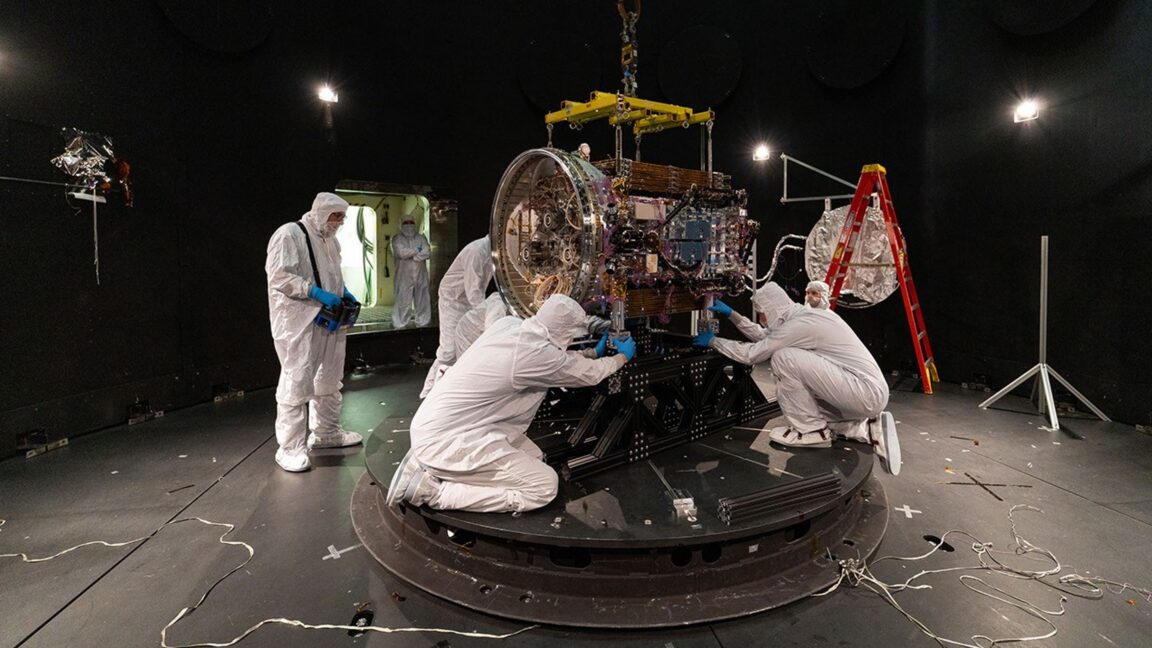
- Primary mirror: A 2.4‑meter monolithic mirror, identical in diameter to HST’s but fabricated with modern ultra‑low‑expansion glass. Final inspection of the mirror was completed in late May 2024, confirming no micro‑fractures from vibration testing.
- Infrared instruments: The Wide‑Field Instrument (WFI) operates from 0.48 µm to 2.0 µm, delivering diffraction‑limited imaging across the entire field. A coronagraph provides high‑contrast imaging for exoplanet studies, capable of suppressing starlight by a factor of 10⁹.
Data Handling and Downlink
The telescope will generate ~1 TB of raw data per day, compressed and transmitted via NASA’s Deep Space Network (DSN) using Ka‑band. On‑board processing reduces the volume by applying lossless compression and preliminary calibration, ensuring that scientists receive science‑ready products within hours of acquisition.
Primary Science Goals: Dark Energy and Exoplanets
Probing Dark Energy
Roman’s wide‑field surveys will map the three‑dimensional distribution of galaxies and galaxy clusters out to redshift z ≈ 2. By employing three complementary techniques—baryon acoustic oscillations (BAO), supernova distance measurements, and weak gravitational lensing—the mission aims to constrain the equation‑of‑state parameter w to a precision of ±0.01. This level of accuracy could confirm whether dark energy behaves like a cosmological constant or hints at new physics.
Exoplanet Census
The coronagraph instrument will directly image exoplanets around nearby stars, blocking out the host star’s glare to reveal planetary atmospheres. Roman will:
- Measure spectral signatures of water vapor, methane, and carbon dioxide, informing habitability assessments.
- Conduct a statistical survey of solar‑system analogs, estimating how common Earth‑like planets are in the Milky Way.
These observations complement the transit data from missions such as TESS and the upcoming James Webb Space Telescope (JWST), creating a multi‑method exoplanet catalog.
Launch Vehicle, Integration, and Operational Considerations
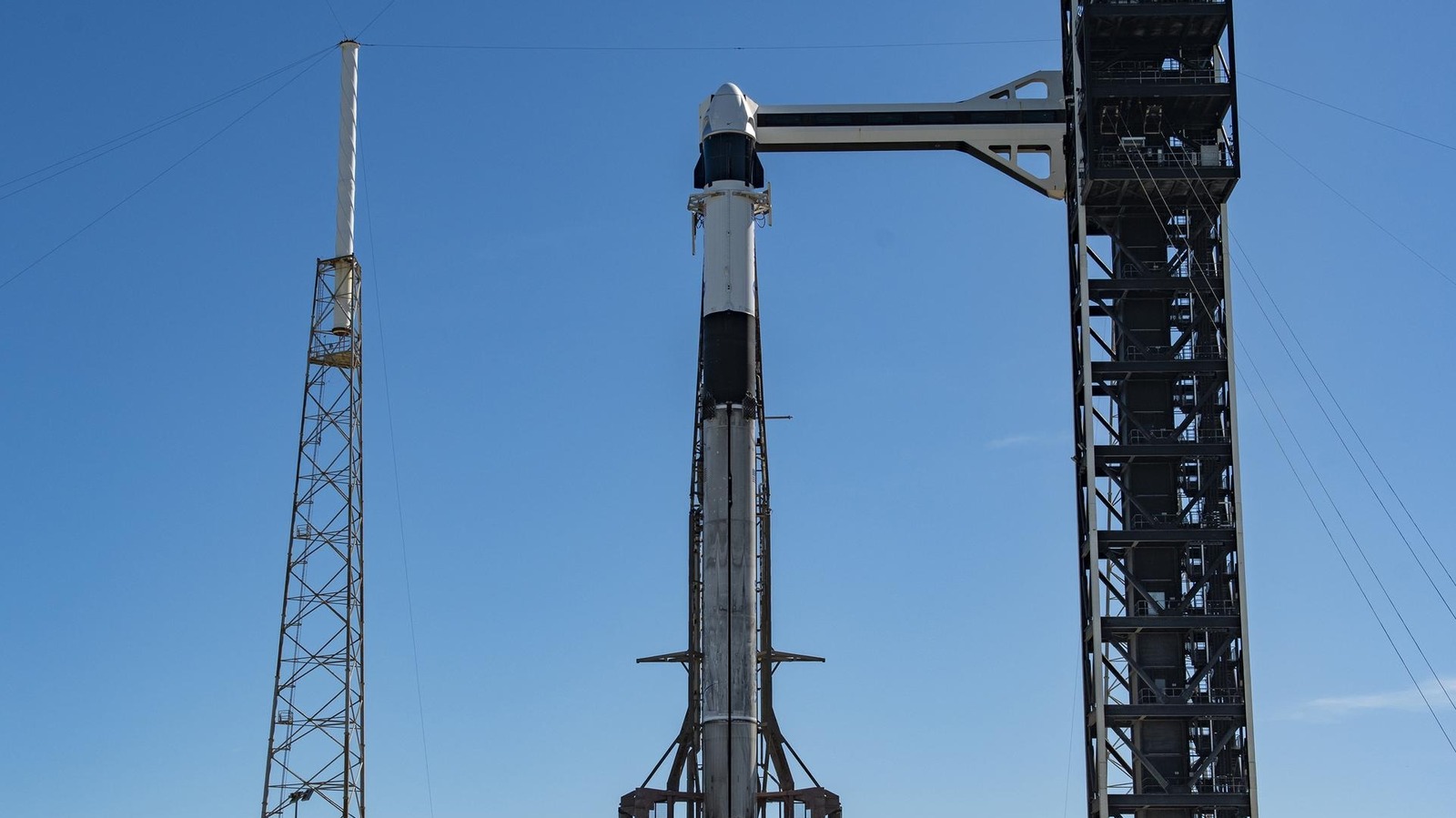
Falcon Heavy on Launch Complex 39A
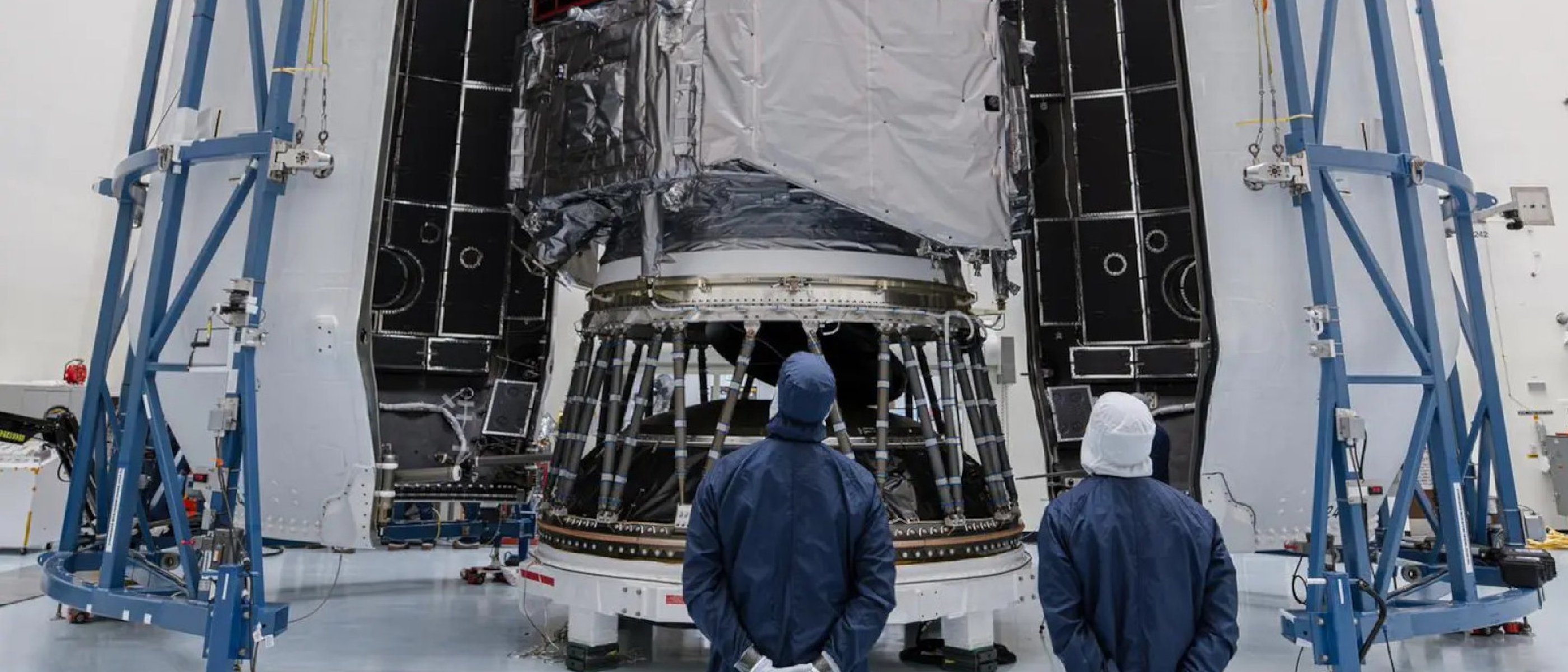
SpaceX’s Falcon Heavy will lift the 5,500 kg Roman payload from Launch Complex 39A at Kennedy Space Center. The telescope is already encapsulated inside the fairing, a process completed in early June 2024 after the launch date was moved up from the original September window.
Key performance points:
- Payload capacity: Falcon Heavy can deliver up to 63,800 kg to low‑Earth orbit, providing ample margin for the Roman telescope and its support hardware.
- Fairing separation: The 5.2 m diameter fairing will open at T+2 minutes, exposing the telescope to the vacuum of space.
- Launch abort options: NASA’s range safety system includes a flight termination system (FTS) that can be activated if the vehicle deviates from the planned trajectory.
Post‑Launch Commissioning
After separation, Roman will undergo a four‑week commissioning phase:
- Solar array deployment – Power generation ramps up to 2 kW.
- Thermal stabilization – The infrared instruments require a stable temperature of ~120 K, achieved via passive radiators and active cryocoolers.
- Optical alignment – Fine guidance sensors will lock onto guide stars, achieving sub‑arcsecond pointing accuracy.
- Instrument checkout – Calibration lamps and on‑board flat‑field sources verify detector performance before science operations begin.
Industry Impact and Future Outlook
Accelerating Wide‑Field Survey Technology
Roman’s success will validate the wide‑field infrared architecture for future missions. The European Space Agency (ESA) is already studying a next‑generation surveyor that could build on Roman’s WFI design, targeting even deeper observations of the early universe.
Commercial Partnerships and Space Infrastructure
The collaboration with SpaceX showcases how commercial launch providers can deliver high‑value scientific payloads on aggressive schedules. The ability to shift the launch from September to August without compromising safety demonstrates a mature integration pipeline that other agencies may emulate.
Cross‑Domain Relevance
While Roman is a pure science mission, its data handling pipeline shares similarities with satellite broadband services. For instance, the Starlink Mini Home Use article discusses how high‑throughput Ka‑band links enable rapid data downlink from low‑Earth orbit constellations. Roman’s reliance on the DSN’s Ka‑band infrastructure underscores the growing convergence between scientific and commercial satellite communications.
Technological Spin‑offs
The telescope’s coronagraph technology has potential applications in high‑contrast imaging for Earth observation, a field explored in the ASUS ROG Gjallar soundbar article where advanced hardware design principles are highlighted. Moreover, the rigorous software security measures required for mission‑critical code echo best practices described in the Mac Antivirus Intego One piece, emphasizing the importance of protecting space assets from cyber threats.
Frequently Asked Questions
Q1: Why is the field of view 100 × larger than Hubble’s?
A: Roman uses a specially designed wide‑field camera with a large focal plane array of 300 megapixels, allowing it to capture a sky area that would require hundreds of Hubble pointings.
Q2: How does the coronagraph block starlight?
A: It employs a series of masks and deformable mirrors that shape the incoming wavefront, creating a dark zone where the star’s light is suppressed, revealing faint nearby planets.
Q3: What happens if the August 30 launch is scrubbed?
A: NASA will shift to the backup window on August 31 at 7:22 AM ET. All pre‑launch briefings and live streams will be updated on the NASA website.
Q4: Will the data be publicly available?
A: Yes. After a 12‑month proprietary period for the mission team, all calibrated data sets will be released through the Mikulski Archive for Space Telescopes (MAST).
Q5: How can I contribute to the mission’s outreach?
A: NASA encourages citizen scientists to participate in the Roman Exoplanet Survey via the Zooniverse platform, where volunteers help classify potential planet candidates.
The launch of the Nancy Grace Roman Space Telescope marks a pivotal moment for astrophysics, offering unprecedented survey power to unravel dark energy and the demographics of distant worlds. As the Falcon Heavy roars toward the sky on August 30, the world will watch not only a spacecraft lift off, but also a new era of discovery begin.
Source: Original Article