


Mission Overview and Historical Significance
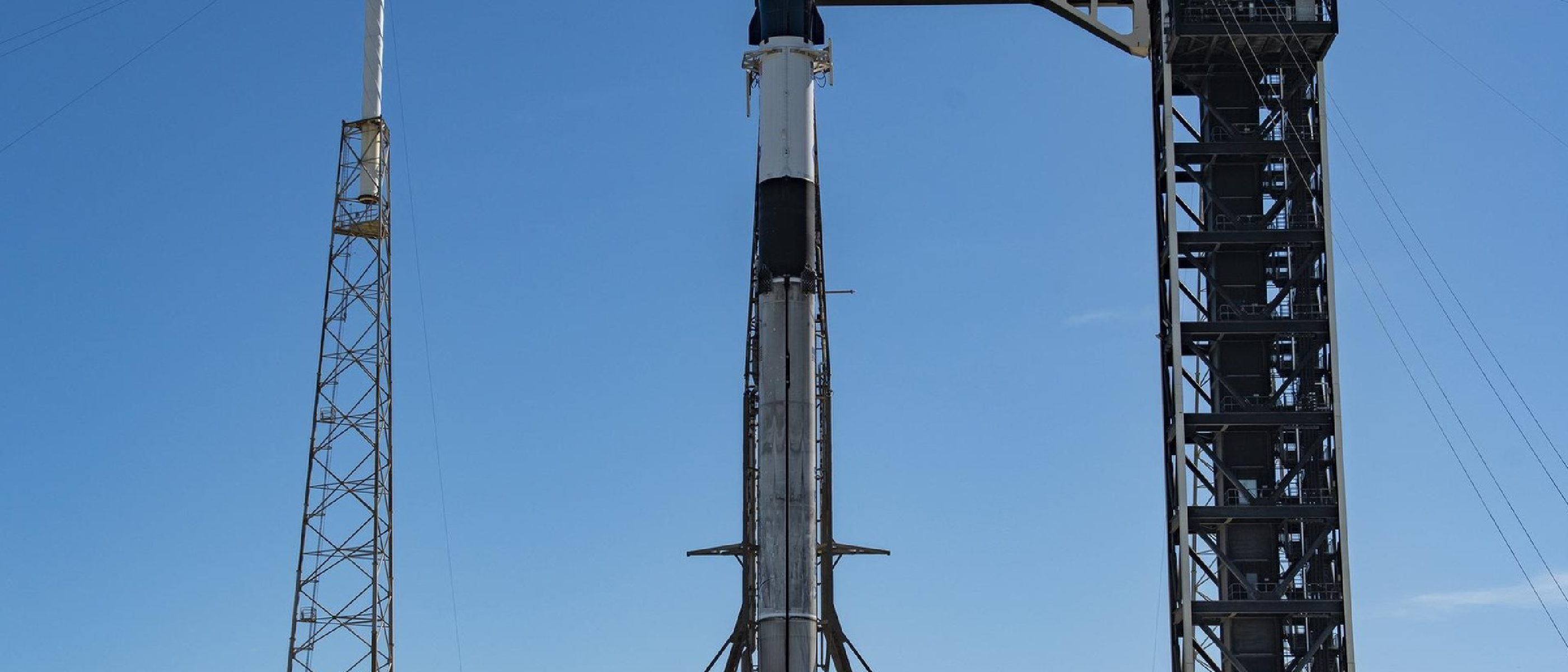
On Thursday, October 1, SpaceX’s Falcon 9 will roar off the pad at Cape Canaveral Space Force Station at 11:10 AM ET, carrying NASA’s Crew‑13 crew to the International Space Station. The four‑person crew—Commander Jessica Watkins, Pilot Luke Delaney, Canadian astronaut Joshua Kutryk, and Roscosmos cosmonaut Sergey Teteryatnikov—represents a blend of scientific expertise and international partnership.
What makes this flight stand out is its projected 7‑hour 50‑minute transit from launch to docking, a record for a U.S. vehicle. The speed is achieved through a highly optimized launch profile, a direct ascent trajectory, and the use of SpaceX’s autonomous docking system, which has been refined over the previous twelve crewed missions. By shaving nearly two hours off the typical 10‑hour window, NASA gains valuable crew time and demonstrates the operational flexibility needed for future deep‑space missions.
Why It Matters: Scientific and Exploration Goals
The primary purpose of Crew‑13 extends beyond crew rotation. The mission will:
- Conduct microgravity experiments in biology, materials science, and fluid dynamics that directly inform life‑support system design for lunar habitats.
- Validate new technology demonstrations, including advanced radiation shielding prototypes and autonomous robotic servicing tools slated for the Artemis program.
- Gather data on crew health during rapid transit, a scenario that will be common for lunar‑orbit and Mars‑transit missions where time efficiency is critical.
NASA’s own statement emphasizes that the flight “conduct scientific investigations and technology demonstrations to help prepare humans for future exploration missions to the Moon and Mars.” The data collected will feed into the Artemis III lunar landing slated for 2027 and the broader goal of returning humans to the Moon’s surface by 2028.
Technical Breakdown of the Falcon 9 and Crew Dragon
Launch Vehicle
- First‑stage Merlin 1D+ engines deliver 845 kN of thrust each, using RP‑1 kerosene and liquid oxygen. The stage performs a controlled boost‑back burn, enabling a rapid return to Landing Zone 4 at Cape Canaveral.
- Grid‑fin steering and real‑time flight‑software updates allow the vehicle to adjust its trajectory on the fly, a capability that contributed to the shortened coast phase.
Crew Dragon Capsule
- Integrated Launch Escape System (LES) remains active until the vehicle reaches orbit, providing a proven safety net demonstrated during the Crew‑2 in‑flight abort test.
- Docking Mechanism: The capsule uses a combination of LIDAR, visual navigation, and the International Docking System Standard (IDSS) to autonomously align with the ISS’s Harmony module.
- Life‑Support Upgrades: A new carbon‑dioxide removal system (CDRA‑2) and an upgraded water reclamation unit reduce consumable mass, a key factor for future long‑duration missions.
Crew Contributions
- Jessica Watkins brings geology expertise from her work on the Curiosity rover, positioning her to lead planetary‑science experiments aboard the ISS.
- Luke Delaney is NASA’s first research pilot to fly on a commercial vehicle, providing valuable data on pilot workload in a highly automated environment.
- Joshua Kutryk makes his inaugural spaceflight, representing Canada’s growing role in lunar exploration.
- Sergey Teteryatnikov adds Russian experience, ensuring seamless integration with the ISS’s Russian segment and reinforcing the mission’s multinational character.
Industry Impact and Market Implications
The rapid turnaround of Crew‑13 underscores SpaceX’s dominance in the commercial crew market. By delivering a near‑record docking time, SpaceX demonstrates a competitive edge that could influence future NASA contracts and international partnerships.
- Commercial Competition: Blue Origin’s upcoming lunar lander tests for Artemis III will now be benchmarked against SpaceX’s proven rapid‑transit capability.
- Supply‑Chain Ripple Effects: Faster crew rotations reduce the need for extended on‑orbit storage of life‑support consumables, potentially lowering logistics costs for private space stations and commercial habitats.
- Streaming and Media: The launch will be streamed across NASA’s YouTube channel, Netflix, Discovery+, X, NASA+, and Amazon Prime Video. The multi‑platform approach mirrors the distribution model discussed in the Apple TV Outage Hits Users: Causes, Impact & Next Steps article, highlighting the importance of robust, redundant streaming infrastructure for high‑profile events.
How to Watch the Launch Live
| Platform | Start Time (ET) | Link |
|---|---|---|
| NASA YouTube | 9:20 AM | https://www.youtube.com/nasa |
| Netflix | 9:20 AM | Search “NASA Live” |
| Discovery+ | 9:20 AM | https://www.discoveryplus.com |
| X (formerly Twitter) | 9:20 AM | Follow @NASA |
| NASA+ | 9:20 AM | https://www.nasa.gov/nasaplus |
| Amazon Prime Video | 9:20 AM | Search “NASA Live” |
Because the event will be streamed on multiple services, viewers should verify bandwidth and device compatibility. The recent discussion on device connectivity in the USB‑C on Your Phone: More Than Just Charging and Data article provides useful tips for ensuring a stable connection, especially when using mobile devices.
Future Outlook: From ISS to Lunar Surface
Crew‑13 is a stepping stone toward the Artemis era. The mission’s rapid docking profile will inform the design of the Artemis II lunar flyby trajectory and the Artemis III landing architecture. Key takeaways include:
- Transit Time Optimization: Shorter Earth‑to‑orbit windows reduce crew exposure to the Van Allen belts, a consideration for Mars‑bound missions.
- International Collaboration: The inclusion of CSA and Roscosmos astronauts demonstrates a model for future multinational lunar crews, echoing the collaborative framework outlined in the Artemis Accords.
- Technology Demonstration Pathway: Successful operation of the upgraded CDRA‑2 and water reclamation units will accelerate their integration into the Lunar Gateway’s environmental control system.
The broader commercial space ecosystem will watch closely. Companies developing lunar landers, in‑space manufacturing, and orbital habitats will use Crew‑13’s data to refine their own timelines and safety protocols.
Frequently Asked Questions
Q1: How long will the crew stay on the ISS after docking?
A: Crew‑13 is scheduled for a six‑
Q1: How long will the crew stay on the ISS after docking?
A: Crew‑13 is scheduled for a six‑month expedition, overlapping with the existing Expedition 71 crew. Their return is slated for early March 2027 aboard a later Crew‑Dragon flight, giving them ample time to complete the science payloads and technology demonstrations outlined above.
Q2: Will the rapid 7‑hour‑50‑minute transit affect crew health?
A: NASA’s health‑monitoring team will track cardiovascular, vestibular, and musculoskeletal metrics throughout the accelerated ascent and docking phases. Early data from Crew‑12’s longer transit suggest that a sub‑8‑hour window does not increase acute motion‑sickness risk, but the mission will provide the first systematic dataset on rapid‑transit physiology—information that will be crucial for future lunar‑orbit and Mars‑transit profiles.
Q3: How does the docking timeline compare with previous U.S. crewed flights?
A: Prior U.S. crewed missions to the ISS—such as Crew‑2, Crew‑4, and Crew‑12—averaged 9 hours 30 minutes from liftoff to hard‑dock. The 7 hour 50 minute profile of Crew‑13 shaves roughly 1 hour 40 minutes off that baseline, making it the fastest U.S. crewed rendezvous ever achieved.
Q4: What happens if the autonomous docking system encounters an anomaly?
A: Crew Dragon is equipped with a redundant manual docking capability. The onboard flight controllers can command the capsule to switch to a “piloted” mode, allowing the crew (or ground‑based operators via the vehicle’s command link) to guide the vehicle using the same LIDAR and visual navigation suite that supports autonomous operations. Additionally, the International Docking System Standard (IDSS) includes a “soft‑capture” mechanism that can hold the vehicle in place while troubleshooting proceeds.
Q5: Where can I find the scientific payload list for Crew‑13?
A: NASA’s ISS National Laboratory website maintains a live inventory of all experiments aboard the station. For Crew‑13, the key payloads include:
- Microgravity Fluid Physics (MFP‑2) – studies capillary flow in low‑gravity environments.
- Advanced Plant Habitat (APH‑3) – tests genetically edited lettuce varieties for rapid growth cycles.
- Radiation Shielding Testbed (RST‑1) – evaluates novel polymer composites against galactic cosmic rays.
Full details and data‑release schedules will be posted on the NASA Science portal after the mission’s first week on orbit.
Closing Thoughts
SpaceX’s Crew‑13 launch not only marks a milestone in crew‑transport speed but also serves as a practical rehearsal for the rapid‑transit demands of Artemis lunar missions and eventual Mars expeditions. By compressing the Earth‑to‑ISS timeline, NASA gains a clearer picture of how crew health, vehicle performance, and mission operations intersect when every minute counts.
The mission’s blend of seasoned veterans and first‑time flyers underscores the evolving nature of human spaceflight: a collaborative, multinational effort that leverages commercial innovation while maintaining rigorous safety standards. As the Falcon 9 lifts off and the Crew Dragon darts toward the Harmony module, the world will be watching—not just for the spectacle of a launch, but for the data that will shape humanity’s next great leap beyond low‑Earth orbit.
Stay tuned for post‑flight updates, experiment results, and the upcoming schedule for Crew‑14, which will continue the cadence of rapid crew rotations and technology demonstrations essential to the Artemis roadmap.
Source: Original Article