






Why Distributed Batteries Matter
Urban centers such as New York City face a paradox: the demand for clean, reliable electricity is soaring, yet the physical and political constraints on large‑scale, centralized storage are tightening. Traditional utility‑scale batteries require permits, land, and community approval—processes that can take years and encounter fierce opposition.
Enter the new wave of distributed battery systems. By embedding modest‑sized, plug‑in packs into everyday devices—e‑bike swappable packs, induction stoves, and even food‑cart power modules—startups are turning every commuter, chef, and laundromat into a micro‑grid node. The aggregate effect is a massive, flexible reserve that can be dispatched during peak‑load events, reducing reliance on fossil‑fuel peaker plants and shaving utility bills for participants.
David Hammer, co‑founder of Pop Wheels, captures the shift succinctly: “The number‑one challenge that large‑scale centralized energy storage providers have is the fact that their benefits are abstract and their costs are concrete.” Distributed solutions flip that equation—benefits become tangible for each user, while the system‑wide cost is diffused across thousands of small transactions.
Technical Breakdown of Leading Solutions
Pop Wheels Battery‑Swapping System
- Form factor: Standardized 5 kWh packs, each weighing ~30 kg, housed in weather‑proof cabinets.
- Deployment: ~50 cabinets across Manhattan, supporting roughly 2,500 active batteries.
- Use case: Delivery drivers and food‑cart operators swap depleted packs for fully charged ones in under a minute, eliminating downtime.
- Grid contribution: If every cabinet were to discharge 5 kWh during a city‑wide peak, the network could supply up to 250 MWh—enough to power a small neighborhood for several hours.
Copper Induction Stoves
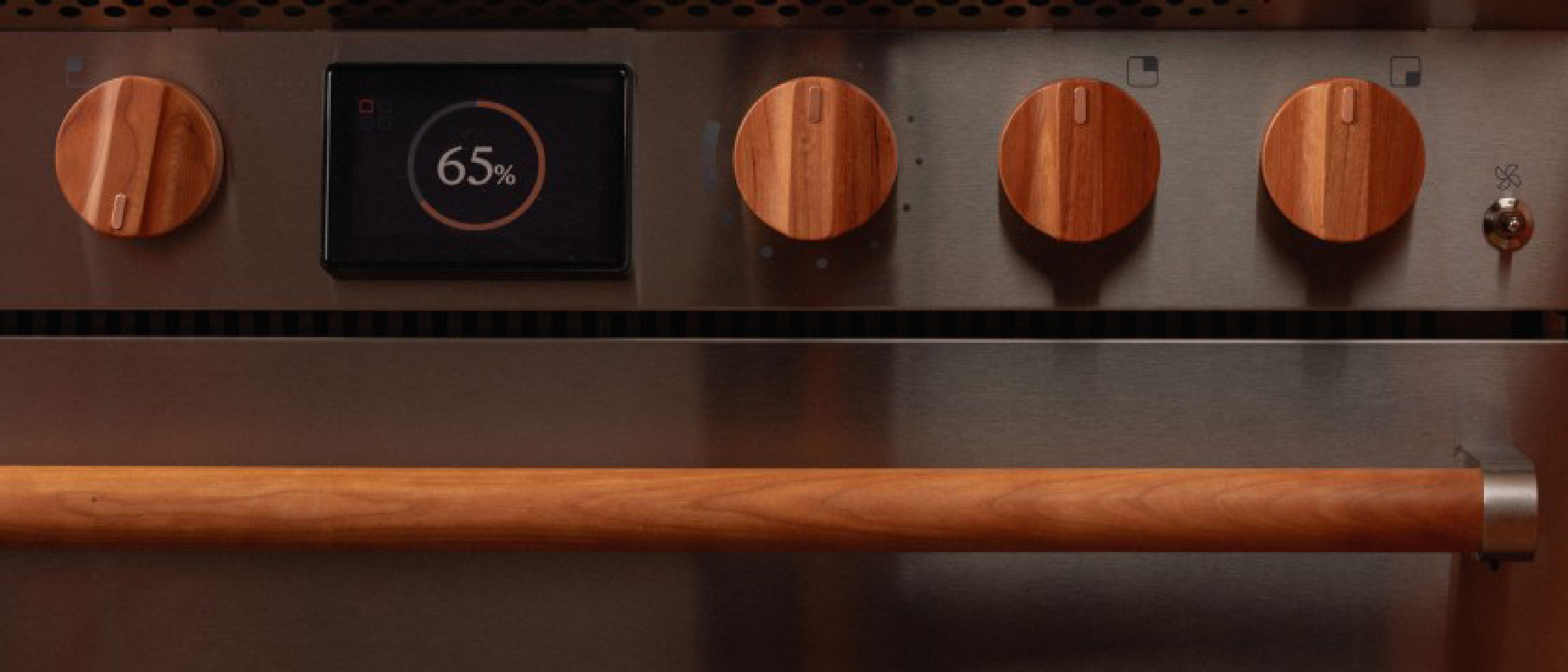
- Integration: Battery cells are built into the stove’s base, delivering up to 2 kW of supplemental power.
- Resilience: During outages, the stove can continue cooking for 1–2 hours, buying time for backup generators or utility restoration.
- Economic angle: By reducing the need for costly electrical upgrades in multi‑unit buildings, Copper’s model saves landlords up to 15 % on annual energy costs.
Every Electric Plug‑in Batteries
- Target: Residential and commercial air‑conditioning units.
- Business model: The company installs the battery at no upfront cost and pays customers for curtailing load during high‑stress grid periods (e.g., hot summer afternoons).
- Technical spec: Each unit provides 3–4 kWh, enough to keep a typical AC compressor running at reduced capacity for 30 minutes.
David Energy Commercial Batteries
- Markets: Laundromats, parking garages, gyms—places with predictable, high‑draw equipment.
- Operation: Batteries are charged overnight when rates are low, then discharge during peak demand, earning demand‑response credits.
- Scale: A typical gym installation (four 5 kWh modules) can shave 10 % off the facility’s peak demand charge.
These solutions share a common architecture: modular lithium‑ion packs with smart‑grid communication (often via cellular or LoRaWAN). The packs report state‑of‑charge, temperature, and location to a cloud platform that orchestrates aggregate dispatch. This mirrors the Balcony Solar model, where small plug‑in modules offset local demand, but the distributed battery approach adds the critical ability to feed power back into the grid.
For a deeper look at how tiny batteries are reshaping technology ecosystems, see the related analysis in AI Mind‑Reading, Tiny Batteries & Space Threats .
Industry Impact and Business Models
Cost Savings and New Revenue Streams
- Demand‑response payments: Utilities are paying up to $0.30 per kWh for load reduction during peak events. Distributed owners can earn a steady side income.
- Reduced capital expenditure: Companies avoid the multi‑million‑dollar outlay of a 10 MW utility battery by aggregating dozens of 5 kWh units.
- Insurance and resilience premiums: Businesses with on‑site storage qualify for lower insurance rates because they can maintain operations during outages.
Environmental Benefits
- Emission cuts: Replacing diesel generators on food carts with 5 kWh battery packs eliminates roughly 0.5 tonnes of CO₂ per year per
per year per food cart, a modest but meaningful reduction when multiplied across the estimated 10,000 carts operating in the city. When combined with the emissions avoided by swapping out diesel generators on delivery vans and the lower‑carbon profile of grid‑sourced electricity, the cumulative impact is comparable to taking tens of thousands of cars off the road each year.
Policy Landscape and Incentives
Municipalities are beginning to recognize the value of distributed storage. New York City’s Clean Energy Standard now offers tax credits for businesses that install “grid‑interactive” battery systems, and the NYC Climate Week panel on September 24 highlighted a pilot program that will subsidize up to 40 % of the upfront cost for qualifying small‑scale installations.
On the state level, the NY Power Authority (NYPA) has launched a “Virtual Power Plant (VPP) 2027” initiative, promising to integrate up to 5 GW of aggregated residential and commercial battery capacity by 2030. Startups that can demonstrate reliable communication protocols and meet NYPA’s performance standards will be eligible for capacity payments—a recurring revenue stream that further sweetens the business case.
Challenges and Risk Mitigation
While the promise is clear, several hurdles remain:
| Challenge | Mitigation Strategy |
|---|---|
| Battery degradation – Frequent cycling can shorten lifespan. | Deploy smart‑charging algorithms that limit depth‑of‑discharge to 80 % and schedule periodic “rest” cycles. |
| Regulatory ambiguity – Some utilities view VPPs as “non‑traditional resources.” | Engage early with Public Service Commission (PSC) filings and secure interconnection agreements that define clear market participation rules. |
| Cybersecurity – Remote dispatch requires robust data links. | Implement end‑to‑end encryption, regular penetration testing, and adopt industry‑standard ISO 27001 controls. |
| Consumer adoption – Upfront cost or perceived complexity can deter users. | Offer zero‑upfront leasing models, bundled with energy‑savings guarantees and 24/7 support hotlines. |
By proactively addressing these issues, companies can build the trust needed for large‑scale aggregation.
The Road Ahead: Scaling the Distributed Grid
If the current trajectory holds, the combined capacity of the four highlighted startups could exceed 200 MWh within the next two years—enough to offset a small peaker plant during a typical summer afternoon. Moreover, the network effect is exponential: each additional battery not only adds its own kilowatt‑hours but also improves the granularity and reliability of the VPP’s response.
Analysts at Greentech Analytics project that by 2035, distributed batteries embedded in consumer products could supply 15–20 % of the ancillary services market in major U.S. metros, translating to $3–4 billion in annual revenue for participants. This shift could also accelerate the retirement of aging fossil‑fuel peaker units, further driving down emissions.
Conclusion
The era of monolithic, utility‑scale storage is giving way to a decentralized tapestry of micro‑batteries woven into the fabric of daily life. Startups like Pop Wheels, Copper, Every Electric, and David Energy are proving that when storage is plug‑and‑play, the benefits become immediate, measurable, and financially attractive for end users. At the same time, the aggregated capacity they generate offers utilities a flexible, fast‑response resource that can be mobilized without the lengthy permitting processes that have hamstrung traditional projects.
For cities grappling with space constraints, community opposition, and the urgent need to decarbonize, distributed batteries present a pragmatic, scalable solution. As policy frameworks evolve and technology matures, the collective “battery‑in‑your‑backpack” approach could become a cornerstone of resilient, low‑carbon urban grids.
Frequently Asked Questions
Q: How do distributed batteries actually feed power back into the grid?
A: Each battery pack is equipped with a grid‑interactive inverter and a communication module. When the VPP platform signals a demand‑response event, the inverter synchronizes with the utility’s frequency and voltage, allowing the pack to discharge a controlled amount of energy directly onto the distribution network.
Q: Will my battery warranty be affected by participating in a VPP?
A: Most providers, including Pop Wheels and Copper, offer VPP‑compatible warranties that cover the additional cycling associated with grid services. The warranty typically includes a performance guarantee that the battery will retain at least 80 % of its original capacity after a defined number of cycles.
Q: Are there any safety concerns with having many batteries on a building’s roof or balcony?
A: Modern lithium‑ion packs incorporate thermal management, over‑current protection, and fire‑retardant casings. Installations must follow National Fire Protection Association (NFPA) 70E guidelines and are inspected by certified electricians before commissioning.
Q: How are participants compensated for providing grid services?
A: Compensation comes in three forms: (1) Demand‑response payments per kilowatt‑hour curtailed, (2) Capacity payments for being available during peak periods, and (3) Energy arbitrage savings when batteries charge at off‑peak rates and discharge during high‑price intervals.
Q: Can these distributed systems replace traditional backup generators entirely?
A: For many low‑to‑moderate load applications—such as food carts, e‑bike fleets, and small commercial kitchens—battery packs can fully replace diesel generators, offering quieter, zero‑emission operation. Larger facilities may still rely on generators for extended outages, but batteries can significantly reduce the duration and fuel consumption required.
Q: What is the expected lifespan of a typical 5 kWh pack used in these programs?
A: With proper management, a 5 kWh lithium‑ion pack can sustain 3,000–4,000 full cycles, translating to 8–10 years of service in a typical urban deployment scenario.
By embracing the power of the many, cities can unlock a resilient, clean energy future—one plug‑in battery at a time.
Source: Original Article