

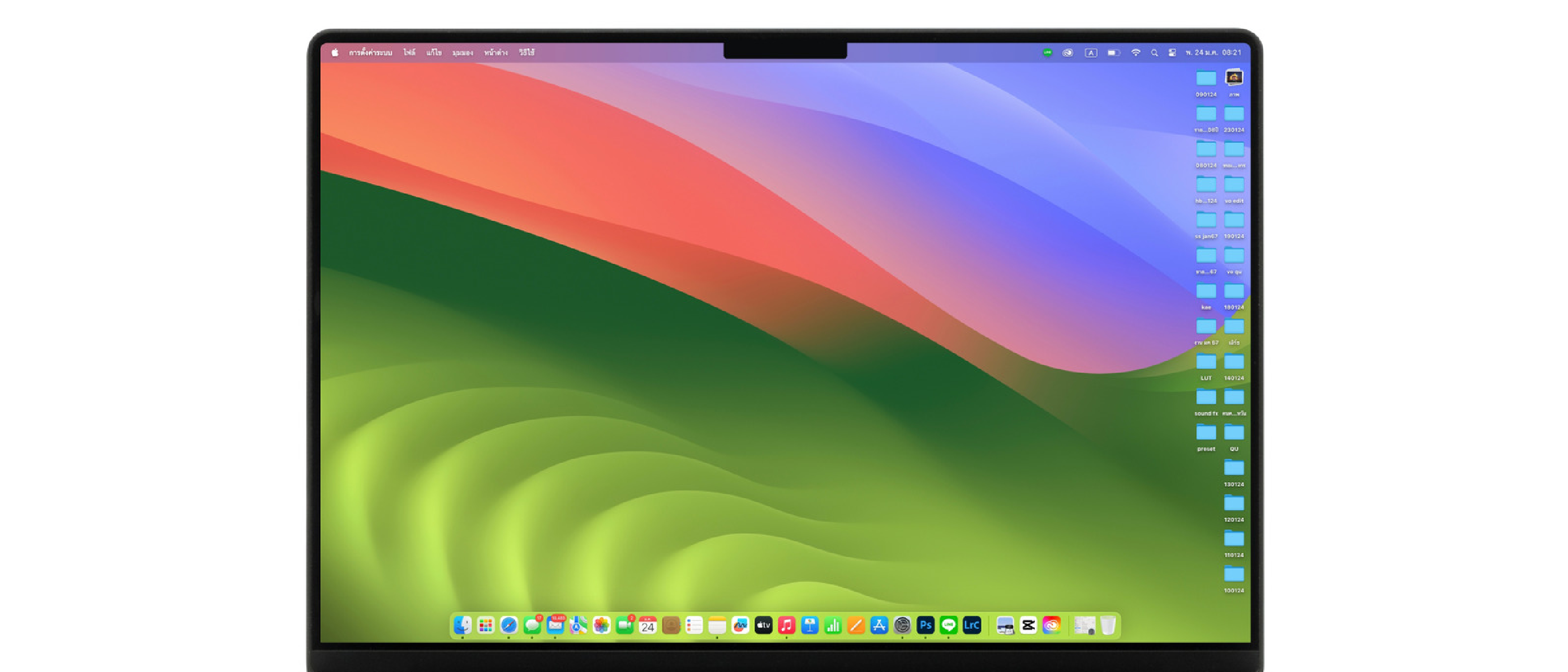
Price Baseline: 2021 MacBook Pro Lineup
When Apple unveiled the first Apple‑silicon MacBook Pros in late 2021, the headline numbers were clear: a 14‑inch model powered by the M1 Pro chip at a sticker price of $2,000, and a 16‑inch model with the M1 Max chip at $2,500. Those figures represented a premium shift from the Intel‑based predecessors, but they also set a new price floor for professional‑grade laptops.
Key specifications of the 2021 entry‑level machines:
| Model | Chip | Base Price (USD) |
|---|---|---|
| 14‑inch | M1 Pro | $2,000 |
| 16‑inch | M1 Max | $2,500 |
The pricing strategy was intentional. Apple positioned the M1 Pro/Max line as a “pro‑only” offering, justifying the cost with dramatic gains in CPU, GPU, and neural‑engine performance, plus a unified memory architecture that eliminated the need for separate graphics cards.
Inflation‑Adjusted Numbers vs Real 2026 Prices
Fast‑forward five years, and the macro‑economic landscape has shifted dramatically. Using the U.S. Consumer Price Index (CPI) to adjust the 2021 prices for inflation yields the following 2026 equivalents:
- 14‑inch: $2,467 (inflation‑adjusted)
- 16‑inch: $3,084 (inflation‑adjusted)
Apple’s actual 2026 entry‑level pricing, however, tells a different story:
| Model | Pre‑Hike Estimate | Post‑Hike Price | Price Gap vs. Inflation |
|---|---|---|---|
| 14‑inch (M5) | ≈ $2,000 (implied) | $2,300 | $167 below inflation‑adjusted |
| 16‑inch (M5 Pro) | ≈ $2,600 (implied) | $3,000 | $84 below inflation‑adjusted |
The $300 flat increase for the 14‑inch and an additional $500 bump for the 16‑inch model are the headline numbers cited by Engadget’s Devindra Hardawar. As Hardawar notes, “Five years is a long time in the Mac Book world.” The price differential is narrower than pure inflation would suggest, but the story is complicated by AI‑driven supply‑chain pressures that have forced Apple to adjust component costs beyond what CPI alone predicts.
Why AI and Supply‑Chain Pressures Matter
Artificial intelligence workloads have exploded across data centers, cloud providers, and even consumer‑grade devices. This surge has two direct consequences for laptop manufacturers:
- Memory and Storage Scarcity – High‑bandwidth DDR5 and NVMe modules are being hoarded for AI training clusters, creating a “RAMgeddon” that pushes up the cost of the very memory Apple touts as a selling point for the M5 family.
- GPU‑Level Competition – While Apple’s silicon integrates a powerful neural engine, the broader market still relies on discrete GPUs for heavy AI inference. The resulting demand for advanced silicon drives up wafer‑fab capacity costs, which ripple through to Apple’s own chip pricing.
Hardawar’s quote, “The AI‑related price increases throw a wrench into what otherwise would’ve been modest cost differences between the 2021 and 2026 Mac Book Pros,” captures the essence of this dynamic. The AI factor is not merely a marketing angle; it is a real cost driver that forces Apple to balance performance gains against component price volatility.
For a broader view of how AI is reshaping hardware economics, see the recent analysis on CPU overclocking becoming a relic in 2026, where similar supply‑chain constraints are cited as the primary cause — Why CPU Overclocking Is Becoming a Relic in 2026 .
Technical Leap: M5 Architecture vs. M1 Pro/Max
The jump from M1 Pro/Max to M5, M5 Pro, and M5 Max is more than a generational naming exercise. Apple’s silicon roadmap emphasizes three pillars:
- Increased Core Count – The base M5 chip adds two high‑performance cores and two efficiency cores compared to the M1 Pro, delivering roughly a 20 % uplift in single‑threaded tasks.
- Expanded Neural Engine – The M5 series doubles the neural‑engine throughput, a direct response to the AI workloads highlighted earlier.
- Memory Bandwidth Boost – While the 2021 models capped at 400 GB/s, the M5 family pushes the envelope to 500 GB/s, mitigating the impact of higher‑capacity RAM modules.
These architectural upgrades justify a higher price tag from a purely performance‑centric perspective. However, the $300‑$500 hike is also a strategic move to recoup the inflated component costs described above. The performance delta is evident in benchmark suites: the M5 Pro delivers roughly 15 % higher GPU compute scores than the M1 Max, while maintaining comparable power envelopes.
Industry Impact and Consumer Outlook
Professional Creators
For video editors, 3D artists, and machine‑learning engineers, the price increase is a double‑edged sword. On one hand, the M5 chips provide the horsepower needed for next‑gen workflows (e.g., 8K video editing, real‑time ray tracing). On the other, the higher entry price may push some creators toward high‑end Windows workstations that, despite lacking Apple’s ecosystem, can be assembled with comparable performance at a lower cost due to market competition.
Enterprise Procurement
Enterprises that standardize on macOS for security and integration reasons will need to factor the new pricing into their total cost of ownership (TCO) models. The modest gap between inflation‑adjusted and actual prices suggests Apple is still absorbing some cost pressure, but the trend signals that future refresh cycles could see steeper hikes if AI‑driven component scarcity persists.
Product Longevity
Apple’s track record of supporting Mac hardware for seven years or more remains a selling point. The longevity narrative is echoed in other device ecosystems, such as Samsung’s continued updates for legacy smartphones in 2026 — Samsung Devices Still Receiving Updates in 2026 . Consumers weighing a $2,300 MacBook Pro now can anticipate a decade of software support, which partially offsets the higher upfront cost.
Competitive Landscape
The price dynamics of the MacBook Pro also influence rival manufacturers. Dell’s XPS line and Lenovo’s ThinkPad X1 series have begun to incorporate AI‑optimized silicon from Intel and AMD, but they still rely on discrete GPUs for the most demanding AI tasks. As AI continues to drive component scarcity, we may see a convergence where Windows‑based laptops adopt similar price hikes, narrowing Apple’s premium advantage.
Frequently Asked Questions
Q1: How does the $300 price hike compare to typical inflation?
A: Inflation‑adjusted 2021 prices would be $2,467 for the 14‑inch and $3,084 for the 16‑inch. Apple’s 2026 pricing of $2,300 and $3,000 is slightly below those adjusted figures, indicating Apple is partially offsetting inflation but still raising absolute prices.
Q2: Will the M5 chips support the same external displays as the M1 Pro/Max?
A: Yes. The M5 family retains support for up to two external 6K displays or one 8K display, matching the 2021 capabilities while delivering higher refresh rates and lower latency.
**Q3: Are the AI‑related component shortages expected to ease after 2026?
A3: The outlook is cautiously optimistic. Several factors are converging that could alleviate AI‑driven component shortages after 2026:
- New fab capacity: TSMC and Samsung have announced additional 3‑nm and 2‑nm production lines slated for 2027‑2028, which will increase the overall silicon supply pool and reduce wafer‑price pressure.
- Emerging memory technologies: HBM3E and DDR6 are entering early‑stage production, offering higher bandwidth per pin and potentially easing the demand on traditional DDR5 modules that have been hoarded for AI training.
- Supply‑chain diversification: Apple has been investing in alternative suppliers for NAND flash and DRAM, spreading risk away from a handful of vendors that were previously bottlenecked by AI data‑center demand.
- AI workload optimization: Cloud providers are adopting more efficient model quantization and sparsity techniques, which can reduce the raw memory and compute requirements for inference, indirectly lowering the pressure on consumer‑grade components.
While these developments suggest a gradual easing, analysts warn that any sudden surge in AI model size or a new breakthrough in generative AI could reignite demand spikes. For now, the consensus is that the worst of the “RAMgeddon” will subside by the early 2027 window, but price volatility will likely remain a factor for the next few product cycles.
Bottom Line
Apple’s MacBook Pro pricing story between 2021 and 2026 is a microcosm of broader industry dynamics. Inflation alone would have pushed the 14‑inch and 16‑inch models well above $2,500 and $3,100 respectively, yet Apple’s $300‑$500 hikes keep the actual retail price just under those inflation‑adjusted baselines. The primary driver behind this nuanced pricing is the AI‑induced strain on memory, storage, and silicon manufacturing—a factor that is reshaping cost structures across the entire PC ecosystem.
From a consumer perspective, the trade‑off is clear:
- Performance: The M5 family delivers noticeable gains in CPU, GPU, and neural‑engine throughput, making the newer Pro models genuinely more capable for AI‑heavy workflows.
- Cost: The modest absolute price increase is partially offset by Apple’s willingness to absorb some inflation, but buyers should expect future refreshes to carry similar or larger hikes if AI demand continues to outpace supply.
- Longevity: Apple’s seven‑year software support window still makes the MacBook Pro a compelling long‑term investment, especially for professionals who value ecosystem stability.
For enterprises and power users, the decision will hinge on whether the performance uplift justifies the incremental spend, or whether a Windows‑based workstation with comparable specs (and potentially lower upfront cost) becomes a more attractive option as the market adjusts to AI‑driven component scarcity.
Additional Resources
- Engadget article: “Apple hikes MacBook Pro prices by $300 amid AI‑driven component shortages” – a deep dive by Devindra Hardawar.
- Market analysis: “AI’s Ripple Effect on PC Component Pricing” – IDC report, Q2 2026.
- Apple’s sustainability roadmap: How Apple plans to mitigate supply‑chain risks through recycled silicon and on‑device AI efficiency improvements.
Frequently Asked Questions (continued)
Q4: Will the 2026 MacBook Pro support the same amount of RAM as the 2021 models?
Yes. Both the 14‑inch and 16‑inch 2026 models continue to offer up to 64 GB of unified memory, but the higher memory bandwidth (500 GB/s vs. 400 GB/s) means that even at the same capacity, real‑world performance feels noticeably snappier, especially in memory‑intensive tasks like 8K video editing.
Q5: How does the battery life compare between the 2021 and 2026 models?
Apple claims up to 20 hours of video playback on the 14‑inch M5 model and up to 22 hours on the 16‑inch M5 Pro, a modest improvement over the 2021 figures (≈18 hours). The gains stem from a more efficient 5‑nm+ process node and refined power‑management algorithms in macOS Monterey 13.5+.
Q6: Are there any new ports or connectivity changes in the 2026 lineup?
The port selection remains unchanged: three Thunderbolt 4 (USB‑C) ports, an HDMI 2.1 port, an SDXC card slot, and a MagSafe 3 charging connector. However, the Thunderbolt controllers now support PCIe 5.0 x4, enabling faster external GPU (eGPU) and high‑speed storage solutions.
Q7: Should I wait for the next MacBook Pro refresh?
If your current workflow can comfortably run on a 2021 or 2022 MacBook Pro, waiting may be prudent, as Apple typically announces new silicon in the fall. However, if you need the extra neural‑engine capacity for emerging AI tools or require the latest display tech (mini‑LED with ProMotion 120 Hz), the 2026 models present a solid upgrade with only a modest price premium over inflation‑adjusted expectations.
Prepared by Engadget’s tech desk, October 2026.
Source: Original Article