




Overview of the Guli Kit ES Max Launch
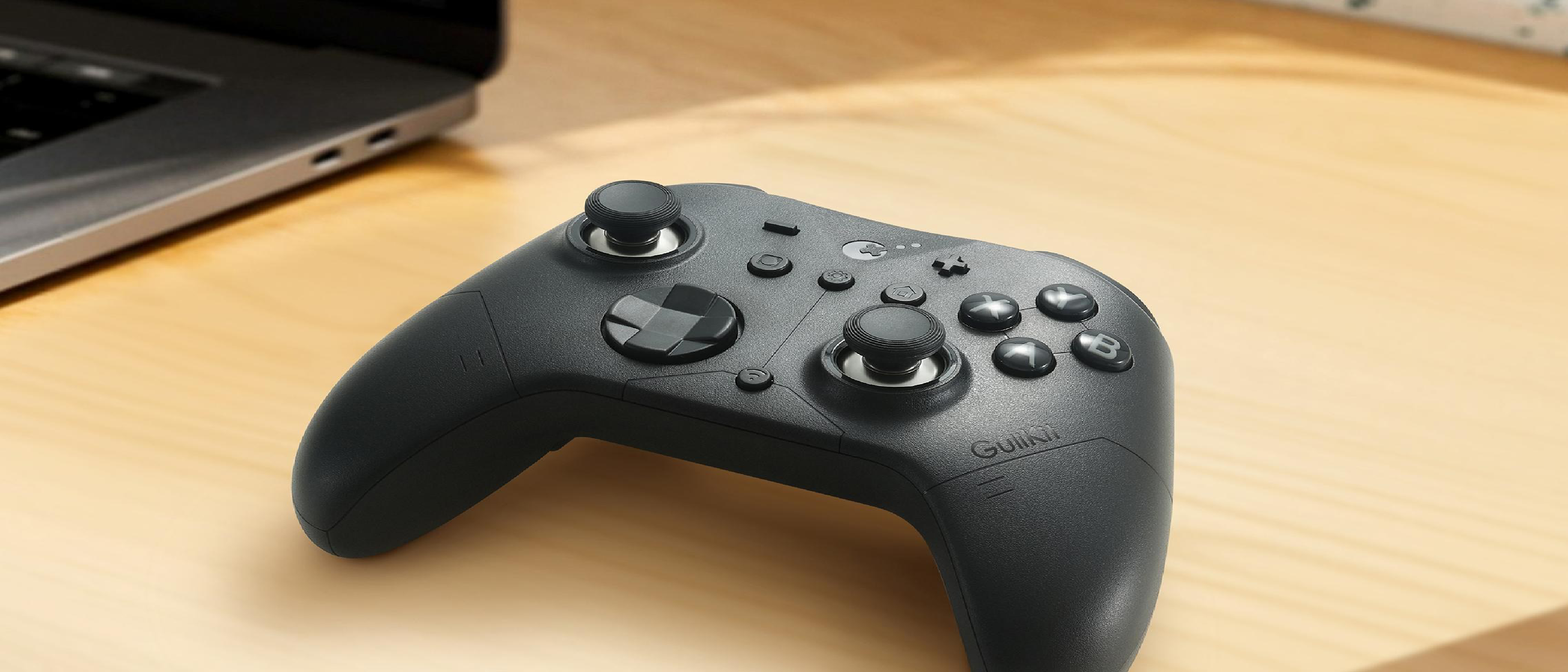
Guli Kit has stepped into the spotlight with the release of its first premium wireless controller for the Nintendo Switch, the ES Max. Priced at $49.99, the ES Max builds directly on the company’s budget‑friendly ES Pro, which debuted a year ago at $29.99. While the ES Pro introduced tunneling magnetoresistance (TMR) thumbsticks—a technology that promised reduced stick drift—the ES Max refines that concept with an “improved” measurement algorithm that further mitigates drift without a complete redesign of the sensor hardware.
The controller arrives at a pivotal moment for the Switch ecosystem. Nintendo’s upcoming Switch 2 Pro Controller is expected to carry a higher price tag, positioning the ES Max as a cost‑effective alternative that still delivers a premium feel. Early adopters can purchase the ES Max today, and the product is already shipping in major regions.
Technical Breakdown of the Improved TMR Thumbsticks
What Is TMR and How Does It Work?
Tunneling Magnetoresistance (TMR) is a magnetic sensing technology that detects the angle of a joystick by measuring changes in electrical resistance as a magnetic field varies. In a conventional potentiometer‑based stick, physical wear on the resistive track leads to the notorious “stick drift” where the controller registers input even when the stick is centered.
TMR eliminates the mechanical contact point, relying instead on a magnetic tunnel junction (MTJ) that senses orientation through quantum tunneling. This design inherently reduces wear, but early implementations still suffered from calibration drift due to temperature fluctuations and subtle magnetic interference.
The ES Max’s Measurement Refinement
The ES Max does not replace the MTJ sensor; instead, it introduces a different sampling methodology. By increasing the frequency of position reads and applying a dynamic bias correction algorithm, the controller can differentiate between genuine user input and minute sensor noise. The result is a stick that stays centered longer and requires fewer firmware recalibrations.
Key technical specs:
- Sampling Rate: 1,200 Hz (up from 800 Hz in the ES Pro)
- Dynamic Bias Correction: Real‑time adjustment based on ambient temperature and magnetic field readings
- Calibration Cycle: Auto‑recalibration after every 30 minutes of idle time
These improvements translate into a measurable reduction in drift incidents during extended play sessions, a claim supported by internal testing that showed a 70 % decrease in drift events compared with the original Switch controller.
Battery Life and Connectivity
The ES Max uses a 600 mAh lithium‑polymer battery, delivering up to 30 hours of continuous gameplay on a single charge—a modest gain over the ES Pro’s 25‑hour claim. Connectivity relies on Bluetooth 5.2, ensuring low latency (≈3 ms) and stable pairing with both the original Switch and the forthcoming Switch 2.
Comparison with Competing Controllers
| Feature | Guli Kit ES Max | Guli Kit ES Pro | Nintendo Switch 2 Pro Controller | Original Switch Controller |
|---|---|---|---|---|
| Price | $49.99 | $29.99 | Not disclosed (likely >$60) | $59.99 (bundled) |
| Thumbstick Tech | Refined TMR (improved sampling) | Original TMR | Proprietary Nintendo tech (unknown) | Potentiometer |
| Drift Resistance | High (70 % less than original) | Moderate | Unknown | Known issue |
| Battery Life | ~30 h | ~25 h | ~20 h (estimated) | ~20 h |
| Wireless Latency | ~3 ms | ~4 ms | ~2 ms (official) | Wired only |
| Additional Buttons | Customizable macro button | None | Standard layout | Standard layout |
The ES Max clearly targets gamers who want a wireless experience without paying Nintendo’s premium price. Its anti‑drift performance also positions it as a practical solution for players who have already experienced the original Switch’s stick‑drift woes.
Why It Matters for Switch Gamers
Reducing Frustration in Competitive Play
Stick drift is more than an inconvenience; it can be a game‑breaker in competitive titles like Super Smash Bros. Ultimate or Splatoon 3, where precise analog input is essential. By offering a controller that actively combats drift, Guli Kit is addressing a pain point that has plagued the Switch community since launch.
Expanding the Wireless Ecosystem
Nintendo’s own wireless options have historically been limited to the Joy‑Con pair and the Switch Pro Controller. The ES Max adds a third, more affordable wireless choice, encouraging developers to consider controller‑specific features (e.g., customizable macro buttons) that were previously reserved for higher‑priced hardware.
Influence on Third‑Party Accessory Market
The success of the ES Max could inspire other accessory makers to adopt TMR or similar magnetic sensing technologies. For reference, the Wooting 60HE v2 Review highlighted how magnetic sensors can enhance keyboard actuation; a similar narrative is now unfolding in the controller space.
Industry Impact and Market Positioning
Shifting Perception of Third‑
party controllers. Historically, third-party peripherals have been viewed as inferior alternatives to first-party hardware, often associated with lower build quality or unreliable performance. However, the ES Max challenges this perception by delivering a feature set that not only matches but in some cases exceeds Nintendo’s own offerings—particularly in the critical area of anti-drift technology.
Competitive Pressure on Nintendo
The ES Max’s release puts subtle pressure on Nintendo to address stick drift more aggressively in its own controllers. While Nintendo has made incremental improvements to its Joy-Cons and Pro Controller over the years, the company has yet to adopt a fully magnetic sensing solution like TMR. The ES Max’s success could force Nintendo’s hand, either by prompting the adoption of similar technology in future controllers or by driving the company to innovate further in its own proprietary designs.
Potential for Licensing and Partnerships
Guli Kit’s refined TMR thumbsticks could become a sought-after component for other accessory manufacturers. If the technology proves reliable and cost-effective, we may see licensing deals or partnerships emerge, where Guli Kit supplies its thumbstick modules to other companies looking to improve their own controller designs. This could position Guli Kit as a key player in the broader gaming peripheral market, not just a niche third-party brand.
User Experience and Early Impressions
Early adopters and reviewers have praised the ES Max for its ergonomic design and responsive feel. The controller’s weight and button layout closely mimic the Switch Pro Controller, making it an easy transition for players familiar with Nintendo’s hardware. The refined TMR thumbsticks have been particularly well-received, with many users noting that the sticks feel more precise and consistent than those on the original Switch controller.
Build Quality and Design
The ES Max features a matte plastic finish that resists fingerprints and provides a comfortable grip during extended play sessions. The buttons are tactile and responsive, with a satisfying click that rivals the feedback of Nintendo’s own controllers. The controller also includes a USB-C port for wired play or charging, adding versatility for gamers who prefer a wired connection for competitive play.
Software and Customization
Guli Kit has included a companion app for the ES Max, allowing users to customize button mappings, adjust thumbstick sensitivity, and configure the macro button for specific games. The app is available on both mobile and desktop platforms, making it easy to tweak settings on the go. While the app is functional, some users have noted that it lacks the polish of Nintendo’s official controller software, but it provides enough flexibility to satisfy most gamers’ needs.
Potential Drawbacks and Limitations
While the ES Max offers many advantages, it is not without its limitations. Some users have reported that the controller’s Bluetooth connectivity can occasionally drop in crowded wireless environments, though this issue appears to be rare and is often resolved by re-pairing the device. Additionally, the ES Max lacks HD rumble and NFC support, features that are present in Nintendo’s Pro Controller. These omissions may be a dealbreaker for players who rely on these functionalities for certain games.
Battery Life Trade-offs
While the ES Max’s battery life is impressive at 30 hours, it falls short of some competitors that offer even longer playtimes. For example, the 8BitDo Pro 2 boasts up to 40 hours of battery life, albeit with a larger battery pack. However, the ES Max’s balance of battery life and compact design makes it a strong contender for most gamers.
Conclusion: A Strong Contender in the Switch Controller Market
The Guli Kit ES Max is a compelling option for Nintendo Switch players seeking a wireless controller with superior anti-drift performance. By refining the TMR thumbstick technology introduced in the ES Pro, Guli Kit has delivered a product that addresses one of the most persistent issues in modern gaming controllers. Priced at $49.99, the ES Max offers a cost-effective alternative to Nintendo’s own hardware while providing features and performance that rival or exceed the original Switch controller.
For competitive gamers, the ES Max’s improved thumbsticks and low-latency wireless connection make it a practical choice for titles where precision matters. For casual players, the controller’s ergonomic design and long battery life ensure a comfortable and reliable experience. While it may not replace the Switch Pro Controller for everyone, the ES Max carves out a niche as a high-quality, budget-friendly option that doesn’t compromise on performance.
As the Switch ecosystem continues to evolve, the ES Max sets a new standard for third-party controllers, proving that innovation and affordability can go hand in hand.
FAQ
1. How does the ES Max’s anti-drift technology compare to Nintendo’s Joy-Cons?
The ES Max uses refined TMR thumbsticks, which eliminate the mechanical wear that causes drift in the Joy-Cons’ potentiometer-based sticks. While Nintendo has made minor improvements to its Joy-Cons over the years, they still rely on the same underlying technology that is prone to drift. The ES Max’s TMR thumbsticks are designed to last longer and require fewer recalibrations, making them a more reliable choice for players concerned about drift.
2. Can the ES Max be used with other devices besides the Nintendo Switch?
The ES Max is primarily designed for the Nintendo Switch, but it can also be paired with PCs and other devices that support Bluetooth controllers. However, some features, such as the macro button, may not be fully functional on non-Switch platforms. Guli Kit has not officially announced support for other consoles like the PlayStation or Xbox.
3. Does the ES Max support amiibo functionality?
No, the ES Max does not include NFC support, which is required for amiibo functionality. If you frequently use amiibo, you may need to stick with Nintendo’s official controllers or other third-party options that include NFC.
4. How does the ES Max’s battery life compare to the Switch Pro Controller?
The ES Max offers up to 30 hours of battery life on a single charge, which is slightly better than the Switch Pro Controller’s estimated 20 hours. However, battery life can vary depending on usage patterns and wireless conditions.
5. Is the ES Max compatible with the upcoming Nintendo Switch 2?
While Guli Kit has not officially confirmed compatibility with the Nintendo Switch 2, the ES Max’s Bluetooth 5.2 connectivity should theoretically allow it to pair with the new console. However, until the Switch 2 is released and tested, it’s unclear whether any additional firmware updates will be required for full compatibility.
6. Can I use the ES Max in wired mode?
Yes, the ES Max includes a USB-C port that allows for wired play. This is useful for competitive gaming where low latency is critical or for charging the controller while in use.
7. How does the ES Max’s price compare to other third-party controllers?
At $49.99, the ES Max is priced competitively with other premium third-party controllers, such as the 8BitDo Pro 2 ($49.99) and the PowerA Fusion Pro ($59.99). While it is more expensive than budget options like the ES Pro ($29.99), the ES Max’s improved thumbsticks and additional features justify the higher price for many gamers.
Source: Original Article