


The Strategic Vision Behind Jensen Huang’s Berlin Keynote
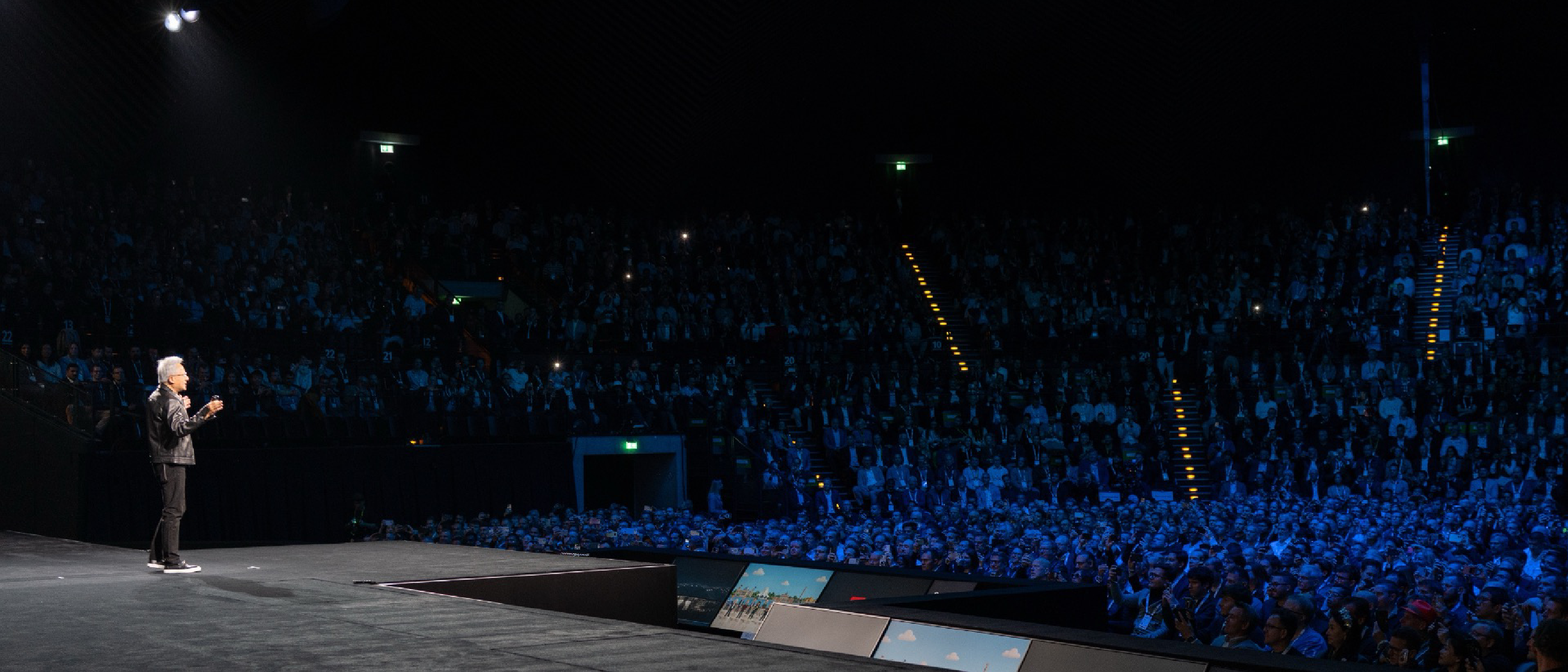
Jensen Huang opened the GTC Berlin 2026 conference with a bold statement: “After decades of advancement in the computer industry, we are now at the beginnings of a new industrial revolution.” The message was clear—NVIDIA is positioning itself as the backbone of a continent‑wide AI economy. By aligning hardware, software, and safety frameworks, the company aims to transition European enterprises from AI consumers to AI producers.
Key takeaways from the opening remarks include:
- Economic Commitment: Nearly $10 billion pledged to nurture the AI ecosystem across Europe, targeting sectors from finance to automotive.
- Collaborative Network: Partnerships with L’Oréal, Revolut, Spotify, Merck, Vodafone, Zara, Porsche, Nestlé, HSBC, and a host of industrial leaders such as Siemens, Dassault Systèmes, T‑Mobile, Nokia, and Mercedes‑Benz.
- Industrial Focus: Emphasis on AI‑driven manufacturing, drug discovery, personalized finance, and autonomous mobility.
These points set the stage for a series of product announcements that collectively address performance, safety, and scalability.
NVIDIA DSX POD: Redefining AI Factory Deployment
The NVIDIA DSX POD is presented as a reference design for the upcoming Vera Rubin AI factories. Built inside modular containers by certified partners, the POD delivers a pre‑validated, plug‑and‑play AI infrastructure.
Technical Highlights
- Rapid Deployment: Installation time shrinks from the traditional six‑month rollout to 14 days, thanks to pre‑integration of compute, storage, and networking.
- Sustainability Gains: Up to 100 % reduction in water consumption for cooling and 30 % lower power draw for equivalent AI output.
- Scalable Architecture: Each POD can be clustered to form a hyperscale AI factory, supporting petaflop‑level workloads without major re‑engineering.
Why It Matters
For European manufacturers, the DSX POD eliminates the lengthy, capital‑intensive build‑out phase that has historically slowed AI adoption. Companies can now spin up AI‑ready environments on demand, accelerating time‑to‑value for use cases such as predictive maintenance, real‑time quality inspection, and large‑scale simulation.
Open Shell Reference Architecture: Securing the AI Agent Era
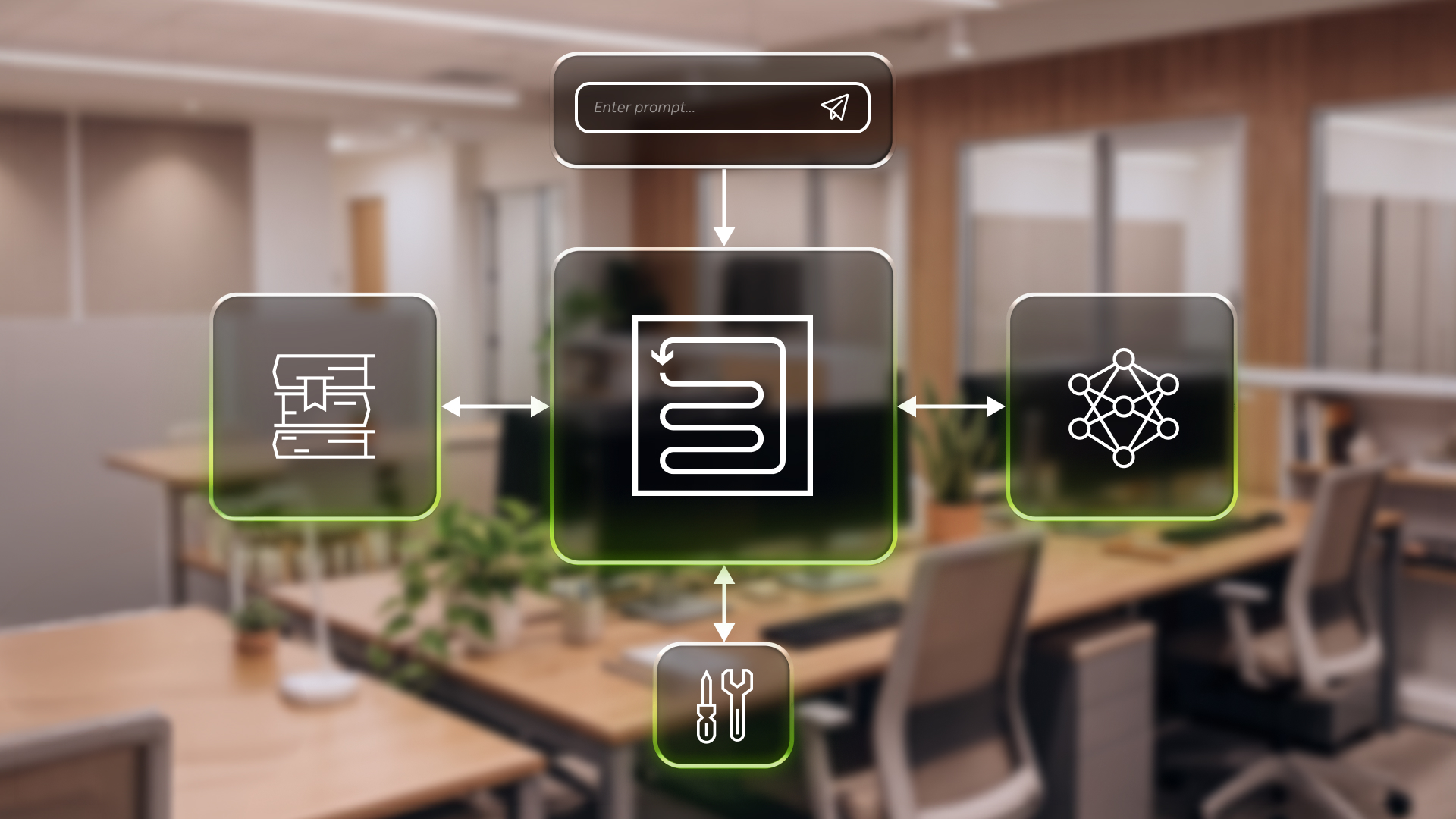
Security is a recurring theme in modern AI deployments, and NVIDIA’s Open Shell aims to provide a robust, policy‑controlled runtime for AI agents. Built on an open‑source kernel‑level sandbox, Open Shell dynamically adjusts privileges, enforces policies, and monitors execution.
Core Features
- Policy‑Controlled Runtime: Administrators define fine‑grained permissions for each agent, limiting access to data and system resources.
- Kernel‑Level Sandbox: Isolates agents from the host OS, mitigating the risk of privilege escalation.
- Dynamic Privilege Adaptation: Agents can request elevated rights for specific tasks; Open Shell evaluates and grants them only when policy criteria are met.
Real‑World Relevance
The architecture directly addresses concerns highlighted in recent AI‑related security incidents, such as the Zoom Annotation Flaw ( Zoom Annotation Flaw Patched After AI‑Prompt Exploit ) and the Zoom Zero‑Day exploit ( Zoom Zero‑Day Exploit: Remote Takeover of iPhone & Mac ). Those cases demonstrated how AI‑driven features can become attack vectors when runtime environments lack strict isolation. Open Shell’s sandboxing model offers a blueprint for enterprises seeking to deploy autonomous agents without exposing critical infrastructure.
NVIDIA’s Open Models: Democratizing Cutting‑Edge AI
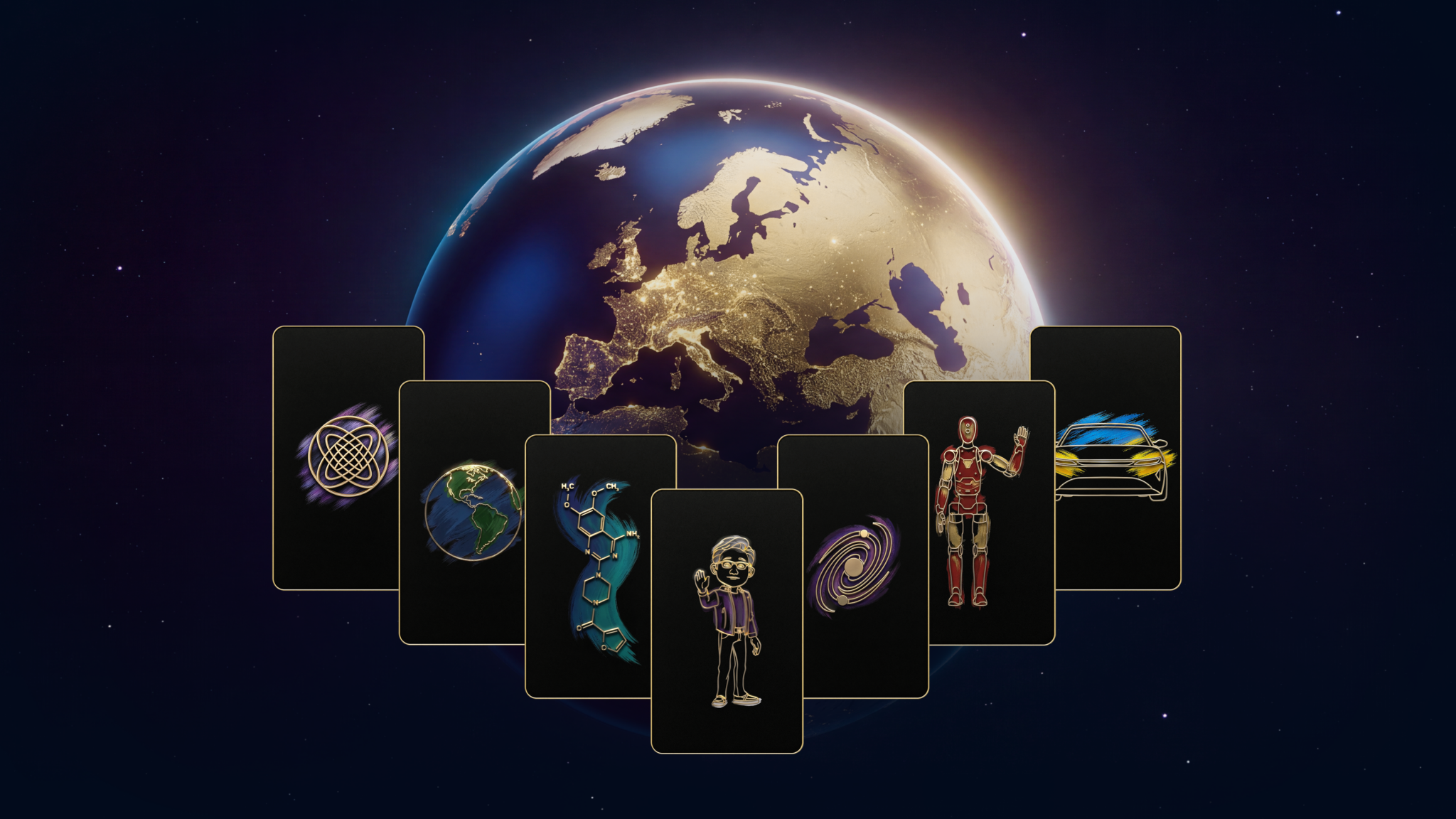
A major announcement was the expansion of NVIDIA’s Open Models portfolio, providing ready‑to‑use foundations for a variety of domains.
| Model | Domain | Primary Capability |
|---|---|---|
| Nemotron | Language | Large‑scale conversational and document understanding |
| Cosmos | World Modeling | Multi‑modal representation of physical environments |
| GR00T | Humanoid Robotics | Control policies for bipedal locomotion |
| Alpamayo | Autonomous Vehicles | End‑to‑end perception and planning |
| Ising | Quantum‑Classical Computing | Hybrid simulations bridging quantum annealing and classical solvers |
| Earth‑2 | Physics AI | High‑fidelity simulation of fluid dynamics and material properties |
These models are openly available, encouraging developers to fine‑tune them on proprietary data. The Agent Knowledge Foundation bundles Nemotron tools for document parsing, query embedding, and reranking, while NVIDIA Kumo models specialize in structured data predictions.
Industry Applications
- Lila Sciences leverages Nemotron for rapid analysis of biomedical literature, accelerating B‑cell lymphoma therapy discovery.
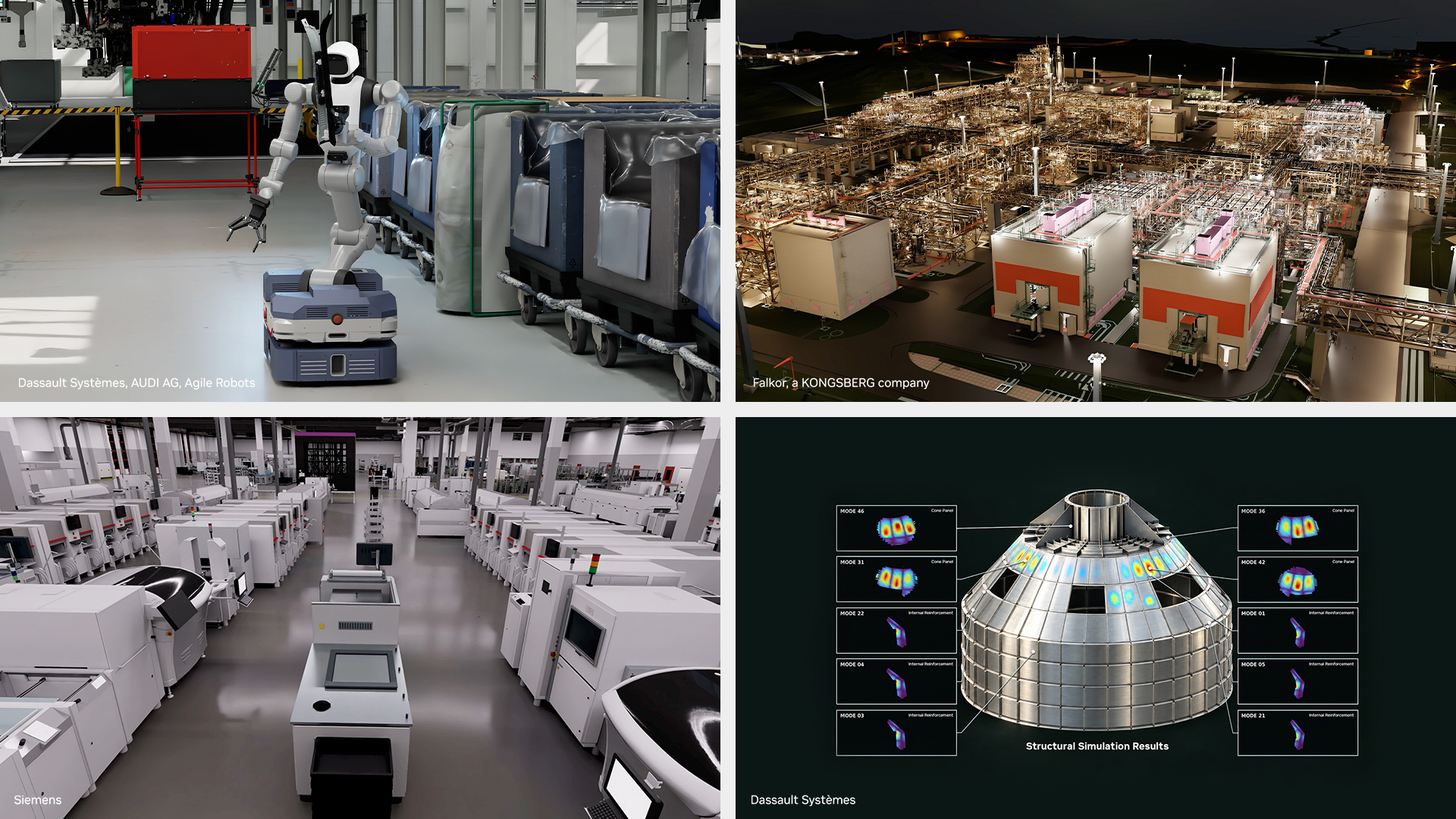
- Siemens integrates Cosmos into its digital twin workflows, enabling real‑time simulation of factory floor dynamics.
- Dassault Systèmes uses Earth‑2 to model aerodynamic properties during vehicle design, cutting simulation time by half.
These examples illustrate how open models lower the barrier for enterprises to embed sophisticated AI without building models from scratch.
Robotics and Autonomous Platforms: From Hyperion to Agile ONE SN
NVIDIA’s robotics announcements signal a concerted push into physical AI.
Hyperion Computing Platform
Designed for autonomous driving and robotaxi fleets, Hyperion supports:
- Scalable Compute: Tailored for high‑throughput perception and decision‑making workloads.
- Vehicle Integration: Already adopted by Lucid, Mercedes‑Benz, Volkswagen, Einride, and Volvo Cars.
- Future‑Proofing: Compatibility with next‑generation electric and autonomous platforms across Europe.
Agile ONE SN Humanoid Robot
Built on the Isaac GR00T model, the Agile ONE SN offers:
- 31 Degrees of Freedom, enabling complex manipulation and locomotion.
- Modular Architecture, allowing researchers to swap sensors, actuators, and software stacks.
- Availability: Expected in the market next year, positioning it as a research‑grade platform for universities and labs.
RTX Spark Laptops
While primarily a consumer product, the RTX Spark line showcases NVIDIA’s vision of local AI. With 1 petaflop of compute and 128 GB of memory, these laptops can run full‑stack AI workloads—ideal for on‑site data scientists, creative professionals, and developers testing edge AI applications.
Industry Impact and Future Outlook
The convergence of high‑performance hardware, secure runtimes, and open models creates a fertile ground for European AI leadership.
Accelerating the AI Economy
- Production Over Consumption: Huang’s mantra—“you don’t want to just be consuming the AI; you want to be producing the AI”—is echoed across the announcements. By providing turnkey infrastructure (DSX POD) and open‑source tools (Open Shell, Open Models), NVIDIA empowers companies to generate proprietary AI assets.
- Cross‑Sector Synergy: From finance (HSBC) to fashion (Zara), the breadth of partners indicates a holistic AI transformation, where data pipelines, model training, and inference are unified under a single ecosystem.
Competitive Landscape
NVIDIA’s integrated approach contrasts with fragmented solutions from cloud‑only providers. The emphasis on on‑premise, low‑latency, and sustainable deployments may sway regulated industries—pharma, automotive, and critical infrastructure—toward NVIDIA’s stack.
Challenges Ahead
- Talent Gap: Scaling AI production requires skilled engineers. NVIDIA’s Agent Toolkit and educational resources will be crucial in upskilling the workforce.
- Regulatory Scrutiny: As AI agents become more autonomous, compliance with emerging EU AI regulations will demand robust auditability—something Open Shell’s policy logs aim to address.
Looking Forward
The roadmap suggests that by 2027, many European enterprises will have at least one DSX POD operational, and the Agile ONE SN will be a staple in robotics research labs. Continued investment in open models and safety frameworks will likely shape the next wave of AI‑driven products, from personalized medicine to fully autonomous logistics networks.
Frequently Asked Questions
**Q1: How does the DSX POD differ from traditional on‑
Q1: How does the DSX POD differ from traditional on‑premise AI clusters?
The DSX POD is a turn‑key, pre‑validated AI factory that ships in a standard shipping container. All compute, storage, networking, and cooling subsystems are integrated, tested, and calibrated by NVIDIA‑certified partners before they ever leave the factory floor. This contrasts with a conventional on‑premise build, where each component is procured, installed, and tuned separately—a process that can take six months or more. The POD’s modular design also enables instant scalability: additional PODs can be linked together with a single network fabric, turning a 10‑petaflop installation into a 100‑petaflop hyperscale plant without major re‑engineering. Finally, the POD’s water‑free evaporative cooling and 30 % lower power envelope give it a sustainability edge that most legacy clusters lack.
Q2: What guarantees does Open Shell provide against malicious AI agents?
Open Shell implements a kernel‑level sandbox that isolates each agent from the host operating system and from other agents. Policy files, written in a human‑readable YAML format, define exactly which data stores, GPUs, and peripheral devices an agent may touch. When an agent requests a privilege escalation—e.g., access to a secure database—Open Shell evaluates the request against the policy in real time and logs the decision to an immutable audit trail. The runtime also injects runtime integrity checks (code‑signature verification, control‑flow integrity) that abort execution if tampering is detected. Together, these mechanisms mitigate the attack surface that plagued earlier AI‑enabled services such as the Zoom annotation exploit.
Q3: Are NVIDIA’s Open Models truly “open” for commercial use?
Yes. All models listed under the Open Models portfolio—Nemotron, Cosmos, GR00T, Alpamayo, Ising, and Earth‑2—are released under the NVIDIA Open Model License (NOML). The license permits unrestricted research, development, and commercial deployment, provided that derivative works credit NVIDIA and do not redistribute the original model weights in a competing AI‑model marketplace. Companies can fine‑tune the models on proprietary datasets, embed them in SaaS offerings, or ship them on‑device (e.g., within RTX Spark laptops) without paying per‑inference royalties.
Q4: What makes the RTX Spark laptop suitable for “local AI” workloads?
Beyond its eye‑catching 1 petaflop of FP16 performance, the RTX Spark integrates the full NVIDIA AI stack—CUDA‑X libraries, TensorRT, and the latest Tensor Core ISA—directly onto the motherboard. The 128 GB of LPDDR5X memory eliminates the need for external GPU enclosures, while the built‑in NVLink bridge enables multi‑GPU scaling in a single chassis. This combination lets data scientists run large‑scale fine‑tuning, real‑time inference, and generative media creation without relying on cloud bandwidth, which is crucial for privacy‑sensitive domains such as medical imaging or financial forecasting.
Q5: When can researchers expect the Agile ONE SN to be available, and what support ecosystem will accompany it?
NVIDIA has slated the Agile ONE SN for general availability in Q3 2027. Early adopters will receive a comprehensive software bundle that includes the Isaac GR00T control stack, pre‑trained locomotion policies, and a ROS‑2‑compatible middleware layer. NVIDIA’s Robotics Cloud will provide over‑the‑air updates, simulation‑in‑the‑loop testing via Omniverse Isaac Sim, and a marketplace for third‑party sensor packages and end‑effector kits. Academic institutions that join the NVIDIA Robotics Partner Program will also gain access to discounted hardware and dedicated technical liaisons.
Closing Thoughts
Jensen Huang’s Berlin keynote painted a vivid picture of an AI‑first Europe where hardware, software, and safety converge in a single, cohesive ecosystem. The DSX POD removes the logistical bottleneck that has long hampered on‑premise AI adoption, while Open Shell offers the confidence needed to let autonomous agents roam freely across corporate networks. By open‑sourcing a suite of domain‑specific models and coupling them with the Agent Toolkit, NVIDIA is handing enterprises the building blocks to produce their own AI rather than merely consume third‑party services.
The robotics announcements—Hyperion for autonomous fleets and Agile ONE SN for research—extend that vision into the physical world, promising a future where digital twins, autonomous vehicles, and humanoid assistants share a common foundation. If the $10 billion European investment plan materializes on schedule, we can expect to see dozens of DSX PODs powering next‑generation factories, a surge of home‑grown AI models emerging from the open‑model repository, and a new wave of safety‑first AI agents running on secure Open Shell runtimes.
In short, the GTC Berlin 2026 announcements signal that the industrial AI revolution is no longer a distant promise—it is being built, container by container, model by model, and robot by robot, right now.
Source: Original Article