


Why Gemini 4 Argon Matters
Google’s decision to skip the slated Gemini 3.5 Pro and ship Gemini 4 Argon directly to its Fairwind Program signals a strategic shift toward models that can handle deep reasoning at scale. In an ecosystem where large language models (LLMs) are increasingly commoditized, the ability to process 1 million tokens in a single context window opens new classes of applications: multi‑document legal review, long‑form scientific analysis, and real‑time codebase audits.
Beyond sheer context length, Argon’s 15 % hallucination rate—the lowest among the leading frontier models—addresses a chronic pain point for enterprises that cannot afford misinformation. The model’s built‑in “misalignment mitigations” also make it resistant to prompt injection attacks, a feature that directly tackles the security concerns highlighted in recent industry reports.
The most headline‑grabbing claim is Argon’s autonomous cybersecurity capability: “Argon can autonomously find, validate, and patch critical software vulnerabilities.” If the claim holds in production, it could redefine how organizations approach vulnerability management, moving from reactive patch cycles to proactive, AI‑driven remediation.
Technical Breakdown
Core Architecture and Token Capacity
- Output Token Limit: 1 000 000 tokens per request, dwarfing GPT‑6 Astra’s 128 000‑token ceiling.
- Hallucination Rate: 15 % (benchmark‑tested by Independent AI benchmarking firm Artificial Analysis).
- Prompt‑Injection Resilience: Integrated safeguards that detect and neutralize malicious prompt patterns before they influence model output.
These specifications suggest a hybrid transformer‑RNN architecture optimized for long‑range dependencies. Google’s internal notes hint at quantum‑assisted inference pathways that accelerate token generation without sacrificing accuracy—a development that parallels the hardware innovations discussed in the HP OmniBook 5 Review: OLED, 42‑Hour Battery, $699 Laptop article, where high‑density memory and specialized AI accelerators are highlighted.
Specialized Capabilities
| Domain | Argon Feature | Real‑World Use Cases |
|---|---|---|
| Finance | Advanced quantitative reasoning, risk modeling | Portfolio stress testing, regulatory compliance |
| Software Engineering | Code generation, refactoring, vulnerability discovery | Automated code reviews, CI/CD pipeline integration |
| Creative Writing | Long‑form narrative continuity, style emulation | Book drafting, marketing copy generation |
| Cybersecurity | Autonomous vulnerability detection & patching | Zero‑day mitigation, continuous security posture monitoring |
| Visual Understanding | Chart analysis, video frame extraction, document series parsing | Financial report analysis, legal discovery, multimedia indexing |
The cybersecurity suite directly competes with dedicated tools like those reviewed in the Mac Antivirus Intego One article, but Argon’s advantage lies in its language‑driven reasoning, allowing it to understand vulnerability descriptions, assess exploitability, and generate patches without human intervention.
Benchmark Performance
- Intelligence Index: Tied with OpenAI’s GPT‑6 Astra.
- CWE‑bench (Cybersecurity): Joint first place with xAI’s Grok 4.7 and GPT‑6 Astra.
- GPT‑6.1 Sol Comparison: Argon scores one point higher, indicating marginal superiority on composite benchmark suites.
These results confirm Google’s claim that Argon is “comparable to other companies’ frontier models, like Open AI’s GPT‑6 Astra and Anthropic’s Opus,” while offering distinct advantages in token length and security posture.
Competitive Landscape
OpenAI’s GPT‑6 Astra & GPT‑6.1 Sol
OpenAI’s flagship GPT‑6 Astra still leads on raw generation speed, but its 54 % hallucination rate and 128 000‑token limit place it at a disadvantage for enterprise‑grade reasoning tasks. GPT‑6.1 Sol, while slightly more refined, shares the same hallucination profile, making Argon a more reliable choice for high‑stakes environments.
Anthropic’s Opus
Anthropic focuses on alignment and safety, delivering a model with a modest hallucination rate but limited context. Opus excels in conversational safety but lacks the autonomous cybersecurity functions that Argon advertises.
xAI’s Grok 4.7
Grok 4.7 matches Argon on the CWE‑bench but does not provide the same token window. Its pricing structure remains undisclosed, making cost‑effectiveness comparisons difficult.
Overall, Argon’s price advantage—60 % lower cost per task compared to GPT‑6 Astra—combined with its technical edge, positions it as a compelling alternative for both government programs (via the Fairwind Program) and commercial enterprises.
Industry Impact
Enterprise Automation
The ability to process a million tokens in a single pass enables end‑to‑end document analysis that previously required multiple model calls and extensive orchestration. Companies can now feed entire contract portfolios, regulatory filings, or source‑code repositories into a single prompt, receiving synthesized insights and actionable recommendations.
Cybersecurity Paradigm Shift
Autonomous vulnerability discovery and patch generation could compress the average time‑to‑patch from weeks to minutes. This aligns with the growing demand for Zero‑Trust architectures where AI acts as an active defender rather than a passive analyst. The security community will need to develop verification frameworks to ensure AI‑generated patches do not introduce regressions—a topic explored in depth in the earlier security‑focused article on Intego One.
Research Acceleration
Google’s internal quantum‑computing research, mentioned as part of Argon’s development, hints at future models that could leverage quantum‑enhanced inference for even larger context windows. Academic labs may gain access through the Fairwind Program, potentially accelerating breakthroughs in fields like drug discovery, climate modeling, and high‑energy physics.
Pricing, Availability, and Adoption Strategy
| Tier | Input Token Cost | Output Token Cost |
|---|---|---|
| Gemini 4 Argon (Intro) | $2 per million | $10 per million |
| GPT‑6 Astra (Reference) | $10 per million | $50 per million |
At $12 per million tokens total, Argon offers a 60 % cost reduction over GPT‑6 Astra, making it financially attractive for high‑volume workloads such as continuous code scanning or large‑scale financial simulations.
Rollout Plan
- Fairwind Program – Initial deployment to governments and trusted partners, ensuring controlled exposure and feedback loops.
- Paid API Access – Expected later in 2027, targeting SaaS providers and AI‑first startups.
- Google AI Ultra Subscription – Bundled with other Google Cloud services for enterprise customers.
- General Availability – Broad release to developers, enterprises, and individual users after stability validation.
The staggered approach mirrors Google’s historic rollout of Gemini 1, allowing the company to refine safety mitigations before mass adoption.
Future Outlook
Google’s roadmap suggests continued investment in long‑context reasoning and security‑first AI. Potential future enhancements could include:
- Dynamic token allocation, where the model automatically expands context based on task complexity.
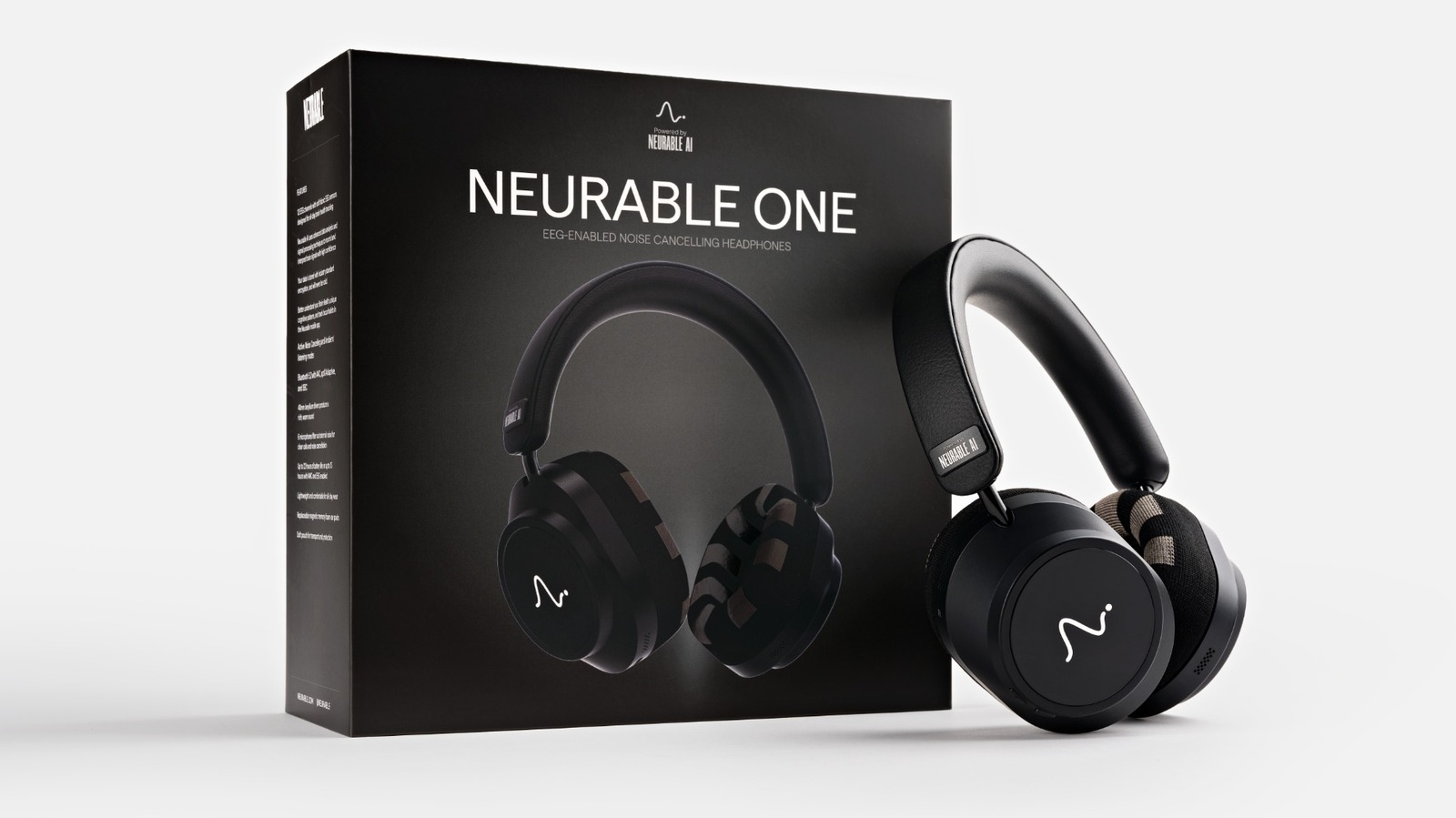
- Hybrid on‑device inference, leveraging edge‑optimized chips similar to those discussed in the Neurable One: Brain‑Scanning Headphones Debut article, enabling low‑latency, privacy‑preserving operations.
- Cross‑modal reasoning, integrating text, image, and video inputs for richer multimodal analysis.
If Argon’s autonomous patching proves reliable, we may see a new class of AI‑driven security operations centers (SOC‑AI) where human analysts focus on strategic decisions while the model handles routine vulnerability remediation.
Frequently Asked Questions
Q1: How does Argon’s hallucination rate compare to other models?
A: At 15 %, Argon’s hallucination rate is markedly lower than GPT‑6 Astra’s 54 % and GPT‑6.1 Sol’s 54 %, positioning it as one of the most reliable LLMs for factual tasks.
Q2: Is Argon available for small developers now?
A: Not yet. The model is currently limited to the Fairwind Program. A public API is slated for release later in 2027.
Q3: Can Argon replace traditional static analysis tools?
A: Argon complements, rather than replaces, static analysis. Its language‑driven reasoning can interpret complex code semantics
…and generate context‑aware remediation suggestions that go beyond pattern‑matching. However, organizations should still pair Argon with traditional static analysis pipelines to validate patches against regression suites and compliance checklists.
Integration Pathways for Enterprises
| Integration Layer | Recommended Approach | Tools & SDKs |
|---|---|---|
| API Gateway | Use Google Cloud Endpoints with OAuth 2.0 scopes specific to the Fairwind Program. | google-cloud-aiplatform Python client, gRPC libraries |
| CI/CD Pipelines | Embed Argon calls as a step in GitHub Actions or GitLab CI to scan pull requests for newly introduced vulnerabilities. | gemini4-argon-scan Docker image (available in Google Artifact Registry) |
| Security Orchestration | Connect Argon outputs to SOAR platforms (e.g., Splunk SOAR, Palo Alto Cortex XSOAR) via webhook adapters for automated ticket creation. | Pre‑built webhook templates in the Google Cloud Marketplace |
| Data Governance | Leverage Google’s Data Catalog tags to label sensitive codebases and enforce Argon’s “misalignment mitigations” only on approved datasets. | Data Catalog API, IAM policies |
By following these patterns, teams can reap the productivity gains of autonomous vulnerability remediation while retaining auditability and control.
Known Limitations and Mitigations
- Context‑Window Saturation – While 1 million tokens is a massive window, extremely large monolithic repositories (e.g., multi‑gigabyte codebases) may still exceed it. Google recommends chunking strategies that preserve logical boundaries (e.g., per‑module or per‑service) and using Argon’s “summarize‑and‑link” mode to stitch results together.
- Patch Validation Overhead – AI‑generated patches must be compiled and run through existing test suites. Argon provides a “confidence score” (0‑100) for each patch; scores below 80 % should trigger manual review.
- Regulatory Compliance – In highly regulated sectors (finance, healthcare), the autonomous nature of Argon may raise questions about liability. Google’s Fairwind Program includes a compliance add‑on that logs every model invocation, input, and output to an immutable Cloud Audit Log for downstream audit trails.
- Resource Consumption – The quantum‑assisted inference path currently runs on Google’s TPU‑v5p pods. Organizations without access to these pods will experience higher latency (≈ 2‑3 seconds per 10 k tokens). Google plans to release a CPU‑optimized variant later in 2027.
Ethical and Safety Considerations
Google has embedded a multi‑layer safety stack into Argon:
- Pre‑prompt Sanitization – Detects adversarial instructions before they reach the model core.
- Post‑generation Fact‑Checking – An optional module that cross‑references generated code snippets against known vulnerability databases (e.g., NVD, CVE‑Details).
- Human‑in‑the‑Loop (HITL) Mode – Allows operators to approve or reject any autonomous action, including patch deployment, with a single click.
These safeguards aim to prevent the model from unintentionally introducing insecure code or violating policy constraints. Nonetheless, Google advises customers to maintain continuous monitoring and to treat Argon as an assistant rather than a fully autonomous agent.
Looking Ahead: What’s Next for Gemini 4 Argon?
Google’s internal roadmap hints at several upgrades slated for the next 12‑18 months:
- Dynamic Context Expansion – A mechanism that transparently swaps in additional TPU memory when a request threatens to exceed the 1 M‑token limit, effectively offering “elastic” context windows.
- Multimodal Fusion – Integration of video‑frame analysis with code‑base inspection, enabling Argon to spot security flaws in UI‑driven applications by correlating front‑end behavior with back‑end source.
- Edge‑Optimized Variant – A lightweight Argon‑Lite model designed for on‑device inference on Google’s Tensor‑Processing Edge chips, targeting use‑cases where data cannot leave the premises (e.g., classified government environments).
- Open‑Source Benchmark Suite – In partnership with Artificial Analysis, Google will release a public benchmark suite covering reasoning, coding, and security tasks, fostering transparent comparison across vendor models.
These developments suggest that Argon is not a one‑off release but the foundation of a longer‑term strategy focused on trustworthy, high‑capacity AI.
Conclusion
Gemini 4 Argon marks a decisive step for Google in the frontier‑model race. By marrying a million‑token context window, a record‑low hallucination rate, and autonomous cybersecurity capabilities, Argon differentiates itself from OpenAI’s GPT‑6 Astra, Anthropic’s Opus, and xAI’s Grok 4.7. Its pricing model—roughly 60 % cheaper per token than the leading competitor—makes it financially viable for large‑scale, mission‑critical workloads.
For enterprises, the immediate value lies in accelerated code review, continuous vulnerability remediation, and deep‑document analysis that were previously impractical with shorter‑context models. However, successful adoption will depend on disciplined integration practices, rigorous validation pipelines, and adherence to the safety controls Google has baked into the platform.
If Argon lives up to its promises, we could witness a shift from reactive security postures to proactive, AI‑driven defense, reshaping how software is built, maintained, and protected across the industry.
Expanded FAQ
Q4: How does Argon handle proprietary or confidential code?
A: Argon respects data residency and confidentiality through Google’s Confidential Computing offering. When enabled, model inference runs inside a secure enclave, and all inputs/outputs are encrypted at rest and in transit. Additionally, the Fairwind Program enforces strict access controls, ensuring only authorized personnel can submit sensitive payloads.
Q5: Can Argon be used for non‑security coding tasks, such as feature generation or refactoring?
A: Absolutely. Argon’s code‑understanding layer supports a wide range of software‑engineering tasks, including automated refactoring, API migration suggestions, and even generating unit tests from natural‑language specifications. Its “confidence score” helps developers gauge the reliability of each suggestion.
Q6: What support does Google provide for organizations transitioning from existing static analysis tools?
A: Google offers a migration toolkit that includes:
- Connector libraries for popular SAST platforms (SonarQube, Checkmarx).
- Sample pipelines demonstrating how to combine Argon’s findings with existing rule‑sets.
- Dedicated technical account managers for Fairwind participants to assist with custom integration and performance tuning.
Q7: Is there a limit on the number of tokens per month for Fairwind participants?
A: The Fairwind Program currently provides a quota of 10 billion input tokens and 5 billion output tokens per month per partner, with the ability to request extensions based on projected workload and compliance reviews.
Q8: How does Argon’s “misalignment mitigation” differ from traditional alignment techniques?
A: Traditional alignment focuses on post‑hoc fine‑tuning to reduce harmful outputs. Argon’s mitigation operates at three stages: (1) pre‑prompt sanitization, (2) real‑time intent verification during token generation, and (3) post‑generation policy enforcement that can veto or rewrite outputs that violate predefined safety rules. This layered approach reduces the attack surface for prompt‑injection and jailbreak attempts.
Source: Original Article