



Why Orbital Compute Matters
The idea of moving high‑performance AI workloads off Earth is no longer a sci‑fi fantasy. By placing Tensor Processing Units (TPUs) in orbit, Google aims to sidestep three fundamental constraints that dominate terrestrial data centers:
- Latency to ground stations – Certain remote‑sensing, real‑time analytics, and edge‑AI scenarios (e.g., disaster response, autonomous maritime navigation) can benefit from sub‑second round‑trip times when the compute node is already in space.
- Power‑density limits – In orbit, solar panels can deliver continuous kilowatt‑scale power without the cooling penalties of dense urban grids. The prototype’s 1 kW requirement is modest compared to the megawatt‑scale power plants that feed today’s hyperscale AI clusters.
- Regulatory and geopolitical flexibility – A distributed orbital compute mesh can operate across multiple jurisdictions, reducing reliance on any single nation’s data‑sovereignty rules.
These advantages dovetail with Google’s broader AI strategy: delivering ever‑larger models while keeping inference latency low. As Travis Beals noted, “The bandwidth and the latency between TPUs really, really matters when you’re trying to run a multi‑rack workload…we’re trying to look ahead to not just what workloads exist today, but where they will be in five years.” The prototype is the first concrete step toward that vision.
Technical Breakdown of the Prototype Satellite
Hardware Platform
The testbed rides on a standard Planet Labs bus, a proven low‑Earth‑orbit (LEO) platform used for Earth‑imaging constellations. By leveraging an off‑the‑shelf chassis, Google reduces integration risk and accelerates the timeline for the first on‑orbit AI inference run.
- TPU Generation – The satellite carries a single Google TPU, the same ASIC family that competes directly with Nvidia’s GPUs in data‑center AI training and inference.
- Power & Thermal Management – The unit draws a continuous 1 kW. To stay within thermal limits, the TPU operates in 15‑minute bursts, allowing radiators and heat‑pipes to dissipate accumulated heat before the next cycle.
- Radiation Hardening – Prior to launch, the chips were exposed to particle‑accelerator radiation. Error rates settled at roughly one‑in‑a‑million for typical inference, a figure Google deems acceptable for a five‑year orbital lifespan.
Operational Mode
The satellite’s software stack schedules inference jobs during the 15‑minute windows, then idles while the power subsystem recharges. This cadence mirrors the “duty‑cycle” approach used by many LEO communications payloads, ensuring that the power budget never exceeds the solar array’s generation capacity.
Connectivity
While the prototype relies on conventional RF links for telemetry, the next‑generation pair of satellites will experiment with laser inter‑satellite links (ISLs). ISLs promise gigabit‑per‑second throughput and microsecond‑scale latency, essential for the parallel processing model envisioned for an 81‑satellite cluster.
Project Suncatcher’s Roadmap and Scaling Challenges
Google’s public roadmap outlines three distinct phases:
| Phase | Timeline | Key Deliverables |
|---|---|---|
| Prototype | Q4 2026 | Single TPU on Planet Labs bus, RF telemetry |
| Demo Constellation | 2027 | Two purpose‑built satellites, laser ISL, multi‑satellite inference |
| Full Moonshot | 2029‑2034 | 81‑satellite formation, multi‑rack AI workloads, continuous 24/7 compute |
From One to Eighty‑One
Scaling from a single node to a
Scaling from a single node to a 81‑satellite mesh is not just a matter of “more of the same.” Google’s engineers have identified three technical pillars that must be solved before the full moonshot can become operational:
| Pillar | Current Status | What Needs to Happen |
|---|---|---|
| Inter‑satellite networking | Laser‑link demo planned for the 2027 demo constellation | Achieve >10 Gbps per link with <1 ms latency, and develop autonomous routing algorithms that can re‑configure on‑the‑fly when a satellite drifts out of formation. |
| Thermal‑power budgeting | 1 kW, 15‑minute duty‑cycle on the prototype | Design next‑gen radiators and deployable solar arrays that can sustain 5–10 kW continuous power, enabling longer inference windows and eventually training‑grade workloads. |
| Radiation resilience | One‑in‑a‑million error rate for inference‑only workloads | Implement error‑detecting/correcting codes and redundant compute lanes to bring the effective error rate down to <10⁻⁹ for training‑scale operations that run for months without ground intervention. |
The Economics of an Orbital Data Center
Google’s internal cost model hinges on a dramatic reduction in launch price per kilogram. The company cites a 20 % annual learning‑curve for SpaceX’s launch cost reductions, projecting a $200 /kg price point by 2035. To hit that sweet spot, Google has run the numbers:
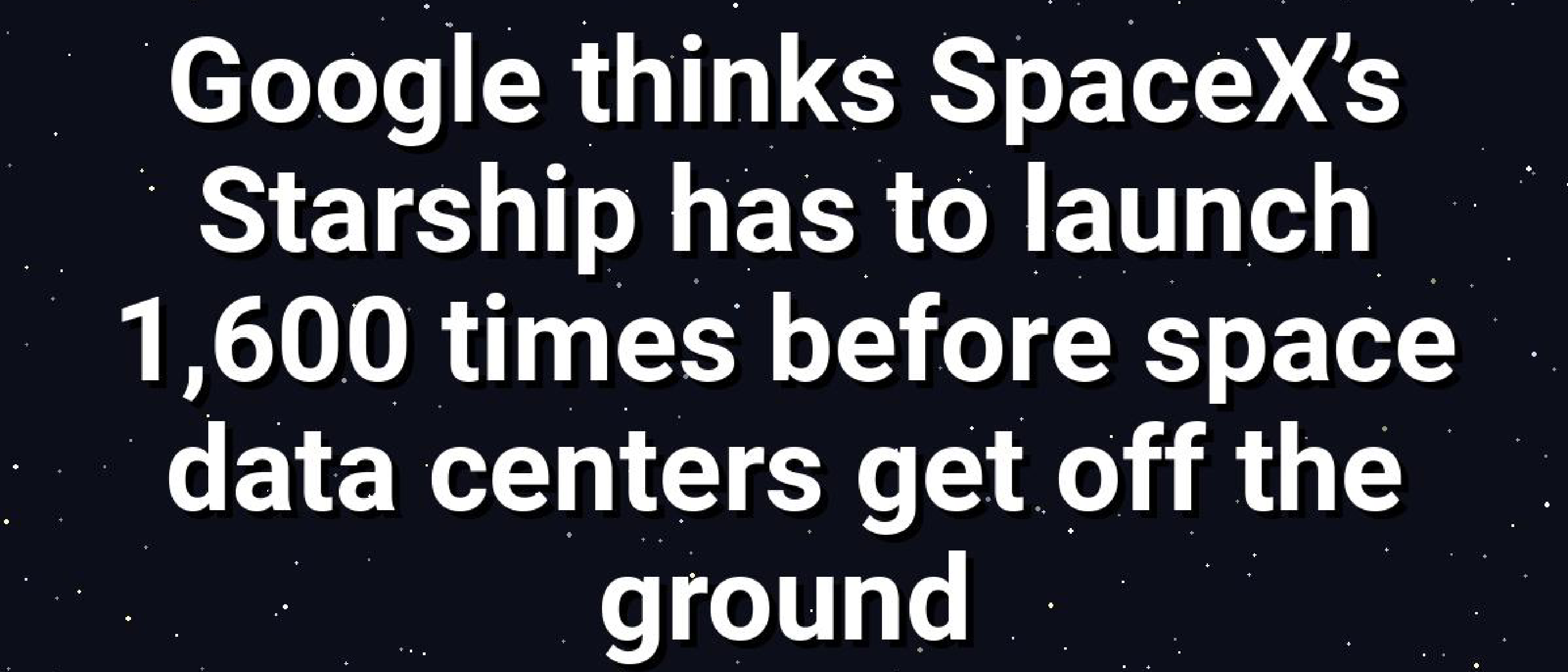
- Payload volume needed: Roughly 370,000 t of total mass must be lofted into orbit over the next decade.
- Launch cadence: Assuming each Starship can carry 200 t to LEO, that translates to ~1,800 launches (≈180 per year).
- Infrastructure: Google is already negotiating bulk launch contracts with SpaceX, and is exploring “ride‑share” opportunities with other payloads (e.g., Satlyt, Cowboy Space) to fill any unused capacity on each flight.
While the headline figure of 1,800 launches sounds staggering, Google points out that the global launch market is on the cusp of a similar scale. By 2030, dozens of commercial launch providers are expected to be operating, and the cumulative launch rate is projected to exceed 200 flights per month worldwide. In that context, Google’s share would be a modest slice of a rapidly expanding ecosystem.
Risks and Mitigations
- Regulatory hurdles: Orbital compute raises questions about spectrum allocation, data‑sovereignty, and export controls. Google is working with the FCC, ITU, and national space agencies to secure dedicated frequency bands for high‑throughput laser links and to establish “data‑jurisdiction” frameworks that respect user privacy while allowing cross‑border compute.
- Space debris: An 81‑satellite formation increases collision risk. Google plans to equip each node with autonomous debris‑avoidance thrusters and to adopt the “end‑of‑life de‑orbit” protocols mandated by the United Nations’ Space Debris Mitigation Guidelines.
- Supply‑chain constraints: The TPU ASICs used in space must be fabricated on a radiation‑hardening process that is currently limited to a handful of foundries. Google is investing in a dedicated “space‑grade” fab line within its existing semiconductor partnerships to ensure a steady supply.
What This Means for the AI Landscape
If successful, orbital compute could become a new tier in the AI hardware stack, sitting between terrestrial data centers and edge devices. The primary value proposition is ultra‑low latency for workloads that ingest data directly from space‑borne sensors (e.g., hyperspectral imaging, synthetic‑aperture radar) and need immediate inference—think real‑time wildfire detection or autonomous maritime traffic management. Moreover, the sheer scale of an 81‑satellite cluster could provide exascale‑level FLOPS without the terrestrial constraints of power‑grid capacity or cooling infrastructure.
From a business perspective, Google could offer “compute‑as‑a‑service” (CaaS) directly from orbit, bundling satellite‑based inference with its existing cloud platform. Enterprises that require global, jurisdiction‑agnostic processing—such as multinational finance firms or global logistics operators—might find orbital compute an attractive complement to their on‑prem and cloud resources.
Looking Ahead: Timeline Recap
| Year | Milestone |
|---|---|
| 2026 Q4 | Launch of the prototype TPU satellite on SpaceX Starship (the subject of this article). |
| 2027 | Deployment of two purpose‑built demo satellites; first laser‑link inter‑satellite communication test. |
| 2029‑2031 | Incremental addition of satellites, reaching a 30‑node testbed to validate large‑scale parallel inference. |
| 2032‑2034 | Full 81‑satellite constellation operational, delivering continuous orbital compute for select partner workloads. |
| 2035+ | Commercialization phase: Google Cloud offers “Orbital AI” services, with pricing competitive to terrestrial GPU/TPU instances, leveraging the projected $200/kg launch cost. |
Conclusion
Google’s first TPU‑powered satellite marks more than a publicity stunt; it is the proof‑of‑concept for a paradigm shift in how we think about compute infrastructure. By moving AI workloads into space, Google hopes to sidestep terrestrial bottlenecks, unlock new latency‑critical applications, and lay the groundwork for a truly global, jurisdiction‑agnostic AI platform. The road ahead is steep—requiring breakthroughs in laser networking, thermal management, and launch economics—but the company’s methodical, phased approach gives the project a realistic chance of reaching orbit‑wide deployment within the next decade.
Frequently Asked Questions
Q: How long will the prototype satellite operate?
A: The initial mission is designed for a five‑year orbital lifespan, matching the expected durability of the radiation‑tested TPU ASICs.
Q: Will the satellite be able to train AI models, or only run inference?
A: The current hardware and error‑rate profile are optimized for inference workloads. Training at scale would require significantly lower error rates and higher sustained power, which Google aims to achieve in later phases.
Q: How does Google handle data security and privacy for compute performed in orbit?
A: All data transmitted to and from the satellite is encrypted end‑to‑end using Google’s Cloud‑native security stack. Additionally, Google is working with regulators to ensure that data residency requirements are met, even when processing occurs outside Earth’s jurisdiction.
Q: What happens to the satellites at the end of their service life?
A: Each node is equipped with a de‑orbit propulsion module that will lower the satellite’s perigee to ensure a controlled re‑entry, complying with the UN’s space‑debris mitigation guidelines.
Q: Could other companies launch their own orbital compute payloads?
A: Yes. Google’s partnership with SpaceX is open‑ended, and the company has expressed interest in co‑hosting third‑party compute payloads on future Starship flights, provided they meet the same radiation‑hardening and thermal specifications.
Q: When can developers expect to access Google’s orbital compute services?
A: Early access is slated for late 2034, once the 81‑satellite constellation reaches operational maturity. Google plans to roll out a beta program for select enterprise partners before a broader public launch in 2035.
Source: Original Article