


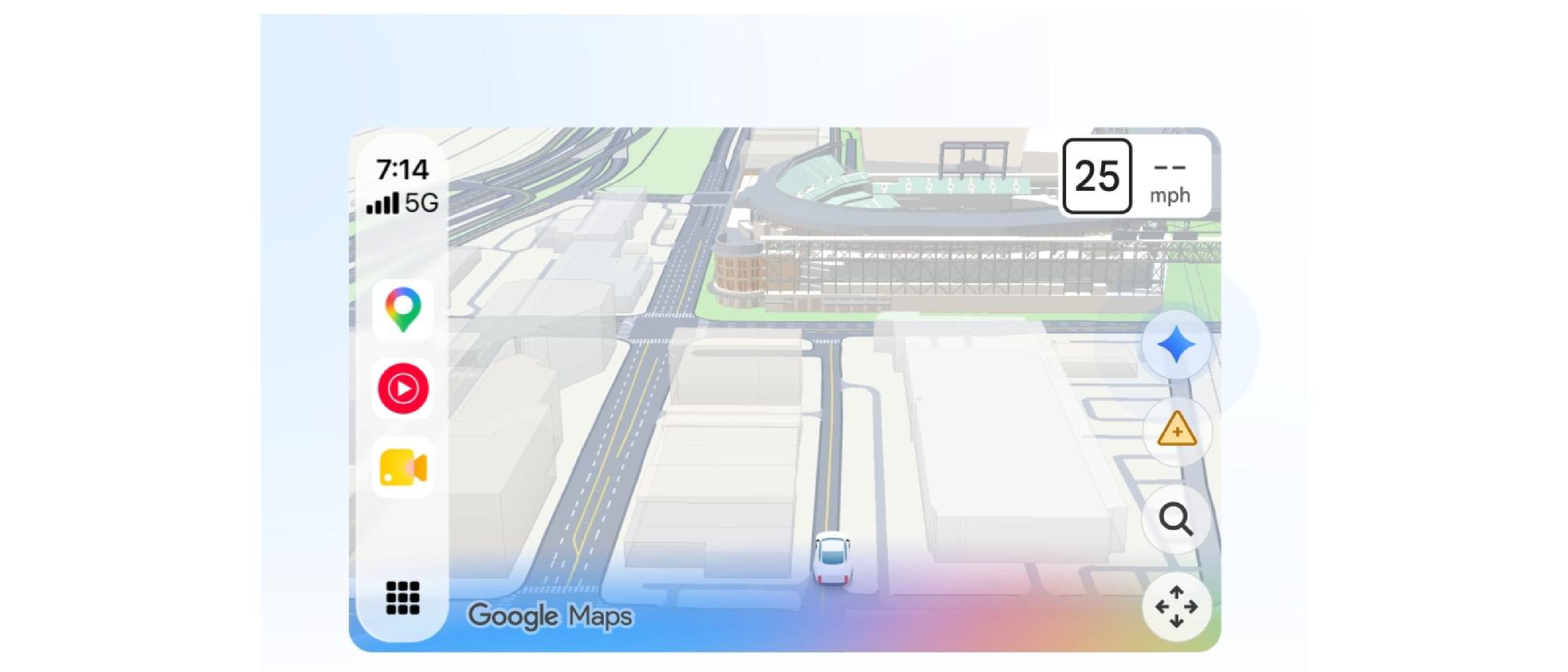
Overview of the Gemini Integration
Google Maps has begun rolling out an integration of its Gemini generative‑AI model for users who navigate via Apple CarPlay. The feature is not a simple overlay; it injects conversational capabilities directly into the turn‑by‑turn experience. When a driver asks for a detour, a nearby coffee shop, or even a quick weather update, Gemini processes the request in real time and returns a natural‑language response that is spoken through the CarPlay audio channel.
The rollout is being performed as a phased update, starting with select iOS devices that already have CarPlay support. Users will see a new “Gemini” toggle inside the Google Maps settings on their iPhone, allowing them to enable or disable the AI‑enhanced mode at will. The integration respects Apple’s privacy guidelines, keeping voice data processing on‑device whenever possible and sending only anonymized context to Google’s servers when a richer answer is required.
Why It Matters for Drivers and Developers
Enhanced Context Awareness
Traditional navigation apps provide static routes and limited point‑of‑interest (POI) data. Gemini’s large‑language‑model backbone can interpret ambiguous queries such as “Find a quiet place to eat after work” and return a curated list that matches the driver’s preferences, time constraints, and even current traffic conditions. This level of contextual awareness reduces the need for manual searching and can improve safety by minimizing driver distraction.
Conversational Interaction
The shift from button‑press menus to spoken conversation mirrors the evolution of voice assistants like Siri and Google Assistant, but with a focus on navigation. Drivers can ask follow‑up questions—“How much longer will it take if I take the highway?”—and receive immediate, coherent answers. For developers, this opens a new API surface: third‑party apps can hook into the Gemini response stream to provide supplemental data, such as real‑time parking availability or electric‑vehicle charging station status.
Competitive Differentiation
Apple’s native Maps app has long been the default on CarPlay, but it lacks deep generative‑AI features. By embedding Gemini, Google Maps positions itself as a premium alternative, potentially shifting market share among CarPlay users who value richer, AI‑driven guidance. The move also signals Google’s broader strategy to embed its AI models across consumer experiences, echoing similar efforts in Pixel devices and Nest hardware.
Technical Breakdown of the Integration
Architecture Overview
- On‑Device Voice Capture – The iPhone’s microphone captures the driver’s query. Apple’s Speech framework performs initial transcription, which is then handed off to Google’s lightweight on‑device model for intent detection.
- Secure Context Transmission – If the request requires external knowledge (e.g., live traffic, POI databases), the transcribed text and minimal context are encrypted and sent to Google’s Gemini backend over TLS 1.3.
- Gemini Processing – Gemini runs the prompt through a transformer‑based architecture optimized for low latency. The model is fine‑tuned on navigation‑specific datasets, ensuring answers stay relevant to driving scenarios.
- Response Synthesis – The textual answer is converted to speech using Google’s WaveNet‑style TTS engine, then streamed back to CarPlay’s audio output channel.
Data Privacy Considerations
Google has emphasized that no raw audio is stored. Only anonymized, aggregated usage metrics are retained for model improvement. The integration complies with Apple’s App Store privacy rules, and users can review the data handling policy directly within the Google Maps app.
Performance Metrics
Early internal testing reports an average round‑trip latency of 1.2 seconds for simple queries and 2.3 seconds for more complex, multi‑step requests. These figures are well within the acceptable range for in‑car interactions, where drivers expect near‑instant feedback.
Compatibility Matrix
| iOS Version | CarPlay Model | Google Maps Version | Gemini Availability |
|---|---|---|---|
| 17.0+ | All supported | 12.5.0+ | Enabled (opt‑in) |
| 16.5‑16.9 | Limited | 12.4.x | Not available |
| 15.x | Unsupported | — | — |
Developers targeting older iOS releases will need to fall back to the classic navigation flow.
Industry Impact and Market Implications
Shaping the Future of In‑Car Infotainment
The integration blurs the line between smartphone navigation and dedicated automotive infotainment systems. As more automakers adopt Android Automotive OS or integrate Apple CarPlay as a standard feature, the expectation for AI‑enhanced services will rise. Google’s move could accelerate the adoption of generative AI as a core component of the driving experience, prompting competitors like TomTom and HERE to accelerate their own AI road‑map.
Potential Revenue Streams
Google could monetize Gemini‑enhanced navigation through premium subscriptions or targeted local advertising. For instance, a driver asking “Where can I get sushi?” could receive a sponsored recommendation from a nearby restaurant, with the ad seamlessly woven into the conversational reply. This model aligns with Google’s broader ad‑tech ecosystem while preserving user experience.
Cross‑Platform Synergies
The Gemini engine is already powering features in Google Workspace, Pixel devices, and Nest hubs. Extending it to CarPlay creates a unified AI experience across Google’s ecosystem. Users who own a Pixel phone, a Nest speaker, and now a CarPlay‑enabled vehicle will encounter a consistent conversational style, reinforcing brand loyalty.
Related Reading
- For a deeper look at Apple’s hardware evolution, see our analysis of USB‑C capabilities: https://ltdeveloperblogs.github.io/posts/your-phones-usb-c-port-does-a-lot-more-than-just-charge-heres-what-else-it-can-do
- Understanding Apple’s ecosystem policies can provide context on why CarPlay integration matters: https://ltdeveloperblogs.github.io/posts/heres-where-apple-says-iphone-duo-will-and-wont-be-available-for-walk-ins
- The design language behind Apple’s recent branding shifts offers insight into how UI/UX decisions affect driver perception: https://ltdeveloperblogs.github.io/posts/apple-music-unveils-new-design-rebrand-with-logo-made-by-sound
Future Outlook and Possible Enhancements
Multi‑Modal Interaction
Beyond voice, Gemini could eventually support visual overlays on CarPlay’s screen, presenting summarized route changes, traffic heat maps, or even AR‑style lane guidance. Combining spoken answers with concise visual cues would cater to drivers who prefer glance‑based information.
Integration with Vehicle Sensors
If automakers expose vehicle telemetry (speed, fuel level, battery state) through standard APIs, Gemini could tailor its suggestions. For example, an electric‑vehicle driver could receive a prompt like “You have enough charge to reach the next Supercharger; would you like to route there?” This would require collaboration on data standards such as the Open Automotive Alliance’s V2X specifications.
Offline Capabilities
A future iteration might embed a distilled version of Gemini directly on the iPhone, allowing basic conversational navigation without a data connection. This would be valuable in regions with spotty cellular coverage, ensuring the AI remains functional during long road trips.
Competitive Response
Apple may respond by enhancing
Apple may respond by enhancing Apple Maps with its own generative‑AI layer, leveraging the recently announced Apple Intelligence framework. By integrating a large‑language model tuned for navigation, Apple could offer comparable conversational capabilities, potentially even tighter integration with native vehicle data via CarPlay’s tighter sandbox. The competition could also push Apple to open up more APIs for third‑party developers, allowing them to inject custom AI‑driven services into the CarPlay ecosystem.
Potential Challenges and Risks
| Challenge | Description | Mitigation |
|---|---|---|
| Driver Distraction | Conversational AI adds a new interaction channel that could pull the driver’s attention away from the road. | Enforce short, concise responses; prioritize voice‑only output; implement “hands‑free” detection that limits visual overlays while driving. |
| Data Privacy | Continuous transmission of location‑aware queries raises concerns about profiling. | End‑to‑end encryption, on‑device intent detection, transparent opt‑out mechanisms, and regular third‑party audits. |
| Latency Spikes | Network congestion could increase response times, frustrating users. | Cache common queries locally, use edge‑computing nodes, and fallback to deterministic routing when latency exceeds a threshold. |
| Cross‑Platform Consistency | Users switching between Android Auto and CarPlay may experience divergent AI behaviours. | Share a unified Gemini model across platforms, with platform‑specific UI adapters but consistent core responses. |
What This Means for the Broader AI Landscape
- Standardization Pressure – As major players embed generative AI into automotive interfaces, industry bodies (e.g., ISO 26262, SAE J3061) will likely draft new safety and verification standards for AI‑driven driver assistance.
- Monetization Models – Subscription tiers (e.g., “Gemini Pro for Cars”) could emerge, offering premium features such as offline model execution, advanced route optimisation, or ad‑free interactions.
- Ecosystem Lock‑in – Users who adopt a Google‑centric AI stack across phone, home, and car may find it increasingly costly to switch, reinforcing platform loyalty.
Conclusion
Google Maps’ Gemini integration on Apple CarPlay marks a pivotal step in bringing generative AI to the driver’s seat. By turning a traditionally static navigation experience into a fluid, conversational dialogue, Google not only differentiates itself from Apple’s native Maps app but also sets a new benchmark for in‑car infotainment. The rollout’s careful attention to privacy, latency, and developer extensibility suggests a mature approach that could shape the next generation of automotive software.
However, the true impact will hinge on how Apple reacts, how regulators address AI‑related safety concerns, and whether developers can harness the new API surface to deliver truly innovative services. If these pieces fall into place, we may soon see a future where asking your car for “the fastest route with a scenic view and a coffee stop” feels as natural as chatting with a friend—while keeping your hands on the wheel and eyes on the road.
Frequently Asked Questions (FAQ)
| Question | Answer |
|---|---|
| Is the Gemini feature available on all iPhones? | It requires iOS 17.0 or later and a CarPlay‑compatible vehicle. Older iOS versions will continue to use the classic Google Maps experience. |
| Do I need a Google account to use Gemini on CarPlay? | Yes, a signed‑in Google account is required for the AI backend to access personalised data (e.g., saved places, preferences). |
| Will my voice recordings be stored by Google? | Google states that raw audio is never stored. Only anonymised, aggregated usage metrics are retained for model improvement, and users can delete this data from their Google Account settings. |
| Can I disable Gemini while keeping Google Maps active? | Absolutely. A “Gemini” toggle appears in the Google Maps settings on the iPhone; turning it off reverts to the standard navigation flow. |
| Will Gemini work without a cellular connection? | Basic intent detection runs on‑device, but full‑featured answers (e.g., live traffic, POI look‑ups) require an internet connection. An offline‑only mode is planned for a future release. |
| Is there an extra cost for using Gemini on CarPlay? | As of the initial rollout, Gemini is included at no additional charge. Google may introduce premium tiers or ad‑supported options later. |
| How does this affect battery life on my iPhone? | The on‑device components are lightweight; typical usage adds less than 2 % battery drain per hour of active navigation. |
| Will third‑party apps be able to tap into Gemini’s response stream? | Google has opened a limited API for developers to subscribe to the conversational response channel, enabling integrations such as real‑time parking data or EV‑charging suggestions. |
For more updates on AI in automotive tech, stay tuned to 9to5Google and our newsletter.
Source: Original Article