


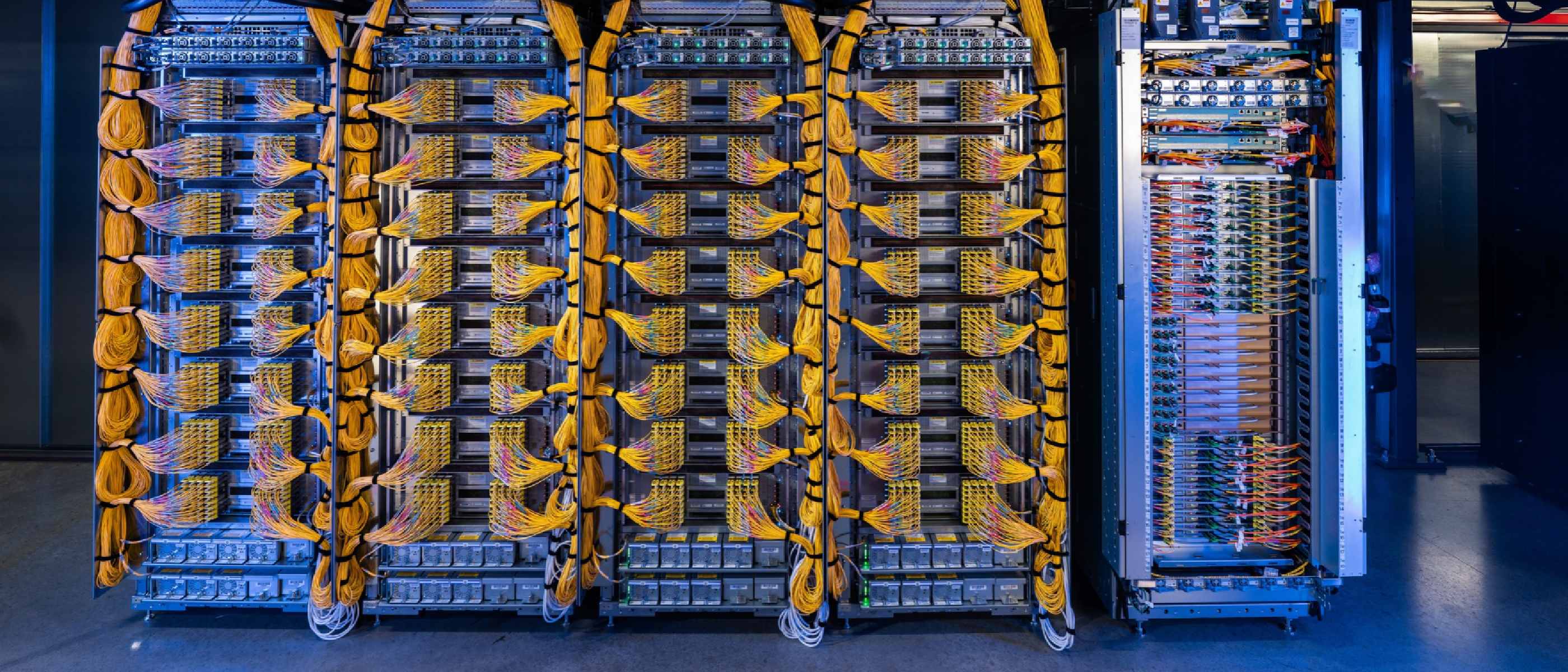
Overview of the A5X Vera Rubin Offering
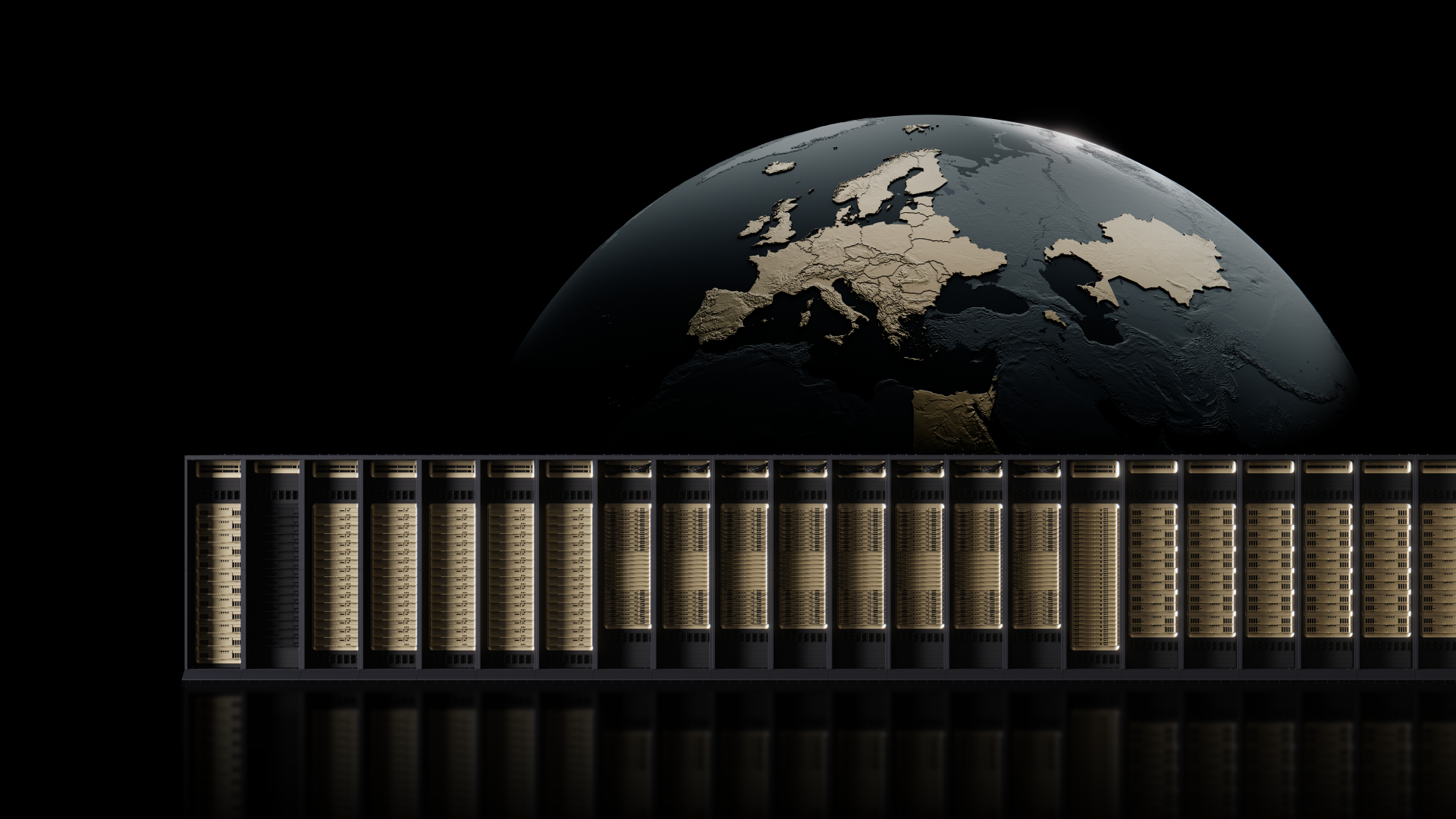
Google Cloud and NVIDIA have moved from preview to general availability for the A5X instances, the first production‑grade servers built around NVIDIA’s Vera Rubin architecture. The announcement, slated for release next month, also outlines a roadmap that will eventually extend the service to European regions.
At its core, the A5X combines:
- NVIDIA Vera Rubin NVL72 CPUs and GPUs with a tightly coupled high‑bandwidth fabric.
- NVIDIA Connect X‑9 Super NICs for ultra‑low‑latency networking.
- Google Cloud Virgo Network that stitches the compute nodes into a unified AI hypercomputer.
- Fourth‑generation advanced liquid‑cooling that keeps power density high while staying energy‑efficient.
The result is a platform purpose‑built for agentic inference and large‑scale reinforcement learning (RL) workloads that require rapid feedback loops between experience generation and model training.
Technical Breakdown of the A5X Stack
1. Vera Rubin NVL72 – The Compute Engine
The NVL72 is a hybrid CPU‑GPU die that merges a high‑performance Vera CPU with Rubin GPUs on the same package. This integration eliminates the PCIe bottleneck that traditionally separates CPU and GPU memory domains. Key specs include:
- Up to 96 Tensor Cores per GPU, optimized for mixed‑precision matrix operations.
- NVLink‑style bandwidth exceeding 1 TB/s between the CPU and GPU, and between GPUs in the same rack.
- Unified memory pool that allows the RL agent to stream experience data directly into the training pipeline without staging copies.
2. Connect X‑9 Super NICs & Virgo Network
The Connect X‑9 is a 400 Gbps Ethernet NIC that leverages NVIDIA’s proprietary networking stack. When paired with Google’s Virgo fabric, the A5X can sustain:
- Sub‑microsecond inter‑node latency, crucial for synchronizing policy gradients across thousands of parallel agents.
- Deterministic bandwidth allocation, ensuring that data‑intensive replay buffers never become a choke point.
3. Fourth‑Generation Liquid‑Cooling
Heat removal has always been a limiting factor for dense AI clusters. Google’s latest liquid‑cooling loop:
- Maintains chip temperatures below 70 °C under sustained 90 % utilization.
- Reduces PUE (Power Usage Effectiveness) to 1.08, a notable improvement over traditional air‑cooled racks.
- Supports dynamic coolant flow, scaling cooling capacity in real time as workloads fluctuate.
4. Confidential Computing Integration
Beyond raw performance, the A5X family inherits NVIDIA’s Confidential Computing capabilities. While the A5X itself is a public‑cloud offering, NVIDIA’s G4 VMs—powered by RTX PRO 6000 Blackwell GPUs—provide:
- Encrypted memory regions that protect model weights and inference data from insider threats.
- Attestation mechanisms that verify the integrity of the execution environment before workloads start.
These features are already being leveraged by customers such as Vertebrae, Polaris Cloud, and Confidential Core AI for privacy‑sensitive conversational agents and policy‑governed enterprise intelligence.
Why It Matters: Impact on Reinforcement Learning and AI Research
Reinforcement learning has historically been constrained by the “experience‑generation loop”: agents must collect data, send it to a trainer, receive updated policies, and repeat. The latency and bandwidth of that loop dictate how quickly an agent can improve.
Accelerated Learning Cycles
- Tight CPU‑GPU coupling means the same silicon can both simulate environments (via the Vera CPU) and train policies (via the Rubin GPUs) without moving data across a PCIe bus.
- High‑bandwidth networking ensures that multi‑node clusters can share experience buffers in near‑real time, enabling distributed RL at petaflop‑scale.
Democratization of “Superlearners”
David Silver of Ineffable Intelligence—the first A5X customer—states: “We’re building superlearners that continually improve through their own experience… Vera Rubin’s combination of compute performance and high‑bandwidth connectivity… lets us push the scale and ambition of our reinforcement learning research further.”
With A5X, organizations no longer need to assemble bespoke on‑prem clusters; they can spin up a single instance that delivers the same throughput previously achievable only with dozens of nodes.
Confidential AI at Scale
The integration of confidential computing means that sensitive policy data (e.g., financial trading strategies, medical decision models) can be trained in the same high‑performance environment without exposing raw data to the cloud provider. This opens doors for regulated industries to adopt RL
at scale while preserving data privacy.
Real‑World Deployments on A5X
Ineffable Intelligence – Superlearner Research Platform
Ineffable Intelligence has been the flagship early adopter, using a single A5X instance to train agents that learn to play complex strategy games and to optimize logistics networks. By co‑locating the simulation environment on the Vera CPU and the training loop on the Rubin GPUs, the team reports a 3.5× reduction in end‑to‑end training time compared with their previous 32‑node GPU cluster.
WPP – Creative‑Agent Reference Architecture
WPP demonstrated a creative‑agent pipeline that generates, evaluates, and iterates on advertising concepts. The workload, which previously required a multi‑node G4‑based cluster to achieve acceptable latency, now runs on a single A5X instance, delivering single‑instance throughput equivalent to a 12‑node deployment. This translates into lower operational costs and faster time‑to‑market for campaign variants.
Vertebrae, Polaris Cloud, and Confidential Core AI – Confidential G4 Workloads
These customers are leveraging the G4 VMs with RTX PRO 6000 Blackwell GPUs for workloads that demand memory encryption and attestation. Use cases include:
- Vertebrae: Secure conversational agents that handle personally identifiable information (PII) for customer support.
- Polaris Cloud: Policy‑governed AI that enforces compliance rules during inference, ensuring that outputs stay within regulatory bounds.
- Confidential Core AI: End‑to‑end encrypted pipelines for training proprietary financial models, where even the cloud provider cannot view the raw data.
Roadmap, Availability, and Pricing
| Region | Availability | Expected Launch |
|---|---|---|
| United States (us‑central1, us‑west2) | GA (General Availability) | November 2026 |
| Europe (europe‑west1, europe‑north1) | GA – announced | Q1 2027 |
| Asia‑Pacific (asia‑east1, australia‑south1) | Preview | Mid‑2027 |
Pricing is published on the Google Cloud Marketplace and follows a pay‑as‑you‑go model, with discounts for sustained‑use and committed‑use contracts. As of the announcement:
- A5X (NVL72 + Connect X‑9): $12.45 per hour for the base configuration (96 Tensor Cores, 1 TB/s NVLink bandwidth).
- G4 Confidential VM (RTX PRO 6000): $5.80 per hour for the standard 48 GB GPU memory tier.
Customers can also request capacity reservations to guarantee availability for large‑scale RL experiments that require weeks of continuous compute.
Implications for the AI Ecosystem
The convergence of high‑performance compute, ultra‑low‑latency networking, and confidential computing in a single, cloud‑native service marks a pivotal shift:
- Lower Barrier to Entry – Start‑ups and research labs can now access petaflop‑scale RL infrastructure without the capital expense of building custom data centers.
- Accelerated Innovation Cycles – Faster experience‑generation loops shrink the iteration period from months to days, enabling rapid prototyping of novel agent architectures.
- Regulatory Compliance at Scale – Confidential computing ensures that sensitive datasets remain encrypted throughout training, satisfying GDPR, HIPAA, and other stringent data‑privacy mandates.
- Energy Efficiency – The fourth‑generation liquid‑cooling system reduces PUE to 1.08, aligning large‑scale AI workloads with corporate sustainability goals.
Collectively, these factors are expected to broaden the adoption of reinforcement learning across industries such as autonomous systems, finance, healthcare, and digital advertising.
Frequently Asked Questions (FAQ)
Q1: How does the A5X differ from the earlier A4X Max instances?
A: A5X introduces the NVL72 hybrid CPU‑GPU die, which provides a unified memory space and dramatically higher intra‑node bandwidth. The A4X Max relied on separate CPU and GPU sockets connected via PCIe, resulting in higher latency for data movement.
Q2: Can I run mixed workloads (e.g., inference and training) on the same A5X instance?
A: Yes. The architecture is designed for simultaneous execution of inference, training, and environment simulation, allowing you to consolidate the entire RL pipeline onto a single node.
Q3: What security guarantees does NVIDIA Confidential Computing provide?
A: It offers hardware‑based memory encryption (via NVIDIA’s DP‑TEE) and remote attestation, ensuring that only trusted code can access plaintext data. The encrypted memory region is isolated from the hypervisor and cloud‑provider administrators.
Q4: Is the liquid‑cooling system user‑maintainable?
A: The cooling loop is fully managed by Google Cloud’s infrastructure team. Users do not need to perform any maintenance; the system automatically adjusts coolant flow based on real‑time thermal metrics.
Q5: How can I estimate the cost of a large‑scale RL experiment on A5X?
A: Google Cloud provides a Cost Calculator that lets you input the number of A5X instances, expected runtime, and any sustained‑use discounts. Additionally, you can request a custom quote for dedicated capacity reservations.
Q6: Will there be support for other NVIDIA AI chips (e.g., Hopper, Ada) on the same platform?
A: The current GA offering focuses on the Vera Rubin NVL72. However, Google Cloud’s roadmap includes plans to integrate Hopper‑based GPUs for inference‑only workloads and Ada‑based accelerators for edge‑centric AI later in 2027.
Conclusion
The launch of A5X Vera Rubin instances signals a maturation of cloud‑based AI infrastructure, where the once‑exclusive realm of on‑prem, purpose‑built supercomputers is now accessible through a managed service. By unifying compute, networking, cooling, and security, Google Cloud and NVIDIA have created a platform that not only accelerates reinforcement learning research but also makes it secure, cost‑effective, and environmentally responsible. As more enterprises begin to experiment with “superlearners,” we can expect a wave of breakthroughs that push AI from narrow, task‑specific models toward truly autonomous, experience‑driven agents.
Source: Original Article