





Overview: The Rise of Screenless Wearables
Screenless fitness trackers have moved from niche concepts to mainstream contenders, promising unobtrusive data collection without the distraction of a display. Garmin’s Cirqa and Google’s Fitbit Air are the latest attempts to capture the “Whoop‑style” market at more approachable price points. Both devices rely on a companion smartphone for GPS, heart‑rate monitoring, and data sync, but they diverge sharply in hardware heft, feature depth, and subscription strategy. The central question for consumers is simple: does the extra $100 for the Cirqa translate into measurable value for serious athletes, or can beginners achieve the same health insights with the Air?
Technical Specs Comparison
| Feature | Garmin Cirqa | Fitbit Air |
|---|---|---|
| Price | $200 | $100 |
| Battery Life | Up to 10 days | Up to 7 days |
| Charge Time | ~90 min (full) | ~90 min (full) – 5 min gives 1 day* |
| Weight | 20.7 g (standard) / 21.2 g (L‑XL) | 12 g |
| Dimensions | 27 × 47 × 9 mm | 17 × 34.9 × 8.3 mm |
| Water Resistance | 50 m (light swimming) | 50 m (light swimming) |
| GPS | Phone‑connected only | Phone‑connected only |
| Manual Workout Button | Yes (side button) | No |
| Automatic Workout Detection | Yes | Yes |
| Tracked Exercises | 80+ distinct activities | Core cardio & strength |
| Core Metrics | Training |
Status**, Body Battery, Training Readiness, Fitness Age | Cardio Load, Daily Readiness Score | | Subscription Cost | $7/month (Garmin Connect+) | $10/month (Google Health Premium) | | Subscription Perks | Guided breathwork, custom workout plans | Workout plans, mindfulness sessions, detailed sleep tracking, AI Health Coach (Gemini) |
The Cirqa’s larger dimensions and weight stem from its more robust sensor suite, which includes an Elevate Gen 5 optical heart-rate monitor and a SpO₂ sensor for blood-oxygen tracking. The Fitbit Air, by contrast, uses a single-stream PPG sensor optimized for minimalism, sacrificing some granularity for a featherlight profile. Both devices eschew built-in GPS, relying instead on a paired smartphone for outdoor activity tracking—a trade-off that keeps costs down but may frustrate runners who prefer standalone operation.
Feature Deep Dive: What $100 Buys You
Workout Tracking & Precision
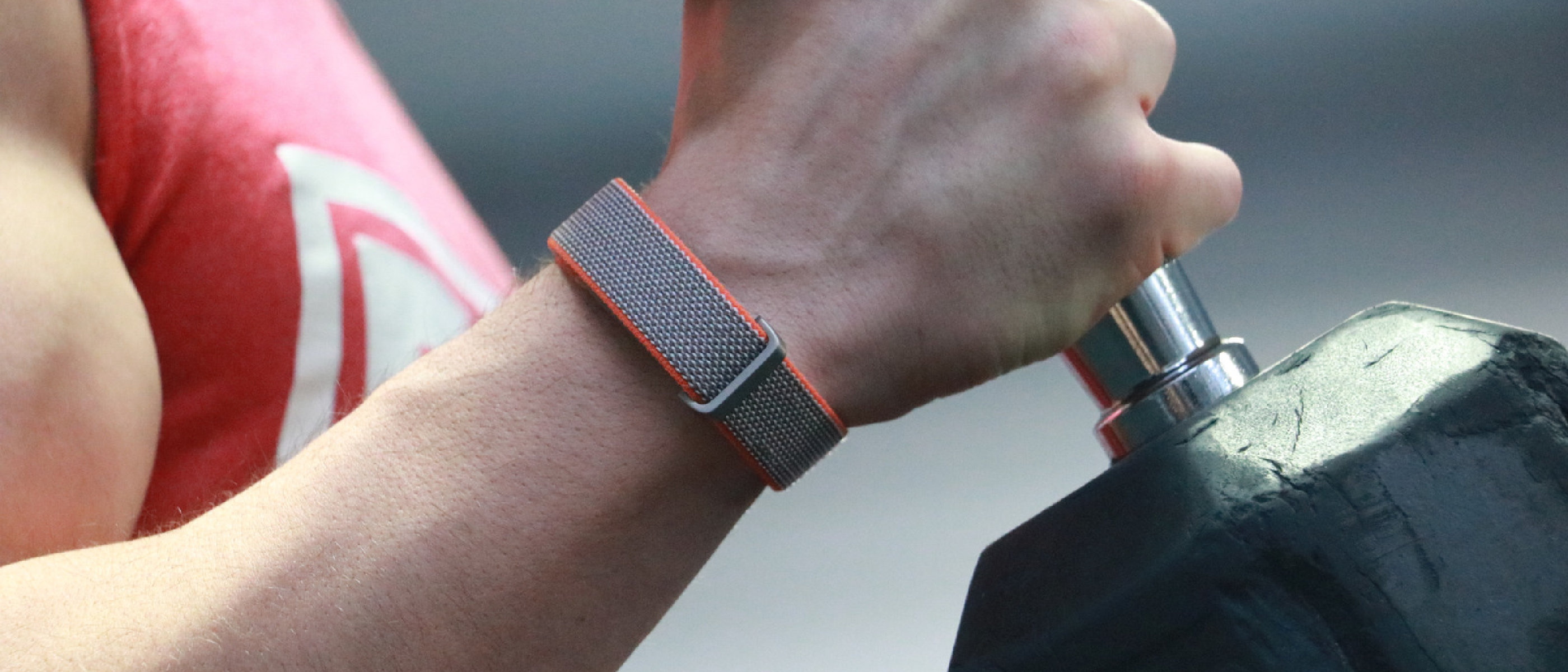
The Cirqa’s manual workout button is a standout feature for athletes who demand precise logging. A single press on the side button starts a timer, eliminating the guesswork of automatic detection and ensuring every rep, lap, or interval is captured. The Fitbit Air lacks this hardware control, relying solely on motion-based auto-detection, which can misclassify activities (e.g., mistaking a grocery run for a walk) or miss short, high-intensity sessions entirely.
Garmin’s 80+ trackable exercises include niche activities like stand-up paddleboarding, rowing machine, and even tactical workouts, catering to users with specialized routines. The Fitbit Air, while competent for cardio and strength training, offers a more limited selection, focusing on core fitness metrics rather than granular sport-specific data.
Health & Recovery Insights
Both devices prioritize recovery and readiness, but their approaches differ. The Cirqa’s Training Readiness score aggregates sleep quality, HRV, stress, and recent activity to generate a daily exertion recommendation (e.g., “Push hard” or “Take it easy”). This metric is included without a subscription, making it accessible to all users. The Fitbit Air’s Daily Readiness Score serves a similar purpose but is locked behind Google Health Premium, requiring a $10/month commitment for full functionality.
Garmin’s Body Battery—a proprietary metric predicting energy levels based on stress, sleep, and activity—is another subscription-free perk. The Fitbit Air offers Cardio Load, a weekly calculation of cardiovascular strain, but again, this is gated behind the premium tier. For users unwilling to pay ongoing fees, the Cirqa delivers more actionable insights out of the box.
Sleep Tracking & AI Coaching
Sleep analysis is a battleground for both devices. The Cirqa provides detailed sleep stages (light, deep, REM), sleep score, and respiration rate without a subscription. The Fitbit Air matches these basics but reserves advanced sleep insights (e.g., sleep animal archetypes, personalized tips) for premium subscribers.
Where the Fitbit Air leans heavily into AI-driven coaching, the Cirqa adopts a more data-centric approach. Google’s Gemini-powered Health Coach offers holistic wellness guidance, including nutrition advice, stress management, and even mental health check-ins. While innovative, this feature may alienate users who prefer raw data over algorithmic interpretations. Garmin’s guided breathwork and custom workout plans (via Connect+) are less intrusive, focusing on structured training rather than lifestyle overhauls.
Long-Term Cost Analysis
At first glance, the Fitbit Air’s $100 price tag seems like a steal compared to the Cirqa’s $200 MSRP. However, the subscription costs flip the script over time:
| Device | Upfront Cost | 3-Year Subscription Cost | Total 3-Year Cost |
|---|---|---|---|
| Fitbit Air | $100 | $360 ($10/month × 36) | $460 |
| Garmin Cirqa | $200 | $252 ($7/month × 36) | $452 |
After three years, the Cirqa becomes the cheaper option—assuming users maintain their subscriptions. For those who opt out of premium tiers, the Cirqa’s $200 upfront cost is the only expense, while the Fitbit Air’s free tier offers limited functionality, pushing users toward the paid plan.
Who Should Buy Which?
Choose the Garmin Cirqa If You:
- Are a serious athlete or hardcore fitness enthusiast who needs precise workout logging and advanced recovery metrics.
- Prefer subscription-free access to most features, including Training Readiness and Body Battery.
- Want 80+ trackable activities and manual workout control for specialized training.
- Don’t mind a slightly bulkier device for better sensor accuracy.
Choose the Fitbit Air If You:
- Are a beginner or casual user looking for a minimalist, lightweight tracker.
- Value AI-driven coaching (e.g., Gemini Health Coach) and holistic wellness insights.
- Prefer Google’s ecosystem (e.g., integration with Google Fit, Nest, or Pixel devices).
- Want quick charging (5 minutes = 1 day of battery) and a lower upfront cost.
The Whoop Wildcard
Both the Cirqa and Air position themselves as Whoop alternatives, but the comparison isn’t apples-to-apples. Whoop’s free hardware + mandatory subscription model ($199/year) makes it more expensive long-term than either device. However, Whoop’s focus on recovery and strain—paired with its sleek, screenless design—still appeals to elite athletes and biohackers. For most users, the Cirqa or Air will suffice, but Whoop remains the gold standard for data-obsessed professionals.
Verdict: Value vs. Versatility
The $100 price gap between the Garmin Cirqa and Fitbit Air isn’t just about hardware—it’s about philosophy. Garmin prioritizes athlete-centric features and subscription flexibility, while Fitbit leans into AI-driven wellness and Google’s ecosystem. For serious fitness buffs, the Cirqa’s precision and upfront value justify the premium. For beginners or wellness-focused users, the Fitbit Air’s lower cost and AI coaching may be more compelling.
Ultimately, the choice hinges on what you value more: data depth (Cirqa) or guided simplicity (Air).
FAQ
1. Do either of these devices have built-in GPS?
No. Both the Garmin Cirqa and Fitbit Air rely on phone-connected GPS, meaning you’ll need to carry your smartphone for outdoor activity tracking.
2. Can I use these trackers without a subscription?
- Garmin Cirqa: Yes. Most features (e.g., Training Readiness, Body Battery, sleep tracking) are available without a subscription. Only guided breathwork and custom workout plans require Garmin Connect+.
- Fitbit Air: Partially. Basic metrics (steps, sleep, heart rate) are free, but advanced insights (e.g., Daily Readiness Score, AI coaching) require Google Health Premium.
3. How accurate are the heart-rate monitors?
- Garmin Cirqa: Uses Elevate Gen 5, which is highly accurate for both resting and active heart-rate tracking, though it may lag slightly during high-intensity intervals.
- Fitbit Air: Uses a single-stream PPG sensor, which is less precise than Garmin’s but sufficient for general fitness tracking. Accuracy may dip during rapid movement or cold conditions.
4. Are these devices suitable for swimming?
Both are water-resistant to 50 meters, making them safe for light swimming and showering. However, neither is optimized for lap counting or stroke analysis—they’ll track duration and heart rate but lack dedicated swim metrics.
5. How do these compare to Apple Watch or Wear OS devices?
- Apple Watch/Wear OS: Offer screens, apps, and standalone GPS, making them more versatile for smartwatch functions (e.g., notifications, payments, music control). However, they’re bulkier, require daily charging, and cost significantly more ($300+).
- Cirqa/Air: Screenless, lightweight, and long-lasting, but limited to fitness tracking. Ideal for users who prioritize battery life and minimalism over smartwatch features.
6. Can I use the Fitbit Air with an iPhone?
Yes, but functionality is limited. While you can track workouts and sync data via the Fitbit app, Google Health Premium features (e.g., AI coaching, detailed sleep insights) are optimized for Android. iPhone users may experience slower updates and fewer integrations.
7. What’s the return policy for these devices?
- Garmin Cirqa: 30-day return window (varies by retailer; check Garmin’s policy for direct purchases).
- Fitbit Air: 15-30 days, depending on the seller (Google Store offers 15 days, while retailers like Best Buy may extend to 30 days).
8. Are there any hidden costs?
- Garmin Cirqa: Replacement bands (~$20–$40) and optional accessories (e.g., charging cradle) add to the cost.
- Fitbit Air: Google Health Premium ($10/month) is the primary ongoing expense. Some AI features may require additional Google services (e.g., Gemini Advanced).
9. How do these devices handle privacy?
- Garmin: Does not sell user data and allows opt-out of data sharing. Health metrics are stored locally unless synced to Garmin Connect.
- Fitbit (Google): Data is used to improve Google services, but users can limit ad personalization in settings. Health data is encrypted and not shared with third parties without consent.
10. Which device is better for weightlifting?
The Garmin Cirqa is the clear winner for weightlifting. Its manual workout button ensures precise rep counting, and its 80+ trackable exercises include strength training, HIIT, and functional fitness. The Fitbit Air auto-detects weightlifting but lacks detailed logging (e.g., sets, reps, rest times).
Source: Original Article