





Overview of the Even Realities G2 First‑Impression Review
Ben Lovejoy, the EU editor for 9to5Mac, recently published a “first impressions” piece on the Even Realities G2 smart glasses. The article is positioned as a hands‑on look rather than a full benchmark, focusing on the visual experience, comfort, and how the device fits into today’s AR ecosystem. While the raw review does not disclose detailed specifications—resolution, field‑of‑view, battery capacity, or price—Lovejoy’s narrative provides enough context to gauge where the G2 sits among competing head‑mounted displays.
Key takeaways from Lovejoy’s write‑up include:
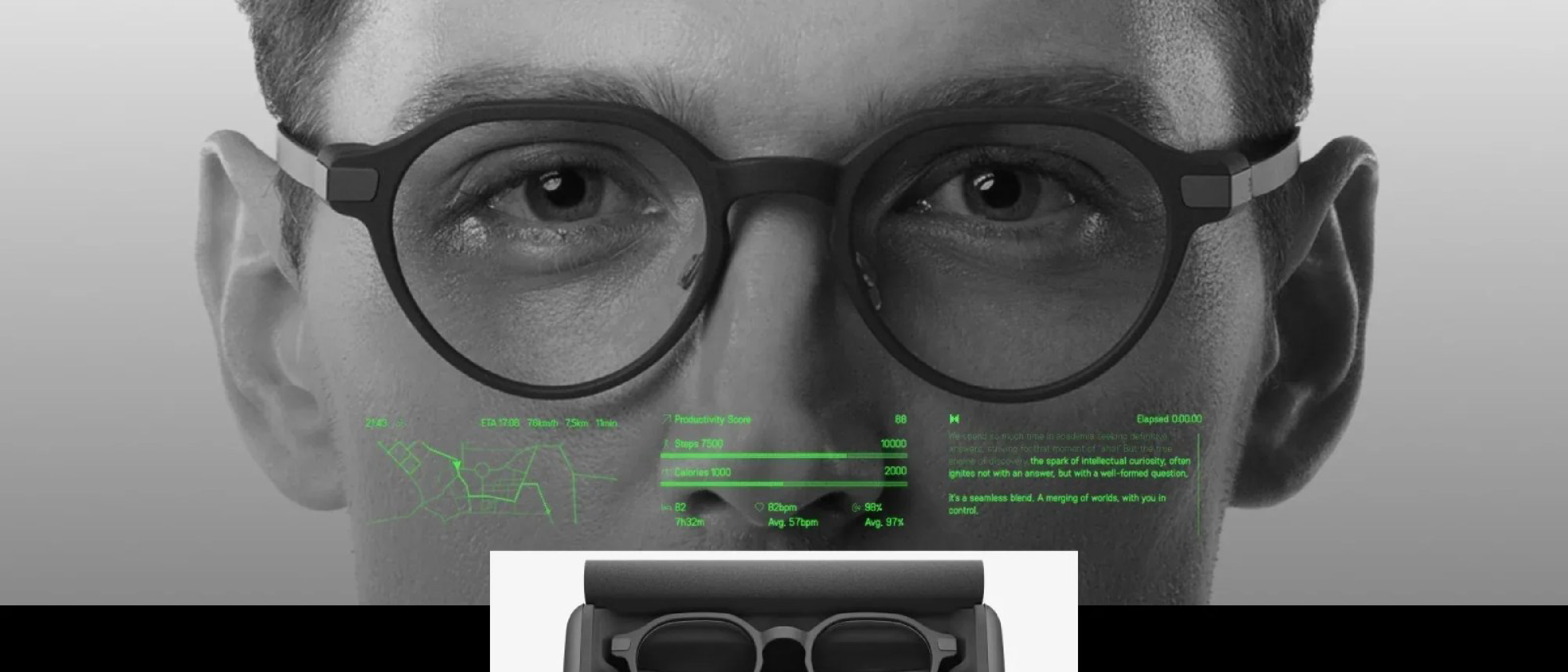
- Display quality is the headline feature, with the author noting a “clear, bright image” that feels more immersive than many entry‑level waveguide units.
- Ergonomics remain a challenge; the glasses are heavier than typical sunglasses, prompting discussion about all‑day wearability.
- Ecosystem integration is hinted at, suggesting that Even Realities is aiming for a software‑agnostic platform that can run both Android and iOS companion apps.
The review’s tone is cautious optimism—recognizing the G2’s progress while reminding readers that the market still lacks a truly seamless, lightweight AR experience.
Technical Landscape: Where the G2 Fits in Current AR Hardware
Even without a full spec sheet, the G2 can be examined against the broader technical trends shaping smart glasses in 2024‑2025.
Display Technology
Most consumer‑grade smart glasses rely on either waveguide optics or micro‑OLED panels. Lovejoy’s comment about “bright, clear image” suggests a waveguide with a high‑efficiency coupler, possibly leveraging a laser‑pump architecture similar to what companies like Vuzix and Nreal have demonstrated. The trade‑off between brightness and power consumption is a central engineering dilemma; a brighter display typically drains the battery faster, which aligns with Lovejoy’s observation of limited continuous usage.
Form Factor and Weight
Weight is a recurring pain point across the industry. The G2’s “heavier than sunglasses” feel mirrors the experience of early Microsoft HoloLens 2 and Meta Quest Pro devices, where battery packs and optics add bulk. Designers are experimenting with carbon‑fiber frames and custom‑molded lenses to shave grams off the chassis, but material costs rise sharply.
Connectivity and Sensors
Even Realities has not disclosed exact connectivity options, yet modern AR glasses almost universally support Bluetooth 5.x, Wi‑Fi 6, and a suite of IMU sensors for head tracking. The presence of eye‑tracking or hand‑gesture recognition would be a differentiator, but Lovejoy’s piece does not confirm these capabilities.
Software Stack
A “software‑agnostic” claim hints at a cross‑platform SDK that could expose APIs for both ARCore and ARKit, allowing developers to target the G2 without rewriting code. This approach mirrors the strategy of Snap’s Spectacles and could accelerate third‑party content creation.
Why It Matters: Consumer Expectations and the AR Adoption Curve
Smart glasses have hovered between niche developer kits and aspirational consumer gadgets for years. The G2’s first‑impression review matters for several reasons:
Bridging the Gap Between Enterprise and Consumer – By emphasizing a consumer‑friendly display and a more approachable price point (though undisclosed), Even Realities attempts to move past the “enterprise‑only” perception that has limited adoption of devices like the HoloLens.
Content Ecosystem Readiness – As platforms such as YouTube tighten policies around AI‑generated video (see the recent policy update in YouTube Fights AI Slop with New Monetization Rules ), creators are looking for new ways to deliver immersive experiences. A capable display on a lightweight frame could become a new medium for short‑form AR content.
Competitive Benchmarking – The G2 provides a reference point for other manufacturers. For example, the Wooting 60HE v2 Review highlighted how hardware enthusiasts value tactile feedback and customization; similarly, AR users will soon demand granular control over display brightness, field‑of‑view, and interaction modalities. The G2’s strengths and weaknesses will inform future design decisions across the sector.
Industry Impact: Market Dynamics and Potential Partnerships
Even Realities is not operating in isolation. The smart‑glasses market is increasingly collaborative, with hardware firms partnering with software platforms, telecom operators, and content creators.
Supply‑Chain Considerations
The display module likely sources components from established micro‑display manufacturers in Japan or Taiwan. Any disruption—such as the semiconductor shortages that affected the Wyze Smart Scale Unveiled—could ripple into AR production timelines. Monitoring these supply chains will be crucial for forecasting availability.
Potential for Carrier Bundles
5G carriers are eager to bundle AR devices with data plans, positioning them as “always‑connected” accessories. The G2’s Wi‑Fi 6 capability could be complemented by a 5G modem in future revisions, aligning with carrier strategies seen in the rollout of Apple Vision Pro.
Developer Community Growth
A cross‑platform SDK would lower the barrier for indie developers, encouraging a surge of AR apps. This mirrors the effect that Snapchat’s Lens Studio had on AR creativity. An active developer ecosystem could also attract enterprise customers seeking custom solutions, further blurring the line between consumer and professional markets.
Future Outlook: What to Expect from the G2 and Its Successors
While Lovejoy’s first‑impression piece stops short of a full performance analysis, several logical trajectories emerge for the G2 line.
Incremental Hardware Refreshes
Future iterations will likely focus on weight reduction (through lighter composites) and battery efficiency (perhaps integrating graphene‑based cells). Incremental upgrades to field‑of‑view—moving from ~50° to 70°—could make the experience more immersive without sacrificing form factor.
Software Evolution
A robust SDK will enable cloud‑rendered AR, where heavy graphics are processed on remote servers and streamed to the glasses, reducing on‑device power draw. This model aligns with the broader industry shift toward edge computing for AR/VR workloads.
Integration with Emerging Standards
The OpenXR standard is gaining traction as a universal API for mixed reality. If Even Realities adopts OpenXR, the G2 could become instantly compatible with a wide range of engines (Unity, Unreal), accelerating content creation.
Market Positioning
Pricing remains undisclosed, but the G2 will need to sit competitively between high‑end enterprise units (>$3,000) and low‑cost novelty glasses (<$200). A sweet spot around $600‑$800 would make it accessible to early adopters while still delivering a premium experience.
Frequently Asked Questions
Q: Does the Even Realities G2 support prescription lenses?
A: The first‑impression article does not specify lens compatibility. Historically, many smart‑glass manufacturers offer optional prescription inserts, so it is plausible that Even Realities will provide a similar solution.
Q: What operating systems can I run on the G2?
A: Lovejoy mentions a “software‑agnostic” approach, suggesting the device can pair with both Android and iOS companion apps. A dedicated OS may exist for on‑device functions, but details are pending.
Q: How does the G2 compare to Apple Vision Pro?
A: Vision Pro targets a high‑end market with a larger form factor and a price above $3,000. The G2 appears to aim for a more portable, affordable segment, focusing on everyday wearability rather than a full‑room mixed‑reality experience.
Q: Will there be a developer program?
A: While not confirmed, the emphasis on cross‑platform compatibility hints at an upcoming SDK and possibly a developer portal, similar to those offered by Snap and Meta.
Q: When can we expect a full specifications sheet?
A: The first‑impression piece is an early look; a detailed spec sheet is likely to be released alongside a formal launch announcement later this year.
Conclusion
Ben Lovejoy’s first‑impression review of the Even Realities G2 smart glasses offers a valuable snapshot of a device that could help shift AR from enterprise labs to everyday pockets. By delivering a bright, clear display and signaling a software‑agnostic strategy, Even Realities positions the G2 as a potential catalyst for broader consumer adoption. The challenges—weight, battery life, and ecosystem maturity—remain, but they are shared across the industry and are being actively addressed through material science, edge‑computing, and open standards. As developers, carriers, and content platforms converge around AR, the G2 may serve as a reference point for the next wave of wearable innovation.
Source: Original Article