






Why the Armenian AI Factory Matters
The launch of Firebird’s AI factory in Yerevan marks a turning point for the Commonwealth of Independent States (CIS). Until now, most large‑scale AI training clusters have been concentrated in Western Europe, North America, or East Asia. By situating a 300 MW compute campus in Armenia, Firebird is:
- Democratizing access – Start‑ups, university research labs, and government agencies can train state‑of‑the‑art models without the latency and cost penalties of cross‑border data transfer.
- Accelerating regional talent – Armenia’s strong engineering education system, combined with the new compute hub, creates a pipeline for AI specialists who can stay local rather than migrating abroad.
- Reducing geopolitical risk – For CIS nations that face sanctions or limited access to Western cloud services, a domestically hosted AI factory offers a sovereign alternative for critical workloads such as defense analytics, healthcare diagnostics, and financial modeling.
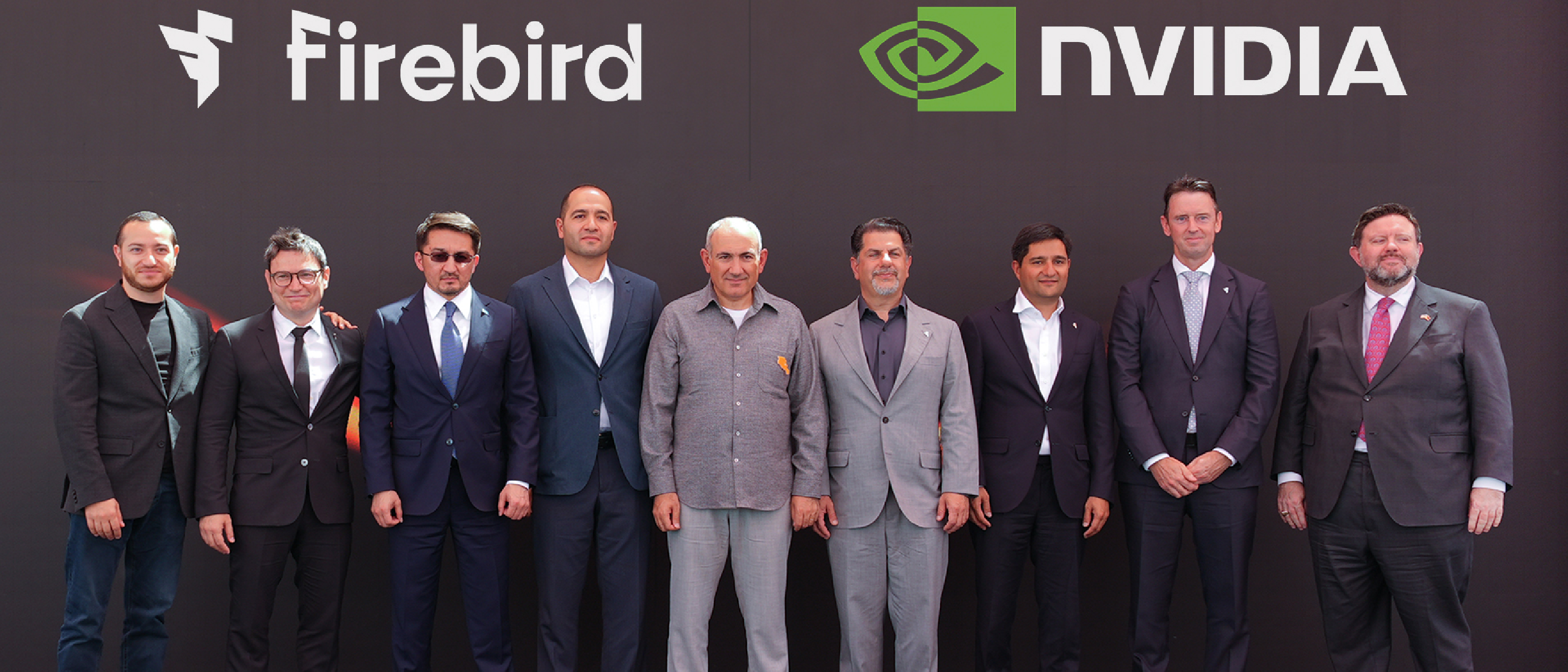
The presence of high‑profile officials—Prime Minister Nikol Pashinyan, Kazakhstan Deputy Prime Minister Zhaslan Madiyev, and U.S. chargé d’affaires David Allen—underscores the strategic importance of the project for both regional development and international cooperation.
Technical Architecture and Hardware Stack
Firebird’s facility is built on the NVIDIA DSX platform, a co‑engineered solution that integrates accelerated computing, networking, power, and cooling into a single chassis. The DSX design delivers up to 40 % more GPUs per rack footprint, translating into higher token‑generation efficiency and lower total cost of ownership.
Core Components
- GPU inventory – By the end of 2027 the plant will host 70,000+ NVIDIA Rubin GPUs and 70,000+ NVIDIA Blackwell GPUs. Both families are based on the latest Hopper architecture, offering tensor‑core performance that exceeds 500 TFLOPS per GPU in mixed‑precision workloads.
- Dell Technologies infrastructure – Dell provides high‑density servers, NVMe storage arrays, and AI‑optimized networking fabrics that complement the DSX chassis. The partnership ensures seamless scaling from a few thousand GPUs to the eventual multi‑gigawatt target.
- Power and cooling – Schneider Electric supplies medium‑ and low‑voltage switchgear, three‑phase UPS systems, and modular rack enclosures. Their rapid‑delivery model allowed the entire power backbone to be installed in under six months, matching the overall construction timeline.
Efficiency Gains
The DSX platform’s integrated power‑distribution architecture reduces conversion losses by roughly 15 % compared with traditional rack‑mount solutions. Combined with Dell’s liquid‑cooling options, the data center can sustain a PUE (Power Usage Effectiveness) of 1.10, a figure that rivals the most efficient hyperscale facilities worldwide.
Strategic Impact on the CIS AI Ecosystem
Enabling Local Innovation
With on‑premise compute, Armenian universities can now run large language model (LLM) pre‑training experiments that previously required cloud credits from providers outside the region. This shift is expected to boost research output, attract foreign R&D investment, and foster home‑grown AI products.
Economic Multiplier Effect
The factory’s construction generated over 1,200 jobs in civil engineering, electrical work, and logistics. Ongoing operations will create a permanent workforce of roughly 400 engineers, system administrators, and support staff. Ancillary industries—such as high‑speed networking, edge‑device manufacturing, and AI‑focused venture capital—are likely to emerge around the hub.
Geopolitical Leverage
NVIDIA’s announced investment in Firebird, following Core Weave’s earlier funding, signals confidence in frontier markets as a growth frontier for AI compute. The partnership gives CIS governments a degree of technological independence, mitigating reliance on Western cloud platforms that may be subject to export controls.
For a broader perspective on how AI policy is shaping platform behavior, see the recent discussion on YouTube’s AI moderation rules: YouTube Fights AI Slop with New Monetization Rules .
Deployment Timeline and Power Infrastructure
Six‑Month Build Sprint
Firebird’s ability to deliver a fully operational AI factory in just over six months is a testament to modular design. Key milestones included:
- Site preparation and civil works – Completed in 8 weeks, leveraging pre‑fabricated steel structures.
- Power grid integration – Schneider Electric’s medium‑voltage switchgear was commissioned in parallel with rack installation, avoiding bottlenecks.
- Rack and GPU deployment – Dell’s pre‑tested server blades were racked and wired in a single 48‑hour window, after which the DSX control software performed automated health checks.
Power Architecture
- Medium‑voltage switchgear – Handles the 300 MW load, stepping down from the national grid to the data center’s internal distribution.
- Low‑voltage UPS – Provides 15‑minute battery backup, sufficient for graceful shutdown or transition to diesel generators if needed.
- Rack enclosures – Custom‑engineered to accommodate the dense GPU layout while maintaining optimal airflow.
The rapid deployment model sets a benchmark for future AI factories in emerging markets, where time‑to‑service is often a critical competitive factor.
Future Roadmap and Market Outlook
Firebird’s roadmap envisions a 2‑GW AI infrastructure spanning Armenia, Kazakhstan, and additional CIS locations. The plan includes:
- Phase 1 (2024‑2027) – Completion of the Armenian plant, reaching the 70k+ Rubin and Blackwell GPU target.
- Phase 2 (2028‑2030) – Construction of a second hub in Almaty, Kazakhstan, leveraging the same DSX/Dell blueprint.
- Phase 3 (2031‑2035) – Expansion into secondary markets such as Georgia and Uzbekistan, creating a contiguous compute corridor across the Caucasus and Central Asia.
From a market perspective, the CIS region’s AI spend is projected to grow at a CAGR of 28 % through 2030, driven by demand in fintech, autonomous transportation, and smart‑city initiatives. Firebird’s early‑stage capacity will allow regional players to capture a larger share of this growth without incurring prohibitive cloud‑service fees.
Security Considerations
Running massive AI workloads locally also raises security challenges. Organizations must protect model intellectual property and guard against adversarial attacks on the training pipeline. Firebird has partnered with security vendors to embed hardware‑rooted attestation and encrypted model storage. For readers interested in how security tools protect sophisticated platforms, the Mac Antivirus Intego One article offers a useful analogy: Mac Antivirus Intego One .
Connectivity and Edge Integration
The factory’s high‑throughput networking stack, based on NVIDIA’s Mellanox adapters, supports 100 Gbps inter‑rack links. This bandwidth is essential for distributed training of LLMs that span multiple racks. Future plans include integrating USB‑C‑based high‑speed external accelerators for edge‑device testing, a topic explored in depth here: USB‑C on Your Phone: More Than Just Charging and Data .
Frequently Asked Questions
Q1: When will the full complement of 140,000 GPUs be operational?
A: The deployment schedule targets full capacity by Q4 2027, with incremental roll‑outs every six months to allow early customers to start training.
Q2: How does the DSX platform differ from traditional rack solutions?
A: DSX co‑designs power, cooling, and networking within a single chassis
, reducing cabling complexity by up to 60% and improving airflow efficiency. This integrated approach eliminates the need for separate power distribution units (PDUs) and network switches, streamlining deployment and maintenance. Additionally, DSX’s modular design allows for hot-swappable components, minimizing downtime during upgrades or repairs.
Q3: What kind of cooling solutions are used to manage the heat output of 140,000 GPUs? A: The facility employs a hybrid cooling system combining direct-to-chip liquid cooling for the GPUs and rear-door heat exchangers for auxiliary components. This setup ensures optimal thermal management while maintaining the PUE of 1.10. Schneider Electric’s modular rack enclosures are designed to support both air and liquid cooling, providing flexibility for future hardware upgrades.
Q4: How does Firebird ensure data sovereignty and compliance with local regulations? A: The AI factory operates under Armenia’s data localization laws, ensuring that sensitive workloads remain within the country’s jurisdiction. Firebird has also implemented NVIDIA’s Confidential Computing capabilities, which encrypt data in use, at rest, and in transit. This approach aligns with regional compliance requirements while enabling secure cross-border collaboration for non-sensitive projects.
Q5: What are the environmental implications of a 300 MW AI factory? A: Firebird has committed to sourcing 100% of its power from renewable energy sources by 2028, with interim targets of 50% by 2025. The facility’s ultra-low PUE and liquid cooling systems significantly reduce energy waste compared to traditional data centers. Additionally, the DSX platform’s efficiency gains translate into fewer carbon emissions per token generated, aligning with global sustainability goals.
Conclusion
Firebird’s AI factory in Armenia represents a pivotal moment for the CIS region, bridging the gap between global AI innovation and local economic development. By leveraging NVIDIA’s accelerated computing, Dell’s infrastructure, and Schneider Electric’s power solutions, the facility delivers unparalleled compute capacity at a fraction of the cost and latency of traditional cloud providers. The project’s rapid deployment—completed in just six months—demonstrates the feasibility of scaling AI infrastructure in emerging markets, setting a new benchmark for future initiatives.
Beyond hardware, the factory’s strategic impact is profound. It empowers local startups, universities, and enterprises to compete on the global stage, fosters job creation, and reduces geopolitical risks associated with cross-border data dependencies. As Firebird expands its 2-GW roadmap across Armenia, Kazakhstan, and beyond, the CIS region is poised to become a major player in the AI economy, driving innovation in fintech, healthcare, and smart infrastructure.
For stakeholders in frontier markets, Firebird’s model offers a blueprint for building sovereign AI capabilities while attracting international investment. The collaboration between Firebird, NVIDIA, Dell, and Schneider Electric underscores the importance of public-private partnerships in shaping the future of AI infrastructure. As the factory ramps up to full capacity by 2027, it will serve as a catalyst for regional transformation, proving that the next wave of AI innovation is not confined to traditional tech hubs but is truly global in scope.
Source: Original Article