






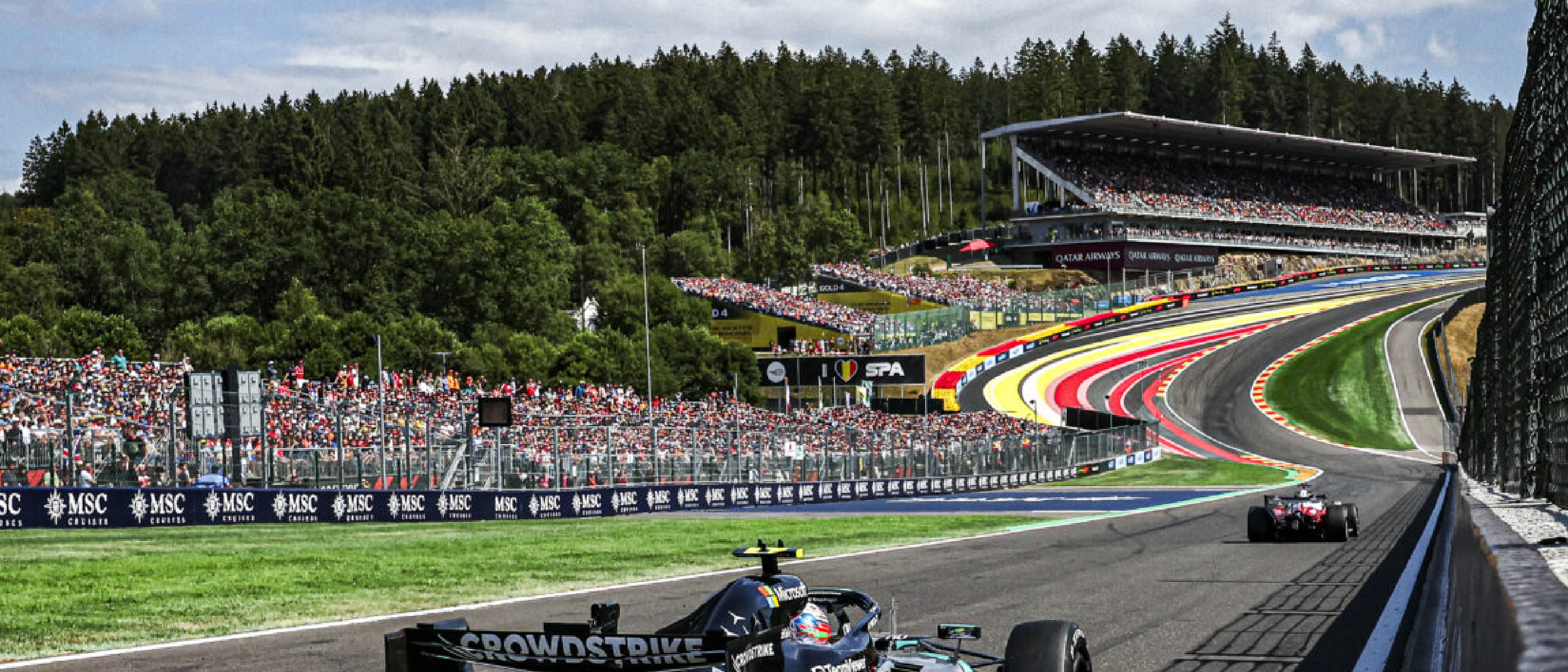
Background: Spa‑Francorchamps and Its Historic Demands
Spa‑Francorchamps is more than a circuit; it is a living museum of motorsport heritage. First appearing on the Grand Prix calendar in 1922, the track originally wound through public roads linking the towns of Malmedy and Stavelot before looping back to Francorchamps. In the post‑war era the layout was trimmed to 8.7 mi (14.1 km), yet the character remained unchanged: long straights, sweeping elevation changes, and the infamous Eau Rouge–Raidillon complex that tests both driver bravery and mechanical endurance.
During the 1950s and 1960s, average lap speeds topped 150 mph (240 km/h). Cars of that era produced massive horsepower with minimal safety concessions, making Spa a crucible for raw speed. The circuit’s reputation for danger and exhilaration has persisted, and it remains one of the few venues where outright velocity still defines a race’s narrative.
When Formula 1 returned to Spa for the 2026 Belgian Grand Prix, the historic backdrop was undeniable. However, the modern power unit—now a hybrid system that blends a 1.6 L turbocharged V6 with an electric motor—faces a paradox: the track demands sustained high‑speed thrust, while the electric component is deliberately limited in energy storage.
2026 Power‑Unit Regulations and Battery Limits
The 2026 technical regulations aim to make the sport greener without sacrificing performance. Key points include:
- Sustainable Fuels: 100 % renewable fuel replaces fossil‑based gasoline.
- Increased Electrical Power: The electric motor’s maximum output rises, allowing more torque off the line and on corner exit.
- Battery Capacity Constraint: The on‑board lithium‑ion pack is capped to a few megajoules per lap, translating to only a handful of seconds of full‑power electric boost.
The regulation‑driven cap is intentional. It prevents a “battery arms race” that could inflate costs and shift the sport away from its internal‑combustion heritage. Yet the cap also means that on circuits like Spa—where a lap lasts roughly 1 minute 30 seconds and drivers spend a large proportion of the time at full throttle—the electric motor can contribute for only a few seconds before the battery must be throttled.
This limitation is not unique to Formula 1. Autonomous‑vehicle fleets such as Waymo’s robotaxis face similar constraints: the need to balance range, peak power, and safety. Waymo’s recent recall, detailed in the article “ Robotaxi Recall ”, underscores how a limited energy budget can force operational compromises, especially in high‑speed scenarios. The parallel highlights that high‑performance electric propulsion is still a work in progress across transportation sectors.
Why Current F1 Machinery Struggles at Spa
Energy‑Demand Mismatch
Spa’s long straights—like the 1.2 km Kemmel Straight—require continuous high torque. In a conventional hybrid strategy, the internal‑combustion engine supplies the bulk of the power, while the electric motor provides a short‑duration boost for overtaking or exiting tight corners. Because the battery can only deliver full power for a few seconds per lap, teams must decide when to deploy that boost. On a circuit where the optimal moments are spread across the lap, the limited boost becomes a strategic handicap.
Aerodynamic and Cooling Challenges
High speeds increase aerodynamic drag, demanding more engine output to maintain velocity. Simultaneously, the hybrid system’s cooling requirements rise. The battery, motor, and turbocharger generate heat that must be expelled through radiators and heat exchangers. Spa’s ambient temperatures can be variable, and the circuit’s elevation changes affect airflow. Managing thermal loads while preserving the few seconds of electric power adds another layer of complexity.
Comparison with Junior F2 Feeder Series
F2 cars, while less powerful, are not bound by the same hybrid constraints. Their simpler powertrains rely solely on a naturally aspirated V6, eliminating the need to ration electric energy. Consequently, F2 teams can extract a more predictable power curve throughout a lap, albeit at lower absolute speeds. This contrast accentuates how the 2026 F1 hybrid architecture, though technologically advanced, can be a liability on a venue that rewards relentless power.
Technical Breakdown of Energy Use per Lap
Below is a simplified illustration of how the 2026 battery’s energy budget is allocated on a typical Spa lap:
| Segment | Approx. Time (s) | Typical Power Demand | Battery Contribution |
|---|---|---|---|
| Start/Formation Lap | 5 | Low (engine warm‑up) | 0 % |
| Eau Rouge–Raidillon | 8 | High (climb) | 10 % |
| Kemmel Straight | 12 | Very High (top speed) | 15 % |
| Les Combes | 6 | Moderate (braking) | 5 % |
| La Source (first corner) | 4 | Low‑mid | 5 % |
| Rest of lap (mixed) | 55 | Variable | 65 % (distributed) |
The percentages reflect the proportion of the total allowable battery energy that can be safely drawn without exceeding the megajoule cap. In practice, teams program the Energy Recovery System (ERS) to harvest kinetic energy under braking, then release it strategically. However, the absolute amount of energy that can be released is fixed, meaning the electric motor’s contribution is a fraction of the total lap power.
Algorithmic Strategy
Optimising when to deploy the electric boost is essentially a real‑time optimization problem. Modern teams employ sophisticated algorithms that ingest telemetry, weather data, and competitor positions. The challenges are reminiscent of the issues discussed in “ X Algorithm Fix ”, where a flawed algorithm led to sub‑optimal outcomes. In F1, a mis‑calculated boost window can cost valuable tenths of a second, especially on a circuit where overtaking opportunities are scarce.
Industry Impact and Future Outlook
Implications for the Sport
- Strategic Shifts: Teams may prioritize aerodynamic efficiency over outright power to compensate for limited electric boost.
- Driver Adaptation: Drivers will need to modulate throttle inputs more precisely, relying on engine torque rather than electric surge.
- Spectator Experience: The spectacle of electric‑assisted overtakes could diminish on high‑speed tracks, prompting fans to question the hybrid narrative.
Technological Ripple Effects
The constraints highlighted at Spa will inform the broader automotive industry. Battery manufacturers are already racing to increase energy density while maintaining safety. Lessons learned from extracting maximum performance from a tightly capped battery could accelerate research into solid‑state cells, fast‑charging architectures, and advanced thermal management—benefits that will eventually filter down to road‑going electric vehicles.
Potential Regulatory Adjustments
If the performance gap becomes too pronounced, the FIA may revisit the battery cap for specific circuit categories. A tiered approach—allowing higher energy allowances on circuits with longer laps—could preserve the hybrid ethos without penalising teams on speed‑focused venues.
Looking Ahead to 2027 and Beyond
- Hybrid‑First Strategies: Some manufacturers are exploring “electric‑first” concepts where the internal‑combustion engine serves primarily as a range extender.
- Alternative Energy Recovery: Beyond kinetic recovery, future cars might harvest energy from suspension movement or aerodynamic flow, adding micro‑generators to the power budget.
- Data‑Driven Development: The integration of AI‑driven predictive models (similar to those that caused the “algorithm fix” issue) will become standard, ensuring that energy deployment is continuously refined throughout a season.
Frequently Asked Questions
Q1: Why can’t the 2026 battery simply be made larger?
A: The regulations deliberately limit battery capacity to control costs, maintain a level playing field, and preserve the sport’s identity as a combustion‑engine showcase. Larger batteries would also add weight, compromising handling.
Q2: Does the limited electric boost affect fuel consumption?
A: Yes. With fewer seconds of electric assistance, the internal‑combustion engine must work harder, slightly increasing fuel usage per lap. However, the overall fuel load is still reduced compared to pre‑hybrid eras thanks to improved engine efficiency.
Q3: How do teams decide where to use the boost on Spa?
A: Teams analyze telemetry from practice sessions to identify sections where a short power surge yields the greatest time gain—typically the exit of Eau Rouge, the start‑finish straight, and heavy‑braking zones. The decision is encoded into the car’s ERS control software.
Q4: Will the battery limitation impact qualifying more than the race?
A: Qualifying laps are shorter, allowing drivers to use a higher proportion of the available electric energy per lap. Consequently, the impact is more pronounced during the race, where the battery must be stretched over 44 laps.
Q5: Are other series, like F2, facing similar hybrid constraints?
A: No. F2 currently runs a non‑hybrid V6 engine, so it does not have the same electric‑energy restrictions. This difference makes F2 a useful benchmark for pure mechanical performance on Spa.
Source: Original Article