


Overview of the New NVIDIA Ecosystem
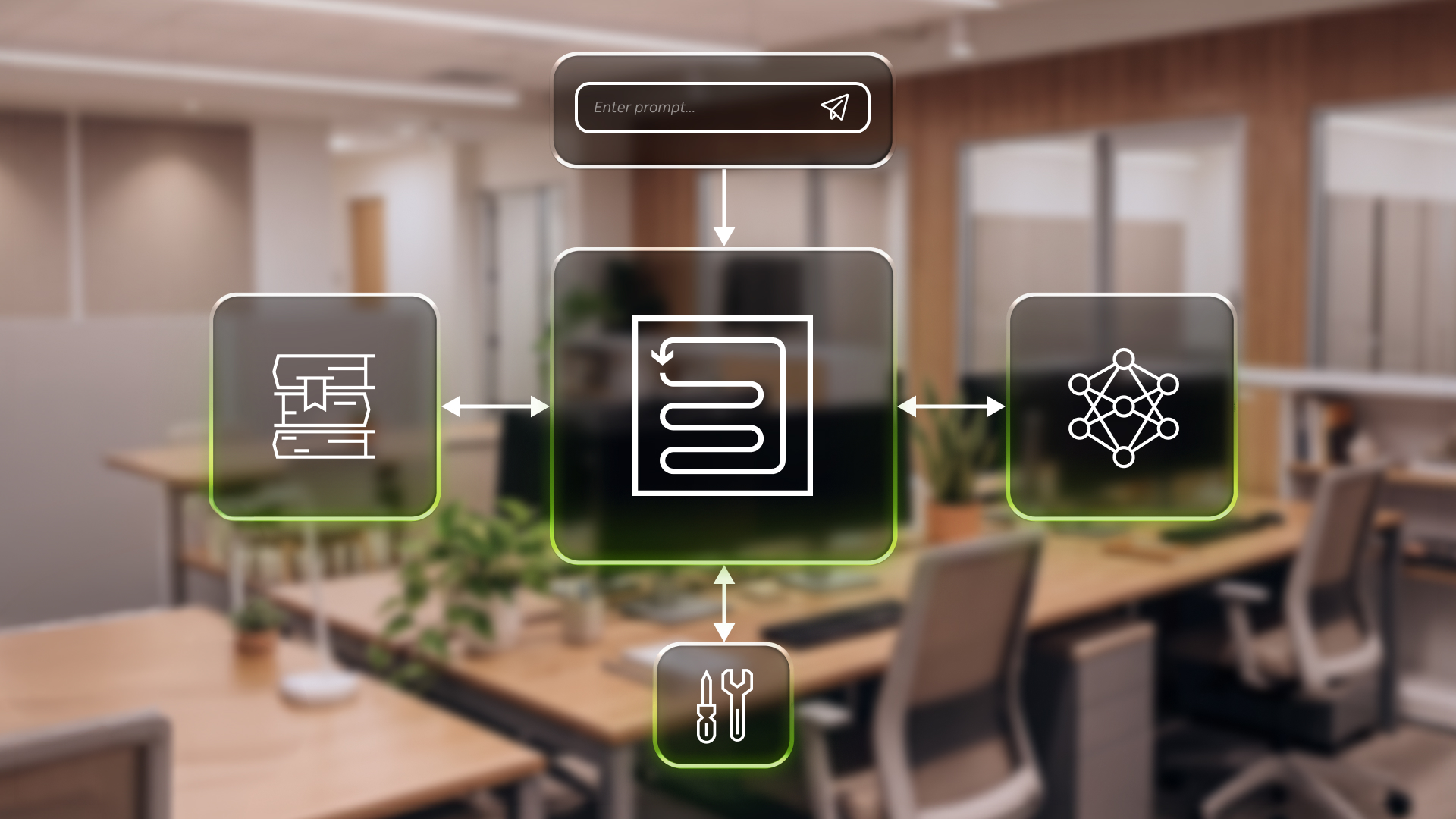
European heavyweights such as Siemens, Mercedes‑Benz, and Dassault Systèmes are rapidly adopting a suite of NVIDIA technologies that were once the domain of research labs. The core of the movement is the Factory Operations Blueprint (FOX), released in early‑access on GitHub, which provides a ready‑made framework for building AI agents that can manage everything from visual inspection to fleet coordination. FOX is not a stand‑alone product; it is tightly coupled with CUDA‑X, Omniverse, Cosmos, and the Nemotron family of large language models. Together they create a unified stack that bridges CAD, PLM, simulation, and OT/IT systems, turning traditional factories into adaptive, data‑driven ecosystems.
The momentum is evident across the continent: Siemens reports a 40 % reduction in calibration time for circuit‑board inspection, while imec and Infineon have demonstrated 40× and 12× speed‑ups respectively in semiconductor simulations using CUDA‑X libraries. These gains are not isolated experiments; they are being rolled out in production lines at Mercedes‑Benz, Audi, and Volkswagen Sachsen, reshaping how Europe designs, validates, and manufactures physical products.
Why It Matters: Economic and Competitive Drivers
Accelerating Time‑to‑Market
The automotive and aerospace sectors operate on razor‑thin margins where a single week of design delay can translate into millions of euros lost. By embedding AI agents directly into the design‑to‑manufacturing pipeline, companies can iterate on geometry, run high‑fidelity fluid‑dynamics or electromagnetic simulations, and receive instant feedback. For example, Dassault Systèmes’ LEO & AURA virtual companions—powered by Nemotron—can generate and evaluate vehicle‑door concepts in minutes, a task that previously required days of manual CAD work and physical prototyping.
Cost Reduction and Resource Efficiency
Siemens’ integration of FOX agents into its Intelligence Center X has already delivered an estimated 20 % cost saving on factory operations. The agents automate routine reporting, root‑cause analysis, and even schedule preventive maintenance, freeing human engineers to focus on higher‑value activities. In semiconductor fabs, the combination of cuDSS and CUDA‑X libraries reduces compute time dramatically, allowing fabs to run more design corners without expanding hardware footprints.
Strategic Sovereignty
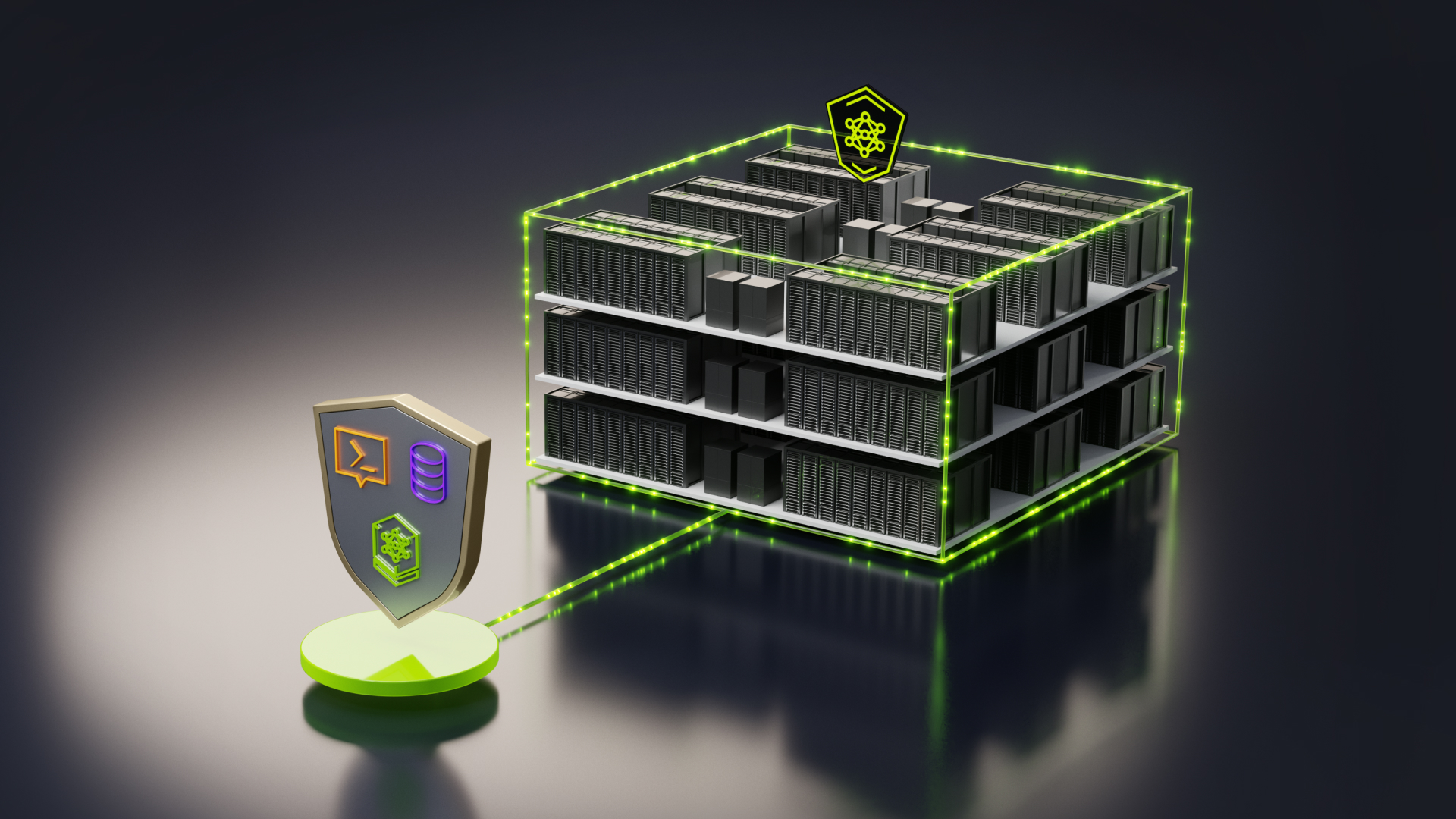
Europe’s push to adopt home‑grown AI stacks aligns with broader policy goals of technological sovereignty. By standardising on NVIDIA’s open‑source blueprints and leveraging Azure NCv6 virtual machines equipped with RTX PRO 6000 Blackwell GPUs, manufacturers keep critical workloads on platforms that are both globally supported and locally controllable. This reduces dependence on legacy PLC‑centric architectures that are increasingly vulnerable to cyber‑threats—a concern highlighted by recent high‑profile exploits such as the Zoom Zero‑Day Exploit: Remote Takeover of iPhone & Mac .
Technical Breakdown of Key NVIDIA Tools
1. Factory Operations Blueprint (FOX)
- Agent Toolkit – Provides pre‑built templates for visual inspection, root‑cause analysis, and fleet management.
- Integration Layer – Connects to CAD (CATIA, SolidWorks), PLM (Teamcenter), and simulation suites (Simcenter STAR‑CCM+, Simulia).
- Data Ingestion – Pulls sensor streams from OT networks, normalises them, and feeds them into Cosmos‑based in‑context learning models.
2. Cosmos In‑Context Learning
Cosmos
Cosmos enables agents to learn in‑context from examples, documentation, and live data streams without the need for costly fine‑tuning cycles. By feeding a handful of annotated inspection images or a short procedural script, the model can instantly adapt its reasoning to new defect types or equipment configurations. Siemens leveraged this capability to generate synthetic defect images for circuit‑board inspection, slashing calibration time by 40 % and eliminating the need for a dedicated data‑collection rig.
3. Nemotron Large Language Models
Nemotron‑based models power the LEO & AURA virtual companions at Dassault Systèmes. These agents act as “design co‑pilots,” interpreting natural‑language commands such as “optimise the door latch for crash safety while reducing weight by 15 %.” The underlying LLM parses the intent, queries the CAD database, runs a rapid topology‑optimisation simulation via CUDA‑X, and returns a revised geometry with performance metrics—all within minutes. This dramatically compresses the concept‑to‑prototype loop for automotive OEMs and aerospace suppliers.
4. Omniverse Libraries & Digital Twins
Omniverse serves as the collaborative metaverse where engineers, AI agents, and simulation engines converge:
- Omniverse Create & Kit provide real‑time, physically‑accurate rendering of factories, enabling visual inspection agents to spot anomalies directly in the 3D scene.
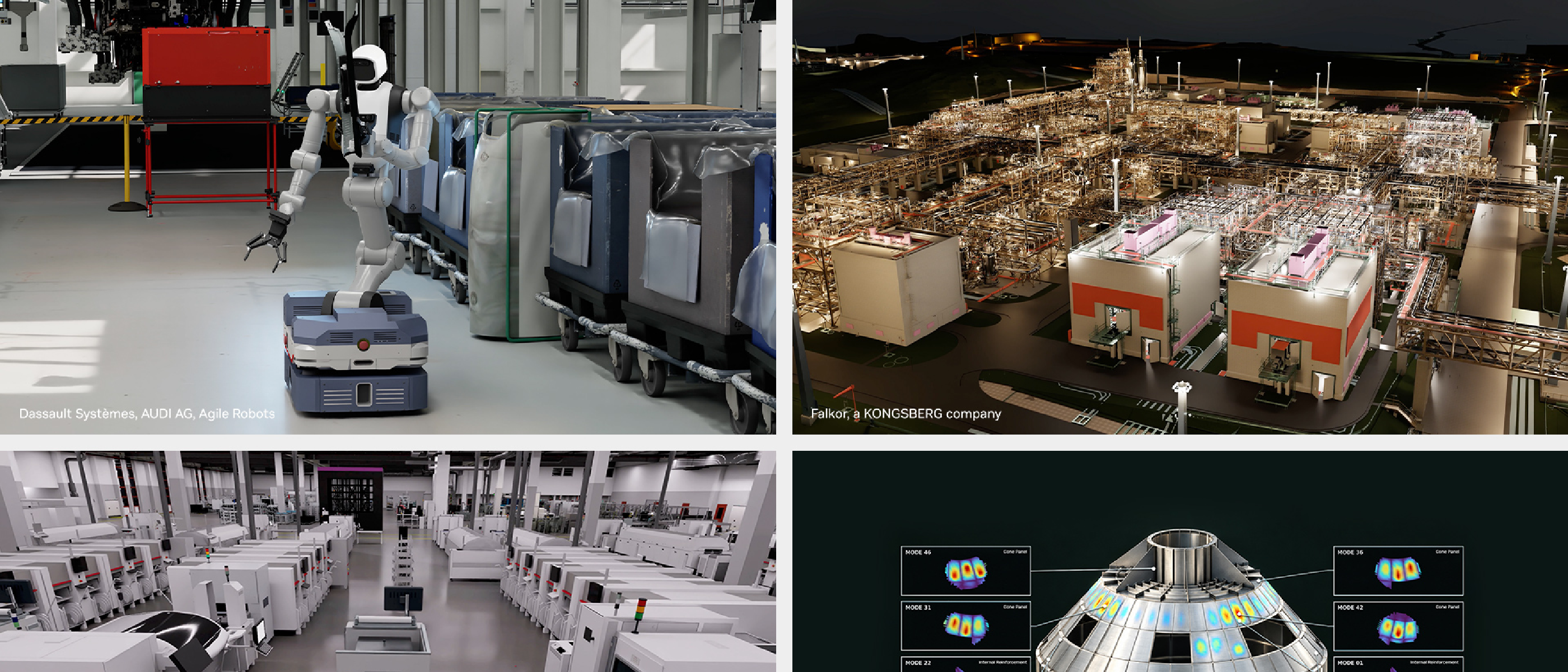
- Omniverse Physics (via Physics NeMo and Warp) delivers high‑fidelity fluid‑structure interaction for aerodynamic and hydrodynamic studies. Autodesk’s Nav Pack now embeds these physics kernels to predict vehicle handling under varying wind conditions.
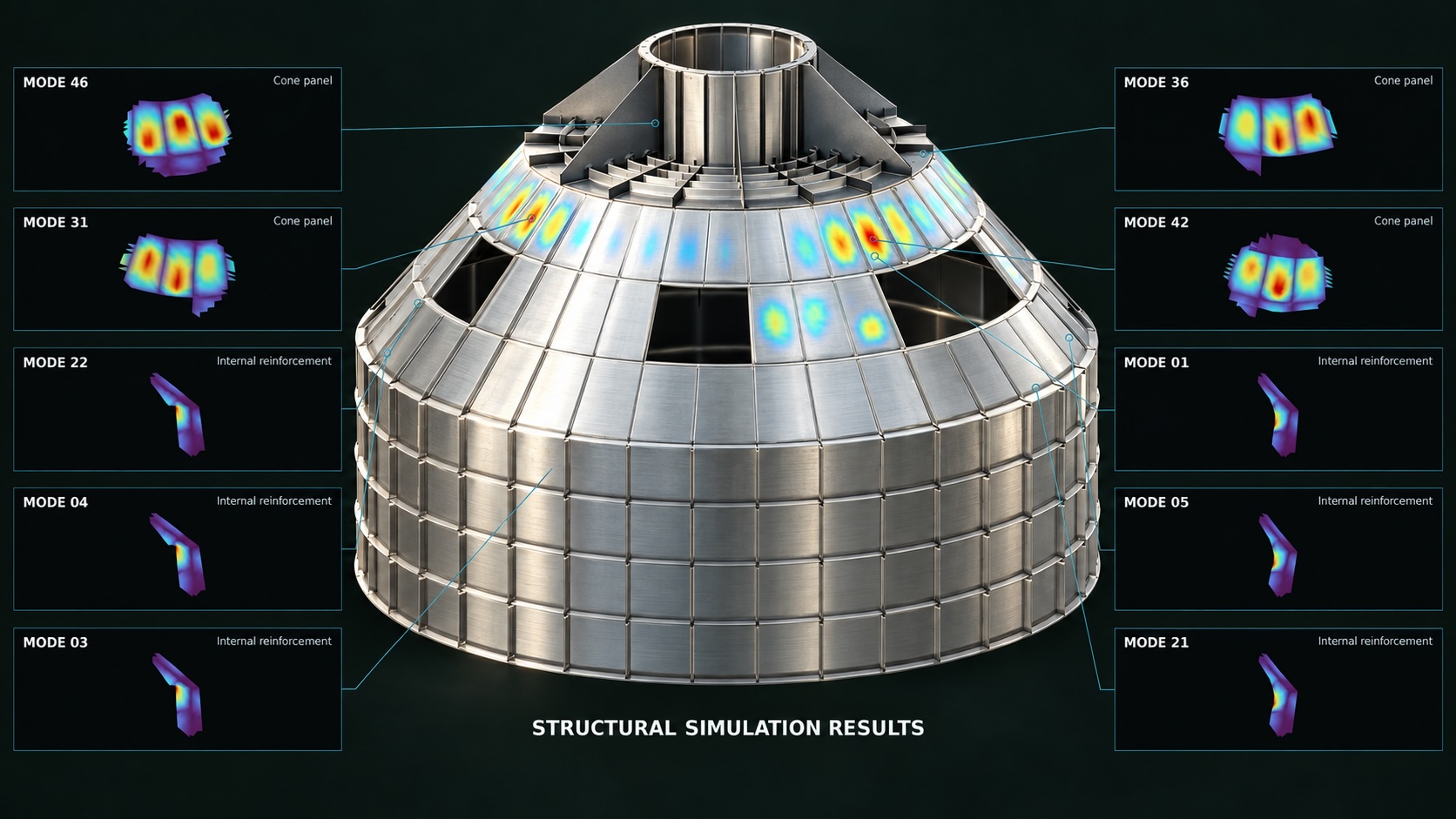
- Omniverse Isaac supplies robotics simulation for humanoid actuators, which Schaeffler uses to validate actuator control loops before hardware deployment, cutting physical test cycles by up to 70 %.
5. Real‑World Deployments Across Europe
| Company / Project | NVIDIA Stack Components | Primary Benefits |
|---|---|---|
| Siemens – Intelligence Center X | FOX agents, Cosmos, cuDSS, RTX PRO 6000 | 20 % operational cost reduction; 40 % faster inspection calibration |
| Mercedes‑Benz – Aerodynamics & Inspection | CUDA‑X, Metropolis VSS, Cosmos 3 | Faster CFD runs; automated windshield assembly verification |
| Audi – Robotics & Digital Twin | Omniverse Isaac, Warp, RTX PRO 6000 | Reduced robot commissioning time; predictive maintenance |
| Infineon – Sentaurus Device | CUDA‑X, cuDSS | 12× speed‑up in 3‑D breakdown simulation |
| imec – S‑Litho | CUDA‑X, cuDSS | Up to 40× acceleration for lithography simulation |
| Universal AGI – Wave‑Condition Forecast | Warp, NVIDIA RTX 6000 | Real‑time sea‑state evaluation, replacing multi‑day batch jobs |
| Schneider Electric & AVEVA – Power‑Plant Twin | Omniverse Libraries, Nscale, RTX PRO 6000 | AI‑driven configuration testing for cooling and power distribution |
These deployments illustrate a common pattern: AI agents orchestrate data, run simulations on GPU‑accelerated libraries, and feed results back into the production workflow, creating a virtuous cycle of continuous improvement.
6. Getting Started with FOX
- Clone the Repository – The early‑access FOX code lives at
github.com/NVIDIA/FOX. - Set Up the Environment – Install the NVIDIA CUDA Toolkit 12.x, the
nvidia‑cosmos‑sdk, and thenemotron‑clientPython package. - Choose a Template – FOX ships with starter agents for visual inspection, root‑cause analysis, and fleet scheduling.
- Connect to Your Data – Use the built‑in adapters to pull sensor streams from OPC‑UA, MQTT, or proprietary PLC APIs.
- Deploy – Run agents on‑premise with NVIDIA DGX Station B0 or in Azure NCv6 VMs powered by RTX PRO 6000 Blackwell GPUs.
Documentation includes step‑by‑step tutorials, sample notebooks, and a community forum where Siemens, Mercedes‑Benz, and other early adopters share best practices.
7. Future Roadmap
NVIDIA has outlined several upcoming enhancements:
- FOX 2.0 – Expanded support for edge‑device inference on Jetson Orin, enabling on‑factory floor AI without cloud latency.
- Cosmos 4 – Multi‑modal in‑context learning that combines text, images, and sensor time‑series in a single prompt.
- Nemotron‑X – Larger parameter counts (up to 1 trillion) optimised for engineering vocabularies, promising even richer design assistance.
- Omniverse Live – Real‑time synchronization of physical factory floor data with the digital twin, allowing agents to react to anomalies within seconds.
These milestones indicate that the NVIDIA stack will continue to deepen its integration with industrial software ecosystems, further blurring the line between simulation and production.
Conclusion
Europe’s manufacturing renaissance is being powered by a holistic AI‑first stack that unites large language models, GPU‑accelerated simulation, and collaborative digital twins. NVIDIA’s Factory Operations Blueprint acts as the glue, turning disparate CAD, PLM, and OT systems into a single, intelligent fabric. Early results—40 % faster calibration, 20 % cost savings, and multi‑order‑of‑magnitude simulation speed‑ups—demonstrate that the technology is no longer experimental but production‑ready.
For manufacturers aiming to stay competitive in a market where time‑to‑market and resource efficiency are decisive, adopting the FOX‑Cosmos‑Nemotron ecosystem offers a clear pathway to smarter factories, shorter design cycles, and greater strategic autonomy. As more European leaders join the movement, the continent is poised to set the global benchmark for AI‑driven engineering and manufacturing.
FAQ
Q: Do I need an NVIDIA GPU to run FOX agents?
A: While the core SDK can run on CPU for development, production‑grade inference and simulation workloads require CUDA‑compatible GPUs (e.g., RTX PRO 6000 Blackwell or newer).
Q: Is the FOX code open source?
A: Yes, FOX is released under the Apache 2.0 license on GitHub, allowing modification and commercial use.
Q: Can FOX integrate with existing PLC/SCADA systems?
A: FOX includes adapters for OPC‑UA, MQTT, and Modbus, and can be extended via custom Python connectors.
Q: How does data security work when using Azure NCv6 VMs?
A: Azure provides end‑to‑end encryption, isolated virtual networks, and compliance certifications (ISO 27001, GDPR). NVIDIA’s stack also supports on‑premise deployment for fully sovereign environments.
Q: What training is required for my engineering team?
A – NVIDIA offers free webinars, certification courses, and partner‑led workshops (e.g., Siemens AI Factory Academy) to upskill staff on CUDA‑X, Omniverse, and AI agent development.
Q: Will FOX work with non‑NVIDIA hardware?
A – The core agent logic is hardware‑agnostic, but GPU‑accelerated libraries (CUDA‑X, cuDSS) are NVIDIA‑specific. Alternative backends are planned for future releases.
Q: How does FOX handle model updates and versioning?
A: FOX leverages the NVIDIA Model Registry, enabling seamless rollout of new Cosmos or Nemotron models with rollback capabilities.
Source: Original Article