







The Policy Shift: What the EPA Announced and Why Timing Matters
Late last week the Environmental Protection Agency formally announced the termination of a more‑than‑20‑year research and regulatory effort aimed at quantifying air emissions from concentrated animal feeding operations (CAFOs). The agency framed the move as a “long‑awaited reprieve for farmers,” emphasizing the political weight of the agricultural constituency in the upcoming midterm elections.
While the EPA’s language is conciliatory toward producers, the decision effectively ends the intermittent attempts to bring factory farms under the Clean Air Act’s permitting and monitoring framework. By withdrawing the rulemaking docket, the agency removes a key lever that could have forced large‑scale livestock operations to install emission controls, report pollutant levels, or face penalties for non‑compliance.
The timing is unmistakable: with the 2026 midterms only days away, the Republican‑led administration appears to be signaling support for a voter base that has historically aligned with agribusiness interests. The move also mirrors other recent regulatory roll‑backs, such as the easing of certain cybersecurity mandates, underscoring a broader agenda to reduce federal oversight ahead of the election.
Why It Matters: Public‑Health and Environmental Stakes
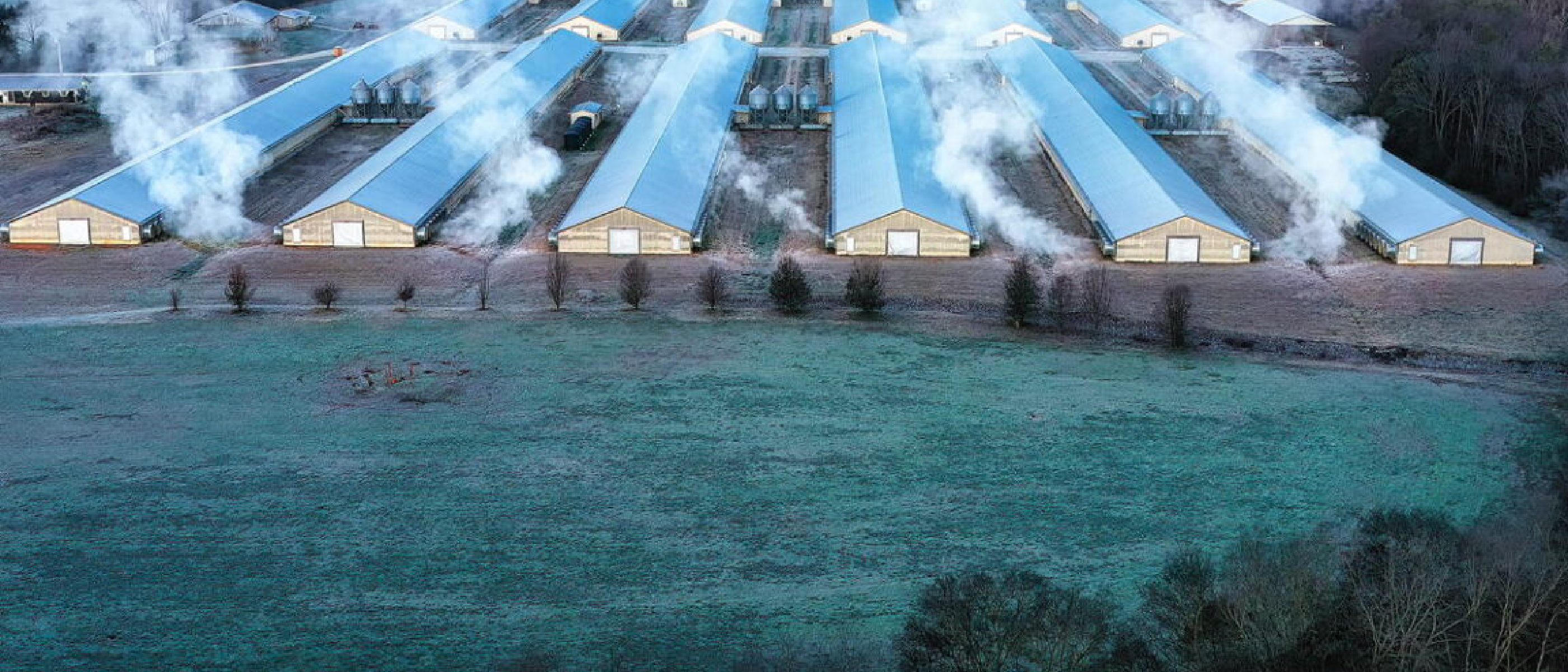
Factory farms are not merely a land‑use issue; they are a significant source of airborne contaminants that affect communities far beyond the fence line. When tens of thousands of animals are confined in a single building, waste accumulates in massive lagoons or is expelled through high‑velocity ventilation fans. This process releases a cocktail of pollutants that can travel miles, infiltrating urban neighborhoods and rural towns alike.
Key emissions from these operations include:
- Fine particulate matter (PM₂.₅) – tiny particles that penetrate deep into the lungs and bloodstream.
- Ammonia (NH₃) – contributes to secondary particulate formation and irritates respiratory pathways.
- Nitrogen oxides (NOₓ) – precursors to ozone and fine particles, exacerbating asthma.
- Sulfur dioxide (SO₂) – can form acid rain and aggravate cardiovascular disease.
- Volatile organic compounds (VOCs) – react with NOₓ in sunlight to create ground‑level ozone.
A recent epidemiological analysis attributes roughly 12,700 premature deaths per year in the United States to the cumulative impact of these emissions. The health burden is disproportionately shouldered by low‑income and minority communities situated near large livestock operations, amplifying existing environmental justice concerns.
Technical Breakdown: How Factory Farm Emissions Are Measured
Historically, the EPA’s approach to monitoring CAFO emissions relied on a patchwork of methods:
- Direct Stack Sampling – Installing probes in ventilation exhausts to capture real‑time concentrations of PM₂.₅, NH₃, and VOCs.
- Remote Sensing – Using lidar and hyperspectral imaging from aircraft or satellites to infer plume characteristics.
- Model‑Based Estimation – Applying the AERMOD dispersion model, calibrated with limited field data, to predict downwind concentrations.
Each technique presented challenges. Stack sampling is invasive and costly; remote sensing struggles with cloud cover and the vertical mixing of gases; model‑based estimates suffer from sparse input data, leading to high uncertainty. The EPA’s 20‑year effort attempted to standardize protocols, develop low‑cost sensor networks, and integrate data streams into the EPA’s Air Quality System (AQS).
By halting the program, the agency not only abandons these technical advances but also leaves a data vacuum. Without consistent monitoring, state and local health agencies lose a critical tool for issuing advisories, enforcing existing regulations, and guiding community‑level mitigation strategies.
Industry Impact: What Farmers, Processors, and Investors Can Expect
For Farmers
- Regulatory Relief – Immediate cessation of compliance costs associated with monitoring equipment, reporting, and potential permit fees.
- Market Perception – Some large agribusinesses may leverage the decision as a selling point, promoting “clean‑air” credentials in consumer‑facing branding.
For Meat‑Processing Companies
- Supply‑Chain Risk – Reduced transparency could heighten scrutiny from retailers and NGOs demanding sustainable sourcing. Companies may need to adopt voluntary third‑party audits to maintain market access.
For Investors
- Capital Allocation – Funds focused on “green” livestock technologies (e.g., anaerobic digesters, air‑scrubbing systems) might see slower adoption rates, affecting venture‑capital pipelines. Conversely, firms betting on regulatory arbitrage could experience short‑term gains.
The broader agricultural sector may also see a shift in lobbying dynamics. With the EPA stepping back, state agencies could become the primary arena for emission control, prompting a patchwork of rules that vary dramatically across state lines.
Future Outlook: Scenarios for Air‑Quality Governance
Scenario 1: State‑Led Regulation Takes the Lead
If the federal vacuum persists, states with strong environmental statutes—California, New York, and several Midwestern jurisdictions—could enact their own CAFO air‑quality rules. This would create a “state‑race” where producers operating in multiple states must navigate divergent compliance regimes, potentially driving industry consolidation toward regions with more lenient standards.
Scenario 2: Technological Self‑Regulation
Industry groups might develop voluntary standards, leveraging the sensor technologies that the EPA was close to standardizing. Partnerships with tech firms could yield low‑cost, networked monitoring kits that feed data to cloud platforms, enabling real‑time compliance dashboards. Such a model would echo the self‑regulatory frameworks seen in the cybersecurity sector, as discussed in the Google botnet takedown case study: Google Dismantles Botnet Secretly Running On 13 Million Android Tv Boxes
Scenario 3: Federal Re‑Engagement Post‑Election
A change in political leadership or a shift in public opinion—perhaps spurred by a high‑profile health study—could prompt the EPA to revive its monitoring agenda. In that event, the agency would likely lean on the technical groundwork laid over the past two decades, accelerating rulemaking timelines.
Connecting the Dots: Regulatory Decisions Across Sectors
The EPA’s move is part of a broader pattern where agencies weigh political considerations against scientific evidence. Similar dynamics played out when Meta faced backlash over AI‑driven content moderation, leading to platform‑wide policy revisions (see Trump Wanted To Give No Kings No Air Then Meta Suspended Its Instagram ). In both cases, the governing body’s actions reverberate through industry practices, public perception, and ultimately, health outcomes.
Even aerospace ventures, such as Argo Space’s shift to water‑based propulsion, illustrate how regulatory environments can catalyze innovation in emissions‑intensive sectors (read more at This Space Company Is Betting Its Future On A Propellant Available Everywhere ). While the domains differ, the underlying principle remains: when regulation loosens, firms either double down on cost‑saving practices or, conversely, seize the moment to pioneer greener technologies to stay ahead of future policy shifts.
Frequently Asked Questions
Q1: Does the EPA’s decision mean factory farms can emit unlimited pollutants? A: Not entirely. Existing Clean Air Act provisions still apply to certain “major sources,” but the specific rulemaking that would have required systematic monitoring and reporting is now off the table.
Q2: How will the 12,700 estimated deaths be addressed without federal monitoring? A: State health departments, academic researchers, and NGOs will likely fill the gap with independent studies and community‑based monitoring, though resources may be limited.
Q3: Are there any immediate legal challenges expected? A: Environmental groups have signaled intent to file lawsuits alleging that the EPA violated the Administrative Procedure Act by abandoning a long‑standing rulemaking without adequate justification.
Q4: Could technology companies profit from the monitoring void? A: Yes. Companies that produce low‑cost air‑quality sensors or data‑analytics platforms may market their solutions directly to farms seeking voluntary compliance or to third‑party auditors.
Q5: What should consumers do if they’re concerned about farm‑related air pollution? A: Supporting local, pasture‑based producers, advocating for stronger state regulations, and staying informed about community air‑quality reports are practical steps.
Conclusion
The EPA’s abrupt termination of a two‑decade effort to monitor factory‑farm emissions marks a pivotal moment in U.S. environmental policy. While the decision offers short‑term relief to a
while the decision offers short‑term relief to a segment of the agricultural industry, it also raises profound concerns for public health, environmental justice, and the credibility of federal environmental stewardship. The absence of a coordinated, science‑based monitoring framework means that communities living downwind of large CAFOs will continue to breathe air laced with harmful pollutants, often without knowing the exact magnitude of their exposure.
The EPA’s retreat underscores a broader tension between short‑term political calculus and long‑term societal costs. If the agency’s rationale—“re‑prieve for farmers”—is to be believed, the administration expects that the electoral payoff outweighs the projected health burden. Yet the data that the EPA painstakingly gathered over two decades suggests otherwise: the cumulative toll of CAFO emissions is not a distant abstraction but a measurable driver of mortality and morbidity across the nation.
What Comes Next?
- State‑Level Action – States with robust environmental statutes are poised to fill the regulatory gap. Expect a surge in state‑initiated rulemaking, especially in regions where agricultural density intersects with vulnerable populations.
- Grassroots Monitoring – Community groups are likely to deploy low‑cost sensor kits, many of which were originally prototyped under the EPA’s program. These citizen‑science networks can generate real‑time data that may prompt local ordinances or health advisories.
- Litigation Landscape – Environmental NGOs have already drafted complaints alleging that the EPA’s abrupt withdrawal violates the Administrative Procedure Act and the National Environmental Policy Act. Court rulings could compel the agency to reinstate at least a portion of the monitoring requirements.
- Industry Self‑Regulation – Some large agribusinesses may adopt voluntary reporting standards to pre‑empt market pressure from retailers and consumers demanding transparency. Partnerships with tech firms could yield proprietary dashboards that track emissions for internal benchmarking.
A Call to Stakeholders
- Policymakers should consider harmonizing state regulations to avoid a fragmented compliance landscape that disadvantages smaller producers and confuses the public.
- Researchers are urged to publish independent exposure assessments using the sensor data that remain in the public domain, ensuring that the scientific conversation does not stall.
- Consumers can leverage purchasing power by supporting farms that certify low‑emission practices, thereby creating a market incentive for cleaner operations.
- Investors might reassess risk models to account for potential future regulatory reversals, especially as climate‑related litigation gains momentum.
The EPA’s decision is a reminder that environmental policy is rarely static; it ebbs and flows with the political tide. Yet the health of millions of Americans does not wait for election cycles. Maintaining vigilance, fostering innovation, and demanding accountability will be essential if the nation is to safeguard air quality for the next generation.
Expanded FAQ
Q6: How reliable are the existing state monitoring programs compared to the federal effort? A: State programs vary widely. California’s Air Resources Board, for example, employs a comprehensive network of continuous monitors and has a well‑established emissions inventory. In contrast, many Midwestern states rely on sporadic sampling and lack the resources to conduct systematic CAFO assessments.
Q7: Could the EPA reinstate the program without new legislation? A: Yes. The agency can issue an interim rule or a “direct final rule” if it determines that the public interest justifies swift action. However, such a move would likely face legal challenges from industry groups citing procedural concerns.
Q8: What role do emerging technologies like machine‑learning‑driven plume modeling play? A: Advanced algorithms can synthesize satellite imagery, meteorological data, and limited ground measurements to predict pollutant dispersion with higher spatial resolution. While promising, these models still require validation against on‑site data—something the EPA’s discontinued program was designed to provide.
Q9: Are there any international precedents for regulating livestock‑related air emissions? A: The European Union’s “Industrial Emissions Directive” includes specific provisions for large animal housing facilities, mandating continuous emission monitoring and best‑available‑tech controls. Some EU member states have also introduced “farm‑gate” emission caps, offering a potential template for U.S. policymakers.
Q10: How can individuals monitor air quality near a CAFO? A: Low‑cost particulate sensors (e.g., PurpleAir) and ammonia detection kits are commercially available. While not a substitute for regulatory‑grade equipment, they can provide community members with actionable data on short‑term spikes in pollutants.
Bottom line: The EPA’s withdrawal of its two‑decade monitoring initiative does not erase the reality of factory‑farm emissions; it merely obscures it. The onus now falls on states, communities, and the private sector to ensure that the air we all share remains safe to breathe.
Source: Original Article