




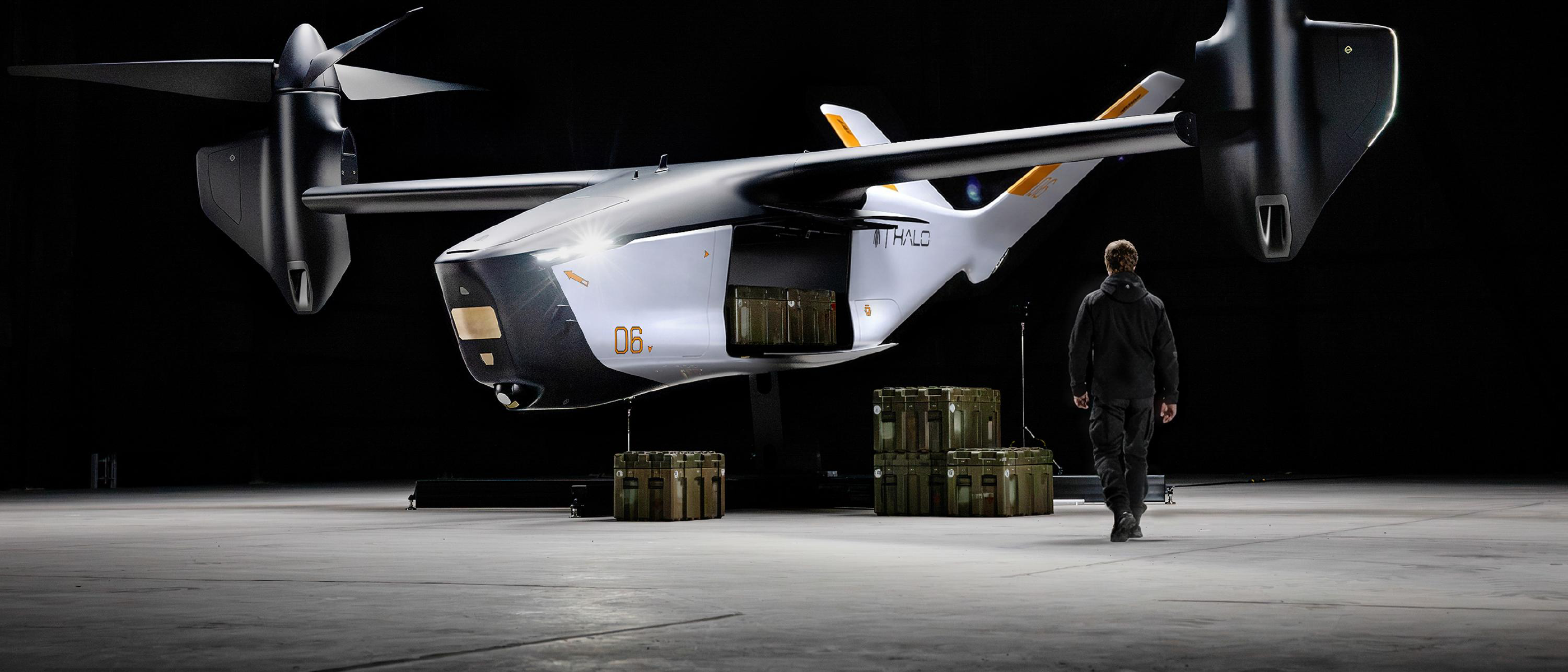
The landscape of aerospace is currently undergoing a seismic shift, moving away from traditional combustion engines toward sustainable, electric propulsion. While much of the public discourse has centered on the concept of “air taxis” for city commuters, a new partnership is proving that the utility of electric Vertical Takeoff and Landing (eVTOL) technology extends far beyond ride-sharing. Archer Aviation, a San Jose-based leader in electric aviation, has joined forces with Anduril Industries—the defense technology powerhouse founded by Palmer Luckey—to unveil a specialized aircraft designed for high-stakes environments.
This collaboration represents more than just a joint venture; it is a strategic convergence of commercial efficiency and military ruggedness. By combining Archer’s expertise in urban air mobility (UAM) with Anduril’s sophisticated approach to autonomous defense systems, the two companies are creating a platform that bridges the gap between civilian transport and tactical deployment. The result is an aircraft that leverages the agility of an electric powertrain while maintaining the operational requirements of modern defense logistics.
The unveiling of this aircraft marks a pivotal moment for Archer Aviation as it diversifies its portfolio beyond its primary commercial product, the Midnight air taxi. While Midnight is designed to whisk passengers across congested cityscapes, this new co-developed aircraft is built for resilience and versatility. This shift suggests that the future of eVTOLs will not be limited to luxury commutes but will instead become essential infrastructure for national security and rapid response operations globally.
Technical Foundations and Design Influence
To understand the technical DNA of this new aircraft, one must look at its predecessors and inspirations. The design heavily references Archer’s Midnight air taxi, which provides the baseline for its electric propulsion system and efficient aerodynamic profile. However, whereas Midnight focuses on passenger comfort and noise reduction for urban environments, this new variant is engineered for durability and mission adaptability in contested or remote areas where traditional runways are nonexistent.
Beyond its commercial roots, the aircraft draws significant inspiration from the V-22 Osprey. The Osprey is legendary in military circles for its tiltrotor capability—the ability to take off vertically like a helicopter and then transition to wing-borne flight like a fixed-wing airplane for higher speeds and greater range. By integrating these concepts into an all-electric framework, Archer and Anduril are attempting to eliminate many of the mechanical complexities associated with heavy combustion tiltrotors while retaining their unmatched tactical flexibility.
The integration of electric motors allows for a distributed propulsion system that increases redundancy; if one motor fails, others can compensate to ensure a safe landing—a critical safety feature when operating in hazardous zones. Furthermore, because electric motors produce fewer heat signatures than jet engines or turboprops, these aircraft offer an inherent advantage in stealth and thermal management during covert operations or reconnaissance missions over sensitive terrain.
Enter ‘Thunder’: The Defense Variant
Among the details revealed during this unveiling was “Thunder,” a specific variant developed by Anduril based on this co-developed platform. Thunder represents the specialization of eVTOL technology for defense applications. While Archer provides the aeronautical foundation—the airframe and power systems—Anduril brings its mastery of software integration and autonomous capabilities to create a vehicle capable of operating in complex electronic warfare environments without constant human piloting overhead.
Thunder is likely designed to handle tasks such as rapid troop insertion, medical evacuation (MEDEVAC), or autonomous cargo delivery into areas where traditional helicopters would be too loud or too vulnerable to detection. The synergy here is clear: Archer builds the “body,” and Anduril builds the “brain.” This allows Thunder to integrate seamlessly into existing defense networks, utilizing AI for navigation through GPS-denied environments or coordinating with other unmanned aerial systems (UAS).
This evolution mirrors trends we have seen in other sectors where commercial tech is hardened for industrial use cases; it’s similar to how we see advancements in autonomous ground vehicles facing challenges when transitioning from controlled highways to chaotic real worlds—a struggle recently highlighted when Robotaxis Invade Closed Highways. For Thunder to succeed where others have stumbled, it must combine Archer’s flight stability with Anduril’s robust situational awareness software to avoid operational failures during highndensity maneuvers in military theatersed zones].
Market Implications for Electric Aviation
The partnership between Archer Aviation and Anduril sends a powerful signal to investors and competitors alike regarding the monetization strategy of eVTOL companies. For years, critics have questioned whether urban air taxis alone could generate enough revenue to sustain these capital intensive startups given regulatory hurdles around noise ordinances and airspace management in cities like New York or Los Angeles. By pivoting toward defense contracts via Anduril, Archer secures a secondary revenue stream that is often more stable and less dependent on consumer adoption rates than civilian ride hailing services).
Defense spending typically involves long term contracts with high margins per unit produced compared to mass market consumer services_ This strategic move positions Archer not just as an aviation company but as a critical component of national security infrastructure_ It creates a feedback loop where military testing can accelerate safety certifications for civilian versions’ effectively using government funding as an R&D catalyst before scaling products like Midnight globally_
Furthermore,this move validates Palmer Luckey’s vision at Anduril regarding “software first” hardware_ Instead of designing an airplane from scratch,Anduril identified an existing high performance platform (Archer’s) และ layered their proprietary autonomy stack on top of it_ This drastically reduces time To market_ ensuring that current theater requirements are met without waiting decades for traditional aerospace procurement cycles_ which are notoriously slow compared to Silicon Valley development speeds_.
Strategic Convergence with Space & Robotics
The intersection of eVTOL technology does not exist in a vacuum; it overlaps significantly with advancements in orbital logistics and robotics_ As we see companies pushing boundaries elsewhere,such as how SpaceX Starfall Launch aims at global cargo delivery from orbit,the goal remains consistent:reducing transit time through unconventional means_. Whether delivering supplies from space or transporting tactical teams across 50 miles via electric rotors,the objective is total logistical dominance_.
From a robotics perspective,the collaboration between Archer’s hardware team AND Anduril’s software engineers mimics THE way advanced automation IS being applied across various industries_. We see similar patterns involving high precision hardware combined with intelligent monitoring_ much like how Venus Aerospace’s $90M RDRE seeks To revolutionize engine efficiency through novel engineering approaches_. In both cases,the focus shifted toward maximizing energy output while minimizing weight—the holy grail de aerodynamics_.
As these platforms evolve,we can expect them To integrate more deeply with AI driven command centers_ turning individual aircraft into nodes within larger swarms_. Imagine dozens Of Thunder variants operating autonomously To create A mobile sensor grid over A battlefield_ providing real time intelligence while remaining virtually silent compared To legacy Black Hawk helicopters_. This transition from single piloted craft TO networked autonomous fleets represents THE true disruptive potential Of THIS partnership_.
Future Outlook: Beyond Urban Air Mobility
Looking ahead,the success Of THE Archer AND Anduril collaboration will depend On Two factors:regulatory approval From aviation authorities AND THE energy density Of battery technology_. Current batteries remain THE bottleneck For eVTOL range; however,defense applications often allow For More flexible charging infrastructure Or hybrid backup systems That may not be feasible In A crowded downtown airport setting_. If Thunder can prove Its viability In rigorous military trials_ IT will pave THE way For more robust civilian emergency service vehicles_ such AS all electric fire fighting Or rescue craft_.
Moreover,this project highlights A broader trend OF Big Tech founders entering THE defense sector TO modernize Outdated procurement processes_. Palmer Luckey has consistently pushed For faster iteration cycles_ AND partnering WITH A nimble startup Like Archer IS Exactly How He Intends TO bypass Traditional Defense Prime contractors who often operate ON decade long timelines_. THIS agile approach To aerospace engineering could lead TO A paradigm shift IN How Governments procure aviation assets Across THE globe_.
Ultimately,THE unveiling OF THIS NEW Aircraft proves THAT Electric Aviation Is no longer Just About avoiding traffic On Your way TO Work_; IT IS about redefining rapid deployment AND tactical mobility . As These technologies Mature_ WE will likely see A blur Between Commercial Logistics AND Defense Capabilities_ leading TO An era Where Vertical takeoff Is AS common As wheel based transport Is today, regardless OF whether you Are A commuter In San Jose OR A soldier In A remote outpost _.
Frequently Asked Questions (FAQ)
What exactly did Archer Aviation {and} Anduril develop?
They co//developed an all\electric vertical takeoff {and} landing (eVTOL) aircraft designed specifically For versatility_ blending Commercial efficiency With military grade durability. One specific variant resulting From this project IS called ‘Thunder’\ which focuses On defense applications.
How does this differ from the ‘Midnight’ air taxi?
While Midnight IS optimized FOR Urban Air Mobility (UAM)\ focusing On passenger comfort\ low noise\ AND short city hops, THIS NEW Aircraft IS designed FOR rugged use cases. It draws inspiration From The V\ 22 Osprey TO provide better tactical flexibility\ endurance\ AND suitability FOR non-permissive environments.
Who are Palmer Luckey {and} why Is he involved?
Palmer Luckey IS The founder OF Anduril Industries, A company dedicated TO building modern defense tech using software-first principles. His involvement ensures That The hardware developed BY Archer IS integrated WITH advanced autonomy\ AI navigation, AND secure communication protocols necessary FOR modern warfare.
Does this mean we will see ‘Thunder’ flying over cities soon?
Unlikely. ‘Thunder’ IS specifically geared Toward Defense Applications,. However, THE technical lessons learned FROM developing Thunder Will almost certainly bleed back Into ARCHER’S civilian products, making Future iterations OF midnight safer\ more durable\ AND potentially more autonomous,.
Source: Original Article