





The Rise of the “Artificial State”
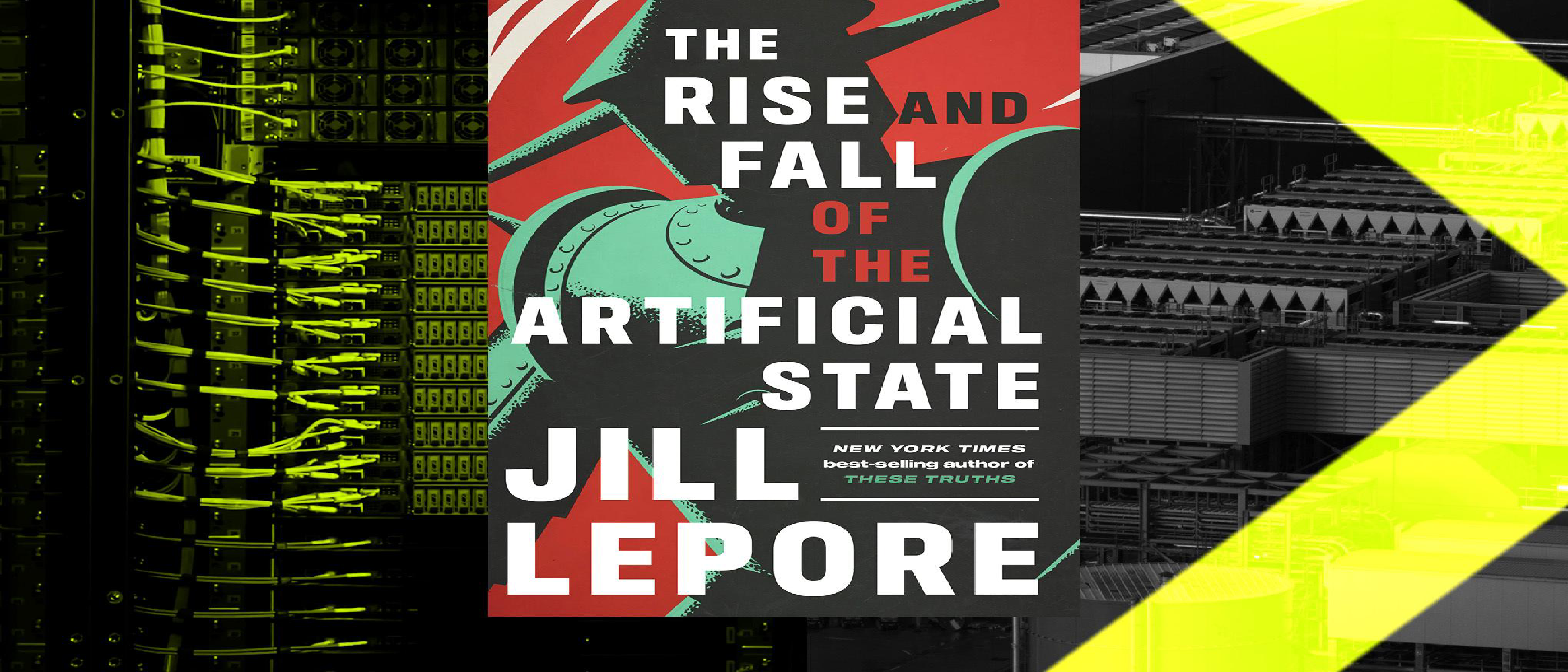
In her latest work, The Rise and Fall of the Artificial State, historian Dr. Jill Lepore articulates a compelling thesis: the nation‑state, once anchored in constitutional rights and public discourse, is being eclipsed by an “artificial state” built on relentless quantification. This new order is not a fictional dystopia; it is the cumulative outcome of three intertwined forces—computational power, algorithmic measurement, and the cultural embrace of data as the ultimate arbiter of truth.
Lepore defines the artificial state as a successor to the liberal nation‑state, one where the mechanisms of governance are delegated to machines that translate human preferences into binary scores. The shift is subtle yet profound: where citizens once debated policy in town halls, today they are presented with curated feeds, AI‑generated recommendations, and automated decision‑making pipelines that shape everything from the news they read to the candidates they vote for. By flattening nuanced concerns into a series of data points, the artificial state risks eroding the very deliberative processes that underpin democracy.
The relevance of this concept cannot be overstated. As platforms such as Twitter, Facebook, and TikTok refine their recommendation engines, the line between public discourse and algorithmic persuasion blurs. Lepore’s warning—“AI versus AI in upcoming elections”—captures a reality where competing AI systems, each optimized for different objectives, vie for influence over the electorate. Understanding this dynamic is essential for technologists, policymakers, and citizens alike.
Historical Roots: From Gallup to Micro‑Targeting
To grasp the present, we must trace the lineage of data‑driven politics back to its earliest formalization: scientific polling. In 1935, George Gallup pioneered a method for translating public opinion into statistically robust numbers, fundamentally altering how campaigns measured voter sentiment. Gallup’s approach introduced the notion that measurement could predict political outcomes, a premise that has only intensified with modern computing.
Fast‑forward to the digital age, and the Gallup model has been amplified a thousandfold. The advent of the internet enabled the collection of granular behavioral data—clicks, likes, dwell time—allowing campaigns to construct hyper‑personalized voter profiles. Tools like Chat GPT and other large language models now generate persuasive messaging at scale, while platforms provide real‑time feedback loops that refine those messages in milliseconds. The process resembles the fictional Multivac from Isaac Asimov’s “Franchise,” a super‑computer that predicts election results based on massive datasets; today’s AI does not merely predict, it acts.
Lepore’s narrative underscores how this evolution has shifted power from elected officials to data engineers and algorithm designers. The historical continuity—from Gallup’s paper questionnaires to today’s AI‑generated micro‑ads—highlights a persistent trend: the more we can quantify, the more control we assume over political outcomes. This trajectory sets the stage for the artificial state’s emergence, where the measurement itself becomes the governing apparatus.
Technical Mechanisms: AI, Micro‑Targeting, and Platform Algorithms
At the heart of the artificial state lie three technical pillars:
Large Language Models (LLMs) – Systems such as Chat GPT can synthesize political messaging that mirrors the tone, style, and policy positions of a candidate, while simultaneously optimizing for engagement metrics. Their ability to generate thousands of variants in seconds makes A/B testing at unprecedented scale possible.
Micro‑targeting Engines – By ingesting data from public platforms (Twitter, TikTok, Facebook) and private data brokers, these engines segment voters into narrowly defined cohorts. Each cohort receives tailored content designed to trigger specific emotional responses, a practice documented in the rise of AI‑powered campaign messages.
Platform Recommendation Algorithms – The ranking signals that determine what users see on their feeds are themselves AI models trained on engagement. When a political post receives high interaction, the algorithm amplifies it, creating a feedback loop that can elevate fringe content to mainstream visibility.
These mechanisms are not isolated; they interlock to produce a self‑reinforcing ecosystem. For example, a micro‑targeted ad that sparks controversy may be boosted by the platform’s algorithm, prompting the LLM to generate follow‑up content that further polarizes the audience. The result is a cascade where human agency is increasingly mediated by algorithmic decisions.
The implications of this technical stack are explored in depth in related industry analyses, such as the investigation of corporate AI super‑PAC spending on local elections ( Why corporate AI super PACs spent 27 million on a local election ) and the broader AI safety discourse ( Anthropic’s Fable 5: The AI Safety Crisis ). Both pieces illustrate how the same underlying technologies that power consumer products are being weaponized for political gain.
Democratic Risks and the Threat of Totalitarianism
Lepore’s central concern is the erosion of humanistic inquiry—the capacity to read, reason, and deliberate. When AI curates the information diet of citizens, the space for independent thought contracts. This contraction is not merely theoretical; it manifests as reduced exposure to dissenting viewpoints, amplified echo chambers, and an increased reliance on algorithmic “authority” to validate beliefs.
The danger escalates when AI systems become the primary decision‑makers in governance. Imagine a scenario where welfare eligibility, law‑enforcement prioritization, or even judicial sentencing are delegated to opaque models trained on historical data that may embed bias. Such a system could evolve into a soft totalitarianism—one that does not rely on overt coercion but on the seamless integration of algorithmic control into everyday life.
Moreover, the competitive nature of AI in elections creates a “AI arms race” where political actors continuously out‑engineer each other’s influence tactics. This dynamic can lead to a race to the bottom in terms of truthfulness and ethical standards, as the primary metric becomes voter persuasion rather than informed consent. The resulting environment threatens the very foundations of liberal democracy that Lepore cherishes.
Industry Impact: Market Responses and Business Realignments
The rise of the artificial state is already reshaping business strategies across the tech sector. Companies that once focused solely on consumer-facing AI products are now courting political clients, offering bespoke micro‑targeting suites and LLM‑driven content factories. Venture capital flows have followed, with funding rounds dedicated to “political tech” startups that promise to unlock voter data at unprecedented granularity.
At the same time, regulatory bodies are grappling with how to classify these services. Are micro‑targeting platforms “advertising” or “information services”? The ambiguity has led to a patchwork of state‑level initiatives, many of which are insufficient to address the cross‑border nature of digital campaigns. Industry players are responding by building compliance layers—audit trails, transparency dashboards, and consent mechanisms—to pre‑empt future legislation.
These market dynamics intersect with broader platform policy shifts. YouTube’s recent crackdown on AI‑generated “slop” content ( YouTube Fights AI Slop with New Monetization Rules ) signals a growing awareness that unchecked AI output can erode trust. Similarly, X’s algorithmic updates that prioritize replies from known connections ( X Algorithm Update Prioritizes Replies ) reflect attempts to mitigate the spread of algorithmically amplified political misinformation.
Collectively, these responses illustrate a market in flux: on one side, a lucrative demand for AI‑driven political tools; on the other, a rising tide of public and regulatory scrutiny that could reshape profit models.
Future Outlook: Governance, Ethics, and Technological Evolution
Looking ahead, several trajectories will determine whether the artificial state becomes a permanent fixture or a cautionary footnote:
Policy Interventions – Robust data‑privacy legislation, transparency mandates for AI‑generated political content, and independent algorithmic audits could restore a measure of human oversight. The challenge lies in crafting rules that are both enforceable and adaptable to rapid AI advances.
Technical Safeguards – Emerging research on “explainable AI” and “human‑in‑the‑loop” systems offers pathways to embed accountability directly into the technology stack. By designing models that surface their reasoning, developers can give citizens the tools to question AI‑driven decisions.
Civic Education – As Lepore emphasizes, preserving the capacity for humanistic inquiry requires a cultural shift. Educational curricula that teach critical media literacy, algorithmic awareness, and democratic participation will be essential to counterbalance the flattening effect of measurement.
Market Realignment – Companies that prioritize ethical AI and transparent practices may capture a growing segment of socially conscious users and advertisers. Conversely, firms that double down on opaque micro‑targeting risk backlash, brand damage, or regulatory penalties.
The future of the artificial state will likely be shaped by a tug‑of‑war between these forces. If democratic institutions can adapt—by integrating technical expertise, enforcing accountability, and fostering an informed citizenry—the artificial state may evolve into a tool that amplifies, rather than suppresses, democratic participation. If not, we risk sliding into a regime where algorithmic efficiency trumps human judgment, a scenario Lepore warns could lead us “through the ice into a drowning pond.”
Frequently Asked Questions
Q: What exactly does “artificial state” mean?
A: It refers to a governance model where computational systems, data measurement, and algorithmic decision‑making replace traditional, deliberative democratic processes.
Q: How is AI currently used in political campaigns?
A: AI powers content generation (e.g., Chat GPT), micro‑targeting based on platform data, and real‑time optimization of ad spend, allowing campaigns to tailor messages to individual voter profiles.
Q: Are there any legal frameworks addressing AI‑driven political influence?
A: Some jurisdictions have begun to regulate political advertising transparency, but comprehensive federal or international standards are still in development.
Q: Can citizens protect themselves from AI‑mediated manipulation?
A: Developing media literacy, using tools that reveal the source of content, and supporting platforms that prioritize transparency can mitigate exposure to manipulative AI content.
Q: What role do tech companies have in preventing the rise of an artificial state?
A: Companies can implement algorithmic audits, provide opt‑out mechanisms for micro‑targeting, and collaborate with regulators to establish industry‑wide standards for political AI use.
Source: Original Article