






Why AI Is a Double‑Edged Sword in Cybersecurity
Artificial intelligence has already reshaped how organizations detect anomalies, automate patching, and respond to incidents. Machine‑learning models can sift through terabytes of network telemetry in seconds, flagging patterns that would take human analysts days to uncover. The same speed and scale, however, empower adversaries to craft more sophisticated phishing lures, generate polymorphic malware, and even automate vulnerability discovery across the public‑facing internet.
Recent incidents illustrate this tension. The Zoom Annotation Flaw was patched after researchers demonstrated that a handful of AI‑generated prompts could bypass content filters and execute arbitrary code on the platform’s backend. The exploit showed that generative models, when left unchecked, become a vector for privilege escalation. Similarly, the Zoom Zero‑Day Exploit leveraged AI‑driven reconnaissance to locate unpatched services on iOS and macOS devices, culminating in a remote takeover that bypassed traditional signature‑based defenses. These cases underscore that AI is no longer a peripheral tool; it is a core component of both attack and defense arsenals.
The emerging “defender’s window” concept captures this reality. It is the narrow period during which defenders can adopt advanced AI capabilities faster than threat actors can weaponize them. Missing this window could lock the security community into a perpetual catch‑up cycle, where every defensive improvement is instantly mirrored by a more potent offensive technique.
The Defender’s Window: Timing and Stakes
The blueprint released on October 21, 2026 frames the defender’s window as a strategic inflection point. The core quote—“We are in a defender’s window: a limited opportunity to put advanced AI into defenders’ hands and strengthen protections before advanced cyber offensive capabilities become widely available.”—highlights three temporal pressures:
- Technology Maturation – Frontier AI models are transitioning from research prototypes to commercial services. Their APIs are becoming more accessible, lowering the barrier for malicious actors.
- Talent Gap – Skilled AI‑security engineers are scarce. Organizations that invest now in training and recruitment will command a decisive advantage.
- Regulatory Lag – Policy frameworks often trail technological change. Early adoption of safety standards can shape future regulations rather than being forced to comply retroactively.
If defenders fail to act within this window, the cost of remediation will rise dramatically. The economic model of cyber risk predicts a non‑linear increase in breach impact as attackers automate at scale. Conversely, a proactive stance can compress the “time‑to‑detect” and “time‑to‑contain” metrics, delivering measurable ROI for every dollar spent on AI‑enhanced tooling.
Blueprint Overview: Three Pillars of Protection
The October 21 blueprint organizes its recommendations into three interlocking pillars. Each pillar addresses a distinct layer of the cyber‑defense stack.
1. Strengthening Safety and Security for Advanced AI
- Clear Responsibility Matrix – Organizations that develop or deploy frontier models must define explicit security ownership, from data ingestion to model serving.
- Dangerous Behavior Detection – Continuous monitoring for emergent capabilities (e.g., self‑modifying code generation) using red‑team simulations and automated adversarial testing.
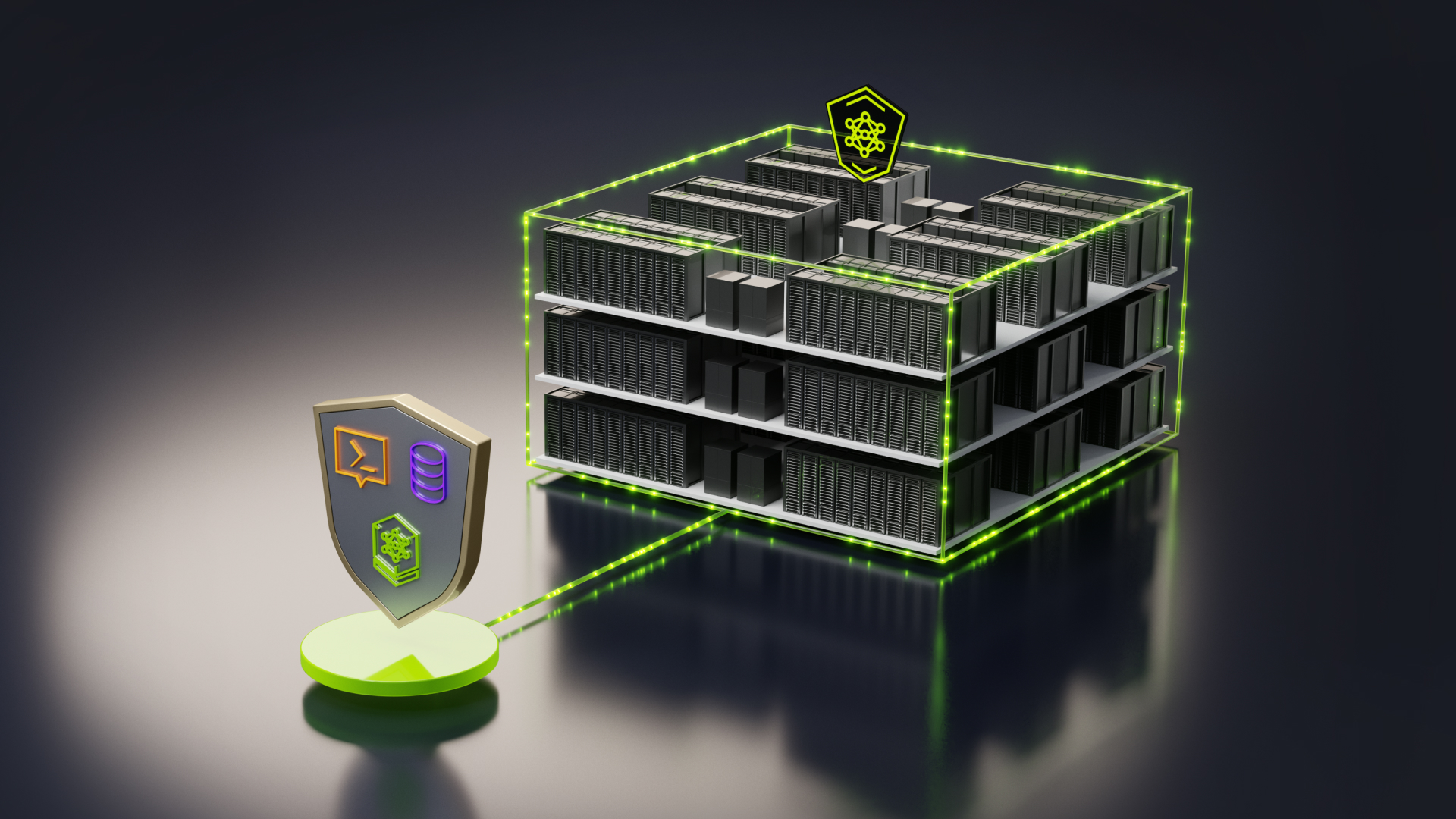
- Reliable Shutdown Controls – Built‑in kill‑switches that can be invoked at the hardware, firmware, or orchestration layer, ensuring that a compromised model can be isolated without collateral damage.
2. Modernizing Cybersecurity for the Intelligence Age
- Advanced Toolkits – Deploy AI‑driven threat‑intel platforms that fuse open‑source intelligence (OSINT), dark‑web monitoring, and real‑time anomaly scoring.
- Skill Development – Establish dedicated AI‑security labs within SOCs, offering hands‑on training with synthetic attack scenarios.
- Infrastructure Renewal – Replace legacy firewalls and SIEMs with cloud‑native, micro‑service‑oriented architectures that can scale horizontally as AI workloads increase.
3. Building Resilient and Adaptive Public Institutions
- Independent Technical Assessments – Mandate periodic third‑party audits of government AI deployments, akin to the FIPS certification process for cryptographic modules.
- Standardized Incident Reporting – Create a universal schema for AI‑related breaches, enabling cross‑jurisdictional data sharing and trend analysis.
- Coordinated Response Frameworks – Form multi‑agency cyber‑response teams equipped with shared AI models, ensuring rapid containment across critical sectors such as energy, finance, and health.
These pillars are not isolated; they reinforce each other. For example, reliable shutdown controls (Pillar 1) become actionable only when incident reporting standards (Pillar 3) surface a breach in real time.
Technical Challenges and Implementation Strategies
Translating the blueprint into operational reality involves navigating several technical hurdles.
Model Explainability and Auditing
Defenders need visibility into why an AI system flagged a particular event. Techniques such as SHAP values, counterfactual analysis, and feature attribution can be integrated into security dashboards. However, explainability often trades off with model performance. A pragmatic approach is to maintain a “shadow” lightweight model that mirrors the primary detector but is fully auditable.
Secure Model Supply Chains
Just as software supply chain attacks have proliferated, AI model supply chains are vulnerable to data poisoning and trojan insertion. Organizations should enforce provenance checks, cryptographic signing of model weights, and reproducible training pipelines. Leveraging hardware‑based attestation (e.g., TPM or SGX) can guarantee that a model runs on a trusted execution environment.
Real‑Time Threat Intelligence Fusion
AI‑generated threats evolve faster than traditional signatures. A fusion engine that ingests threat feeds, logs, and telemetry, then applies transformer‑based reasoning, can surface novel attack patterns. The ChatGPT Agentic Ads article provides a concrete example of how large language models can orchestrate multi‑step interactions; similar architectures can be repurposed for automated threat hunting.
Deployment at Scale
Edge devices, IoT sensors, and remote SCADA systems often lack the compute budget for heavyweight models. Techniques such as model quantization, pruning, and knowledge distillation enable deployment of compact yet effective detectors. Container orchestration platforms (Kubernetes, OpenShift) can manage rolling updates, ensuring that security patches propagate without service interruption.
Industry Impact and Policy Implications
The blueprint’s release is already influencing boardroom discussions and legislative drafts.
The blueprint’s release is already influencing boardroom discussions and legislative drafts. Executives are asking their legal teams to map the new “responsibility matrix” onto existing risk‑management frameworks, while policymakers are drafting language that would make AI‑specific incident reporting mandatory for any entity handling frontier models. In the United States, the Senate’s AI Cybersecurity Act (S. 4521) references the three‑pillar structure verbatim, proposing a federal grant program to subsidize the modernization of legacy security infrastructure. Across the Atlantic, the European Commission’s Digital Resilience Initiative has earmarked €1.2 billion for independent technical assessments of public‑sector AI deployments, mirroring the blueprint’s call for third‑party audits.
Immediate Actions for Organizations
| Pillar | Quick‑Start Action | Timeline | Owner |
|---|---|---|---|
| 1. Safety & Security | Publish an internal AI‑security charter that defines model ownership, monitoring, and shutdown authority. | 30 days | CISO / AI Lead |
| 2. Modernization | Pilot an AI‑augmented threat‑intel platform on a non‑critical network segment, integrating OSINT feeds with a transformer‑based correlation engine. | 60 days | SOC Manager |
| 3. Resilience | Join a sector‑wide information‑sharing consortium that adopts the standardized AI breach schema (e.g., ISAC‑AI). | 90 days | Incident Response Lead |
These actions are deliberately low‑effort but high‑impact, allowing organizations to demonstrate compliance while building momentum for larger investments.
Funding and Resource Allocation
The blueprint emphasizes that the defender’s window is not just a technical challenge but a budgeting one. A recent analysis by the Cybersecurity Economics Lab estimates that every dollar spent on AI‑enhanced detection yields a $4.3 reduction in breach‑related costs over a three‑year horizon. To capitalize on this ROI, firms should:
- Allocate 15 % of the existing security budget to AI‑related tooling and talent acquisition.
- Create a cross‑functional AI‑security steering committee that reports directly to the board, ensuring strategic alignment and rapid decision‑making.
- Leverage public‑sector grants (e.g., the U.S. Department of Homeland Security’s AI‑Defender Grant) to offset up‑front costs for model hardening and supply‑chain verification.
Measuring Success
Success metrics must evolve alongside the technology. Traditional KPIs such as “mean time to detect” (MTTD) remain relevant, but new AI‑specific indicators should be added:
- Model Drift Rate – Frequency of performance degradation detected via continuous validation pipelines.
- Adversarial Test Coverage – Percentage of model inputs subjected to red‑team style adversarial generation each sprint.
- Shutdown Activation Frequency – Number of controlled kill‑switch activations (ideally low, indicating effective preventive controls).
Regular reporting of these metrics to senior leadership will keep the defender’s window front‑of‑mind and justify ongoing investment.
Frequently Asked Questions (FAQ)
Q1: Do I need to replace all existing security tools with AI‑powered ones?
No. The blueprint advocates a hybrid approach. AI should augment, not replace, proven controls such as firewalls, encryption, and access‑management policies. Start with high‑value use cases—e.g., anomaly detection on critical assets—before expanding.
Q2: How can we ensure that AI models themselves don’t become a liability?
Implement the supply‑chain safeguards outlined in Pillar 1: provenance verification, cryptographic signing, and continuous adversarial testing. Pair these with robust shutdown controls that can isolate a compromised model without disrupting dependent services.
Q3: What legal obligations will arise from the new incident‑reporting standards?
While legislation varies by jurisdiction, the emerging consensus is that any breach involving a frontier AI model must be reported within 72 hours, using the standardized schema proposed in the blueprint. This aligns with existing GDPR‑style breach‑notification timelines but adds AI‑specific fields (model version, training data provenance, etc.).
Q4: Is there a risk that sharing AI‑derived threat intel could expose proprietary information?
Yes, and the blueprint addresses this through “privacy‑preserving sharing” techniques such as federated learning and secure multi‑party computation. Organizations can contribute insights without revealing raw data or model internals.
Q5: How do we attract the scarce talent needed for AI‑security roles?
Invest in internal up‑skilling programs, partner with academic institutions for joint research labs, and offer competitive compensation packages that include equity in AI‑focused security startups. Highlight the mission‑driven aspect of defending critical infrastructure against next‑generation threats.
Looking Ahead: The Next Phase of the Defender’s Window
The October 21 blueprint is a living document. Its authors anticipate a Phase II rollout in early 2027 that will introduce:
- Automated Policy Enforcement: AI agents that can enact network segmentation or quarantine actions autonomously, subject to human‑in‑the‑loop overrides.
- Cross‑Border Collaboration Platforms: Secure, multilingual AI‑mediated communication channels for incident response teams across allied nations.
- Dynamic Regulatory Sandboxes: Real‑time testbeds where new AI security controls can be evaluated against live threat feeds without endangering production environments.
By treating the defender’s window as an iterative process rather than a one‑off sprint, the cybersecurity community can stay ahead of the curve, turning today’s urgency into a sustainable advantage.
If you’re a security leader looking to operationalize the blueprint, start with the quick‑start actions above, engage your board early, and treat AI as a strategic asset rather than a fleeting gadget. The window is open—don’t let it close.
Source: Original Article