


Why AI Is a Strategic Imperative for Modern Cities
Urban environments generate petabytes of data every day—from traffic cameras and air‑quality sensors to utility SCADA systems. Historically, municipalities have struggled to move beyond data collection to real‑time decision making. The gap is not technical scarcity; it is the orchestration of heterogeneous data sources, the latency of legacy IT stacks, and the governance required for privacy‑sensitive information.
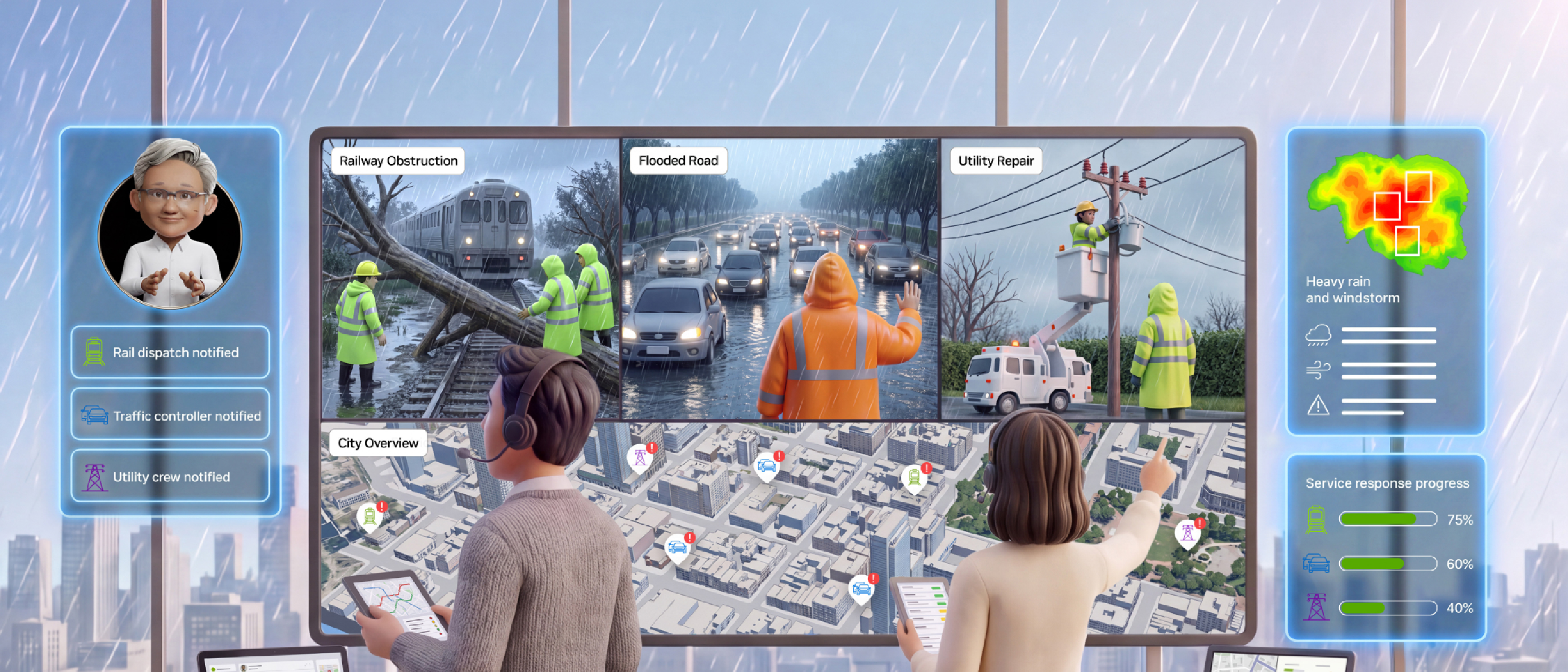
- Operational efficiency – Faster incident detection reduces response times for accidents, floods, or power outages.
- Citizen experience – AI‑driven chat‑bots and vision agents can answer service requests instantly, cutting bureaucratic friction.
- Sustainability goals – Predictive traffic routing and energy‑usage modeling help cities meet carbon‑reduction targets.
When AI is embedded at the edge of city infrastructure, the feedback loop shortens from days to seconds. That shift is what NVIDIA’s physical and agentic AI platform promises: a unified compute fabric that lets public agencies act on data the moment it is captured.
Physical AI and Digital Twins: The Technical Bedrock
Physical AI refers to the combination of high‑performance GPUs, sensor‑level inference, and simulation models that mirror the real world. NVIDIA’s Omniverse and Metropolis libraries provide the software glue that turns raw video streams into structured, searchable metadata.
Digital Twin Architecture
- Data Ingestion Layer – High‑throughput pipelines pull video, LiDAR, and IoT telemetry into a central data lake.
- Real‑Time Fusion Engine – GPU‑accelerated kernels align disparate modalities (e.g., aligning a traffic camera view with a GIS map).
- World Reasoning Model – NVIDIA Cosmos world models generate probabilistic predictions about crowd movement, vehicle flow, or infrastructure stress.
- Visualization & Control – Engineers interact with a 3‑D replica in Omniverse, issuing “what‑if” scenarios that instantly propagate through the simulation.
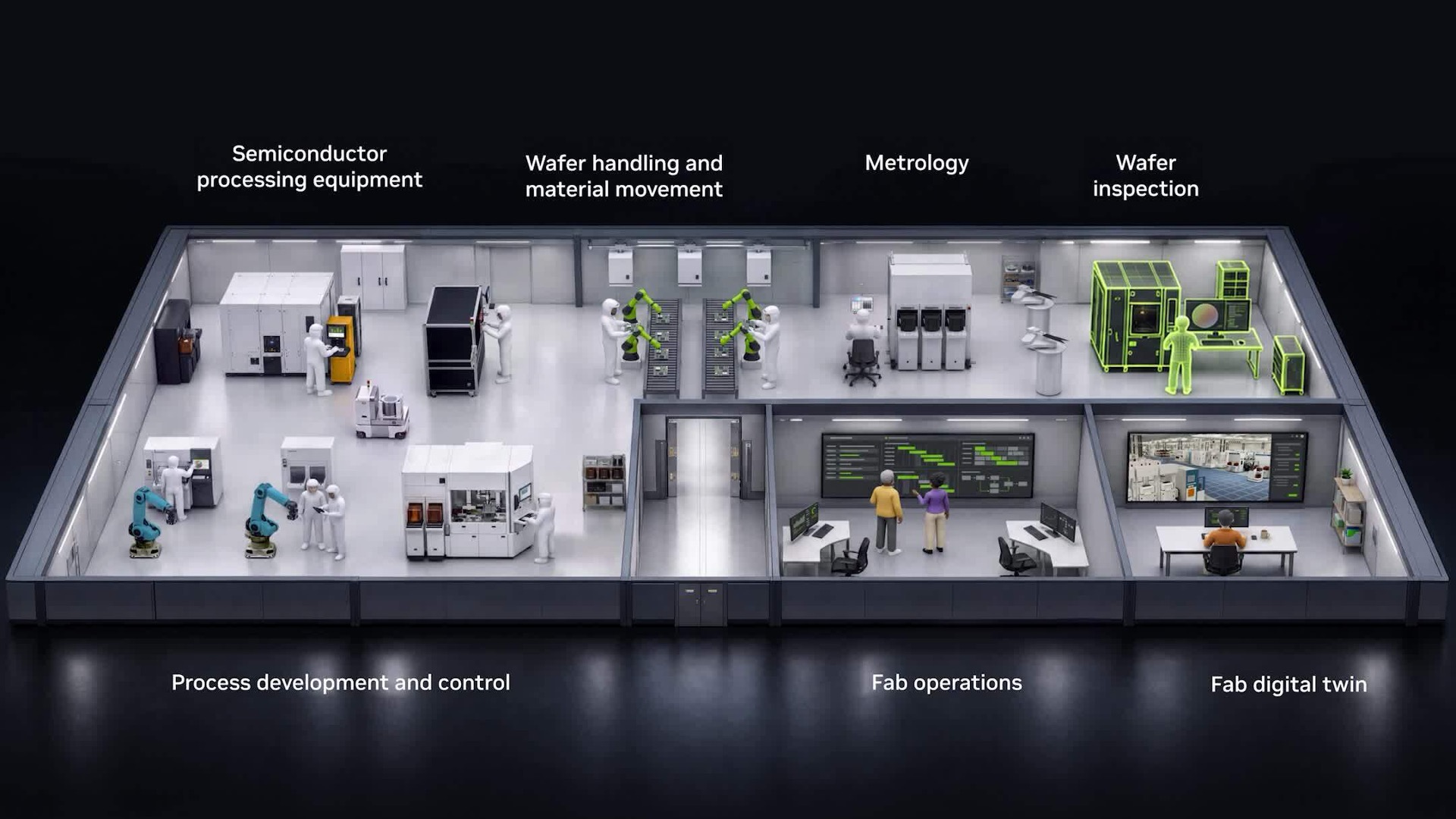
The result is a living replica of a district, a refinery, or an entire metropolitan area that can be queried like a database. This approach mirrors the concepts discussed in the article AI‑Defined Fab: Accelerating Chip Design and Yield, where digital twins accelerate physical processes in semiconductor manufacturing. The same principles now apply to streets, bridges, and public utilities.
Edge‑to‑Cloud Continuum
Physical AI workloads are split between RTX PRO workstations at the edge (e.g., traffic‑signal cabinets) and centralized GPU clusters in municipal data centers. NVIDIA’s Nemotron language models run on the same hardware, enabling natural‑language queries against the twin (“Show me projected congestion on Main St. at 5 pm”). This seamless edge‑to‑cloud flow eliminates the need for separate analytics stacks.
Agentic AI for Public Services
Agentic AI extends the physical layer with autonomous software agents that can converse, reason, and trigger actions. NVIDIA’s Nemotron models, fine‑tuned on municipal datasets, power resident‑service bots, vision assistants, and operational coordinators.
Resident‑Service Bots
- 1Million Bot in Spain combines open‑source ALIA models trained at the Barcelona Supercomputing Center with Nemotron to field over 150 deployments.
- Functions include handling appointment scheduling, urban‑planning incident reports, and general inquiries.
- Because the models run on modest RTX workstations, even small towns can launch a full‑featured AI help desk without a data‑center investment.
Vision Agents for Safety & Mobility
In Wrocław, Poland, K2K leverages NVIDIA Metropolis Blueprint for video search and summarization (VSS). The system ingests feeds from thousands of cameras, tags events (e.g., illegal parking, pedestrian crossing violations), and surfaces alerts to traffic‑control centers.
Live X in the San Francisco Bay Area builds on the same stack, adding conversational overlays that guide airport passengers or hospital visitors in real time. The agents can be localized to any language, a crucial feature for multilingual municipalities.
Governance and Data Sovereignty
All AI processing can be confined to on‑premise GPUs, ensuring that personally identifiable information never leaves the city’s jurisdiction. This design respects GDPR, CCPA, and emerging data‑sovereignty regulations, while still allowing developers to plug in open‑source models from the community.
Shared GPU Infrastructure: A Common Foundation
One of the most compelling aspects of NVIDIA’s roadmap is the shared computing infrastructure model. Instead of each department purchasing its own GPU farm, a municipal consortium can provision a pooled resource pool:
- Cost Efficiency – Capital expenditures are amortized across dozens of agencies.
- Scalability – New workloads (e.g., a pandemic‑response dashboard) can be spun up on demand.
- Developer Enablement – Local startups and university labs gain access to the same GPUs used by city planners, fostering an ecosystem of innovation.
ITMAX in Malaysia illustrates this approach. Their Samur AI V2 vision agents run on RTX PRO 6000 GPUs, supporting a roadmap of 17,000+ cameras by 2027. By integrating the open‑source Tera Sim traffic simulator, they achieve up to a 26 % reduction in peak‑hour travel times—demonstrating how shared infrastructure can deliver measurable public‑benefit outcomes.
Industry Impact and Real‑World Deployments
The convergence of physical and agentic AI is already reshaping how cities operate:
| City / Region | Core Use‑Case | Key NVIDIA Technologies | Measurable Outcome |
|---|---|---|---|
| Madrid (Spain) | Resident‑service automation | Nemotron, ALIA, RTX PRO | 30 % reduction in call‑center volume |
| San Francisco Bay Area | Interactive AI kiosks in public spaces | Cosmos, Omniverse, RTX PRO | 20 % faster way‑finding for visitors |
| Wrocław (Poland) | Video‑based mobility analytics | Metropolis Blueprint, RTX PRO | 15 % improvement in incident response time |
| Malaysia (nationwide) | Traffic‑signal optimization | Samur AI V2, Tera Sim, RTX PRO 6000 | 26 % cut in peak‑hour travel time |
| Lekki (Nigeria) | Refinery digital twin for operations | Forge Plant Cognition, Nemotron | Real‑time anomaly detection, reduced downtime |
These deployments echo the governance concerns explored in Reverse Game Theory: Guiding Super‑Intelligent AI, where the balance between autonomous decision‑making and human oversight is paramount. By keeping the AI “agentic” layer under municipal control, cities can reap efficiency gains without surrendering policy authority.
Future Outlook and Remaining Challenges
Scaling Beyond Pilot Projects
The next five years will likely see a transition from isolated pilots to city‑wide AI fabrics. Critical success factors include:
- Standardized Data Models – Interoperability between legacy SCADA, GIS, and AI pipelines.
- Robust Edge Security – Hardware‑rooted attestation to prevent model tampering on remote cabinets.
- Talent Pipelines – Partnerships with local universities to train AI engineers familiar with NVIDIA’s SDKs.
Ethical and Legal Considerations
As vision agents become capable of predictive policing or crowd‑control recommendations, municipalities must codify transparent audit trails. The **Reverse Game
A digital twin of the plant and its process control loops is kept in sync with sensor streams, allowing Nemotron‑driven agents to flag anomalies, suggest corrective actions, and even run “what‑if” simulations for maintenance scheduling. Early results show a 15 % reduction in unplanned shutdowns and a 10 % improvement in energy efficiency, demonstrating how physical AI can deliver tangible ROI in heavy‑industry contexts that are increasingly part of the urban ecosystem.
Ethical and Legal Considerations
As vision agents become capable of predictive policing or crowd‑control recommendations, municipalities must codify transparent audit trails. The Reverse Game Theory framework highlighted in recent research provides a useful lens: AI agents should be designed to anticipate the incentives of human operators and regulators, ensuring that autonomous recommendations can be overridden or audited without friction. Key safeguards include:
- Explainability dashboards that surface the confidence scores and feature attributions behind each AI‑driven decision.
- Bias detection pipelines that continuously monitor model outputs for disparate impact across neighborhoods, demographics, or socioeconomic groups.
- Data minimization policies that retain only the metadata needed for a given service, automatically purging raw video after a configurable retention window.
- Human‑in‑the‑loop (HITL) protocols that require a certified operator to approve any action that could affect public safety or civil liberties (e.g., dispatching law‑enforcement resources).
By embedding these controls into the shared GPU infrastructure, cities can maintain compliance with GDPR, CCPA, and emerging AI‑specific statutes while still reaping the efficiency gains of autonomous agents.
Implementation Blueprint for Cities
Below is a practical, phased roadmap that municipal leaders can adopt to bring physical and agentic AI from concept to production:
| Phase | Objectives | Core NVIDIA Technologies | Typical Timeline |
|---|---|---|---|
| 1️⃣ Discovery & Data Audit | Catalog existing sensor feeds, legacy SCADA, and citizen‑service platforms. Identify data‑privacy constraints. | NVIDIA Data Fusion SDK, Omniverse Connectors for GIS & BIM. | 2–3 months |
| 2️⃣ Edge Enablement | Deploy RTX PRO workstations or Jetson AGX modules at critical junctions (traffic signals, utility substations). | Jetson AGX, RTX PRO, Metropolis Edge SDK. | 3–4 months |
| 3️⃣ Centralized GPU Cluster | Provision a municipal GPU pool (on‑prem or hybrid cloud) for heavy‑weight inference and model training. | NVIDIA DGX Cloud, NVIDIA AI Enterprise, Nemotron LLMs. | 1–2 months |
| 4️⃣ Pilot Development | Build a focused use‑case (e.g., traffic‑signal optimization or 24/7 citizen‑service bot). Fine‑tune Nemotron on local language corpora. | Cosmos, Metropolis Blueprint, NVIDIA NeMo for LLM fine‑tuning. | 4–6 months |
| 5️⃣ Governance Layer | Implement audit logging, model‑version control, and HITL approval workflows. | NVIDIA AI Guardrails, Kubeflow Pipelines, Open Policy Agent (OPA) integration. | 2 months (parallel) |
| 6️⃣ City‑wide Scale‑Out | Replicate the pilot across additional departments (public safety, utilities, health). Enable shared‑service APIs for third‑party developers. | Omniverse Enterprise, NVIDIA AI‑as‑a‑Service (AIaaS), Metropolis VSS. | Ongoing |
| 7️⃣ Continuous Improvement | Monitor KPI dashboards, retrain models with fresh data, and expand to new sensor modalities (e.g., air‑quality drones). | NVIDIA Triton Inference Server, NVIDIA Clara for multimodal analytics. | Ongoing |
Key Success Factors
- Cross‑departmental data contracts that define ownership, latency expectations, and security requirements.
- Skill‑building programs in partnership with local universities to create a pipeline of AI engineers familiar with NVIDIA’s SDKs.
- Public‑engagement portals that let citizens see how AI is used, provide feedback, and opt‑out where appropriate.
Conclusion
Physical AI and agentic AI together form a dual‑layer intelligence fabric that can turn the sprawling, noisy data streams of modern cities into actionable, real‑time insights. NVIDIA’s ecosystem—spanning RTX PRO edge devices, Nemotron language models, Cosmos world reasoning, and the Omniverse/Metropolis software stack—offers a turnkey yet customizable foundation. By leveraging shared GPU infrastructure, municipalities can avoid costly siloed deployments, accelerate innovation, and keep sensitive data under local control.
The early adopters highlighted above—Madrid’s 1Million Bot, Wrocław’s K2K video analytics, Malaysia’s Samur AI V2 traffic platform, and the Lekki refinery digital twin—show that measurable benefits are already within reach: reduced response times, lower operational costs, and greener, more livable urban environments. As cities continue to grow, the ability to sense, simulate, and act in seconds rather than days will become a decisive competitive advantage. With thoughtful governance, transparent AI practices, and a collaborative ecosystem of public agencies, private partners, and academia, the promise of truly smart, AI‑enabled cities can be realized at scale.
FAQ
Q: Do I need a massive GPU farm to start using NVIDIA’s AI solutions? A: No. Many city workloads run comfortably on a single RTX PRO workstation or a modest Jetson AGX edge node. The shared‑infrastructure model lets multiple departments pool resources as they scale.
Q: How does NVIDIA ensure data privacy for sensitive city data? A: All inference can be performed on‑premise, and the platform supports encrypted data pipelines, hardware‑rooted attestation, and strict data‑retention policies. Models never need to leave the municipal firewall unless explicitly permitted.
Q: Can the AI agents understand local languages and dialects? A: Yes. Nemotron models can be fine‑tuned on municipal corpora, and open‑source language models such as ALIA or LLaMA can be adapted to regional vocabularies, enabling multilingual citizen‑service bots.
Q: What is the typical ROI timeline for a traffic‑management pilot? A: Early deployments (e.g., ITMAX’s Samur AI V2) have reported a 20‑30 % reduction in peak‑hour travel times within 12 months, translating into fuel savings, lower emissions, and improved commuter satisfaction.
Q: How do I address bias in vision‑based surveillance systems? A: NVIDIA provides bias‑detection toolkits within the Metropolis SDK, and municipalities should pair these with regular audits, community oversight boards, and clear HITL escalation paths.
Q: Is there support for integrating legacy SCADA or GIS systems? A: Omniverse Connectors and the Data Fusion SDK include adapters for common SCADA protocols (OPC-UA, Modbus) and GIS formats (GeoJSON, CityGML), simplifying integration without wholesale system replacement.
Q: What training resources are available for city staff? A: NVIDIA offers the NVIDIA AI City Academy, a suite of free online courses, workshops, and certification tracks tailored for public‑sector engineers and planners.
Source: Original Article