


The Phenomenon: Sex in Driverless Cars
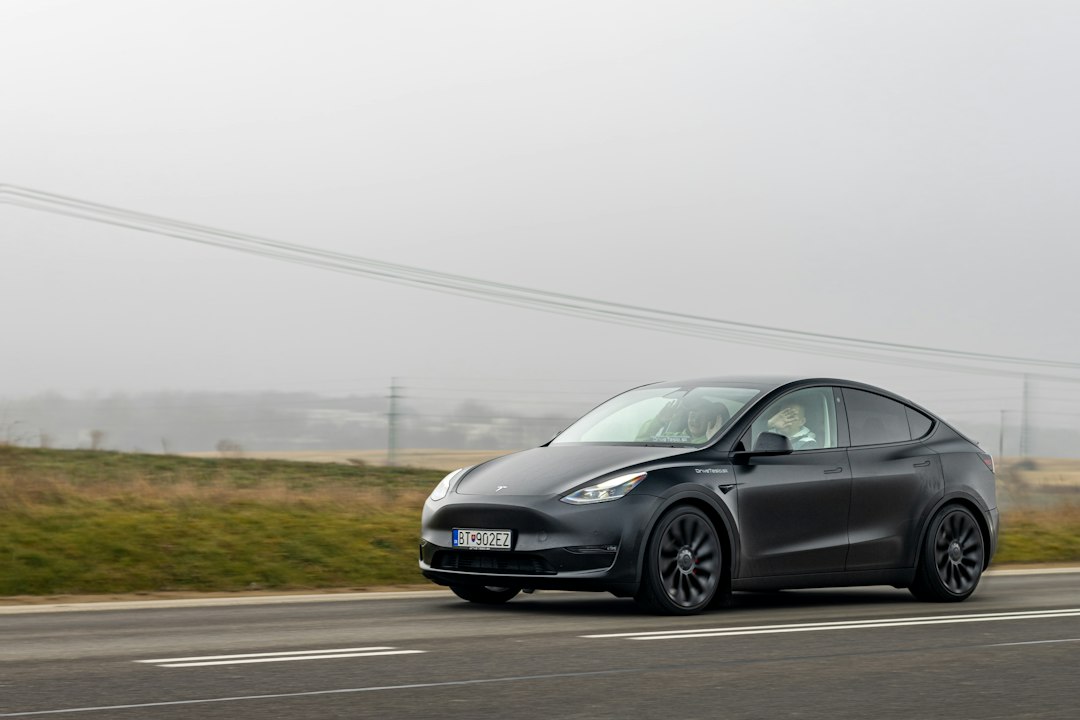
When Tesla’s Autopilot first allowed hands‑free highway cruising, a wave of user‑generated content flooded social media. Among the most provocative clips were videos of couples—sometimes strangers—engaging in sexual activity from the driver’s seat. The novelty of a vehicle that no longer required a human to monitor the road created a false sense of seclusion, prompting riders to treat the cabin as a private bedroom rather than a public transport space.
The trend did not stop with Tesla. The San Francisco Standard recently interviewed several individuals who claimed to have had sex inside robotaxis operated by General Motors’ Cruise service before it was discontinued. In a separate incident, two intoxicated teenagers hired a Waymo robotaxi, consumed gel beads, and hurled them out of the windows, illustrating how perceived privacy can be weaponized.
These anecdotes are more than tabloid fodder; they expose a design blind spot that autonomous‑vehicle (AV) manufacturers have yet to address comprehensively.
Why Privacy Assumptions Fail in Autonomous Vehicles
The Illusion of an Empty Cabin
Traditional taxis and rideshare cars come with an implicit social contract: a human driver is present, able to intervene, and—perhaps more importantly—capable of enforcing socially acceptable behavior. The removal of that human presence eliminates the “small‑talk” checkpoint that often discourages overtly intimate or disruptive actions.
“There’s no one to tell you, ‘You can’t do that.’ It gets to the point where you’re more and more and more comfortable, and if you’re with someone, like a more serious partner, it can escalat[e] to other activities,” a man told the SF Standard.
The perception of privacy is further amplified by the vehicle’s interior design. Soft lighting, spacious rear seats, and the absence of visible driver controls give the cabin a lounge‑like ambience. Yet, AVs are equipped with an array of cameras, microphones, and lidar sensors that continuously stream data to cloud servers for safety monitoring and fleet management. The terms‑and‑conditions that riders accept often contain clauses granting the operator rights to record and analyze interior footage—a fact most passengers overlook.
Data Retention and Legal Exposure
From a compliance perspective, every recorded incident becomes a potential piece of evidence. If a passenger engages in illegal activity—public indecency, drug consumption, or vandalism—the operator may be compelled to hand over interior video to law enforcement. This creates a liability loop where the operator is both a data custodian and a potential witness.
The Waymo teen incident underscores this risk. By shooting gel beads out of the windows, the riders not only created a safety hazard for other road users but also generated interior and exterior video that could be used in a criminal investigation. The incident raises the question: Should AV interiors be designed to limit the capture of non‑essential activities, or should operators enforce stricter usage policies?
Human‑Factors Research and the “Love in Traffic” Workshop
In response to the emerging “sex‑in‑AV” phenomenon, human‑factors researcher Alexandros Rouchitsas organized a workshop titled “Love in Traffic.” The event brought together academics, designers, and industry engineers to discuss how autonomous interiors could accommodate—or deter—sexual activity without compromising safety.
“The interiors of vehicles has been sexualized and appropriated for sex since forever in popular culture. You can see it in movies, you can see it in lyrics, you can see it in photography,” said Rouchitsas.
Key takeaways from the workshop included:
- Context‑aware interior zoning: Using seat‑belt sensors and occupancy detection to differentiate between “passenger mode” and “intimate mode,” potentially prompting a privacy overlay on interior cameras.
- Dynamic privacy shields: Software‑controlled blurring of interior video streams when the vehicle detects that occupants are engaged in non‑driving activities, while still preserving safety‑critical data (e.g., seat‑belt status, occupant posture for crash detection).
- Consent signaling: A simple UI element—similar to a “Do Not Disturb” button on smartphones—allowing occupants to indicate that they do not wish interior recordings to be stored beyond the trip.
These concepts echo privacy‑by‑design principles that have been discussed in other tech domains. For instance, the Zoom Annotation Flaw and Zoom Zero‑Day Exploit incidents highlighted how seemingly innocuous features can become vectors for privacy breaches. The lessons learned from those security flaws—particularly the importance of granular consent and data minimization—are directly applicable to AV interior design.
Technical Design Challenges: Sensors, Interiors, and Data Governance
Sensor Placement and Blind Spots
Autonomous systems rely on a combination of external sensors (cameras, radar, lidar) and interior sensors (cabin cameras, microphones) to maintain situational awareness. Designing a cabin that respects privacy while still providing safety data is a balancing act:
- Exterior sensors must retain an unobstructed view of the road, pedestrians, and cyclists. Any attempt to “shield” the cabin from external view could compromise safety.
- Interior sensors are primarily used for occupant detection, seat‑belt compliance, and driver‑monitoring (in Level‑2 systems). In Level‑4/5 robotaxis, interior sensors can also detect suspicious behavior (e.g., a passenger reaching for the steering wheel) and trigger emergency protocols.
One technical approach is to implement edge‑processing: the cabin camera streams raw footage to an on‑board processor that performs real‑time analysis (e.g., detecting a seat‑belt violation) and only transmits metadata to the cloud. Raw video is retained locally and automatically overwritten after a short retention window unless a safety incident is flagged.
Data Governance Frameworks
Operators must define clear data‑retention policies that align with regional privacy regulations such as the EU’s GDPR, California’s CCPA, and emerging AV‑specific statutes. A robust governance framework should include:
- Purpose limitation: Interior video is stored solely for safety verification, not for marketing or analytics.
- Retention caps: Automatic deletion after 30 days unless a legal hold is triggered.
- Access controls: Role‑based permissions ensuring only authorized safety analysts can view raw footage.
- Transparency: Real‑time notification to passengers (e.g., a subtle LED indicator) that interior recording is active.
These measures echo
These measures echo the lessons learned from the Zoom Annotation Flaw and the Zoom Zero‑Day Exploit, where inadequate consent mechanisms and over‑collection of data led to widespread privacy concerns. By applying the same principles of data minimisation, transparent user signalling, and strict access controls, AV operators can mitigate legal exposure while respecting passenger expectations of privacy.
Regulatory Landscape: From Traffic Laws to Data Protection
The convergence of transportation safety regulations and data‑privacy statutes creates a complex compliance matrix for robotaxi providers:
| Jurisdiction | Relevant Regulation | Key Requirement for AV Operators |
|---|---|---|
| European Union | GDPR (Article 5, 6, 9) | Explicit consent for processing “special category” data such as biometric recordings; impact‑assessment for interior monitoring. |
| California, USA | CCPA/CPRA | Right to opt‑out of data sale; clear notice of interior recording; deletion upon request unless retained for safety. |
| Washington State (US) | AV Safety Act (2023) | Mandatory reporting of interior incidents that could affect passenger safety; retention of video for 90 days. |
| Singapore | PDPA & AV Guidelines | Real‑time notification of interior cameras; storage limited to 30 days; anonymisation for analytics. |
In many regions, the “right to be forgotten” clashes with the safety‑critical need to retain evidence of incidents. Operators are therefore experimenting with tiered retention: raw video is kept for a short, predefined window, while derived safety metrics (e.g., seat‑belt status, occupant posture) are stored long‑term in an anonymised form.
Legal Fallout: Liability, Evidence, and the “Sex‑in‑Robotaxi” Cases
The emerging jurisprudence around autonomous‑vehicle privacy is still nascent, but a few early cases illustrate the stakes:
Doe v. Cruise (San Francisco Superior Court, 2025) – A passenger sued Cruise after a leaked interior video of a consensual sexual encounter was posted online by a third‑party data‑broker. The court ruled that Cruise had breached its privacy policy by failing to adequately anonymise footage before sharing it with a vendor, awarding damages for emotional distress.
State v. Waymo (Washington State, 2026) – Prosecutors used interior video from a Waymo robotaxi to charge two teenagers with reckless endangerment after they hurled gel beads at other road users. Waymo’s cooperation with law enforcement was upheld, reinforcing that operators can be compelled to provide interior recordings when a crime is alleged.
GM v. Federal Trade Commission (2026) – The FTC investigated GM’s handling of interior data from the now‑defunct Cruise service, focusing on whether the company’s “privacy‑by‑design” claims were substantiated. The settlement required GM to implement an independent audit of its data‑governance practices and to publish a transparency report every six months.
These rulings collectively signal that operators cannot hide behind the “no driver” argument; they remain data controllers with attendant responsibilities.
Design Recommendations: Balancing Intimacy, Safety, and Privacy
Drawing from the “Love in Traffic” workshop and the regulatory insights above, the following design guidelines can help manufacturers and fleet operators navigate the delicate balance:
Adaptive Interior Modes
- Passenger Mode – Default state; interior cameras record continuously with full resolution for safety monitoring.
- Intimate Mode – Activated via a discreet UI toggle (e.g., a tactile button on the seatback). In this mode, interior cameras switch to a privacy‑preserving mode that blurs faces and bodies in real‑time, while still capturing seat‑belt status and occupant posture for crash‑worthiness. Audio capture is muted unless a safety trigger (e.g., a sudden impact) occurs.
Physical Privacy Shields
- Deploy retractable, translucent panels that can be lowered over interior cameras when Intimate Mode is engaged. These panels are made of a material that still allows infrared sensors to monitor occupant presence for emergency detection, but block visible‑light recording.
Real‑Time Consent Indicators
- An LED ring around the interior camera glows green when full recording is active, amber when privacy‑preserving mode is on, and off when the vehicle is parked and no recording occurs. This mirrors the “recording indicator” mandated for smart speakers in several jurisdictions.
Edge‑AI Incident Detection
- On‑board AI models detect anomalous behaviours (e.g., a passenger reaching for the steering column, sudden unbuckling, or the presence of prohibited objects). When such an event is flagged, the system temporarily overrides privacy mode, storing a short high‑resolution clip for forensic analysis, then re‑applies privacy filters.
Transparent Data Policies
- Provide a concise, plain‑language summary of interior data handling on the passenger app before ride confirmation. Include a one‑tap “opt‑out of non‑essential recording” option that limits data collection to safety‑critical signals only.
Post‑Ride Data Access
- Offer passengers a secure portal where they can view, download, or request deletion of any interior footage associated with their ride, within the limits of legal retention periods.
Implementing these measures not only reduces the risk of privacy violations but also creates a market differentiator: passengers may prefer services that respect intimacy while still guaranteeing safety.
Future Outlook: From “Sex‑in‑Robotaxi” to Normalised Intimacy Spaces
As autonomous technology matures, the interior of a robotaxi will evolve from a utilitarian seat to a multifunctional living space. Companies are already prototyping “sleep pods,” “office cabins,” and “social lounges.” In such environments, the line between public transport and private venue blurs further, making robust privacy controls indispensable.
Moreover, the rise of mixed‑reality (MR) headsets could enable passengers to create personal “bubble” experiences, overlaying virtual walls that signal to the vehicle’s AI that occupants are engaged in a private activity. Future AV operating systems may integrate these biometric cues to automatically adjust interior recording policies without explicit user input.
The key takeaway is that privacy by design must become a core pillar of autonomous‑vehicle architecture, not an afterthought. By anticipating how people will repurpose cabin space—and by providing transparent, user‑controlled mechanisms—manufacturers can avoid the legal pitfalls highlighted by the recent incidents while fostering trust in driverless mobility.
Conclusion
The surge of sexual activity and other privacy‑challenging behaviours inside robotaxis is more than a sensational headline; it is a symptom of a deeper design oversight. Removing the human driver eliminates a social deterrent but does not eliminate the vehicle’s surveillance capabilities or its legal obligations.
Through a combination of context‑aware interior zoning, dynamic privacy shielding, consent signaling, and rigorous data‑governance, the industry can reconcile passengers’ desire for intimacy with the imperatives of safety and regulatory compliance. The lessons from the “Love in Traffic” workshop, coupled with emerging case law, provide a roadmap for building autonomous interiors that respect both human freedom and societal responsibility.
FAQ
Q1: Are interior cameras mandatory in all Level‑4/5 robotaxis?
A: Most jurisdictions require interior sensors for occupant detection and safety monitoring. However, the resolution and retention of the footage can be limited, and operators may choose to implement privacy‑preserving modes where legally permissible.
Q2: Can I disable interior recording completely?
A: In many regions, you can opt‑out of non‑essential recording via the passenger app, limiting data collection to safety‑critical signals (e.g., seat‑belt status). Full disabling may be prohibited if it interferes with crash‑worthiness monitoring.
Q3: What happens if a police request for interior video is denied?
A: Operators must comply with lawful subpoenas or court orders. Refusal can result in penalties and loss of operating licenses. However, privacy‑by‑design architectures can ensure that only the minimal necessary data is retained, reducing exposure.
Q4: Will “Intimate Mode” affect the vehicle’s ability to respond to emergencies?
A: No. Even in privacy mode, the system retains access to critical safety data (e.g., occupant posture, seat‑belt status) and can override privacy settings automatically if a crash or other emergency is detected.
Q5: How will these privacy features impact the cost of robotaxi services?
A: Implementing edge‑AI processing and dynamic privacy hardware adds modest hardware and software costs, but economies of scale and the competitive advantage of a privacy‑focused brand are expected to offset these expenses over time.
Q6: Are there any standards being developed for interior privacy in autonomous vehicles?
A: Industry groups such as the Society of Automotive Engineers (SAE) and the International Organization for Standardization (ISO) are drafting guidelines (e.g., ISO/SAE 21434‑IV) that address data protection, consent mechanisms, and interior sensor design for AVs. Adoption is expected within the next two years.
If you found this article insightful, share it with fellow designers, policymakers, and technologists. The conversation around privacy in autonomous mobility is just beginning, and every perspective helps shape a safer, more respectful future on the road.
Source: Original Article