




Overview of the California AI‑Workplace Law
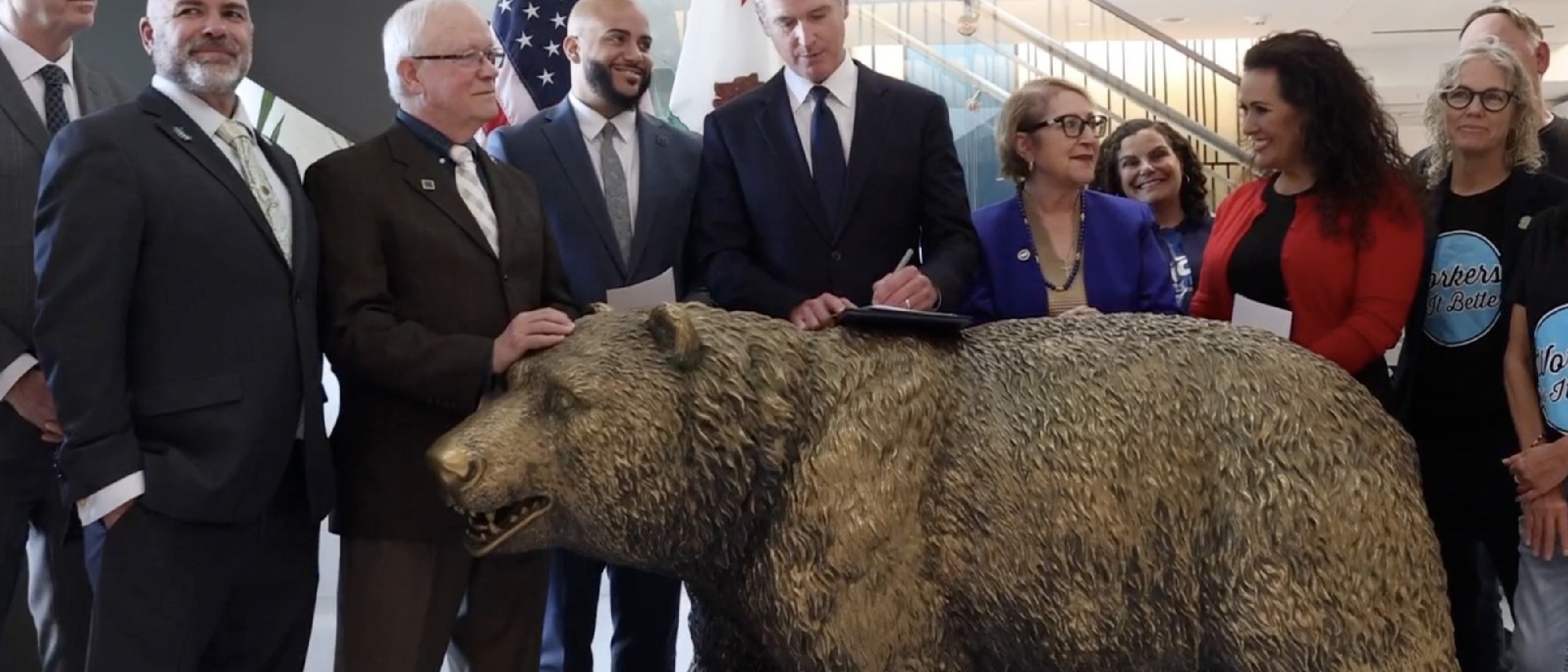
On June 1 2026, Governor Gavin Newsom signed a groundbreaking bill that directly addresses the growing anxiety around artificial‑intelligence‑driven employment decisions. The legislation, formally known as the AI‑Employee Protection Act (AEPA), introduces three core prohibitions:
- No sole reliance on AI for disciplinary actions or terminations. Human review must be part of any final decision.
- Ban on AI‑enabled surveillance in employee restrooms and changing areas.
- Transparency obligations when AI systems trigger mass layoffs, relocations, or terminations.
The law also extends to the legal profession, preventing lawyers from delegating core brief‑drafting work entirely to AI, and it includes an executive‑order clause that state agencies continue to use the term “artificial intelligence” rather than “super intelligence.”
Governor Newsom framed the bill as a safeguard for families: “AI should expand opportunity — not come at the expense of workers and families.” He dismissed the Trump administration’s claim that the AI industry can self‑regulate as “bulls*it.”
Why It Matters for Workers and Employers
Protecting Human Dignity
AI models can process performance metrics at scale, but they lack contextual understanding of personal circumstances, mental health issues, or workplace dynamics. By mandating human oversight, the law preserves the dignity of employees who might otherwise be reduced to a data point.
Reducing Legal Exposure
Employers now face clear liability if they fire someone based solely on an algorithmic recommendation. The transparency clause forces companies to document the role AI played in any large‑scale workforce change, creating a paper trail that can be audited by regulators or litigants.
Economic Stability
According to HR Dive, one in four managers already uses AI “often or all the time” to decide which employees to cut. The new law curtails that practice, potentially slowing the speed of AI‑driven downsizing and giving workers more time to transition or retrain.
Competitive Advantage
Companies that adopt responsible AI practices early may attract talent that values ethical tech environments. Conversely, firms that ignore the law risk fines, reputational damage, and talent drain.
Technical Breakdown of the Prohibitions
Disciplinary Actions & Terminations
- Algorithmic Score Thresholds: Employers may still use AI to generate risk scores, but any decision to discipline or terminate must involve a documented human review. The law does not prescribe a specific review process, leaving room for industry best practices.
- Audit Logs: Companies must retain logs showing which AI system contributed to a decision, the weight given to its output, and the final human judgment. These logs must be accessible to the California Labor Commissioner upon request.
Workplace Surveillance
- Scope of Ban: AI‑enabled cameras, audio sensors, or biometric scanners in bathrooms, locker rooms, or any private facilities are prohibited. The ban applies regardless of whether the data is stored, analyzed in real time, or used for “well‑being” programs.
- Exemptions: Surveillance for safety (e.g., fire alarms) that does not employ AI analytics is still permitted.
Legal Profession Restrictions
- Core Legal Work: Drafting briefs, motions, or court filings cannot be fully automated. Lawyers may use AI for research or drafting suggestions, but the final document must be reviewed and approved by a licensed attorney.
Terminology Executive Order
- Semantic Consistency: State agencies must continue to use “artificial intelligence” in all official communications. This prevents the dilution of regulatory language that could arise from buzzwords like “super intelligence.”
Industry Impact and Reactions
Tech Companies
Meta, already under scrutiny for biased AI tools reported by employees, issued a statement pledging compliance and promising an internal “human‑in‑the‑loop” framework for all HR decisions. Other large employers—Google, Microsoft, and Amazon—have announced internal task forces to audit existing AI‑driven HR pipelines.
HR Technology Vendors
Vendors that sell AI‑based talent‑management platforms now face a market shift. Products that previously marketed “automated layoff recommendations” must be re‑engineered to include mandatory human review modules. Start‑ups focusing on AI‑driven employee monitoring are particularly vulnerable, as the bathroom‑surveillance ban eliminates a lucrative use case.
Legal Services
Law firms are revisiting their AI adoption strategies. While tools like ChatGPT can accelerate research, the new restriction forces firms to retain senior attorneys for final drafting, potentially slowing turnaround times but also reducing the risk of malpractice claims.
Comparative Landscape
California’s approach contrasts sharply with the self‑regulation stance promoted by the Trump administration, which
self‑regulation stance promoted by the Trump administration, which argued that market forces and industry‑led standards would be sufficient to curb misuse. By contrast, California’s law takes a prescriptive, state‑driven approach, setting concrete prohibitions and enforcement mechanisms rather than leaving the issue to voluntary codes of conduct.
Federal‑State Tension
- Regulatory Overlap: While the federal government continues to explore a national AI framework, California’s AEPA will apply to any employer operating within the state, regardless of whether a federal rule is later adopted.
- Preemption Risks: Legal scholars note that the state law is unlikely to be pre‑empted because it addresses employment practices, an area traditionally reserved for state regulation under the California Labor Code.
- Potential Litigation: Companies that argue the law conflicts with any future federal AI guidance may face lawsuits that could shape the balance of power between state and federal AI governance.
Enforcement and Penalties
| Violation | Maximum Penalty | Enforcement Agency |
|---|---|---|
| Sole‑reliance AI termination without human review | $10,000 per employee + civil penalties | California Labor Commissioner |
| Unauthorized AI surveillance in restrooms | $25,000 per incident | California Department of Fair Employment and Housing |
| Failure to provide required transparency logs for mass layoffs | $5,000 per day until compliance | California Attorney General’s Office |
| Lawyers delegating core brief drafting entirely to AI | $15,000 per violation | State Bar of California |
Penalties are cumulative; a single incident that breaches multiple provisions can attract the full suite of fines. The law also authorizes the Labor Commissioner to issue injunctive relief, forcing companies to suspend non‑compliant AI systems pending remediation.
Compliance Roadmap for Employers
Audit Existing AI Tools
- Catalog every AI system used in hiring, performance evaluation, and termination processes.
- Identify which tools generate “risk scores” or automated recommendations.
Implement Human‑In‑The‑Loop (HITL) Protocols
- Define clear decision‑making checkpoints where a qualified manager must review AI output.
- Document the review process, including sign‑off fields in HRIS platforms.
Update Surveillance Policies
- Conduct a physical audit of all cameras, microphones, and biometric sensors in private employee areas.
- Remove or disable any AI analytics modules that process data from these zones.
Establish Transparency Log Infrastructure
- Deploy immutable logging (e.g., blockchain‑based or write‑once storage) to capture AI system identifiers, timestamps, and the weight given to algorithmic recommendations.
- Ensure logs are searchable and can be exported in a format compatible with the Labor Commissioner’s request portal.
Train Legal and HR Teams
- Provide mandatory training on the AEPA’s requirements, focusing on the distinction between “assistive” and “decision‑making” AI.
- For law firms, create internal policies that require senior attorney sign‑off on any AI‑generated legal document.
Engage External Auditors
- Consider third‑party AI ethics auditors to certify compliance before the law’s effective date (July 1 2026).
- Auditors can also help design bias‑mitigation strategies that satisfy both the AEPA and broader DEI initiatives.
Industry Reactions: A Deeper Look
Meta’s “Human‑First” Initiative
Meta announced a cross‑functional task force that will redesign its internal People Analytics platform to surface AI‑generated scores but require a “human justification” field before any action can be taken. The company also pledged to shut down any AI‑driven restroom monitoring pilots that were in early testing stages.HR Tech Start‑ups Pivot
Companies like PeoplePulse and WorkSense are rapidly releasing “Compliance‑Ready” modules that lock out AI‑driven termination recommendations unless a manager manually overrides the recommendation after a documented review. Early adopters report a 15‑20% increase in review time but note higher employee trust scores in internal surveys.Legal Community Feedback
The State Bar of California has issued an advisory note reminding attorneys that the “core legal work” exception is meant to preserve attorney competence and accountability. Some large firms are exploring hybrid workflows where AI drafts a first draft, but a senior associate must rewrite at least 30% of the content before filing.
Looking Ahead: The Ripple Effect
California’s bold stance is already prompting other states to consider similar measures. Bills introduced in New York and Illinois echo the “human‑in‑the‑loop” requirement, though they stop short of banning bathroom surveillance. At the federal level, the National AI Initiative Act—still under congressional debate—includes a provision for a Workforce Protection Subcommittee, which many analysts believe will be heavily influenced by California’s legislative template.
If the AEPA proves effective in curbing opaque AI‑driven terminations, it could become a model law for the nation, shaping how AI is integrated into human resources across the United States and potentially abroad.
Conclusion
California’s AI‑Employee Protection Act marks a watershed moment in the intersection of technology, labor law, and civil liberties. By outlawing the exclusive use of AI for firing or disciplining workers, banning invasive AI surveillance in private spaces, and demanding transparent documentation of AI‑driven workforce changes, the state is setting a high bar for responsible AI deployment.
For employers, the law is a clear signal: AI can be a powerful assistant, but it cannot replace human judgment when livelihoods are at stake. Companies that proactively adapt—by instituting robust HITL processes, revising surveillance policies, and training staff—will not only avoid costly penalties but also position themselves as ethical leaders in an increasingly AI‑saturated marketplace.
Workers, meanwhile, gain a tangible safeguard against being reduced to a data point, reinforcing the principle that technology should serve humanity, not the other way around.
Frequently Asked Questions (FAQ)
| Question | Answer |
|---|---|
| When does the AEPA take effect? | The law became effective on July 1 2026. All affected employers must be in compliance by that date. |
| Does the law apply to remote workers? | Yes. If a remote employee is subject to AI‑driven performance monitoring or termination decisions, the same human‑review requirements apply. |
| What constitutes “AI‑enabled surveillance” in restrooms? | Any camera, audio recorder, or sensor that uses machine‑learning algorithms to analyze or infer behavior in a private area is prohibited, even if the raw footage is not stored. |
| Can AI still be used for hiring decisions? | The AEPA does not ban AI in recruitment, but any AI‑generated recommendation must be reviewed by a human recruiter before an offer is extended. |
| How are “core legal work” responsibilities defined? | Core legal work includes drafting briefs, motions, pleadings, and any document that will be submitted to a court or regulatory body. AI may assist, but a licensed attorney must perform the final drafting and sign‑off. |
| What documentation must be retained for audits? | Employers must keep: (1) audit logs of AI system identifiers and outputs, (2) records of human review decisions, (3) timestamps of any mass‑layoff triggers, and (4) evidence of compliance with the bathroom‑surveillance ban. Retention period is five years. |
| What are the penalties for non‑compliance? | Penalties range from $5,000 to $25,000 per violation, plus possible injunctive relief and civil damages. Repeated violations can trigger escalated fines and potential criminal charges for willful disregard. |
| Will there be a grace period for existing AI tools? | No formal grace period is provided. However, the Labor Commissioner may issue compliance notices that give companies a reasonable timeframe (typically 30 days) to remediate specific deficiencies before imposing fines. |
| How can companies verify they are compliant? | Engaging an independent AI ethics auditor, conducting internal compliance reviews, and maintaining up‑to‑date documentation are recommended best practices. The State Bar and Labor Commissioner will also release compliance checklists later in 2026. |
| What happens if a federal AI law is enacted later? | California’s AEPA will remain enforceable unless a federal statute explicitly pre‑empts state employment regulations. In most scenarios, the stricter state law will continue to apply to California‑based employers. |
Prepared by the editorial team at HR Insights. For further updates on AI regulation, subscribe to our newsletter.
Source: Original Article