




NVIDIA’s GTC Berlin: A New Era for Local AI
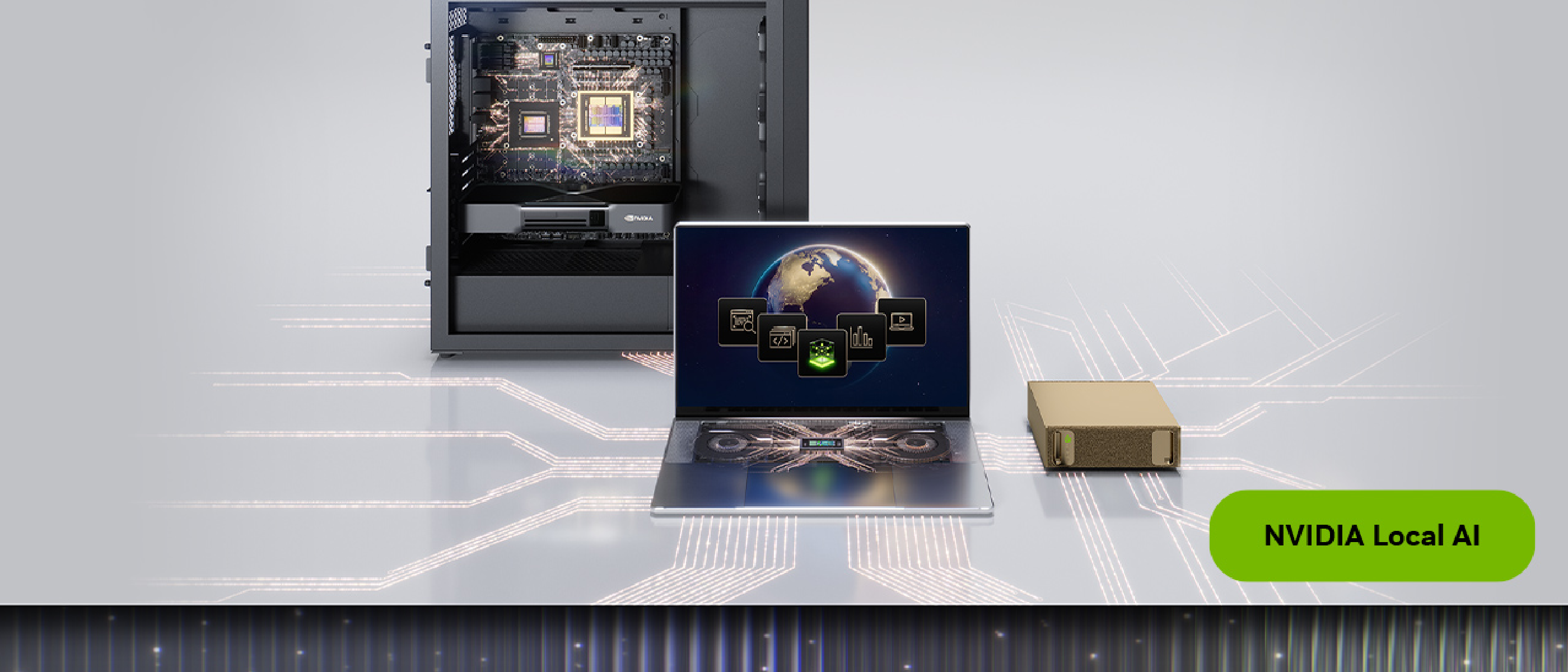
At the recent GTC Berlin, NVIDIA’s founder and CEO Jensen Huang announced a comprehensive lineup of local AI hardware that bridges the gap between personal creativity and enterprise-scale deployment. The event showcased four core products—RTX Spark, DGX Spark, DGX Station, and Recursive Flint—alongside a suite of new models and software optimizations that emphasize day‑zero support, seamless integration with leading security and manufacturing applications, and unprecedented performance on both Windows and Linux platforms.
The announcement signals NVIDIA’s commitment to democratizing AI by providing end‑to‑end solutions that run entirely on local devices, reducing latency, enhancing privacy, and cutting cloud costs. This shift aligns with broader industry trends toward edge‑AI and on‑premises inference, a movement that has already begun to reshape sectors ranging from automotive safety to industrial automation.
RTX Spark: Personal AI in a Portable Package
RTX Spark is NVIDIA’s flagship personal AI workstation, targeting creators, developers, and power users who demand high‑performance inference on a single machine. Key specifications include:
- 128 GB unified memory for large model loading and multi‑task workloads.
- 1 petaflop of AI compute achieved through the latest GPU architecture.
- 1440p at 100 fps gaming capability, ensuring that the device remains a versatile gaming platform.
Early reviews from CGMag, The Verge, and PCMag praised the machine’s balance of power and portability. The addition of the Underdog Desktop Agent extends RTX Spark’s usability by providing a lightweight, AI‑powered assistant that can run locally without cloud dependency.
Availability
- Laptops: ASUS, Dell Technologies, HP, Lenovo, Microsoft, MSI; Acer to launch soon.
- Desktop: NVIDIA’s own configurations and partner builds.
The RTX Spark lineup demonstrates how local AI can coexist with traditional PC workloads, offering a compelling proposition for professionals who need instant inference without compromising on mainstream productivity.
DGX Spark & DGX Station: Enterprise‑Grade Scaling
DGX Spark – Linux‑First Development Platform
DGX Spark is tailored for developers building and scaling AI applications on Linux. Its latest iteration, DGX Spark 64 GB, becomes available on Friday, Oct. 23. The platform supports a range of cutting‑edge models, including:
- Nemotron 3.5 Bolt 74B 24GB
- Qwen 3.8 27B
- Gemma 4 26B‑A4B
NVIDIA Sync enhances cluster management by allowing up to eight DGX Spark units to operate cohesively, with the Model Launcher simplifying model deployment across the cluster. The October software update introduces Wi‑Fi Assistant and updates to DGX Spark Skills, improving connectivity and developer ergonomics.
DGX Station – Frontier Workloads on Linux and Windows
DGX Station is designed for enterprise teams that run frontier workloads on Linux, with a Windows version launching in December. Its standout features include:
- 748 GB coherent memory for massive data sets.
- Up to 20 petaflops AI performance, enabling real‑time inference on complex models.
New integrations bring robust security and device management to the platform:
- Absolute Security
- Splunk by Cisco
- Fleet Device Management
- Microsoft Intune
- Perforce Puppet
- Progress Software Chef
- Tanium
Manufacturing applications from nTop, Dassault Systèmes, Keysight Technologies, MathWorks, Rockwell Automation, Siemens, Synopsys, Unity, and Altera now run natively on DGX Station for Windows, expanding the device’s appeal to industrial and simulation workloads.
Shipping today from ASUS, Dell Technologies, GIGABYTE, HP, MSI, Supermicro, and Exxact, DGX Station positions NVIDIA as a one‑stop shop for AI‑centric enterprises.
New Models and Day‑Zero Support
NVIDIA’s ecosystem now includes a suite of models that support day‑zero inference—meaning they can run immediately on local hardware without prior fine‑tuning or cloud training. Highlights include:
- Nemotron Bolt E4B 4GB (Oct. 23 release)
- GLM
- Deep Seek
- Qwen
- Mini Max
- Liquid AI’s LFM2.5‑24B‑A2B
- FLUX.3 Klein
The Mini Max M3.1 Flash is optimized for DGX Station and DGX Spark, while Liquid AI’s LFM2.5‑24B‑A2B targets private AI agents on PCs. These models expand the range of use cases from conversational agents to complex simulation tasks.
Technical Optimizations and Ecosystem Enhancements
NVIDIA’s commitment to performance is evident in its software stack:
- llama.cpp and vLLM optimizations for local inference accelerate workloads on RTX Spark and DGX Station.
- Qwen 3.8 Flash Next delivers up to 1.4× faster inference on RTX PRO 6000 Blackwell.
- GLM 5.3 Flash achieves up to 1.2× higher throughput on DGX Station.
Additional ecosystem features include:
- NVIDIA Sync Model Launcher for simplified model access on DGX Spark clusters.
- Three open‑source reference workflows for robotics on DGX Station, fostering community adoption.
- NVIDIA Cloud Functions in early access for DGX Station, bridging local inference with cloud orchestration.
- DSX OS previewed at GTC Berlin for AI factory simulations, offering a dedicated operating environment for large‑scale AI workloads.
- Post‑training support via NeMo Automodel and NeMo RL, enabling efficient model deployment and reinforcement learning pipelines.
These enhancements underscore NVIDIA’s strategy of providing a cohesive, end‑to‑end AI stack that spans hardware, software, and developer tools.
Industry Impact and Future Outlook
The introduction of RTX Spark and DGX Spark/Station signals a broader shift toward local AI deployment. Key implications include:
- Reduced Cloud Dependency: Enterprises can keep sensitive data on-premises, mitigating compliance risks and lowering recurring cloud costs.
- Lower Latency: Real‑time inference on local hardware is critical for applications such as autonomous driving, industrial robotics, and immersive gaming.
- Ecosystem Growth: Partnerships with security vendors (Absolute Security, Splunk, Tanium) and manufacturing software providers expand the use cases beyond traditional AI workloads.
The integration of day‑zero models and accelerated inference tools positions NVIDIA to lead the next wave of AI adoption. As more developers adopt the RTX Spark platform for personal projects and the DGX Station for enterprise workloads, the boundary between consumer and professional AI hardware will blur further.
The synergy between NVIDIA’s hardware and the broader AI ecosystem—highlighted by collaborations with Recursive Superintelligence and Hugging Face—suggests a future where local AI becomes the default, rather than the exception.
Frequently Asked Questions
What is the difference between RTX Spark and DGX Spark?
RTX Spark is a personal workstation designed for creators and developers on Windows, offering high‑performance inference and gaming capabilities. DGX Spark is a Linux‑centric platform aimed at developers building and scaling AI applications across clusters.
When will the Windows version of DGX Station be available?
The Windows version of DGX Station is slated for launch in December, expanding its reach to a broader enterprise audience.
How does day‑zero support benefit users?
Day‑zero models can run immediately on local hardware without prior fine‑tuning, enabling rapid deployment of AI solutions and reducing the time-to-value for businesses.
Are there security integrations for DGX Station?
Yes, DGX Station includes integrations with Absolute Security, Splunk by Cisco, Fleet Device Management, Microsoft Intune, Perforce Puppet, Progress Software Chef, and Tanium, providing comprehensive device and data security.
Where can I find more information on NVIDIA’s AI hardware?
For deeper insights into NVIDIA’s AI hardware strategy, see the recent discussion on Road Safety Revolution: Vision Zero’s Global Impact and the evolving role of AI in autonomous systems.
Source: Original Article