







Background of the FCC’s Foreign Equity Rule
The Federal Communications Commission has long enforced a 25 % cap on foreign equity in U.S. broadcast and cable entities. The rule was codified to protect national security, preserve domestic control over content distribution, and prevent undue foreign influence on the American media ecosystem.
Key technical aspects of the rule include:
- Ownership Thresholds: Any foreign entity that exceeds 25 % of voting stock in a broadcast licensee must obtain a specific waiver from the FCC.
- National Security Review: The waiver process triggers a review by the Committee on Foreign Investment in the United States (CFIUS), which evaluates potential risks to critical infrastructure and information flow.
- Public Interest Standard: Even if CFIUS clears a transaction, the FCC must determine that the waiver serves the “public interest, convenience, and necessity” – a language that gives the commission broad discretion.
Historically, the FCC has been reluctant to relax this rule, especially for sovereign‑wealth funds that are directly tied to foreign governments. The decision to allow a 49.5 % stake for three Gulf funds therefore represents a dramatic policy shift.
The Paramount‑Warner Merger and the Waiver Decision
The merger that combines Paramount Global with Warner Bros. Discovery creates a media behemoth with a library spanning film, television, streaming, and gaming. The transaction’s financing plan originally called for a minority foreign investment to help close the $8 billion cash gap.
Who Are the Investors?
| Sovereign‑wealth fund | Country | Intended stake |
|---|---|---|
| Public Investment Fund (PIF) | Saudi Arabia | ~16 % |
| Qatar Investment Authority (QIA) | Qatar | ~16 % |
| Abu Dhabi Investment Authority (ADIA) | United Arab Emirates | ~17.5 % |
Collectively, the three funds will own 49.5 % of the combined entity, leaving the remaining 50.5 % in the hands of existing U.S. shareholders, including the management teams of Paramount and Warner Bros.
Why the FCC Approved the Waiver
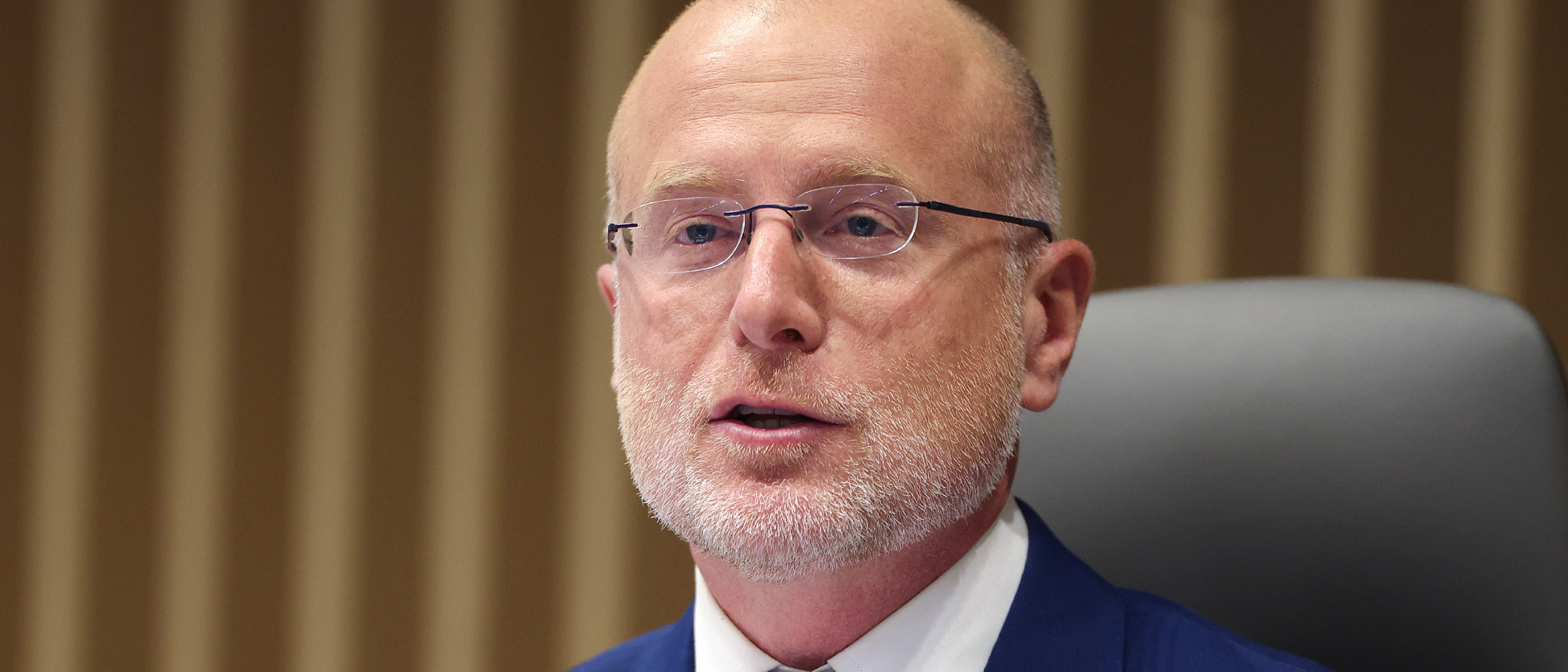
Commissioner Brendan Carr, who has overseen a series of high‑profile enforcement actions, framed the waiver as a “strategic investment” that will:
- Preserve U.S. content creation jobs by ensuring the merged company has sufficient capital to compete with global streaming giants.
- Maintain a diversified ownership structure, arguing that a single foreign investor does not dominate the board.
- Align with broader U.S. policy encouraging foreign capital in high‑technology and media sectors, provided national‑security safeguards are in place.
The FCC’s decision was accompanied by a detailed mitigation plan, including:
- Board voting restrictions on matters deemed sensitive (e.g., content that could affect national security).
- Data‑security audits conducted by an independent third party.
- Ongoing CFIUS oversight for a five‑year period.
Implications for Media Ownership and National Security
Geopolitical Ramifications
The waiver signals a willingness to accommodate state‑backed capital from the Gulf region, a move that could reshape the geopolitical balance of media influence. Critics argue that sovereign‑wealth funds, while financially independent on paper, can be directed by their governments to pursue soft‑power objectives.
Market Dynamics
- Competitive Pressure: The infusion of capital may enable Paramount‑Warner to accelerate original‑content production, potentially challenging Netflix, Disney+, and Amazon Prime.
- Valuation Shifts: Analysts are revising the merged entity’s valuation upward, citing the reduced financing risk and the strategic partnership with Gulf investors.
- Regulatory Precedent: Future deals involving foreign investors—especially from countries like China, Russia, or Iran—may reference this waiver as a benchmark, prompting calls for clearer statutory guidance.
Technical Safeguards
The FCC’s mitigation plan leans heavily on technical controls:
- Encryption of editorial data to prevent unauthorized access.
- Segmentation of network infrastructure so that foreign investors cannot directly access content‑distribution systems.
- Real‑time monitoring of content‑censorship algorithms, ensuring that any external influence is flagged.
These measures echo the kind of security hardening seen in other high‑profile incidents, such as the Zoom Zero‑Day Exploit that exposed remote‑takeover vulnerabilities on iPhone and Mac devices. Both cases illustrate how regulatory bodies are increasingly demanding robust technical safeguards alongside traditional legal reviews. (Read more about the Zoom exploit here: https://ltdeveloperblogs.github.io/posts/zoom-flaw-let-an-attacker-take-over-your-device-including-iphone-and-mac )
Brendan Carr’s Tenure: A Pattern of Regulatory Pressure
Commissioner Carr’s record over the past five years reveals a consistent approach to using the FCC’s authority as a lever against perceived political or ideological opponents.
| Action | Description |
|---|---|
| Threatened ABC | Repeatedly warned the network about potential license revocation for alleged bias. |
| Blocked Democratic interviews | Attempted to prevent stations from airing interviews with certain Democratic candidates, citing “fairness” standards. |
| Censored late‑night hosts | Issued directives that limited jokes deemed “politically sensitive.” |
| Bullying journalists | Leveraged FCC investigations to pressure reporters covering FCC policy. |
These actions have cultivated a perception that the commission is more focused on controlling the message than on safeguarding the infrastructure. The current waiver, while framed as a business decision, fits into this broader narrative: the FCC is willing to relax ownership rules when it believes the political payoff aligns with its leadership’s agenda.
Industry Reaction and Future Regulatory Landscape
Immediate Responses
- Broadcasters: ABC issued a statement emphasizing the need for a
the need for a level playing field and warned that the waiver could set a “dangerous precedent” for future foreign investments in U.S. media assets.
- Warner Bros. Discovery: The company praised the FCC’s flexibility, stating that the Gulf investment “provides the financial runway required to deliver world‑class content to American audiences.”
- Paramount Global: Executives highlighted the strategic value of the partnership, noting that the sovereign‑wealth funds will bring “deep expertise in global distribution and emerging‑market growth.”
- Consumer Advocacy Groups: Organizations such as Media Matters and the Electronic Frontier Foundation (EFF) filed comments urging the FCC to impose stricter transparency requirements and to monitor any potential editorial influence.
- Congressional Leaders: A bipartisan group of senators sent a joint letter requesting a hearing on the waiver, arguing that “national security cannot be compromised for short‑term financial gains.”
Future Regulatory Landscape
The FCC’s decision is likely to reverberate across several regulatory fronts:
- Re‑evaluation of the 25 % Cap – Lawmakers may introduce legislation to codify a higher ceiling for sovereign‑wealth investments, or conversely, to reinstate a stricter limit in response to political pressure.
- CFIUS Coordination – The five‑year CFIUS oversight clause could become a template for future deals, prompting the inter‑agency committee to develop more granular criteria for media‑related transactions.
- Enhanced Disclosure Regime – The FCC has signaled that future waivers will require quarterly public filings detailing board voting patterns, data‑security audit results, and any instances of content‑related interference.
- International Reciprocity – Critics warn that loosening U.S. rules may invite reciprocal concessions from other jurisdictions, potentially allowing non‑U.S. entities greater access to American broadcast spectrum.
Potential Ripple Effects
| Sector | Possible Impact |
|---|---|
| Streaming Services | Paramount‑Warner could accelerate its direct‑to‑consumer platform, leveraging Gulf capital to secure exclusive sports and entertainment rights. |
| Advertising Market | A larger, financially stable entity may command higher ad rates, pressuring smaller broadcasters to consolidate or seek alternative revenue streams. |
| Content Regulation | With foreign stakeholders, there may be increased scrutiny of “politically sensitive” programming, especially content that touches on Middle‑East geopolitics. |
| Technology Vendors | Vendors providing encryption, content‑delivery networks, and AI‑driven moderation tools may see a surge in contracts to meet the FCC’s technical safeguards. |
Conclusion
The FCC’s waiver marks a watershed moment in U.S. media policy, blending financial pragmatism with a controversial reinterpretation of national‑security safeguards. While the immediate benefit is clear—a $8 billion financing gap is closed, and the merged Paramount‑Warner entity gains a competitive edge—the longer‑term implications raise profound questions about sovereignty, editorial independence, and the role of regulatory bodies in shaping the political economy of information.
If the commission’s mitigation plan proves effective—maintaining strict data‑security protocols, limiting board influence, and ensuring ongoing CFIUS oversight—the waiver could be hailed as a model for responsible foreign investment. Conversely, any perceived erosion of editorial autonomy or evidence of soft‑power manipulation could fuel a backlash that reshapes the FCC’s mandate and prompts legislative action to reinstate tighter ownership limits.
Stakeholders across the spectrum—broadcasters, investors, civil‑society groups, and policymakers—will be watching closely as the first post‑waiver reporting periods unfold. The balance struck between capital infusion and national‑security vigilance will likely define the next decade of American media ownership.
FAQ
Q: Does the waiver allow the foreign funds to control the board?
A: No. The FCC’s mitigation plan imposes voting restrictions on matters deemed “sensitive,” and no single foreign investor holds a controlling block of votes.
Q: How long will CFIUS oversight last?
A: The agreement includes a five‑year monitoring period, after which the parties must submit a compliance report and may request an extension.
Q: Could this decision affect other industries beyond media?
A: Potentially. The FCC’s approach may be cited in future debates over foreign ownership in telecommunications, satellite services, and emerging 5G infrastructure.
Q: What recourse do consumer groups have if they believe the waiver is misused?
A: They can file petitions for rulemaking with the FCC, request a formal hearing, or pursue litigation under the Administrative Procedure Act if they believe the decision violates statutory mandates.
Q: Will the waiver impact existing foreign ownership caps in other sectors?
A: The waiver is specific to this transaction. However, it could set persuasive precedent for the FCC to consider similar exceptions on a case‑by‑case basis.
Q: How will the public be kept informed about the mitigation measures?
A: The FCC requires quarterly public disclosures, and the companies must publish annual transparency reports outlining board composition, voting outcomes, and any security audit findings.
The story continues to develop as the FCC finalizes its waiver conditions and as the merged Paramount‑Warner entity begins to integrate its new investors.
Source: Original Article