

Overview of This Week’s Indie Landscape
The indie sector continues to prove its resilience and creativity, even as major publishers dominate headline numbers. This week’s roundup showcases a blend of aggressive discount events, ambitious new releases, and experimental design choices that push hardware boundaries. From the massive Steam Cyberpunk Fest—still ticking down to its August 10 1 PM ET deadline—to the niche Kitfox Games Sale, developers are leveraging limited‑time pricing to surface titles that might otherwise be lost in the platform’s noise.
Beyond sales, the spotlight falls on three fresh indie projects: Big Walk, Re Story: Chill Electronics Repairs, and Echobreaker. Each brings a distinct gameplay loop—co‑op exploration, retro‑tech restoration, and an undisclosed yet promising concept—highlighting the breadth of experiences indie studios can deliver. Meanwhile, legacy titles like Overcooked celebrate milestones, reminding us that longevity often stems from strong community tools and iterative design.
Deep Dive: Steam Cyberpunk Fest and Kitfox Sale Mechanics
Discount Structures and Consumer Psychology
Steam’s Cyberpunk Fest is a textbook example of tiered discounting. Flagship titles such as Cyberpunk 2077 receive a 70 % cut, while the Ultimate Edition (including Phantom Liberty) sits at 60 %. Meanwhile, niche action titles like Robo Cop: Rogue City enjoy a staggering 90 % reduction. This gradient serves two purposes: it drives traffic with eye‑catching deep discounts on lesser‑known games, then nudges higher‑margin titles through perceived value.
The Kitfox Games Sale mirrors this approach but with a narrower focus. Boyfriend Dungeon (70 % off) and Pupperazzi (60 % off) target the “cute‑and‑quirky” segment, while Caves of Qud—also part of the Cyberpunk Fest—receives a modest 20 % discount, likely to avoid cannibalizing its own price elasticity across two events.
Demos and Cross‑Platform Incentives
Both sales include playable demos, a strategy that reduces purchase friction for hesitant buyers. Demos also act as data collection points, feeding Steam’s recommendation algorithms with real‑time engagement metrics. For cross‑play enthusiasts, the inclusion of demos for titles that support multiplayer (e.g., Ghostrunner and Ghostrunner 2) amplifies community buzz, especially when paired with Steam Deck verification—a growing factor for on‑the‑go gamers.
Strategic Timing
Ending on August 10 (Cyberpunk Fest) and August 13 (Wholesome Games Celebration) aligns with the mid‑summer lull, when major AAA releases are scarce. This timing maximizes visibility for indie titles and ensures that promotional emails land in relatively uncluttered inboxes. The staggered end dates also keep the platform’s “sale” banner active for an extended period, sustaining user engagement.
Spotlight on New Indie Releases
Big Walk – A Massive Co‑op Puzzle Adventure
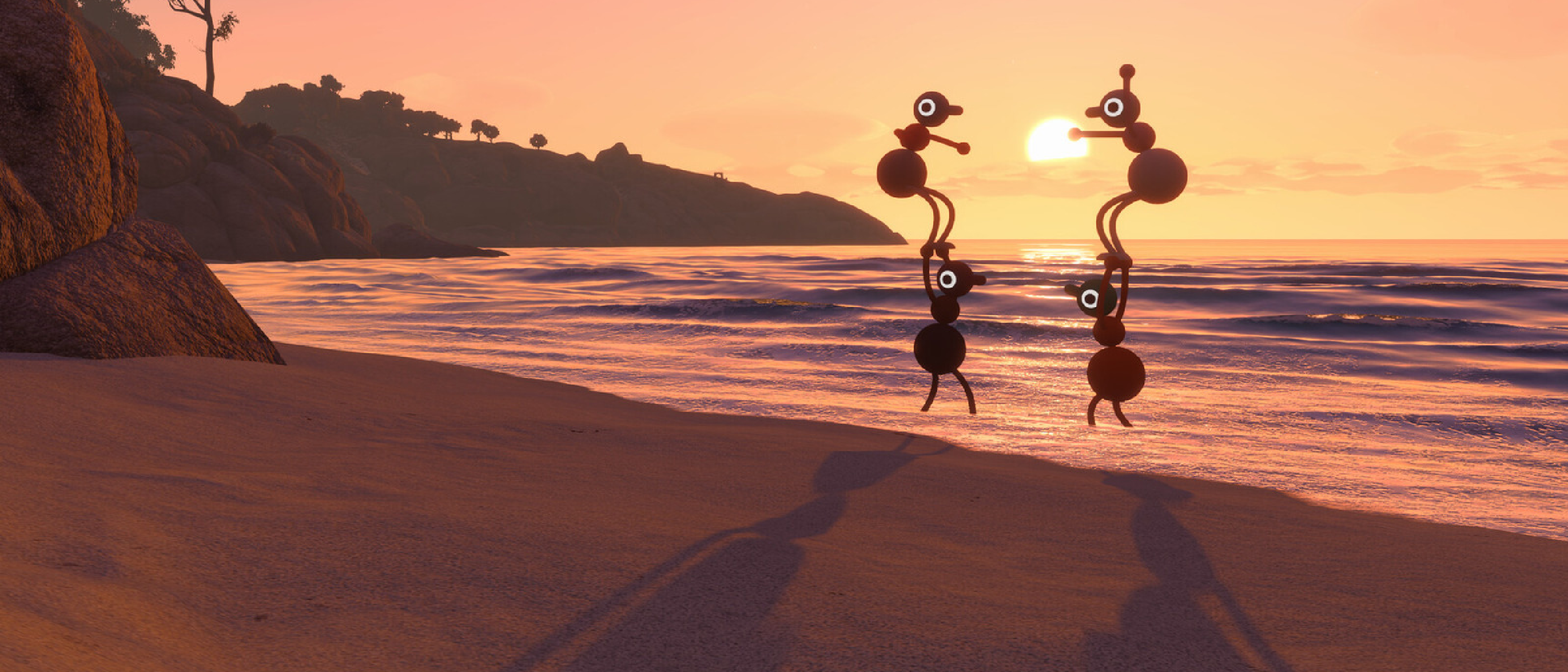
Developed by House House and published by Panic, Big Walk pushes the envelope of cooperative design. Up to 11 players can join a single session without matchmaking, relying instead on cross‑play across Steam, PS5, and the upcoming Nintendo Switch 2. The game’s communication suite—proximity chat, walkie‑talkies, notes, flares, cowbells, and gesturing—creates a sandbox where coordination feels organic rather than scripted.
From a technical standpoint, the title is Steam Deck verified, meaning its UI scales gracefully to the handheld’s 800 × 1280 resolution and its Vulkan‑based rendering pipeline stays within the device’s 8 GB RAM envelope. The 25 % discount on both Switch and Steam (valid until August 18) is a clear incentive for early adopters, while PlayStation Plus eligibility expands its reach to subscription‑based gamers.
Re Story: Chill Electronics Repairs – Nostalgia Meets Management Sim
Re Story arrives from Mandragora under the tiny Build banner, targeting players who love both retro hardware and meticulous resource management. Set on a repair‑shop floor, the game tasks players with restoring iconic devices—from Tamagotchi to the original Xbox—using a web‑scanning system that mimics real‑world part sourcing. The branching narrative reacts to player choices, offering multiple endings based on the balance between profit and preservation.
The simulation runs on Windows and macOS via Steam, leveraging Unity’s Addressable Asset System to stream high‑resolution textures for each device model only when needed. This approach keeps the base install under 2 GB, crucial for indie titles that aim for low entry barriers. A modest 10 % discount through August 20 further sweetens the deal for budget‑conscious gamers.
Echobreaker – What We Know So Far
Echobreaker is being developed by Upstream Arcade and published by Weekend Games. While the publisher has released limited details, the title’s presence in this roundup signals a potential focus on rhythm‑based mechanics or audio‑driven puzzles—common themes for Upstream’s past projects. Until an official trailer or dev diary surfaces, the community can only speculate, but the anticipation underscores the importance of early‑stage visibility in a crowded marketplace.
Technical and Design Highlights: Turnip Mountain’s Dual‑Mouse Control & Overcooked’s Decade
Turnip Mountain – Redefining Input Paradigms
Turnip Mountain introduces a dual‑mouse control scheme, assigning each hand its own cursor to simulate climbing movements. This unconventional input method demands precise synchronization, effectively turning the player’s mouse into a pair of virtual hands. From an engineering perspective, the game utilizes DirectInput to capture two separate streams, then maps them onto a custom physics engine that calculates grip strength, friction, and momentum in real time.
The decision to launch on Nintendo Switch—despite the platform’s lack of a confirmed Switch 2—highlights the developers’ confidence in the console’s broad install base. Publisher Jando Soft openly admitted the inability to delay the release for a hypothetical Switch 2, stating, “If enough people want it, we’ll definitely try again and see if we can make a Switch 2 Edition happen.” This candidness may foster community goodwill, encouraging fans to voice demand through social channels.
Overcooked – Ten Years of Cooperative Chaos
Celebrating its 10th anniversary, the Overcooked series has amassed over 100 million players. Its longevity stems from a robust local‑multiplayer framework that scales from two to four players, combined with a procedurally generated kitchen system that keeps each session fresh. Ghost Town Games is already teasing a new co‑op title, Stage Fright, which promises to blend horror aesthetics with the franchise’s signature frantic cooking mechanics.
From a design lens, Overcooked pioneered asymmetric task distribution, forcing players to
negotiate roles dynamically—chopping, cooking, plating, or washing dishes—without explicit role assignment. This emergent gameplay loop has since become a benchmark for co-op design, influencing titles like Moving Out and PlateUp!. The series’ success also underscores the power of iterative content updates, with each sequel refining mechanics based on player feedback, such as the introduction of assist modes and expanded kitchen layouts in Overcooked! 2.
The Business of Indie: Monetization and Community Building
Early Access and Transparency
Both Big Walk and Re Story launched with clear discount timelines, a strategy that builds trust by avoiding the “permanent sale” stigma. Big Walk’s 25% discount on Switch and Steam until August 18, for example, creates urgency without resorting to predatory pricing. Meanwhile, Re Story’s 10% discount through August 20 aligns with its “chill” branding, appealing to players who prefer a relaxed, long-term engagement over flash sales.
Publishers like Panic and tinyBuild also leverage PlayStation Plus and Xbox Game Pass to amplify visibility. Big Walk’s inclusion in PlayStation Plus not only guarantees a revenue floor but also exposes the game to a subscriber base that might not actively seek out indie titles. This hybrid monetization model—premium pricing with strategic platform partnerships—has become a lifeline for mid-sized indie studios navigating Steam’s oversaturated marketplace.
Community-Driven Development
Turnip Mountain’s dual-mouse control scheme exemplifies how indie developers can turn technical constraints into unique selling points. By embracing unconventional input methods, the game fosters a niche but passionate community. Developer Jando Soft’s openness about the Switch 2 dilemma further strengthens this bond, as players feel directly involved in the game’s future. This transparency is a hallmark of indie success stories like Hades and Stardew Valley, where early access and dev logs create a feedback loop that shapes the final product.
Similarly, Overcooked’s decade-long journey highlights the importance of community tools. The series’ built-in level editor and mod support have extended its lifespan far beyond typical AAA titles, proving that player creativity can be as valuable as developer content. Ghost Town Games’ upcoming Stage Fright is likely to incorporate these lessons, emphasizing moddability and user-generated chaos to keep the franchise fresh.
The Road Ahead: Trends to Watch
The Rise of “Cozy” Management Sims
Re Story: Chill Electronics Repairs reflects a broader trend toward “cozy” management sims—games that blend resource management with low-stakes, narrative-driven gameplay. Titles like Dinkum, Coral Island, and Fae Farm have proven that players crave experiences that prioritize relaxation over competition. Re Story’s focus on retro tech restoration taps into this demand while offering a unique twist: the emotional resonance of reviving beloved gadgets. Expect more indie studios to explore niche management sims, from vintage car restoration to botanical gardens, as players seek escapism in increasingly stressful times.
Cross-Play and Platform Agnosticism
Big Walk’s support for 11-player cross-play across Steam, PS5, and Nintendo Switch 2 signals a shift toward platform-agnostic design. As console manufacturers relax their exclusivity policies, indie developers are seizing the opportunity to build games that transcend hardware boundaries. This trend is particularly beneficial for co-op titles, where player pools are often fragmented. Tools like Unity Netcode and Steamworks are making cross-play implementation more accessible, reducing the technical barriers that once limited multiplatform indie games.
The Switch 2 Wildcard
Turnip Mountain’s absence on the rumored Nintendo Switch 2 raises questions about the future of indie development for Nintendo’s next-gen hardware. While the current Switch remains a lucrative platform, its aging specs (Tegra X1, 4GB RAM) are increasingly limiting for ambitious indie projects. If Nintendo confirms the Switch 2, expect a rush of indie studios to re-evaluate their porting strategies, balancing the potential of a new install base against the risks of delayed releases. Jando Soft’s statement—“If enough people want it, we’ll definitely try again”—may become a common refrain as developers weigh community demand against technical feasibility.
Conclusion: Why Indie Games Matter Now More Than Ever
This week’s roundup underscores the indie sector’s role as a laboratory for innovation. From Big Walk’s 11-player co-op to Turnip Mountain’s dual-mouse controls, indie games are pushing boundaries in ways that AAA studios, constrained by risk-averse publishers, often cannot. Sales events like Steam Cyberpunk Fest and Kitfox Games Sale provide critical visibility, while platforms like PlayStation Plus and Xbox Game Pass offer financial stability. Meanwhile, titles like Overcooked and Re Story prove that longevity and creativity can coexist, even in a market dominated by blockbuster franchises.
For gamers, this means more choices, more risks, and more rewards. For developers, it’s a reminder that passion projects can thrive with the right mix of community engagement, smart monetization, and technical ingenuity. As the industry grapples with rising development costs and consolidation, indie games remain a beacon of experimentation—and a testament to the power of small teams with big ideas.
FAQ
Q: How do I claim Big Walk on PlayStation Plus?
A: Big Walk is available as part of the PlayStation Plus Game Catalog for Extra and Premium tier subscribers. To claim it, navigate to the “Game Catalog” section in the PS Plus hub, search for Big Walk, and select “Add to Library.” The game will remain accessible as long as your subscription is active.
Q: Will Echobreaker support Steam Deck?
A: As of now, Echobreaker’s Steam Deck compatibility is unconfirmed. Given Upstream Arcade’s history with audio-driven games, it’s likely the team will prioritize optimization for handheld play. Keep an eye on the game’s Steam store page for updates on verification status.
Q: Why is RoboCop: Rogue City discounted so heavily (90%)?
A: Deep discounts like this often occur when a publisher aims to clear inventory or boost player counts for multiplayer titles. RoboCop: Rogue City’s 90% reduction may also reflect its age (released in 2023) or a strategic push to cross-promote other titles in the Cyberpunk Fest sale.
Q: Can I play Turnip Mountain with a single mouse?
A: No. Turnip Mountain’s core mechanic requires two mice (one per hand) to simulate climbing. The developers have stated that this input method is non-negotiable, as it’s central to the game’s design. Players without two mice can use a second USB mouse or a trackpad as a substitute.
Q: What’s the difference between Cyberpunk 2077 and the Ultimate Edition?
A: The Ultimate Edition includes:
- The base game Cyberpunk 2077
- The Phantom Liberty expansion (a story-driven DLC with new zones and mechanics)
- All previously released free updates (e.g., 2.0 overhaul)
- Additional cosmetic packs The 60% discount on the Ultimate Edition (vs. 70% on the base game) reflects its higher perceived value.
Q: How does Re Story’s branching narrative work?
A: Re Story’s story adapts based on three key metrics:
- Profit vs. Preservation: Prioritizing quick, cheap repairs leads to a “corporate” ending, while restoring devices meticulously unlocks a “nostalgia” path.
- Customer Requests: Fulfilling customization orders (e.g., painting a Tamagotchi) branches the narrative toward “artisan” outcomes.
- Part Sourcing: Using rare or ethically sourced parts influences the game’s environmental themes. The game tracks these choices invisibly, culminating in one of five major endings and multiple epilogues.
Q: Is Stage Fright a direct sequel to Overcooked?
A: No. Stage Fright is a new IP from Ghost Town Games, though it retains the studio’s signature co-op chaos. Early teasers suggest a horror-comedy setting where players manage a haunted theater, blending cooking mechanics with supernatural elements. Expect more details at Gamescom 2024.
Source: Original Article