




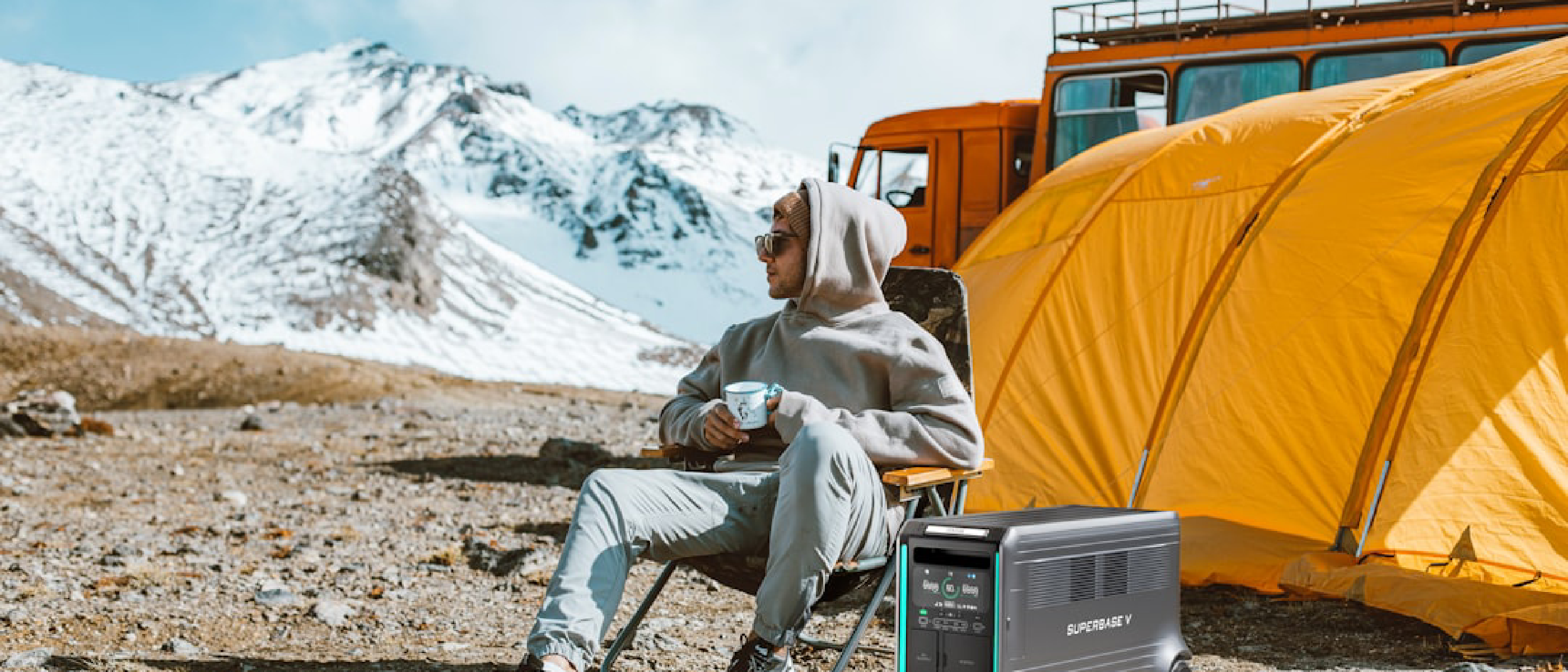
Why Portable Solar Generators Matter
The shift toward renewable, on‑site power has accelerated in 2026. Whether you’re a weekend camper, a full‑time RV traveler, or a homeowner seeking resilience against grid outages, a portable solar generator offers a clean, silent, and self‑sufficient energy source. Unlike traditional generators, these units eliminate noisy combustion and hazardous fumes, making them ideal for quiet environments and indoor use. Moreover, the rapid advances in battery chemistry and solar panel efficiency mean that a single unit can now supply several thousand watt‑hours—enough to run a small kitchen, charge multiple devices, or power a home HVAC system for a day.
Market Landscape & Brand Overview
The portable generator market has matured, with several brands carving out distinct niches:
- Jackery – Known for reliable, high‑capacity units that emphasize durability and RV compatibility.
- Bluetti – Focuses on innovation, cold‑weather performance, and modular expandability.
- Anker – Offers compact, smart designs that appeal to tech‑savvy consumers.
- EcoFlow – Stands out for rapid charging and a dense port ecosystem.
- Goal Zero – Specializes in rugged, vibration‑tolerant units for van life.
- DJI – Tailored for drone operators with fast‑charge capabilities.
Brands such as Vtoman and Dabbsson have struggled to gain traction, often due to limited online presence and sparse reviews. When selecting a generator, it’s prudent to favor well‑documented brands with robust community feedback.
Key Models and Specs
| Brand | Model | Capacity (Wh) | Output (W) | Solar Input | Price |
|---|---|---|---|---|---|
| Jackery | Home Power 3000 (Explorer 3000 v2) | 3,072 | 3,600 (7,200 surge) | 1,000 via DC8020 | $1,900 |
| Jackery | Explorer 1500 Ultra | 1,536 | 1,800 (3,600 surge) | 800 via DC8020 | $1,499 |
| Bluetti | Elite 300 | 3,014 | 2,400 (4,800 surge) | 1,200 via XT60 | $1,699 |
| Anker | Solix C1000 | 1,024 | 2,000 (3,000 surge) | 600 via XT60 | $2,000 |
| EcoFlow | Compact | 1,024 | 1,800 (2,600 surge) | 1,000 via XT60i | $1,200 |
| Goal Zero | Yeti 1500 (2026) | 1,505 | 2,000 (3,600 surge) | 600 | $1,500 |
| DJI | Power 2000 | 2,048 | 3,000 (3,600 surge) | 1,800 (fast charger) | $720 |
Prices range from $299 for a small Anker bundle to $2,000 for the Anker Solix F3000. Bundles typically include solar panels, which can dramatically reduce charging time—an important consideration for off‑grid users.
Technical Breakdown: Capacity, Output, Solar Input, Portability
Capacity vs. Usage
Capacity is measured in watt‑hours (Wh) and represents the total energy a generator can store. A 3,072 Wh unit can theoretically run a 1,000 W appliance for about three hours. However, real‑world usage depends on load patterns, battery age, and efficiency losses. For RV owners, a 1,500–2,000 Wh unit often suffices for lights, a fridge, and a few appliances. Home backup scenarios may demand 3,000 Wh or more to cover critical loads during extended outages.
Output Ratings
The continuous output rating indicates the maximum power the unit can deliver under steady conditions. Surge ratings (often double the continuous output) accommodate short bursts, such as starting a refrigerator or a power tool. For instance, the Jackery Home Power 3000’s 3,600 W continuous output can handle a typical RV refrigerator and a few 120 V outlets simultaneously.
Solar Input and Charging Speed
Solar input ports determine how quickly a generator can recharge. Proprietary ports (e.g., Jackery’s DC8020) often limit maximum input to 500 W per port, whereas generic XT60 ports can accept up to 600–1,200 W. Bluetti’s Elite 300 can ingest 1,200 W, enabling a full recharge in roughly four hours under ideal sunlight. EcoFlow’s Compact, with two XT60i ports, can accept 1,000 W total, offering a one‑hour outlet recharge time and a 30‑minute solar recharge under optimal conditions.
Port Compatibility
Port compatibility is crucial for users who already own solar panels or wish to expand their system. Proprietary ports restrict panel choices, while XT60 or XT60i ports allow mixing and matching panels from various manufacturers. For example, the EcoFlow Compact’s dual XT60i ports let you connect a 500 W panel on each side, doubling your input capacity without needing a proprietary adapter.
Weight and Portability
Weight ranges from 30 lbs for the Anker Solix C1000 to 60 lbs for the Jackery Home Power 3000. For van life, the lighter models are preferable, but they also offer lower capacity. The inclusion of handles, wheels, or ergonomic grips can significantly affect user experience during transport.
Real‑World Use Cases: RV, Off‑Grid, Home Backup
RV Power
RVs demand a balance between capacity and weight. The Jackery Explorer 1500 Ultra’s IP65 rating and shock‑proof design make it a top pick for mobile users. Its TT‑30 port allows direct connection to RV shore power, enabling simultaneous AC and solar charging—a feature also found on Bluetti’s Elite 300.
Off‑Grid Camping
For extended off‑grid trips, the Bluetti Elite 300’s 3,014 Wh capacity and 1,200 W solar input provide ample power for a small kitchen, lights, and a portable fridge. The unit’s ability to charge via both AC and solar simultaneously reduces downtime. The EcoFlow Compact’s 1,024 Wh capacity is ideal for short trips where only essential devices need power.
Home Backup
During grid outages, homeowners often need to keep critical appliances running. The Jackery Home Power 3000’s 3,072 Wh capacity can sustain a refrigerator, lights, and a small HVAC unit for several days. Its UPS function (<20 ms fallover) ensures that sensitive electronics receive uninterrupted power, protecting against data loss.
Future Outlook & Industry Impact
The portable solar generator market is poised for continued growth, driven by:
- Battery Technology: Advances in lithium‑ion chemistries and solid‑state batteries promise higher energy density and longer cycle life.
- Solar Panel Efficiency: Per‑cell efficiencies above 22 % are becoming mainstream, allowing smaller panels to deliver more power.
- Smart Integration: IoT‑enabled units will offer remote monitoring, predictive maintenance, and automated load management.
- Regulatory Incentives: Governments are expanding rebates for off‑grid solutions, making portable generators more affordable.
These trends will likely lower prices while expanding capacity ranges, enabling consumers to choose units that fit both their power needs and budget constraints.
FAQ
Q: Can I use any solar panel with these generators?
A: It depends on the input port. Generators with proprietary ports (e.g., Jackery’s DC8020) require matching panels. Those with XT60 or XT60i ports accept most standard panels rated up to the port’s maximum input.
**Q: How long does it take to fully charge a
generator via solar?** A: Charging time varies based on panel wattage, sunlight conditions, and generator capacity. For example, the Bluetti Elite 300 (3,014 Wh) can fully recharge in just over four hours with 1,200W of solar input under ideal conditions. In contrast, the Anker Solix C1000 (1,024 Wh) may take 2–3 hours with 600W of solar input. Cloud cover, panel angle, and temperature can extend these times by 20–50%.
Q: Are portable solar generators safe for indoor use? A: Yes, portable solar generators are designed for indoor use because they produce no emissions, unlike traditional gas generators. However, ensure proper ventilation for the battery, especially during charging, to prevent overheating. Always follow the manufacturer’s guidelines for placement and usage.
Q: Can I daisy-chain multiple generators for more capacity? A: Some brands, like EcoFlow and Anker, offer expandable systems that allow daisy-chaining additional batteries or generators. For example, the Anker Solix F3000 supports expandable capacity, enabling users to scale their power storage as needed. However, not all models support this feature, so check compatibility before purchasing.
Q: How do I maintain my portable solar generator? A: Regular maintenance ensures longevity and performance. Key steps include:
- Battery Care: Avoid deep discharges; aim to keep the battery between 20% and 80% charge when possible.
- Storage: Store the unit in a cool, dry place, ideally at 50% charge if unused for extended periods.
- Cleaning: Wipe down the exterior with a damp cloth and ensure solar panels are free of dust or debris.
- Firmware Updates: For smart models, keep the firmware updated to benefit from performance improvements and bug fixes.
Q: What’s the lifespan of a portable solar generator? A: Most portable solar generators are rated for 500–2,000 charge cycles, depending on the battery chemistry and usage patterns. For example, a generator with a 1,000-cycle lifespan can last 3–5 years if cycled once daily. Lithium iron phosphate (LiFePO4) batteries, used in many high-end models, typically offer longer lifespans than traditional lithium-ion batteries.
Q: Can I power high-wattage appliances like air conditioners or microwaves? A: It depends on the generator’s output rating. High-wattage appliances like air conditioners (1,000–1,500W) or microwaves (1,000–1,200W) require generators with continuous output ratings of at least 2,000W. For example, the Jackery Home Power 3000 (3,600W continuous) can handle these appliances, while smaller units like the Anker Solix C1000 (2,000W) may struggle with sustained high loads. Always check the appliance’s wattage and the generator’s surge rating before use.
Conclusion
Portable solar generators have evolved into indispensable tools for off-grid living, RV travel, and home backup. The 2026 market offers a diverse range of options, from compact, lightweight models for weekend campers to high-capacity units capable of powering entire households during outages. When selecting a generator, prioritize capacity, output, solar input, and port compatibility to match your specific needs. Brands like Jackery, Bluetti, Anker, and EcoFlow lead the industry with reliable, innovative designs, while niche players like Goal Zero and DJI cater to specialized use cases.
As battery technology and solar efficiency continue to improve, portable solar generators will become even more powerful, affordable, and integrated into smart home ecosystems. Whether you’re preparing for an off-grid adventure or seeking energy resilience at home, investing in a high-quality portable solar generator is a step toward sustainability and self-sufficiency.
Source: Original Article