






Market Evolution: From Bulky to Sleek
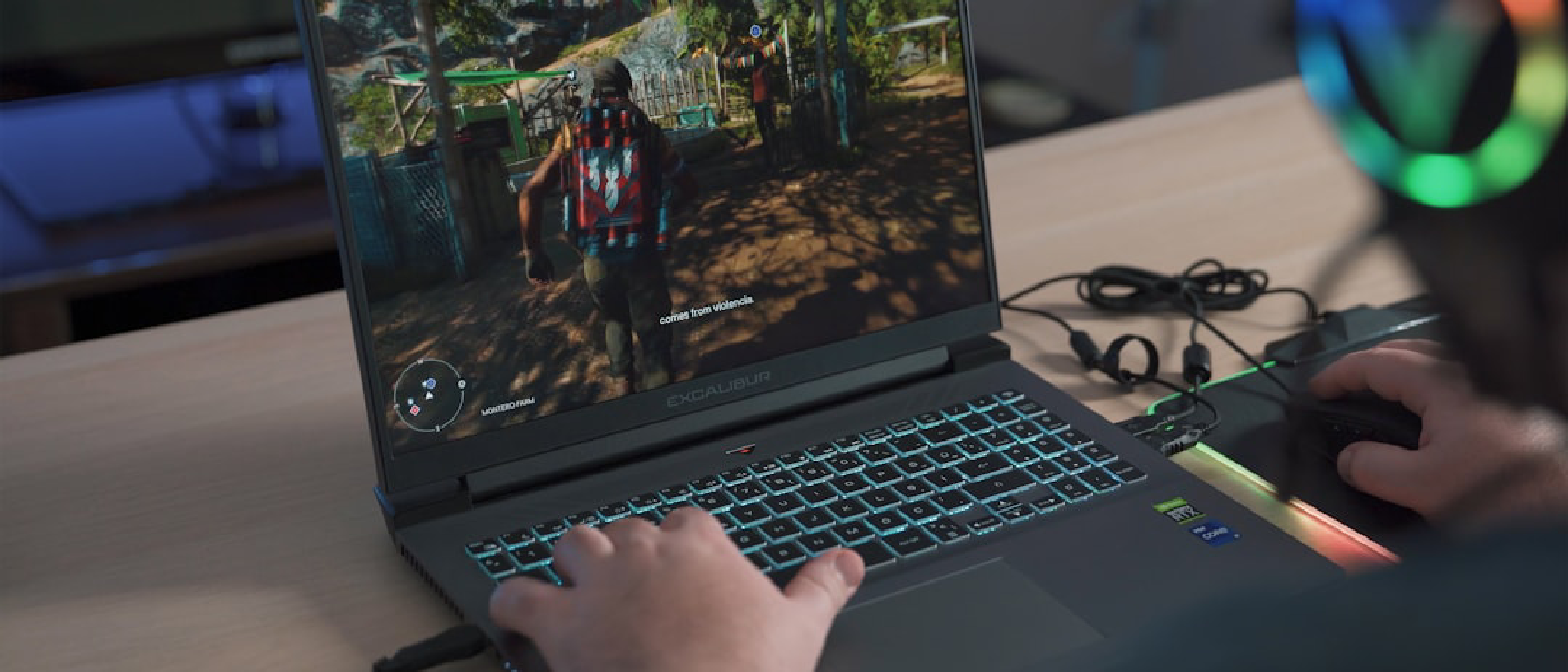
The gaming laptop has undergone a radical transformation over the past decade. Early 2020‑era machines were essentially desktop‑class workhorses crammed into oversized chassis, sacrificing portability for raw horsepower. By 2026, the narrative has flipped: manufacturers are delivering desktop‑level performance in frames that can slip into a backpack.
Key drivers of this shift include:
- Miniaturized RTX 50‑series GPUs – Nvidia’s 5090 and 5080 chips pack more CUDA cores and higher clock speeds while staying under a 30 W TDP envelope, enabling thinner cooling solutions.
- Advanced silicon from Intel and AMD – Intel’s Core Ultra line and AMD’s Ryzen Max+ CPUs integrate Xe SS upscaling and AI‑enhanced rendering, reducing reliance on discrete graphics for many titles.
- OLED adoption – High‑brightness, 1,000+ nit panels with 100 % DCI‑P3 coverage provide true blacks and vibrant colors, a decisive factor for competitive gamers and creators alike.
The result is a market where “thin and gorgeous” is no longer a marketing tagline but a baseline expectation.
Flagship Thin‑and‑Powerful Laptops
Razer Blade 16 & 14
Razer continues to position its Blade series as the “MacBook of gaming laptops.” Both the 16‑inch and 14‑inch models earned an 8/10 rating from WIRED, thanks to machined aluminum bodies, ultra‑thin bezels, and support for up to the RTX 5090. The 16‑inch version offers a 240 Hz OLED panel, while the 14‑inch trades a slightly lower refresh rate for a lighter footprint.
“There’s a reason many regard the Razer Blade line as the Mac Book of gaming laptops (complimentary): It sports a machined aluminum construction, thin bezels, very few vents, and simple straight edges.” – WIRED
Asus ROG Zephyrus G14 & G16
Asus’s Zephyrus line rivals Razer in build quality but differentiates itself with a 16:10 OLED display that peaks at 1,200 nits. The G14 remains a favorite for its 14‑inch chassis, while the G16 adds a larger screen without compromising the sub‑2 kg weight target. Both models ship with RTX 5070 options and feature Asus’ Active Aerodynamic System (AAS) for dynamic fan control.
Lenovo Legion 7i Gen 10
The Legion 7i Gen 10 pushes the envelope of aesthetic minimalism with a glossy white chassis and a 0.7‑inch thickness. Its OLED panel delivers 1,000+ nits, making it one of the brightest gaming laptops on the market. Configurations include RTX 5070 Ti and RTX 5080, paired with Intel Core Ultra CPUs. Priced slightly above the $2,000 mark, it targets power users who also value a premium look.
Asus ROG Strix G16
At $1,760, the Strix G16 offers a straightforward value proposition: an RTX 5070 GPU, 16‑inch 165 Hz OLED screen, and a robust cooling system. While it lacks the ultra‑thin chassis of the Blade, its price‑to‑performance ratio makes it a solid mid‑range contender.
Value‑Driven Gaming Machines
Not every gamer can justify a $2,500 price tag, and the 2026 market reflects that reality. Entry‑level thresholds have settled around $1,000, delivering respectable performance for esports titles and modern AAA games at medium settings.
- Lenovo LOQ 15 – Rated 8/10, this $1,000 laptop pairs an RTX 5060 with a 15.6‑inch 144 Hz OLED panel. Its thin profile and solid battery life make it a strong choice for students.
- MSI Cyborg A15 – Also near $1,000, the Cyborg ships with an RTX 5050 and a 180‑W power brick, ensuring stable performance under load.
- Alienware 15 – At $1,160, it offers an RTX 5050 but suffers from desaturated colors, a trade‑off for the iconic Alienware aesthetic.
- Acer Nitro V 16 – Priced at $1,049, this model includes a 16:10 OLED display and a 135‑W adapter, which can cause battery drain in performance mode but remains a compelling budget option.
The consensus among reviewers is clear: “No gaming laptops worth buying are actually cheap relative to all laptops on the market.” Even the most budget‑friendly models carry a premium over mainstream ultrabooks because of the specialized cooling, power delivery, and display technology required for gaming.
Experimental & Alternative Form Factors
Manufacturers are now exploring form factors that blur the line between laptop, tablet, and handheld.
Asus ROG Flow Z13 (2025 model)
The Flow Z13 earned a 7/10 rating. It’s a 2‑in‑1 Windows tablet with a detachable keyboard and an AMD Ryzen Max+ processor. Its compact size makes it ideal for LAN parties where space is limited, though the RTX‑class performance is limited to integrated graphics.
Asus ROG Zephyrus Duo (upcoming)
A dual‑screen concept that adds a secondary 14‑inch touchscreen above the keyboard. Early leaks suggest it will house an RTX 5080 and a 4,000 nits OLED main panel, targeting creators who need simultaneous game streaming and editing.
Gaming Handhelds
Steam Deck and the newly announced Xbox Ally X continue to carve out a niche for portable PC gaming. While not laptops, they influence design decisions in the laptop space, especially around power efficiency and controller integration.
Non‑Gaming Laptops That Can Game
High‑end productivity machines are increasingly capable of handling modern games, thanks to powerful integrated graphics and clever upscaling.
- Lenovo Yoga Pro 9i – With an RTX 5050, this convertible retails at $2,400 and offers a 4K OLED display. Its versatility makes it attractive to creators who also game on the side. (See also the Mac security discussion in the Mac Antivirus Intego One article for Mac‑focused users.)
- Asus Pro Art P16 – Scoring a 9/10, the Pro Art line emphasizes color accuracy and includes an RTX 5060, positioning it as a creator‑first gaming device.
- Dell XPS 14 – Despite lacking a discrete GPU, the XPS 14 leverages Intel’s X7 integrated graphics with Xe SS upscaling, delivering playable frame rates in many titles when low‑latency mode is enabled.
- MacBook Pro 16‑inch – Apple’s M‑series silicon, while not listed with an RTX, provides impressive Metal‑optimized performance, especially for titles that have been ported to macOS.
These devices illustrate that the line between “gaming” and “productivity” laptops is fading, a trend that will only accelerate as AI‑driven upscaling becomes mainstream.
Technical Breakdown & Future Outlook
GPU Landscape
The RTX 50‑series dominates 2026, with the RTX 5090 delivering up to 12 TFLOPs of rasterization performance while staying under 30 W. Nvidia’s DLSS 3.5 and RTX‑based ray tracing cores have become standard, allowing thin laptops to run ray‑traced titles at 1080p‑1440p with high frame rates.
CPU Advances
Intel’s Core Ultra line integrates Xe SS upscaling directly into the silicon, reducing latency for AI‑enhanced rendering. AMD’s Ryzen Max+ chips bring Zen 5 architecture with higher IPC and a built‑in Strix Point GPU for low‑power scenarios. Both vendors are pushing 5 nm processes, enabling more cores in the same thermal envelope.
Display Technology
OLED panels have become the default for premium models, offering:
- Peak brightness: 1,200 nits (Legion 7i) – essential for HDR gaming in bright environments.
- Refresh rates: 240 Hz (Razer Blade 16) – reduces motion blur for competitive shooters.
- Variable Refresh Rate (VRR): Supported across all OLED models, synchronizing frame output with GPU output for smoother gameplay.
Power Delivery & Battery
USB‑C power delivery has matured, with 240 W adapters now common in high‑end laptops. The USB‑C on Your Phone: More Than Just Charging and Data article outlines how these standards enable faster charging and more efficient power negotiation, directly benefiting gaming laptops that need to sustain high performance without overheating.
Content Creation & AI
YouTube’s recent crackdown on AI‑generated content, detailed in the YouTube Fights AI Slop with New Monetization Rules
calization) article, has also influenced gaming laptop design. Manufacturers are embedding NPUs (Neural Processing Units) to accelerate AI-driven workflows, from real-time video upscaling to automated game optimization. The Lenovo Yoga Pro 9i, for instance, uses its NPU to dynamically adjust fan curves and power limits based on workload, ensuring sustained performance without thermal throttling.
Thermal Management Innovations
Cooling remains the Achilles’ heel of thin gaming laptops, but 2026 has seen breakthroughs in vapor chamber design and phase-change materials. Razer’s Blade series now employs a dual-vapor chamber system, while Asus’ AAS (Active Aerodynamic System) lifts the chassis by 5mm when open, improving airflow by up to 20%. These advancements allow RTX 50-series GPUs to maintain boost clocks even in sustained loads, a feat previously reserved for bulkier desktop replacements.
Connectivity and Ports
The shift to USB4 and Thunderbolt 5 has streamlined connectivity, enabling single-cable docking solutions with 80Gbps bandwidth. Most 2026 gaming laptops now include:
- At least two USB4/Thunderbolt 5 ports – Supporting 4K@144Hz external displays and high-speed storage.
- HDMI 2.1 – For console-style gaming on TVs.
- Wi-Fi 7 – With 6GHz support for sub-1ms latency in competitive multiplayer.
- SD card readers – A nod to content creators, now standard on models like the Asus Pro Art P16.
Software and Ecosystem
Nvidia’s GeForce Experience has evolved into a full-fledged gaming hub, integrating DLSS Frame Generation, Reflex latency optimization, and Broadcast AI tools. AMD’s Adrenalin software now offers similar features, including FSR 4.0 upscaling and Radeon Super Resolution. Meanwhile, Intel’s Arc Control provides Xe SS upscaling for integrated graphics, ensuring even non-gaming laptops like the Dell XPS 14 can run modern titles at playable frame rates.
The MacBook Pro’s Role in the Gaming Laptop Market
Apple’s MacBook Pro 16-inch, while not a traditional gaming laptop, has carved out a niche among developers and indie creators. Its M-series chips deliver Metal-optimized performance that rivals mid-range RTX GPUs in titles like Baldur’s Gate 3 and Resident Evil Village. The 2026 model’s 120Hz ProMotion display and 24-core GPU make it a viable option for casual gaming, especially as more studios port their games to macOS. However, the lack of native ray tracing support and limited game library keep it from competing directly with Windows-based gaming laptops.
Future Trends to Watch
1. AI-Driven Personalization
- Laptops will use NPUs to learn user preferences, automatically adjusting performance profiles, RGB lighting, and even display settings based on the game being played.
- Example: A laptop could switch to “Competitive Mode” for Valorant (high refresh rate, low latency) and “Cinematic Mode” for Cyberpunk 2077 (HDR, ray tracing).
2. Modular Upgrades
- Companies like Framework are pioneering user-replaceable GPUs and storage. While not yet mainstream, 2026 may see the first gaming laptops with swappable GPU modules, extending their lifespan beyond the typical 3-4 years.
3. Cloud Hybrid Gaming
- With services like Xbox Cloud Gaming and Nvidia GeForce Now gaining traction, laptops may prioritize low-latency Wi-Fi 7 and 5G connectivity over raw GPU power. This could lead to thinner, lighter devices that offload rendering to the cloud for demanding titles.
4. Sustainability Initiatives
- Manufacturers are under pressure to reduce e-waste. Expect more laptops with recycled aluminum chassis (like the Razer Blade), repairable designs, and energy-efficient OLED panels that consume less power than traditional LCDs.
5. AR/VR Integration
- As mixed-reality headsets like Apple Vision Pro and Meta Quest 4 become more popular, gaming laptops will need to support high-bandwidth video passthrough and spatial computing. The Asus ROG Zephyrus Duo’s dual-screen design could evolve into a VR-ready control surface.
Conclusion: The Best Gaming Laptop for You in 2026
Choosing the right gaming laptop in 2026 depends on your priorities:
- For power and portability: The Razer Blade 16 or Asus ROG Zephyrus G16 offer the best balance of thin design and RTX 50-series performance.
- For budget-conscious gamers: The Lenovo LOQ 15 or Acer Nitro V 16 deliver solid 1080p gaming at under $1,100.
- For creators who game: The Asus Pro Art P16 or Lenovo Yoga Pro 9i combine OLED displays with RTX GPUs for content creation and casual gaming.
- For experimental form factors: The Asus ROG Flow Z13 (2-in-1 tablet) or upcoming ROG Zephyrus Duo (dual-screen) cater to niche use cases.
- For Mac users: The MacBook Pro 16-inch is the best option for Metal-optimized games, though Windows laptops remain the superior choice for most gamers.
The 2026 gaming laptop market has matured into a diverse ecosystem where performance, aesthetics, and versatility coexist. Whether you’re a competitive esports player, a content creator, or a casual gamer, there’s a laptop tailored to your needs—without the bulk of yesteryear’s machines.
FAQ
Q: Are gaming laptops still worse than desktops in 2026?
A: The gap has narrowed significantly. While desktops still offer better cooling and upgradeability, high-end gaming laptops like the Razer Blade 16 with an RTX 5090 can match or exceed the performance of a mid-range desktop in many games. The trade-off is price: a desktop with equivalent performance is often 20-30% cheaper.
Q: Is OLED worth it for gaming?
A: Yes, but with caveats. OLED panels offer superior contrast, true blacks, and vibrant colors, making them ideal for single-player and narrative-driven games. However, they’re prone to burn-in with static UI elements (e.g., health bars in MMOs). Most 2026 OLED gaming laptops include burn-in mitigation features like pixel refresh and logo dimming.
Q: Can I use a gaming laptop for work or school?
A: Absolutely. Many 2026 models, like the Lenovo Yoga Pro 9i and Dell XPS 14, are designed to double as productivity machines. Look for features like:
- Long battery life (8+ hours for non-gaming tasks).
- Quiet fan modes for office environments.
- High-resolution webcams and microphones for video calls.
Q: How long will a 2026 gaming laptop last?
A: With proper care, 4-5 years is realistic. Key factors that extend lifespan:
- Cooling: Regularly clean vents and use a cooling pad.
- Storage: Upgrade to a 2TB NVMe SSD to avoid running out of space.
- Software: Keep drivers updated and avoid overclocking unless necessary.
Q: Should I wait for the next generation of GPUs?
A: If you’re eyeing an RTX 50-series laptop, there’s no need to wait. Nvidia’s next-gen GPUs (likely RTX 60-series) won’t arrive until late 2027 or early 2028. AMD and Intel may release refreshed CPUs in 2027, but the performance gains will be incremental.
Q: Are gaming handhelds like the Steam Deck or Xbox Ally X better than laptops?
A: It depends on your use case. Handhelds excel in portability and couch gaming but lack the raw power, screen size, and keyboard/mouse support of laptops. They’re complementary devices—ideal for travel or casual play, while laptops remain the best choice for serious gaming and productivity.
Q: What’s the deal with Intel Xe SS and AMD FSR?
A: Both are upscaling technologies designed to boost frame rates without sacrificing visual quality:
- Intel Xe SS: Optimized for Intel Arc GPUs and integrated graphics (e.g., Dell XPS 14). Uses AI to reconstruct images at higher resolutions.
- AMD FSR 4.0: Works on any GPU (including Nvidia) and focuses on temporal upscaling for smoother motion.
- Nvidia DLSS 3.5: Still the gold standard for RTX GPUs, offering the best image quality and performance.
For most gamers, enabling upscaling can double frame rates in demanding titles, making it a must-use feature.
Source: Original Article