



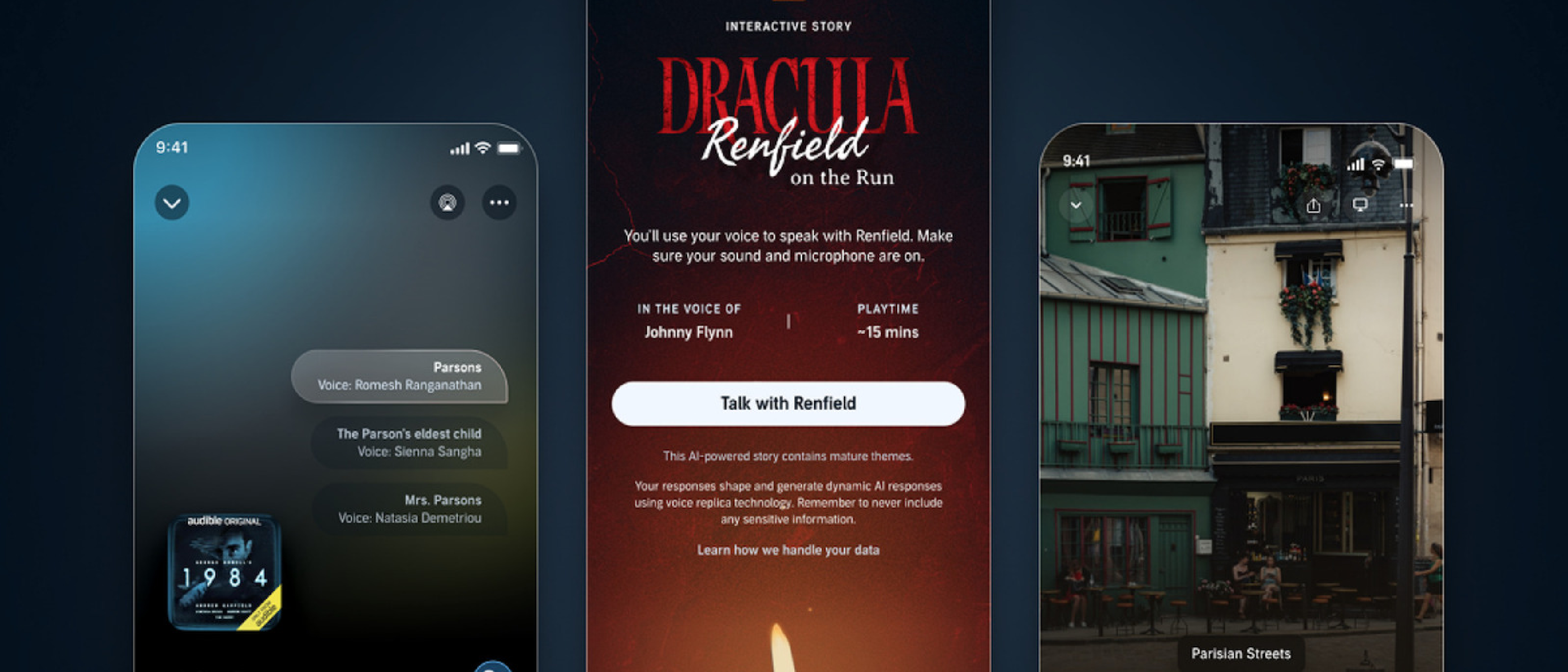
What Audible’s Interactive Stories Are
Audible’s newest product line, Interactive Stories, marks a decisive shift from passive listening to a conversational, role‑play experience. Powered by generative‑AI, the feature lets a listener speak directly to characters, receive real‑time reactions, and become an active participant in the narrative.
The first rollout pairs the technology with the upcoming Audible Original adaptation of Bram Stoker’s Dracula. In this beta experience, the infamous servant Renfield greets the user, assigns a role, a goal, and stakes, and then reacts to whatever the listener says—no pre‑recorded branches, just dynamic dialogue generated on the fly.
Key launch milestones:
- Beta launch – “later this fall” (no exact date)
- Dracula adaptation – October 1
- Second Interactive Story, Exoplanet – November 5, created with author Benjamin Percy
Additional tools accompany the core experience: a Character Guide that displays speaker identity and spoiler‑free cards, already live for 1984 and slated for Dracula and Exoplanet; and a Visual Explorer that surfaces maps and contextual images during key moments, debuting with The Cultural Tutor’s Grand Tour audio tour.
Technical Architecture and AI Mechanics
Generative‑AI Core
At the heart of Interactive Stories is a large language model (LLM) fine‑tuned on Audible’s extensive catalog of scripts, voice talent recordings, and narrative structures. The model must satisfy three constraints:
- Voice Consistency – The AI must synthesize speech that matches the original actor’s timbre, cadence, and emotional tone.
- Narrative Coherence – Responses must respect the story’s plot, character motivations, and the stakes introduced by Renfield.
- Low Latency – Real‑time interaction demands sub‑second turnaround, requiring edge‑computing optimizations and efficient token streaming.
Audible’s Chief Product and Analytics Officer, Andy Tsao, emphasized that “AI is allowing us to create new interactive experiences that today’s listeners, especially younger audiences, are craving.” The company reportedly leverages a hybrid approach: a cloud‑based inference engine for heavy language processing, paired with on‑device caching of voice profiles to reduce round‑trip time.
Role Assignment and Goal Setting
When a listener first engages, Renfield delivers a scripted role‑assignment prompt (e.g., “You are a daring explorer seeking the hidden crypt”). The AI then records the user’s spoken input, parses intent, and maps it to a goal tree—a structured representation of possible objectives and outcomes. This tree guides subsequent AI‑generated dialogue, ensuring that the conversation remains anchored to the story’s arc.
Character Guide Integration
The Character Guide overlays a real‑time speaker label and a concise, spoiler‑free card. Technically, it pulls metadata from Audible’s content management system (CMS) and synchronizes it with the AI’s turn‑taking logic. This solves a classic audiobook pain point: listeners often lose track of who is speaking when multiple characters appear without visual cues.
Visual Explorer Sync
The Visual Explorer is a lightweight UI layer that surfaces relevant imagery—maps, period photographs, or concept art—exactly when the AI references a location or event. It uses timestamped tags embedded in the audio file, which the player reads and triggers the visual component. The beta pairing with The Cultural Tutor’s Grand Tour demonstrates Audible’s broader ambition to blend audio storytelling with visual context.
Why It Matters: Audience & Market Impact
Engaging Younger Listeners
A Pew Research survey cited in the announcement notes that younger audiences are skeptical of AI, yet also “craving” immersive experiences. Interactive Stories directly address this paradox by offering agency without the complexity of full‑blown video games. The conversational format mirrors the popularity of voice assistants and AI chatbots, making the experience feel familiar yet novel.
Differentiation in a Crowded Audio Market
Audible competes with platforms like Pandora (see our analysis of the recent price hike) and Spotify’s podcast ecosystem. By introducing a generative‑AI layer, Audible creates a unique value proposition that cannot be replicated by simple playlist curation. The addition of visual aids also nudges the platform toward a hybrid audio‑visual niche, potentially attracting users who enjoy interactive fiction but lack the hardware for VR or AR.
Monetization Potential
While pricing details remain undisclosed, the beta model suggests a subscription‑based or premium‑add‑on approach. Interactive Stories could become a flagship feature for Audible’s higher‑tier plans, similar to how Sony’s AI upscaling became a selling point for the base PS5 model (see our coverage of that rollout). The technology also opens doors for branded experiences, educational modules, and corporate training scenarios where role‑play is valuable.
Industry Implications and Competitive Landscape
AI‑Driven Narrative Across Media
Audible’s move mirrors trends in gaming, where titles like AI Dungeon pioneered text‑based adventure generation. However, Audible’s integration of professional voice talent and high‑production audio sets a higher bar for quality. This could pressure other audiobook services to explore AI‑enhanced narration, potentially leading to an industry‑wide arms race in voice synthesis fidelity.
Legal and Ethical Considerations
Generating dialogue in real time raises questions about content moderation, especially when users might say inappropriate things. Audible will need robust filters to prevent the AI from producing offensive or copyrighted material. The platform’s compliance framework may draw on lessons from the NYC Click‑to‑Cancel Rule case, which highlighted the importance of transparent user controls in subscription services.
Cross‑Platform Opportunities
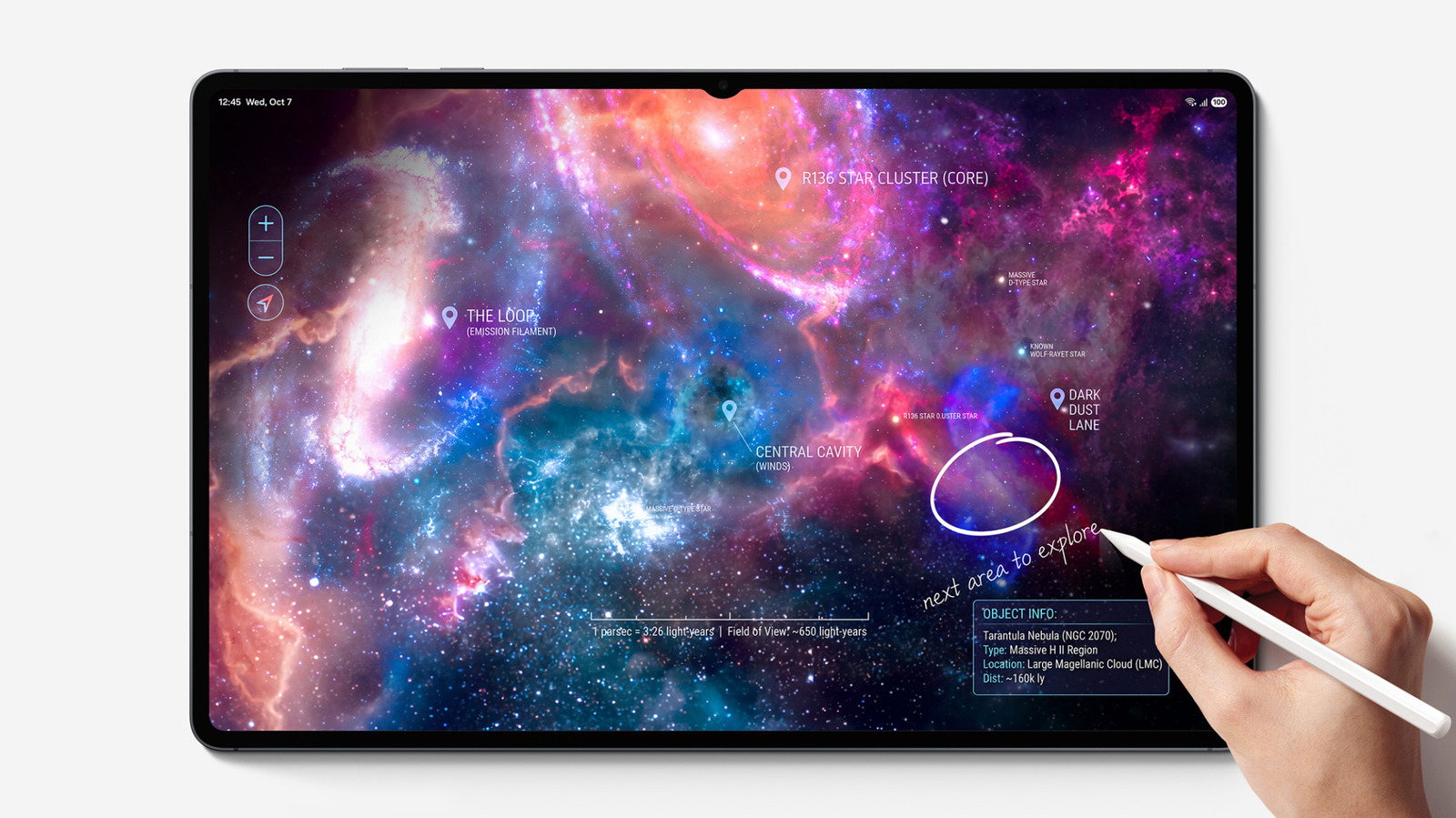
The Visual Explorer hints at future integration with smart displays, tablets, or even AR glasses. If Audible can synchronize AI‑driven audio with visual layers on devices like the Samsung Galaxy Tab S12 Ultra, it could create a seamless multimodal experience. Such cross‑device synergy would further differentiate Audible from pure‑audio competitors.
Future Outlook and Potential Extensions
Scaling the Library
The initial rollout includes Dracula and Exoplanet, but the underlying architecture is designed to scale across Audible’s entire catalog. Future interactive adaptations could span classic literature, true‑crime podcasts, and language‑learning modules. Each genre would require custom role‑assignment logic, but the core LLM remains reusable.
Community‑Generated Content
One logical next step is allowing authors or creators to submit interactive scripts that the AI can augment. This would democratize content creation, similar to how indie developers publish mods for games. Audible could introduce a marketplace for user‑generated interactive stories, expanding the ecosystem without heavy internal production costs.
Real‑Time Multiplayer Experiences
While current Interactive Stories are single‑user, the technology could evolve to support co‑op narratives, where multiple listeners converse with the same characters and influence outcomes together. Implementing synchronized state across users would be technically challenging but could unlock a new genre of social audio gaming.
Frequently Asked Questions
Q: Do I need special hardware to use Interactive Stories?
A: No. The feature works on any Audible‑compatible device that supports microphone input, including smartphones, tablets, and smart speakers.
Q: How is my voice data handled?
A: Audible processes spoken input locally for intent detection before sending anonym
anized tokens to the cloud for generation, and no raw audio is stored long‑term. Audible also gives users the option to delete their interaction history from the app settings at any time.
Q: Will the AI ever deviate from the original story?
A: The system is constrained by a story‑graph that encodes the canonical plot points of each title. While the dialogue is dynamically generated, it is bounded by these nodes, ensuring that the overall narrative stays true to the author’s intent.
Q: Can I change my assigned role mid‑story?
A: Yes. At any point you can say “I want to try a different role,” and Renfield (or the relevant guide character) will present a new set of objectives. This flexibility is built into the goal‑tree logic to keep the experience fresh.
Q: Is there a limit to how long I can talk?
A: Each Interactive Story episode is capped at roughly 30 minutes of active conversation, after which the AI will guide you toward a natural narrative pause or conclusion. This limit helps maintain pacing and prevents the model from drifting off‑topic.
Q: Will subtitles be available for the AI‑generated speech?
A: Audible plans to roll out real‑time transcription for accessibility in a later update, leveraging the same speech‑to‑text pipeline that powers the voice‑input processing.
Q: How does the Visual Explorer know which image to show?
A: Audio files are annotated with time‑coded metadata tags that reference a curated image library. When the AI mentions a location or object, the player reads the tag and surfaces the corresponding visual element instantly.
Q: Is there a way to turn off the AI interaction and just listen?
A: Absolutely. A toggle in the playback controls lets you switch to “Story‑Only” mode, which disables the microphone and presents the traditional linear audiobook experience.
Conclusion
Audible’s Interactive Stories represent a bold experiment at the intersection of generative AI, voice synthesis, and immersive storytelling. By giving listeners the agency to speak directly to characters like Renfield and receive on‑the‑fly, context‑aware responses, Audible is redefining what an audiobook can be. The accompanying tools—Character Guide and Visual Explorer—address long‑standing usability gaps, while the strategic rollout schedule (Dracula in October, Exoplanet in November) gives the company time to refine latency, moderation, and voice‑matching pipelines.
If the beta proves successful, we can expect a cascade of genre‑spanning interactive experiences, community‑driven content, and perhaps even multiplayer narrative sessions. For now, the technology offers a glimpse of a future where audio entertainment is as conversational as a chat with a friend, yet as polished as a Hollywood production. Listeners who crave agency without sacrificing production quality may find this the next big thing in audio media.
Stay tuned for updates on launch dates, pricing tiers, and upcoming titles that will join the Interactive Stories lineup.
Source: Original Article