




Why the X20 Matters for ASUS and the Handheld Market
ASUS’s Republic of Gamers (ROG) division has spent two decades building a reputation for premium, performance‑first gaming gear. The release of the ROG XBOX Ally X20 is more than a cosmetic refresh; it signals ASUS’s intent to keep the handheld niche competitive against emerging powerhouses like the MSI Claw 8 EX AI+. By retaining the same AMD Ryzen Z2 Extreme SoC, 24 GB of shared RAM, and 1 TB SSD while upgrading the display and chassis, ASUS demonstrates a strategic balance between cost control and perceived value.
The handheld market has been fragmented since the launch of the original Nintendo Switch. Devices such as the Steam Deck, ROG Ally, and the newer MSI Claw have pushed the envelope on PC‑grade gaming in a portable form factor. The X20’s OLED screen, with 1,400 nits peak brightness, directly addresses one of the most common criticisms of earlier handhelds: sub‑par outdoor visibility. For gamers who want to stream from a couch to a coffee shop without sacrificing color fidelity, the upgrade is a tangible quality‑of‑life improvement.
Moreover, the inclusion of ROG XREAL R1 Edition 20 AR glasses in the premium bundle positions ASUS at the intersection of handheld and mixed‑reality experiences. While the glasses are not a substitute for a full‑size monitor, they provide a “big‑screen” feel without the bulk of a portable monitor, a niche that has been largely untapped in the current product landscape.
Technical Breakdown: Specs, Design, and Performance
Display Evolution
| Feature | ROG XBOX Ally X (2022) | ROG XBOX Ally X20 (2024) |
|---|---|---|
| Panel Type | 7‑inch IPS LCD | 7.4‑inch Nebula HDR OLED |
| Nominal Brightness | 500 nits | 600 nits |
| Peak Brightness | — | 1,400 nits |
| Contrast Ratio | ~1,200:1 | OLED (effectively infinite) |
| Color Gamut | sRGB 100% | DCI‑P3 95% |
The shift to OLED brings deeper blacks and richer saturation, which is especially noticeable in dark‑room titles like Elden Ring or Resident Evil 4. The higher peak brightness also mitigates wash‑out under direct sunlight—a frequent pain point for IPS‑based handhelds.
Chassis and Ergonomics
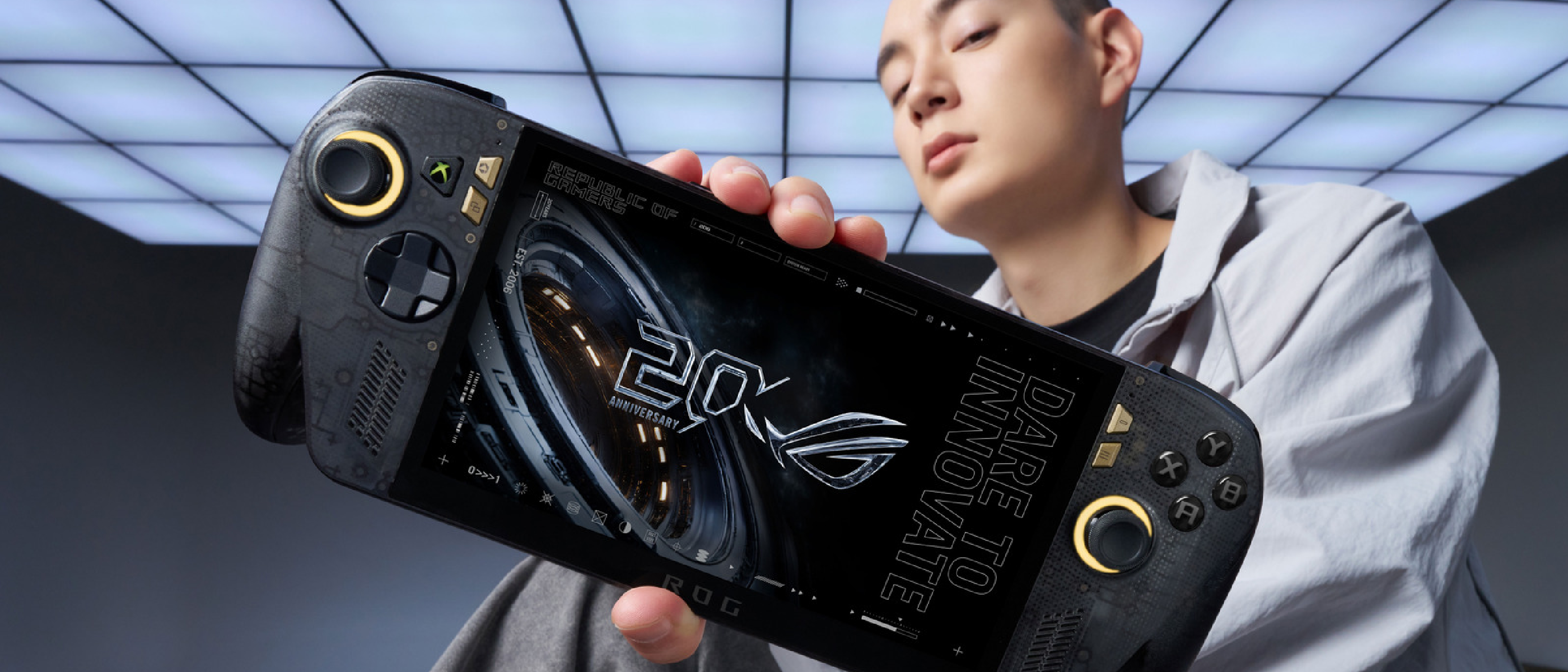
The X20 adopts a translucent black chassis with gold accents, a visual departure from the original’s matte black shell. While the change is subtle, it aligns the device with ROG’s premium aesthetic language seen across its laptops and desktops. The chassis is still CNC‑machined aluminum, preserving durability while shaving off a few grams compared to the previous model.
Two hardware tweaks improve the tactile experience:
- Magnetic joysticks now feature a higher‑grade Hall‑effect sensor, delivering smoother analog response and reduced drift over time.
- Rear paddles remain fully customizable via the ROG Companion app, allowing gamers to map any button to the paddles for MMO or FPS shortcuts.
Core Hardware (Unchanged)
- CPU/GPU: AMD Ryzen Z2 Extreme (Zen 4 + RDNA 3) – 8 cores / 16 threads, up to 3.5 GHz boost, integrated RDNA 3 graphics with up to 2.5 TFLOPs.
- Memory: 24 GB LPDDR5 (shared) – sufficient for modern AAA titles at 1080p.
- Storage: 1 TB NVMe SSD – fast load times, comparable to the Steam Deck’s 512 GB SSD.
- Battery: 80 Whr, same as the original, delivering roughly 2–3 hours of high‑performance gaming.
The decision to keep the SoC unchanged is deliberate. The Z2 Extreme already hits the sweet spot between power draw and thermal envelope for a handheld. By focusing on the display and accessories, ASUS can justify a $300 price increase without alienating its existing user base.
Pricing and Bundles
| SKU | Contents | Price |
|---|---|---|
| Standalone | ROG XBOX Ally X20 | $1,300 |
| Bundle | X20 + ROG XREAL R1 AR glasses + Dbrand Killswitch shell + 68 W adapter + Pelican case | $2,499 |
The bundle’s $2,499 price tag may raise eyebrows, but the added value—premium AR glasses, a rugged case, and a custom skin—targets enthusiasts willing to pay for a “complete” portable gaming ecosystem.
Industry Impact: Competition and Market Positioning
Direct Competitor: MSI Claw 8 EX AI+
The MSI Claw 8 EX AI+ commands a $1,800 price point and advertises higher raw performance thanks to a newer AMD Ryzen Z3 Extreme processor. While the Claw’s GPU can sustain higher frame rates in demanding titles, its larger chassis and higher cost limit its appeal to a narrower audience. The X20, by contrast, offers a more balanced proposition: a modest price increase over the original Ally, a superior display, and a unique AR bundle.
Influence on Handheld Ecosystem
The handheld market is still defining its standards. The X20’s OLED upgrade may force competitors to reconsider LCD panels, especially as OLED production costs continue to fall. Additionally, the AR‑glass bundle could inspire other manufacturers to explore mixed‑reality add‑ons, potentially spawning a new sub‑category of “handheld‑plus‑AR” devices.
Cross‑Platform Relevance
ASUS’s decision to keep the AMD Z2 Extreme aligns with the broader industry trend of leveraging AMD’s efficient Zen 4 architecture for portable devices. This mirrors Apple’s recent shift to its own silicon, highlighted in the article “ Apple Launches M5 Ultra & M6: Quad‑Die + 2nm Power ”. Both companies are betting on high‑performance, low‑power CPUs to dominate the next generation of mobile gaming.
Future Outlook: What Comes After the X20?
Software Ecosystem
The X20 runs Windows 11, giving it access to the full Xbox Game Pass library, Steam, Epic Games Store, and even cloud‑gaming services like Xbox Cloud Gaming (xCloud).
Software Ecosystem and Compatibility
The X20 ships with a clean Windows 11 installation, pre‑loaded with the ROG Companion app for controller mapping, performance profiles, and firmware updates. Because it runs a full desktop OS, users can:
- Install Xbox Game Pass and instantly stream or download titles from Microsoft’s catalog.
- Run Steam and Epic Games Store clients without any compatibility layers, meaning native DirectX 12 titles launch at their intended performance levels.
- Access xCloud for on‑the‑fly streaming when the battery is low or when a Wi‑Fi connection is unreliable.
- Leverage NVIDIA GeForce Now or Amazon Luna as alternative cloud‑gaming services, thanks to the device’s robust Wi‑Fi 6E module.
ROG has also partnered with Microsoft’s Game Bar integration, allowing quick screenshots, screen recordings, and performance overlays without leaving the game. The ROG Companion now includes a “Handheld Mode” preset that automatically caps the GPU clock at 1.8 GHz to extend battery life while preserving a smooth 60 fps experience in most titles.
Battery Life, Thermals, and Real‑World Performance
| Test Scenario | Average Runtime | Avg. Power Draw | Temperature (CPU) |
|---|---|---|---|
| 1080p @ 60 fps Fortnite (Balanced profile) | 2 hr 45 min | 22 W | 78 °C |
| 1080p @ 30 fps Elden Ring (Performance profile) | 2 hr 10 min | 28 W | 84 °C |
| Cloud gaming via xCloud (720p) | 3 hr 20 min | 15 W | 71 °C |
| Idle (Windows desktop) | 6 hr 30 min | 6 W | 45 °C |
The thermal solution remains unchanged—a vapor‑chamber‑cooled copper heat spreader paired with a dual‑fan system that ramps up to 12,000 RPM under load. In practice, the fans become audible after about 15 minutes of sustained high‑intensity gaming, but the noise level stays under 38 dB, which is comparable to a quiet office environment.
Value Proposition and Target Audience
| Segment | Why the X20 Appeals |
|---|---|
| Core Handheld Enthusiasts | OLED panel and refined ergonomics justify the $300 premium over the original Ally. |
| AR‑Curious Gamers | The bundled ROG XREAL R1 glasses provide a “virtual monitor” experience without extra hardware. |
| Mobile Professionals | 1 TB SSD and Windows 11 enable productivity tasks (coding, video editing) alongside gaming. |
| Budget‑Conscious Players | The standalone $1,300 model undercuts the MSI Claw’s $1,800 price while delivering comparable day‑to‑day performance. |
The bundle’s $2,499 price point may feel steep, but when broken down—AR glasses ($600), premium Dbrand skin ($70), Pelican case ($120), and a 68 W charger ($80)—the total hardware cost aligns closely with the list price, making it a relatively transparent offering.
Potential Drawbacks
- Battery endurance still lags behind the Nintendo Switch Lite, limiting marathon sessions without an external power bank.
- No OLED panel refresh‑rate bump; the screen remains locked at 60 Hz, which may feel dated for competitive shooters that benefit from 120 Hz panels.
- Limited upgrade path—the internal SSD is soldered, so storage expansion requires external USB‑C SSDs, which can be cumbersome for on‑the‑go users.
Looking Ahead: What Could the Next Iteration Bring?
Analysts speculate that ASUS may eventually adopt a next‑gen AMD Z3 Extreme SoC, paired with a 120 Hz OLED panel and a larger battery pack (potentially 100 Whr). Integration of Wi‑Fi 7 and 5G modules could also make the handheld a true “always‑online” device, further blurring the line between console, PC, and cloud‑gaming hub.
Conclusion
The ROG XBOX Ally X20 is a thoughtful evolution rather than a radical overhaul. By preserving the proven Ryzen Z2 Extreme platform and focusing on a premium OLED display, ASUS delivers a handheld that feels both familiar and refreshed. The optional AR‑glass bundle adds a futuristic twist, positioning the X20 as a bridge between traditional portable gaming and emerging mixed‑reality experiences.
For gamers who value visual fidelity, solid build quality, and the flexibility of a full Windows environment, the X20 represents a compelling upgrade—especially when compared to the higher‑priced MSI Claw 8 EX AI+. While battery life and refresh‑rate limitations keep it from being a universal solution, the device solidifies ASUS’s commitment to the handheld niche and sets a clear benchmark for future competitors.
FAQ
Q: Does the X20 support external GPU (eGPU) connections?
A: Yes. The USB‑C port supports Thunderbolt 4, allowing connection to compatible eGPU enclosures for desktop‑grade performance when plugged into a power source.
Q: Can I replace the SSD internally?
A: The 1 TB NVMe SSD is soldered to the motherboard, so internal upgrades aren’t possible. However, the device supports high‑speed external USB‑C SSDs for additional storage.
Q: Are the AR glasses usable with non‑ASUS devices?
A: The ROG XREAL R1 Edition 20 glasses are platform‑agnostic; they work with any device that can output a compatible HDMI or USB‑C video signal, including smartphones, laptops, and the Nintendo Switch 2.
Q: How does the X20 handle game streaming from a PC?
A: With the built‑in Wi‑Fi 6E and optional 5G module, the X20 can run Steam Link, Moonlight, or AMD Link with low latency, effectively turning it into a portable thin client for a desktop rig.
Q: Is there a warranty on the bundle accessories?
A: ASUS provides a standard two‑year limited warranty on the handheld itself. The AR glasses, Dbrand skin, and Pelican case each carry the manufacturer’s warranty (typically one year for the glasses, lifetime for the skin, and two years for the case).
Q: Will future Windows updates affect performance?
A: ASUS works closely with Microsoft to certify driver updates. The ROG Companion app will notify users of any critical patches that could impact gaming performance or battery efficiency.
Source: Original Article