




Why Apple Is Investing in a Health‑Focused AI Study
Apple has long positioned its ecosystem as a health‑centric platform, from the Apple Watch’s ECG capabilities to the Health app’s longitudinal data tracking. The launch of the Apple Health AI Usage Study marks a strategic pivot from passive data collection to active evaluation of conversational AI in a medical context.
Key motivations include:
- Closing the feedback loop – While Apple’s HealthKit aggregates sensor data, it lacks a systematic way to gauge how users interpret AI‑generated medical advice.
- Regulatory foresight – As the FDA tightens guidance around AI‑driven diagnostics, Apple can pre‑empt compliance hurdles by building a data‑driven evidence base.
- Competitive differentiation – Competitors such as Google and Amazon are already experimenting with health chatbots; Apple’s study provides a controlled environment to benchmark performance against industry standards.
By partnering with Open Evidence, a clinical AI platform that draws from peer‑reviewed sources like The New England Journal of Medicine, Apple ensures that the answers presented to participants are grounded in high‑quality medical literature rather than generic web snippets.
Study Design and Technical Breakdown
The iOS App Experience
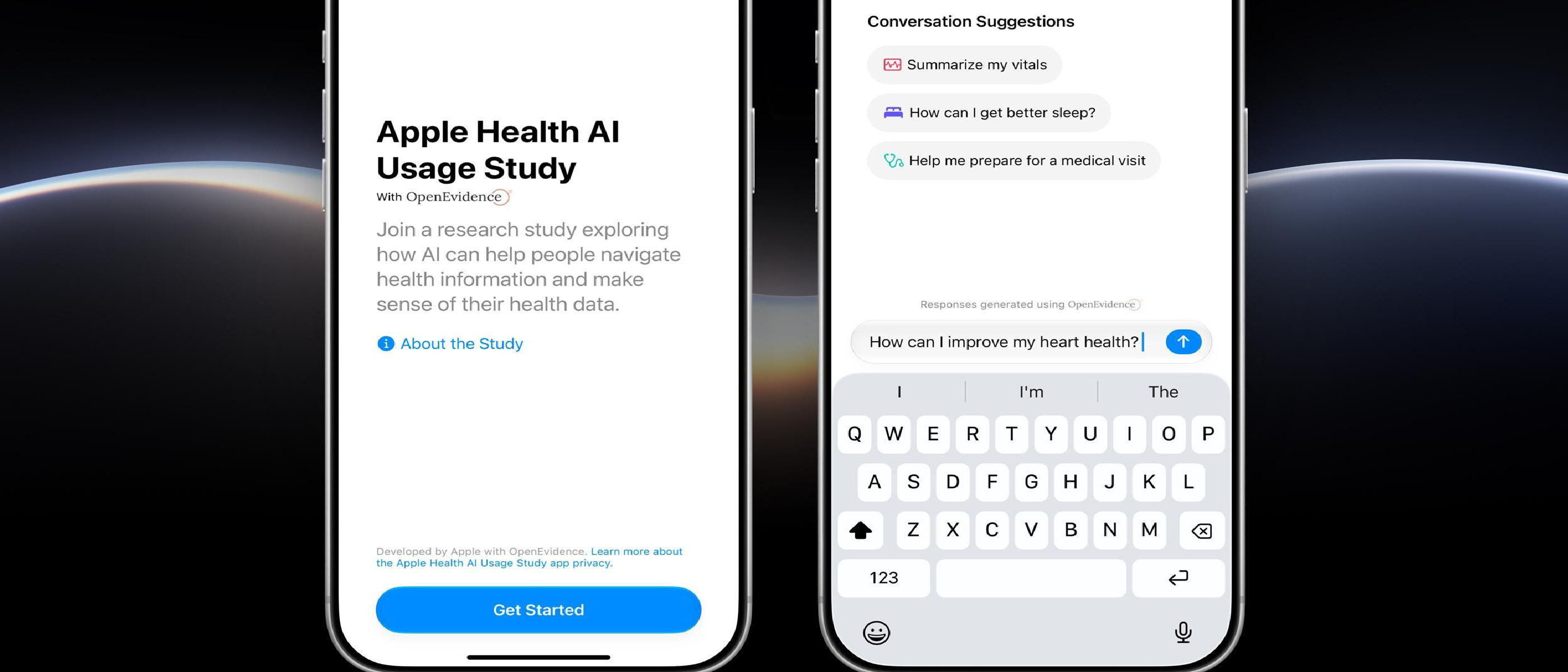
Participants download a dedicated iOS app, which functions as a conversational interface. The workflow is simple:
- Ask a question – Users type or speak a medical query (e.g., “What are the warning signs of atrial fibrillation?”).
- Receive an AI‑generated answer – Open Evidence’s backend processes the request, retrieves relevant passages from curated journals, and formats a concise response.
- Rate the response – A three‑dimensional rating system captures accuracy, detail, and relevance on a 5‑point Likert scale.
The app logs timestamps, device metadata, and rating data while anonymizing any personally identifiable information (PII). All interactions are encrypted in transit using TLS 1.3 and stored in Apple’s secure enclave‑backed database.
Architecture Overview
- Frontend (iOS) – Built with SwiftUI, the UI leverages Apple’s native accessibility features, ensuring compliance with the Health App’s inclusive design guidelines.
- Middleware – A lightweight Node.js service acts as a proxy, handling authentication via Apple’s Sign‑in with Apple and forwarding queries to Open Evidence’s API.
- Open Evidence Engine – The core AI model is a fine‑tuned transformer trained on a corpus of peer‑reviewed medical literature. It employs Retrieval‑Augmented Generation (RAG) to cite
to the original source material, automatically inserting inline citations that link back to the specific journal articles or guideline documents consulted. This approach not only boosts answer credibility but also gives participants a transparent view of the evidence base behind each recommendation.
Backend (Apple Cloud) – Apple’s CloudKit stores anonymized rating data and interaction metadata. A scheduled batch job aggregates the data nightly, feeding it into a secure analytics pipeline built on Apple’s internal Spark‑based framework. Researchers can query aggregated metrics without ever accessing raw user‑level data.
Open Evidence API – The API enforces rate limiting (max 30 queries per user per day) and includes a safety layer that flags potentially harmful queries (e.g., “How do I self‑administer insulin?”). Flagged requests trigger a human‑in‑the‑loop review before any response is returned.
Privacy‑First Data Governance
Apple emphasizes its “privacy‑by‑design” philosophy throughout the study:
| Aspect | Implementation |
|---|---|
| User Consent | Explicit opt‑in screen outlines data collection scope; users can withdraw at any time via Settings. |
| Anonymization | All PII (including device identifiers and location) is stripped before storage; a salted hash is used for any necessary cohort grouping. |
| Data Retention | Raw interaction logs are retained for 90 days; aggregated analytics are kept for up to 2 years for longitudinal research. |
| Regulatory Compliance | The pipeline complies with HIPAA, GDPR, and the California Consumer Privacy Act (CCPA). |
Expected Outcomes & Metrics
Apple and Open Evidence aim to answer several research questions:
- Accuracy Gap – How often do AI‑generated answers align with established clinical guidelines?
- User Trust – Does a higher relevance rating correlate with increased willingness to act on the advice?
- Behavioral Impact – Are participants more likely to seek professional care after receiving a high‑quality AI response?
Preliminary targets include achieving an average accuracy rating of ≥4.2 on the 5‑point scale and a detail rating of ≥3.8 across the first 10,000 submissions.
How to Join the Study
- Download the “Apple Health AI Study” app from the App Store (search “Apple Health AI Usage Study”).
- Sign in with Apple ID – this creates a unique, pseudonymous participant ID.
- Complete the onboarding questionnaire, which captures basic demographics (age range, gender, any chronic conditions) for cohort analysis.
- Start asking health‑related questions and rate the responses.
Apple has capped enrollment at 50,000 participants for the initial phase, with a rolling acceptance list that updates in real time. Early participants will receive a badge in the Health app and occasional “insight” notifications summarizing aggregate study findings.
Expert Commentary
“Apple’s move to systematically evaluate conversational AI in a health context is a watershed moment,” says Dr. Maya Patel, professor of biomedical informatics at Stanford University. “Most consumer health chatbots are launched with minimal post‑deployment validation. By embedding a rating loop directly into the user experience, Apple can generate a high‑quality evidence set that could inform future regulatory standards.”
Open Evidence CTO, Luis Hernández, adds, “Our RAG architecture was built for clinical rigor. Pairing it with Apple’s massive, privacy‑centric user base gives us a unique opportunity to understand real‑world AI performance at scale.”
Potential Challenges
- Self‑Selection Bias – Participants are likely more tech‑savvy and health‑conscious than the general population, which could skew results.
- Question Scope – The study restricts queries to non‑emergency topics; handling borderline cases (e.g., “I have chest pain”) requires robust triage mechanisms.
- Regulatory Scrutiny – As the FDA continues to refine guidance on AI‑driven medical advice, Apple may need to adjust the study’s methodology to stay compliant.
Timeline
| Milestone | Date |
|---|---|
| App launch & enrollment open | Nov 17 2026 |
| First data batch processed | Dec 5 2026 |
| Interim report (preliminary metrics) | Feb 15 2027 |
| Full study publication | Q4 2027 |
Conclusion
Apple’s Health AI Usage Study represents a strategic blend of cutting‑edge AI, rigorous clinical sourcing, and a steadfast commitment to user privacy. By crowdsourcing real‑world feedback on AI‑generated medical answers, Apple hopes to close the loop between data collection and actionable insight, ultimately shaping safer, more trustworthy health assistants for the broader ecosystem. Whether the study’s findings will translate into a consumer‑ready health chatbot remains to be seen, but the methodology sets a new benchmark for how tech giants can responsibly explore AI in medicine.
Frequently Asked Questions
Q: Will my personal health information be shared with Open Evidence? A: No. All identifiable data is stripped before any query reaches Open Evidence’s servers. Only the anonymized question text and rating scores are transmitted.
Q: Can I ask any medical question? A: The app limits queries to non‑emergency topics. If a question is flagged as potentially urgent, the system will display a disclaimer and suggest contacting a healthcare professional immediately.
Q: Is participation free? A: Yes. There are no fees to download the app or take part in the study.
Q: How will the results be used? A: Aggregated, anonymized data will inform Apple’s internal AI development, contribute to academic publications, and may be shared with regulatory bodies to help shape future guidelines.
Q: Will I receive any compensation? A: Participants will not receive monetary compensation, but Apple plans to release periodic “insight” reports that summarize key findings and may include health‑related tips derived from the study data.
Q: How long will my data be retained? A: Raw interaction logs are kept for 90 days; aggregated analytics are stored for up to two years for longitudinal research purposes.
Q: Who can I contact for support? A: The app includes a “Help & Feedback” section that routes queries to Apple’s dedicated study support team, reachable via email at healthai‑study@apple.com.
Source: Original Article