

Overview of the Health AI Usage Study
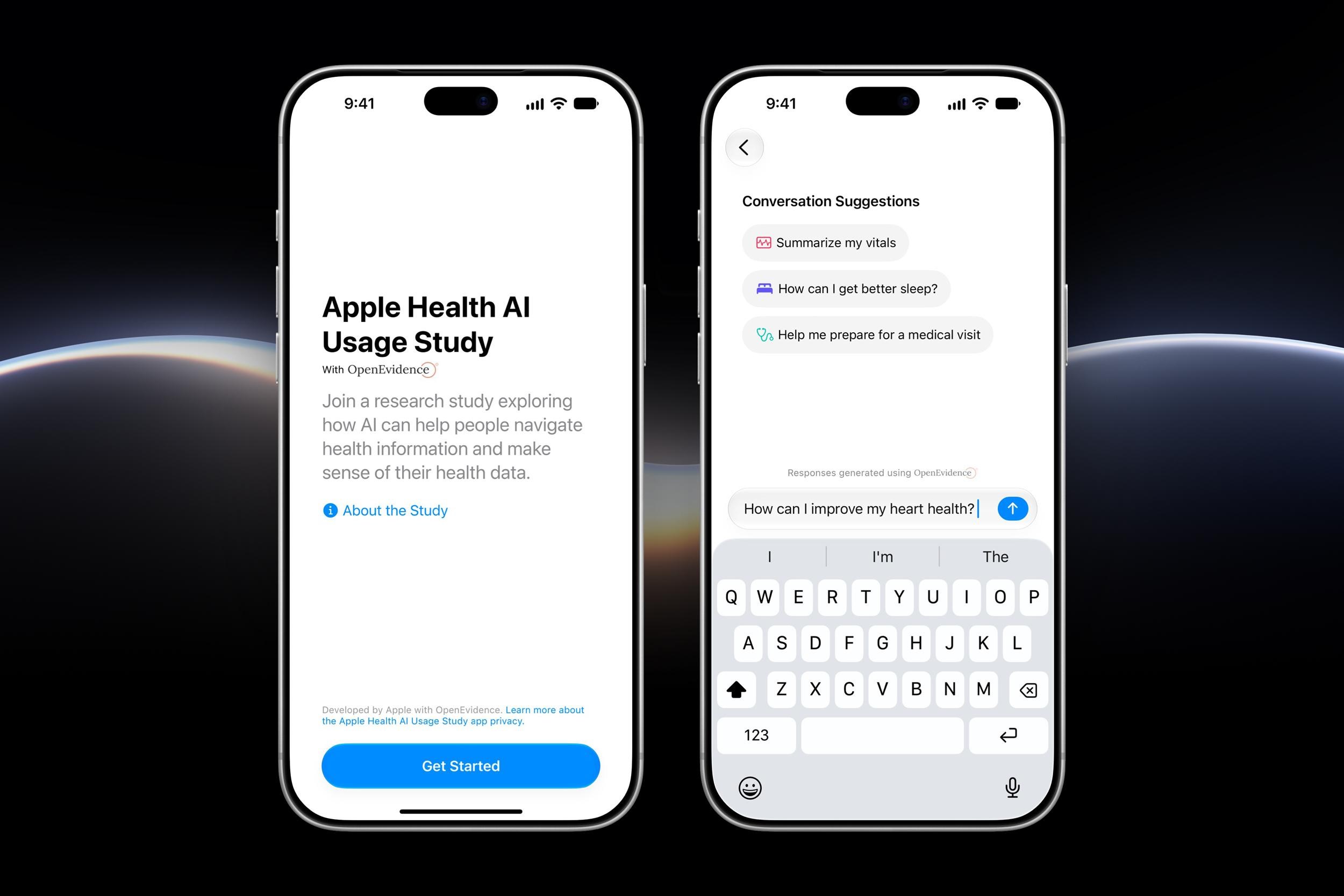
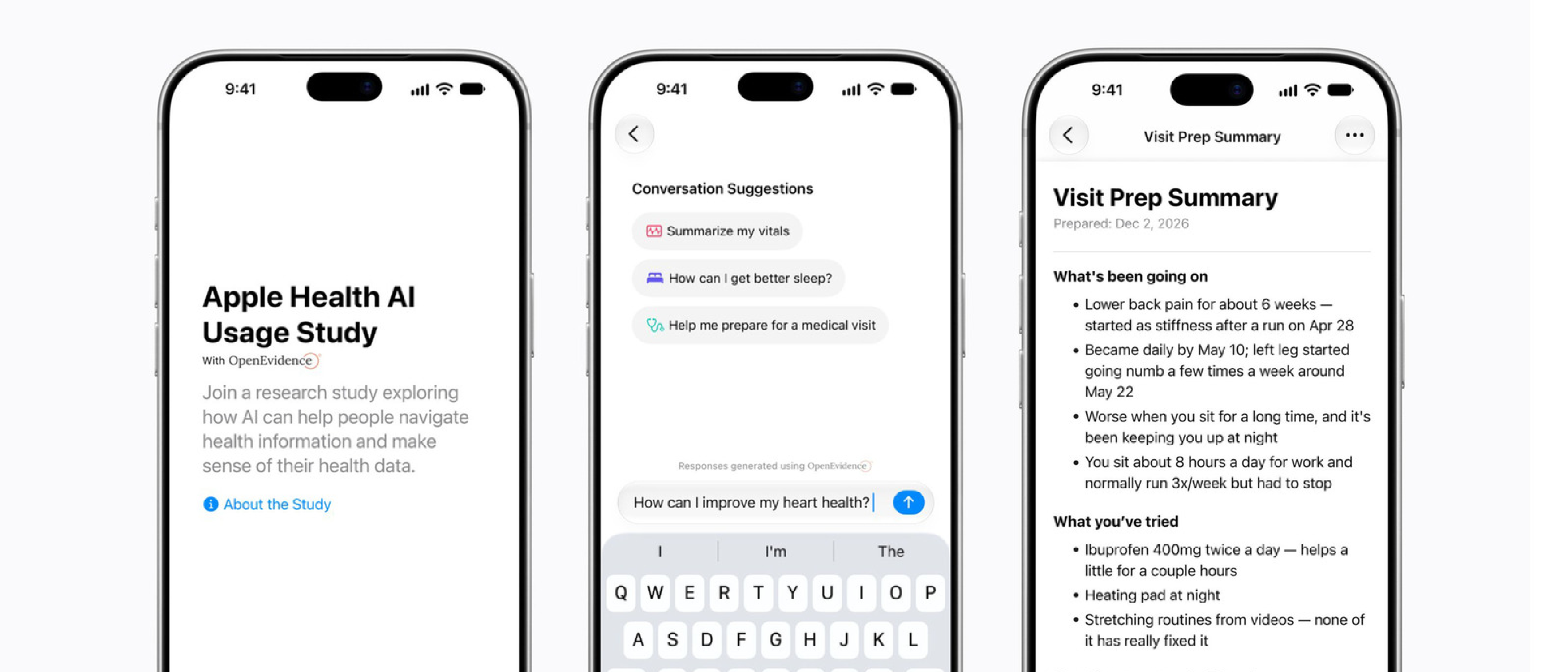
Apple announced the Health AI Usage Study, a research‑driven initiative that aims to map how everyday users interact with AI‑powered health tools. The program is anchored by a dedicated iOS app, now publicly downloadable, that lets participants pose medical questions in plain language and receive concise, jargon‑free answers linked to peer‑reviewed clinical literature. Apple targets up to 200,000 U.S. residents for the study, focusing on adults 21 years or older who own an iPhone 15 Pro or later and run iOS 26 or newer.
The study’s stated purpose is two‑fold: first, to collect real‑world usage patterns that can inform the design of more intuitive AI health interfaces; second, to validate that AI‑generated advice remains clinically grounded. As Apple VP of Health and Fitness Sumbul Desai, MD put it, “We believe responsible innovation starts with scientific rigor and clinical grounding.” The initiative underscores Apple’s broader ambition to become a trusted conduit between consumers and evidence‑based health information.
Technical Architecture of the Study App
Core Functionality
The app operates as a lightweight conversational layer that does not rely on Siri or Apple Intelligence. Users type queries such as “how can I improve my heart health?” The backend processes the prompt, matches it against a curated knowledge base supplied by the Open Evidence platform, and returns a short answer accompanied by hyperlinks to original articles from sources like The New England Journal of Medicine. This design ensures that every response is traceable to a peer‑reviewed study, reducing the risk of hallucinated or speculative advice.
Integration with Apple Health Kit
Participants may opt‑in to share selected health metrics from Apple Health Kit, including:
- Daily activity levels (steps, workouts)
- Sleep quality scores
- Laboratory results (e.g., cholesterol, glucose)
These data points are used solely for aggregate analysis; Apple explicitly states that individual data will never train its AI models. The optional sharing mechanism respects user autonomy while providing researchers with a richer context for interpreting query patterns.
Platform Dependencies
- Device requirement: iPhone 15 Pro or later. The choice reflects Apple’s push toward the latest hardware capabilities, such as the enhanced Neural Engine that can accelerate on‑device inference for future iterations. For readers interested in the hardware ecosystem, see our review of Apple’s travel chargers: 2026’s Best 3‑in‑1 Apple Travel Chargers Reviewed.
- OS requirement: iOS 26+. This aligns with the rollout of new privacy APIs that give developers granular control over data consent.
- Connectivity: The app leverages the device’s USB‑C port for secure data transfer when users export their health logs. A deeper dive into USB‑C capabilities on iPhones can be found here: USB‑C on Your Phone: More Than Just Charging and Data.
Data Privacy and Ethical Considerations
Apple’s privacy narrative is a central pillar of the study. Key safeguards include:
- Confidentiality: All participant data is stored in encrypted form on Apple’s servers, isolated from other consumer services.
- No AI training: The collected corpus will not be used to fine‑tune Siri, Apple Intelligence, or any other commercial model. This restriction is codified in the app’s terms of service.
- Transparent consent flow: Users receive a step‑by‑step permission screen that explains exactly which Health Kit categories they are sharing and for what purpose.
- Independent oversight: The Open Evidence platform, which supplies the clinical literature, operates under a separate governance model, ensuring that source selection remains unbiased.
These measures address growing concerns about “data mining” in health AI, where user inputs could inadvertently improve proprietary models without compensation or consent.
Why It Matters for Users and Developers
For Consumers
- Evidence‑based answers: By linking every response to a peer‑reviewed article, the app reduces reliance on generic internet search results that may be outdated or inaccurate.
- User‑friendly language: The non‑jargon output lowers the barrier for individuals without medical training, potentially improving health literacy.
- Control over personal data: Optional Health Kit sharing lets users contribute to research without surrendering full access to their medical history.
For Developers
- Blueprint for responsible AI: Apple’s explicit separation of research data from product training sets a precedent for ethical data pipelines.
- API design patterns: The study app demonstrates how to build a conversational health interface that pulls from a vetted knowledge base rather than a large language model, a pattern that could be replicated in niche domains.
- Hardware‑software synergy: Requiring the latest iPhone models encourages developers to design for the most capable on‑device processors, pushing the industry toward richer on‑device AI while preserving privacy.
Industry Impact and Competitive Landscape
Apple’s entry into systematic health‑AI research positions it alongside other tech giants that have launched medical data initiatives, such as Google’s Health Studies platform and Microsoft’s Healthcare Bot. However, Apple differentiates itself through:
- Hardware lock‑in: By limiting participation to iPhone 15 Pro or newer, Apple leverages its premium device ecosystem to ensure consistent performance and security standards.
- Clinical partnership: The use of Open Evidence and direct integration of The New England Journal of Medicine content signals a deeper commitment to medical rigor than many competitors, which often rely on proprietary datasets.
- Privacy‑first stance: Declaring that study data will not train commercial AI models counters criticism that tech firms exploit health data for profit.
Analysts predict that the insights gathered could accelerate the rollout of AI features in Apple Health Kit, potentially influencing future versions of the Health app, Apple Watch health metrics, and even third‑party developer tools. The broader tech community is watching closely; for a perspective on how emerging research platforms shape ecosystems, see the discussion on Starlink’s research model: Starlink Mini Home Use: Costs, Speed & What’s Next.
Future Outlook and Potential Extensions
While the current study is limited to U.S. residents, Apple may expand geographically once the initial data set stabilizes. Possible future directions include:
- Multilingual support: Extending the text‑prompt interface to Spanish, Mandarin, and other languages would broaden accessibility.
- Integration with wearables: Real‑time sensor data from Apple Watch could enrich query context (e.g., “my heart rate spikes during workouts”).
- Hybrid AI models: A future version might combine rule‑based clinical reasoning with a lightweight, on‑device language model, preserving privacy while offering more nuanced answers.
- Clinical trial recruitment: Aggregated, anonymized data could help match participants with relevant clinical studies, creating a virtuous loop between research and patient care.
Apple’s roadmap will likely be guided by the study’s findings, especially around user comfort with AI explanations and the balance between depth of information and readability.
Frequently Asked Questions
Q1: Is the Health AI Usage Study app free? A: Yes, the app can be downloaded at no cost from the App Store. There are no hidden fees or subscription requirements.
Q2: Can I use the app on an older iPhone? A: Participation is restricted to iPhone 15 Pro or later models running iOS 26+. Older devices are not supported at this time.
Q3: Will my Health Kit data be sold to third parties? A: No. Apple states that all participant data remains confidential and will not be used to train AI models or sold to advertisers.
Q4: How are answers sourced? A: Responses are generated from the Open Evidence platform, which pulls peer‑reviewed articles from sources such as The New England Journal of Medicine.
Q5: Is Siri involved in answering my questions? A: The study app operates independently of Siri and Apple Intelligence, ensuring that the research data stays separate from Apple’s consumer AI services.
Conclusion
Apple’s Health AI Usage Study represents a strategic blend of rigorous clinical sourcing, privacy‑centric design, and hardware‑driven performance. By inviting a sizable, demographically diverse cohort to interact with a text‑based AI health assistant, Apple is gathering the empirical evidence needed to refine future health‑AI experiences. The initiative sets a benchmark for responsible data handling and could catalyze a wave of evidence‑backed, user‑friendly health tools across the mobile ecosystem. As the study progresses, developers, clinicians, and consumers alike will gain valuable insights into how AI can augment personal health without compromising trust.
Source: Original Article