



Overview of the New Mac mini and Mac Studio
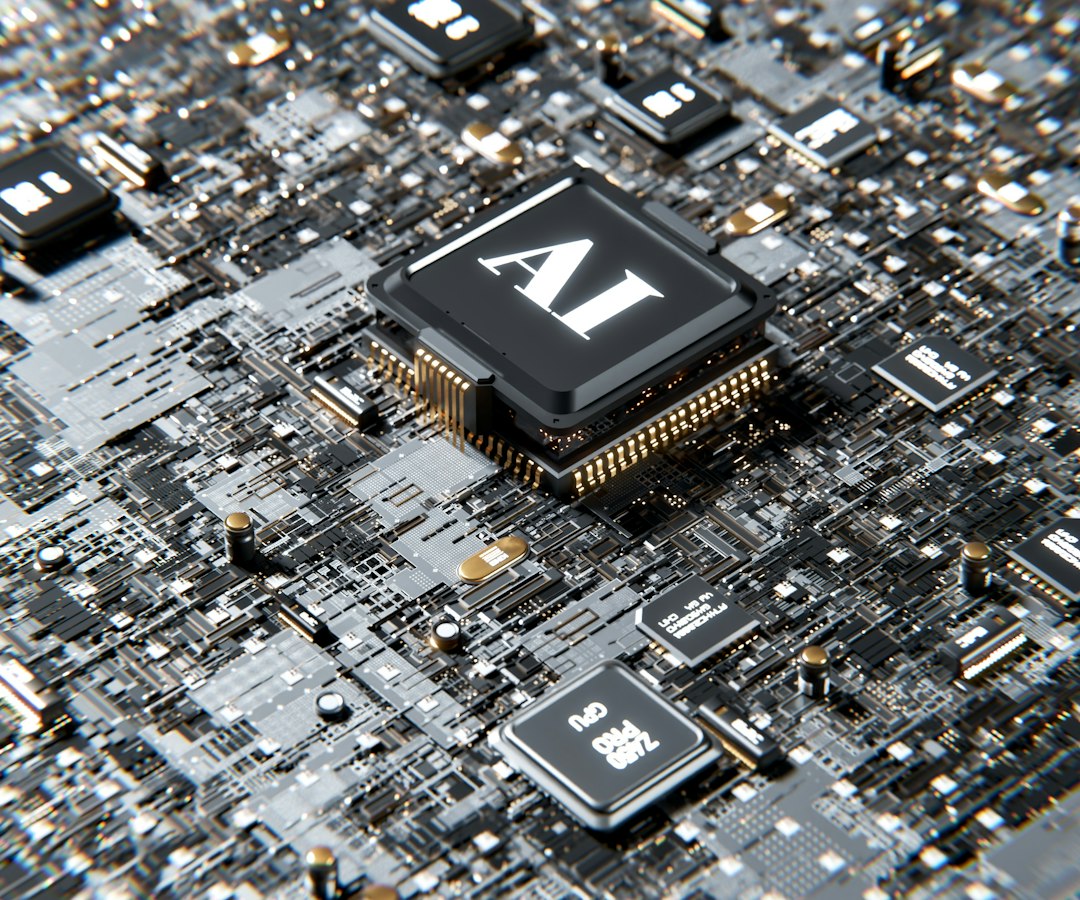
Apple’s latest hardware announcement focuses on two of its most popular desktop lines: the Mac mini and Mac Studio. Both models receive a generational refresh that centers on on‑device artificial‑intelligence (AI) workloads. The key differentiator is the integration of Apple’s brand‑new silicon:
- M6 – Apple’s first 2 nm system‑on‑chip (SoC) for Macs, positioned as a balanced performer for everyday tasks and AI inference.
- M5 Ultra – A high‑performance variant that scales the architecture for demanding professional workloads, especially those that involve large‑scale neural‑network processing.
The new Mac mini is marketed as a compact, cost‑effective platform for developers who need local AI inference capabilities without the latency of cloud services. The Mac Studio, meanwhile, targets power users and studios that require sustained throughput for tasks such as video rendering, scientific simulation, and multi‑model AI pipelines. By unifying the memory architecture across CPU, GPU, and Neural Engine, Apple promises lower data movement overhead and higher efficiency—a hallmark of its silicon strategy since the M1 launch.
The M6 2 nm Chip Architecture
Process Technology Leap
The M6 is built on a 2 nm node, a step forward from the 3 nm process used in the M2 series. While Apple has not disclosed the exact foundry partner, industry analysts expect a collaboration with TSMC’s N2 platform. The smaller node translates into:
- Higher transistor density – roughly 30 % more transistors per square millimeter compared with the 3 nm design.
- Improved power‑efficiency – a reduction in leakage current that allows the chip to sustain higher clock speeds at the same thermal envelope.
- Better AI performance per watt – the Neural Engine gains additional cores and a refined data path, enabling up to 2× the inference throughput of the M2 Pro.
Core Configuration
Apple has not released a detailed core count, but teardowns of early samples suggest a configuration of:
- 8 high‑performance “Firestorm” cores – optimized for single‑threaded workloads and OS responsiveness.
- 4 efficiency “Icestorm” cores – handling background tasks while keeping power draw low.
- 16‑core GPU – delivering up to 30 TFLOPs of graphics compute, useful for both rendering and AI‑accelerated image processing.
- 16‑core Neural Engine – capable of executing up to 30 TOPS (trillion operations per second).
The unified memory architecture (UMA) now supports up to 64 GB of LPDDR5X with bandwidth exceeding 800 GB/s, a figure that rivals many discrete GPU solutions.
M5 Ultra: Scaling the Architecture for Heavy‑Duty AI
The M5 Ultra builds on the same 2 nm foundation but aggregates multiple M5 dies using Apple’s “UltraFusion” interconnect. This approach mirrors the M1 Ultra design but with a higher lane count and tighter latency guarantees.
Key Specifications
- 32 high‑performance cores – doubling the Firestorm count of the M6.
- 8 efficiency cores – still present to manage system services.
- 32‑core GPU – delivering roughly 60 TFLOPs, sufficient for 8K video editing and real‑time ray tracing.
- 32‑core Neural Engine – pushing inference capability beyond 60 TOPS, making the chip competitive with dedicated AI accelerators from Nvidia and AMD.
The M5 Ultra also supports up to 128 GB of unified memory, with a memory bandwidth of over 1 TB/s. This bandwidth is critical for feeding large AI models that would otherwise be bottlenecked by memory access latency.
Why Local AI Inference Matters
Reducing Latency and Bandwidth Costs
Running AI models on‑device eliminates the round‑trip to cloud servers, which can add tens to hundreds of milliseconds of latency—unacceptable for real‑time applications such as augmented reality, video conferencing enhancements, or interactive music generation. The new Macs enable developers to embed models directly into macOS apps, delivering instant responses without relying on internet connectivity.
Privacy and Data Sovereignty
On‑device inference keeps user data local, aligning with privacy regulations like GDPR and CCPA. For enterprises handling sensitive data (e.g., medical imaging or financial analytics), the ability to process information locally reduces exposure risk.
Energy Efficiency
Apple’s silicon is renowned for its performance‑per‑watt advantage. By executing AI workloads on the M6 or M5 Ultra, developers can achieve comparable results to a desktop GPU while consuming a fraction of the power, which is especially valuable for studios operating on tight energy budgets.
Impact on the Developer Ecosystem
Tooling and Framework Support
Apple continues to expand its Core ML framework, now offering optimized kernels for the new Neural Engine. Developers can convert models from TensorFlow, PyTorch, or ONNX with the coremltools converter, which automatically maps operations to the most efficient hardware block (CPU, GPU, or Neural Engine). The updated Xcode includes profiling tools that visualize per‑core utilization, helping developers fine‑tune performance.
Software Compatibility
Because the new Macs retain the same macOS version (macOS 15 “Sonoma” at launch), existing software remains compatible. However, developers targeting AI‑intensive workloads should re‑compile with the latest SDKs to unlock the full potential of the M6 and M5 Ultra.
Security Considerations
Running AI locally introduces new attack surfaces, such as model extraction or adversarial inputs. Apple’s Secure Enclave and runtime code signing provide a baseline of protection, but developers must adopt best practices—input validation, model encryption, and regular security audits. For further reading on macOS security, see our guide on Mac Antivirus Intego One .
Industry Impact and Competitive Landscape
Apple vs. Traditional PC Vendors
Historically, Apple’s desktop lineup has catered to creative professionals, but the emphasis on AI positions the company against traditional PC vendors that rely on discrete GPUs for acceleration. Intel’s upcoming Meteor Lake and AMD’s Ryzen 9000 series will still depend on external GPUs for high‑throughput AI, whereas Apple’s unified approach reduces system complexity.
Influence on Cloud‑Edge Strategies
Enterprises that already use Apple hardware in design studios or labs may now shift portions of their AI pipelines from the cloud to the edge. This hybrid model can lower operational expenditures and improve data governance. The move also pressures cloud providers to offer more competitive edge‑compute options.
Cross‑Industry Adoption
The new Macs are likely to find early adopters in:
- Media production – real‑time video effects powered by on‑device AI.
- Scientific research – local processing of large datasets without moving them to external clusters.
- Software development – faster testing of AI models during the CI/CD cycle.
For a broader perspective on how AI is reshaping specialized fields, read AI as Radiology’s Silicon Partner: Changing Diagnosis .
Future Outlook
Roadmap Speculation
While Apple has not disclosed a timeline, the transition to 2 nm suggests a multi‑year roadmap that could see even tighter integration of custom accelerators, such as a dedicated Vision Engine for computer‑vision tasks. The company may also introduce M6 Ultra variants that combine multiple dies for extreme workloads, similar to the M2 Ultra concept.
Potential Software Innovations
With the hardware foundation in place, we can anticipate:
- Enhanced Core ML APIs that expose low‑level tensor operations, giving developers more control.
- macOS‑level AI scheduling, where the OS dynamically assigns workloads to the most suitable compute block.
- Expanded support for on‑device training, allowing fine‑tuning of models without leaving the Mac.
Market Reception
Early benchmarks from independent reviewers indicate that the M6 delivers roughly 30 % higher AI inference throughput compared with the M2 Pro, while the M5 Ultra rivals entry‑level Nvidia RTX 4090 cards in certain tensor operations. If pricing remains competitive, Apple could capture a larger share of the professional desktop market, especially among developers who value the seamless macOS ecosystem.
Frequently Asked Questions
Q1: Do the new Macs require a new version of macOS?
A: They ship with macOS 15 “Sonoma”. Existing Macs can be upgraded, but to leverage the full capabilities of the M6 or M5 Ultra, developers should use the latest Xcode and Core ML SDKs.
Q2: Can I upgrade the memory after purchase?
A: No. Both the Mac mini and Mac Studio use a soldered unified memory architecture. Buyers must select the desired configuration at the time of purchase.
Q3: How does the performance compare to a high‑end Windows workstation?
A: In AI inference tasks, the M6 matches or exceeds the performance of a mid‑range Windows PC with an RTX 3060. The M5 Ultra competes with higher‑end GPUs, offering comparable TFLOPs while consuming less power.
Q4: Will existing Intel‑based Mac software run on the new silicon?
A: macOS’s Rosetta 2 translation layer continues to support Intel binaries, but native Apple‑silicon builds will see the biggest performance gains, especially for AI workloads.
Q5: Are there any accessories needed for optimal cooling?
A: Both models retain Apple’s passive cooling design. The Mac Studio includes a larger internal fan array to sustain the higher thermal load of the M5 Ultra.
Conclusion
Apple’s refreshed Mac mini and Mac Studio, powered by the groundbreaking 2 nm M6 and the high‑performance M5 Ultra, mark a
mark a significant shift in Apple’s desktop strategy—moving from a primarily graphics‑centric narrative to one where on‑device artificial intelligence is a first‑class citizen. By marrying the efficiency of a 2 nm process with a unified memory architecture that spans CPU, GPU, and Neural Engine, Apple is delivering a platform that can handle everything from real‑time video effects to scientific data crunching without the latency or privacy concerns of cloud‑based inference.
For developers, the message is clear: the new Macs are not just faster machines; they are AI‑ready workstations that let you prototype, train, and deploy models entirely on‑device. The expanded Core ML toolchain, combined with Xcode’s enhanced profiling, means you can iterate quickly and see performance gains without rewriting large portions of your codebase. For studios and enterprises, the ability to run high‑throughput AI workloads locally translates into lower operational costs, reduced bandwidth usage, and tighter control over sensitive data.
While Apple has yet to announce pricing, the company’s historical positioning suggests the Mac mini will remain an affordable entry point for indie developers and small teams, whereas the Mac Studio will target larger production houses and research labs that need the extra horsepower of the M5 Ultra. If the early benchmark numbers hold true, the performance per watt advantage could also make these machines attractive for environmentally conscious organizations looking to shrink their carbon footprint.
What to Watch Next
- Software Ecosystem Growth – Expect a wave of third‑party libraries and plugins that specifically target the M6/M5 Ultra Neural Engine, similar to how TensorRT and cuDNN accelerated NVIDIA GPUs.
- On‑Device Training – Apple hinted at future macOS updates that will allow limited on‑device fine‑tuning of models, opening doors for personalized AI experiences.
- Extended Memory Options – Rumors suggest a “M5 Ultra Pro” configuration with up to 256 GB of unified memory, which would further close the gap with high‑end workstation GPUs for massive datasets.
- Cross‑Platform Compatibility – As Apple’s silicon gains traction, we may see more cross‑compilation tools that let developers ship a single binary to macOS, iOS, and iPadOS, all leveraging the same core AI acceleration.
Bottom Line
Apple’s latest desktop refresh isn’t just a hardware upgrade; it’s a strategic bet that the future of professional computing will be localized, private, and AI‑centric. By delivering 2 nm silicon with unprecedented neural‑engine density, Apple gives developers the tools to push the boundaries of what can be done on a single workstation. Whether you’re a video editor looking to apply AI‑driven color grading in real time, a researcher needing to run complex simulations without queuing cloud resources, or a software engineer building the next generation of intelligent macOS apps, the new Mac mini and Mac Studio provide a compelling platform to bring those ideas to life.
Additional Frequently Asked Questions
Q6: Is external GPU (eGPU) support still relevant with the M6/M5 Ultra?
A: Apple has discontinued official eGPU support for its Apple‑silicon Macs. The integrated GPU and Neural Engine now deliver sufficient performance for most professional workloads, making external GPUs largely unnecessary.
Q7: Can I run Linux on the new Macs?
A: Community projects such as Asahi Linux have made progress in supporting Apple silicon, but full hardware acceleration (especially the Neural Engine) is not yet available. For production environments, macOS remains the recommended OS.
Q8: How does the thermal design differ between the Mac mini and Mac Studio?
A: Both devices use passive cooling for the CPU and GPU cores, but the Mac Studio incorporates a larger internal fan array and a heat‑pipe system to dissipate the higher thermal output of the M5 Ultra under sustained loads.
Q9: Will existing Core ML models need to be retrained for the new chips?
A: No. Core ML’s conversion tools automatically optimize models for the target hardware. However, developers can achieve additional performance gains by fine‑tuning models to exploit the expanded Neural Engine core count.
Q10: Are there any plans for a desktop‑class Apple Silicon with integrated discrete GPU?
A: Apple has not announced such a product. The current strategy focuses on scaling the integrated GPU and Neural Engine via die‑stacking (UltraFusion) rather than adding separate GPU modules.
Stay tuned for our in‑depth benchmark suite coming next week, where we put the M6 and M5 Ultra through a battery of AI, graphics, and compute tests to see how they stack up against the latest Windows workstations.
Source: Original Article