
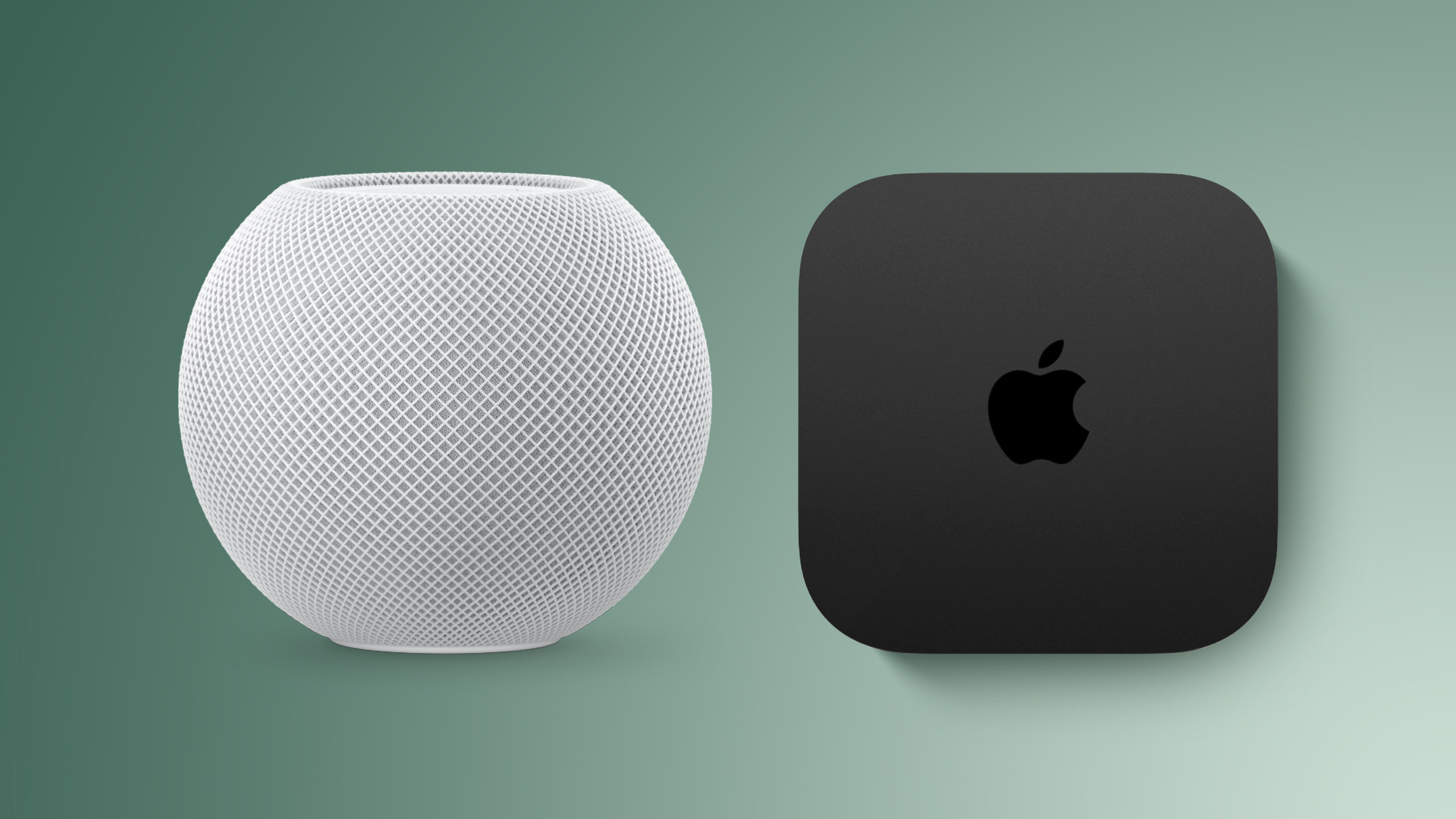

Apple’s latest hardware refresh has arrived, and the spotlight is firmly on the Mac Mini—now powered by the M6 chip and a more premium M5 Pro variant. Alongside, the Mac Studio lineup has been updated with M5 Max and M5 Ultra chips, signaling Apple’s continued push into high-performance computing and AI-driven workflows. But with a 50% price hike on the base model, is the new Mac Mini worth the investment? Let’s dive into the specs, pricing, and broader implications for consumers and the tech industry.
The New Mac Mini: M6 vs. M5 Pro – What’s Changed?
Apple’s Mac Mini has long been a favorite among developers, power users, and budget-conscious professionals. The latest iteration introduces two distinct models:
1. Mac Mini (M6 Chip) – The New Entry-Level Powerhouse
- Chip: M6 (12-core CPU, 12-core GPU)
- RAM: 16GB unified memory (non-upgradable)
- Storage: 256GB (2x faster than M4)
- AI Performance: 4x better than M4
- Connectivity:
- Wi-Fi 7
- Bluetooth 6
- 2.5Gb Ethernet (upgradable to 10Gb)
- Price: $899 (up from $599 for the discontinued 256GB M4 model)
- Availability: Pre-orders open now; shipping after September 22, 2026
2. Mac Mini (M5 Pro) – The Prosumer Workhorse
- Chip: M5 Pro (15-core CPU, 16-core GPU, upgradable to 18/20-core)
- RAM: 24GB unified memory
- Storage: 512GB
- Connectivity: Same as M6 model
- Price: $1,699
- Availability: Same as M6 model
Key Upgrades Over Previous Models
- AI Acceleration: Apple claims the M6 delivers 4x better AI performance than the M4, making it a strong contender for local AI workloads.
- Storage & Graphics: Both storage and GPU speeds are twice as fast as the M4, addressing long-standing complaints about SSD bottlenecks.
- Future-Proofing: Wi-Fi 7 and Bluetooth 6 ensure compatibility with next-gen peripherals and networks.
Mac Studio Gets M5 Max & M5 Ultra – Who’s It For?
While the Mac Mini targets mainstream users, the Mac Studio remains Apple’s answer to high-end workstations. The new models include:
1. Mac Studio (M5 Max)
- Chip: M5 Max
- RAM: 36GB unified memory
- Storage: 512GB
- Price: $2,499
2. Mac Studio (M5 Ultra)
- Chip: M5 Ultra (dual-die configuration)
- RAM: 96GB unified memory
- Storage: 1TB
- Price: $5,499
These updates cater to video editors, 3D artists, and AI researchers who need extreme performance. The M5 Ultra, in particular, is a beast for machine learning training and high-resolution rendering, though its $5,499 price tag limits its audience to professionals with deep pockets.
Why the Price Hike? The AI & Storage Trade-Off
The most controversial change is the $300 price increase on the base Mac Mini (from $599 to $899). Apple justifies this with:
- Doubled storage speed (256GB vs. previous 128GB/256GB models)
- 4x AI performance (critical for local AI agents like Open Claw and Hermes)
- Wi-Fi 7 & Bluetooth 6 (future-proofing for next-gen networks)
However, the discontinuation of the $599 model leaves budget-conscious buyers with fewer options. The last remaining entry-level Mac Mini (M4, 512GB) now costs $799, making Apple’s ecosystem less accessible to students and small businesses.
The Secondary Market Boom
With the $599 Mac Mini gone, eBay and resellers have capitalized on demand, selling older models at marked-up prices. This trend mirrors the GPU and PlayStation 5 shortages of past years, where scalpers exploited limited supply.
Industry Impact: Apple’s AI Ambitions & the Local AI Revolution
Apple’s focus on AI performance in the M6 chip aligns with a broader industry shift toward on-device AI processing. Unlike cloud-dependent models (e.g., OpenAI’s ChatGPT), local AI agents like Anthropic’s Hermes and Open Claw run entirely on-device, offering:
- Lower latency (no internet required)
- Enhanced privacy (data stays local)
- Offline functionality (critical for remote work)
This move positions Apple as a direct competitor to NVIDIA’s AI-focused GPUs, which dominate the machine learning space. However, Apple’s closed ecosystem may limit adoption among open-source developers who prefer Linux-based workstations.
For more on AI-driven security risks, check out our coverage of OpenAI’s exposure of a Russian AI-powered influence operation .
Technical Deep Dive: M6 vs. M5 Pro vs. M4 – What’s Under the Hood?
1. CPU & GPU Performance
| Model | CPU Cores | GPU Cores | AI Performance (vs. M4) | RAM (Base) | Storage (Base) |
|---|---|---|---|---|---|
| M6 | 12 | 12 | 4x | 16GB | 256GB |
| M5 Pro | 15-18 | 16-20 | N/A | 24GB | 512GB |
| M4 | 10 | 10 | 1x (baseline) | 8GB | 256GB |
- The M6’s 12-core CPU is a 20% upgrade over the M4’s 10-core, while the M5 Pro’s 15-18 cores target pro users.
- GPU improvements (12-core vs. 10-core) benefit video editing, gaming, and AI workloads.
2. Storage & Memory
- 2x faster storage (NVMe SSDs) reduces load times for large datasets and AI models.
- Unified memory (16GB on M6, 24GB on M5 Pro) is soldered, meaning no upgrades post-purchase—a limitation for power users.
3. Connectivity & Future-Proofing
- Wi-Fi 7 (320MHz channels, multi-link operation) enables faster, more stable connections for 8K streaming and cloud gaming.
- Bluetooth 6 improves low-latency audio and device pairing for AirPods and other peripherals.
Who Should Buy the New Mac Mini?
✅ Ideal For:
- Developers & AI Enthusiasts – The 4x AI performance makes it great for local LLMs and machine learning.
- Content Creators – 2x faster storage and GPU speeds up video editing and 3D rendering.
- Home Lab & Server Users – 10Gb Ethernet upgrade is perfect for NAS setups and homelabs.
❌ Not Ideal For:
- Budget Buyers – The $899 starting price is steep for casual users.
- Gamers – While the GPU is improved, macOS still lacks native AAA game support.
- Upgraders – Soldered RAM and storage mean no future expansions.
Future Outlook: What’s Next for Apple Silicon?
Apple’s M-series chips have consistently outpaced Intel and AMD in power efficiency and performance per watt. With the M6, M5 Pro, and M5 Ultra, Apple is doubling down on:
- AI acceleration (likely via dedicated neural engines)
- Pro-level workflows (video, 3D, ML)
- Enterprise adoption (Mac Studio for businesses)
However, competition is heating up:
- NVIDIA’s RTX 5000 series (expected in 2027) may challenge Apple in AI training.
- AMD’s Ryzen AI chips are gaining traction in Windows laptops.
- Qualcomm’s Snapdragon X Elite (Windows on ARM) could disrupt Apple’s MacBook dominance.
For a deeper look at AI-driven cybersecurity threats, read our analysis of Zoom’s zero-day exploit that allowed remote takeover of Macs .
FAQ: Your Mac Mini Questions Answered
1. Is the $899 Mac Mini worth it?
- Yes, if: You need AI performance, faster storage, or future-proof connectivity.
- No, if: You’re a casual user who doesn’t need the upgrades.
2. Can I upgrade the RAM or storage later?
- No. Apple uses soldered components, so upgrades must be done at purchase.
3. How does the M6 compare to the M2/M4?
- CPU: ~20% faster than M4
- GPU: ~20% faster than M4
- AI: 4x faster (likely due to improved neural engine)
4. Will the Mac Mini support external GPUs?
- No. Apple has deprecated eGPU support in favor of integrated M-series GPUs.
5. What’s the best alternative to the Mac Mini?
- Windows: Intel NUC 13 or ASUS PN64 (more upgradeable, but weaker AI performance).
- Linux: Framework Laptop 16 (modular, but not as compact).
Final Verdict: A Powerful but Pricey Upgrade
Apple’s M6 Mac Mini is a significant leap forward in AI performance, storage speed, and connectivity, but the $899 starting price will deter budget buyers. The M5 Pro variant ($1,699) is a strong choice for pros, while the Mac Studio updates cater to high-end workflows.
For developers, AI enthusiasts, and content creators, the new Mac Mini is a compelling upgrade. For casual users, the $799 M4 model (if still available) may be the better deal.
One thing is clear: Apple is betting big on AI, and the Mac Mini is now a serious contender in the local AI hardware race.
Source: Original Article