





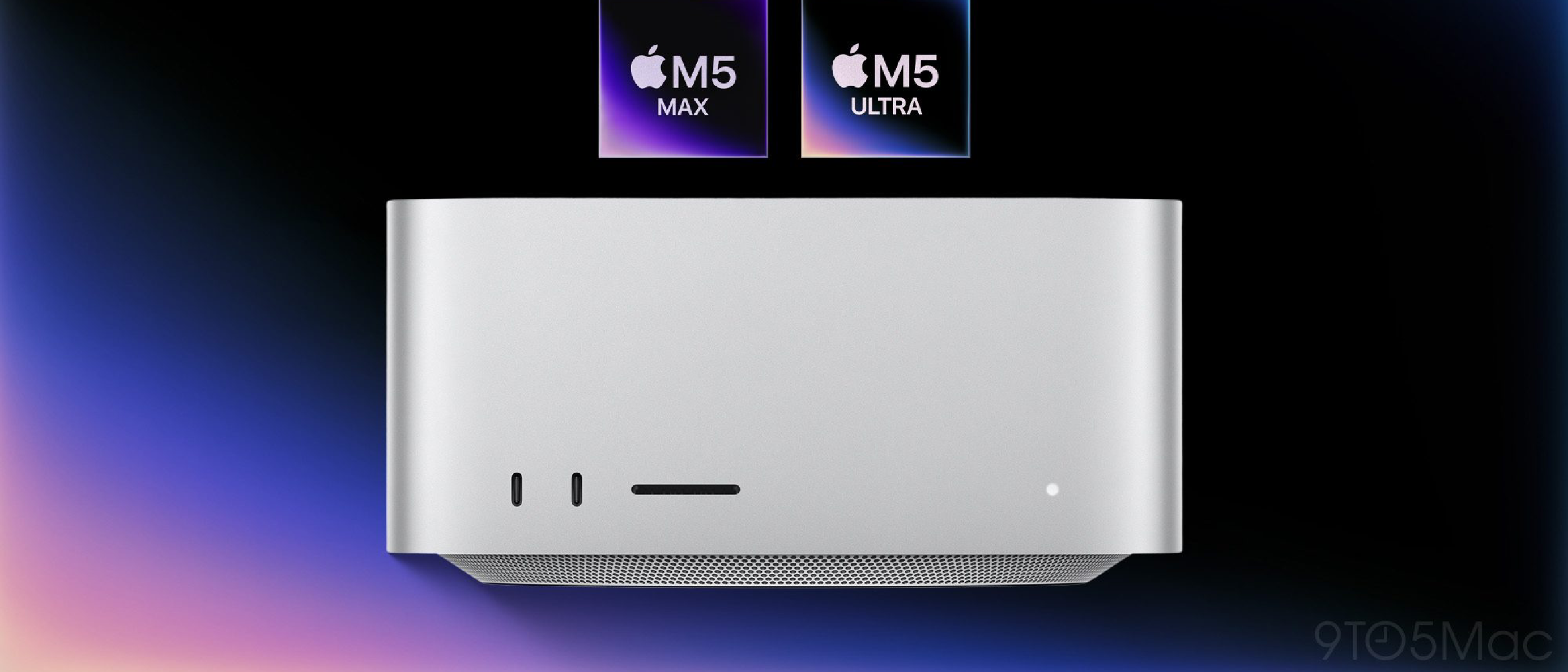
Overview of the New Mac Studio Announcement
Apple’s latest product reveal adds a refreshed Mac Studio to its desktop lineup, now powered by the next‑generation M5 Max and M5 Ultra chips. While Apple has kept the detailed specifications under wraps, the naming convention signals a continuation of the “Max/Ultra” hierarchy introduced with the M1 and M2 families. The Max variant traditionally targets high‑throughput graphics and media workloads, whereas the Ultra version combines two silicon dies to deliver a massive leap in compute density. By slotting these chips into the compact Mac Studio chassis, Apple is positioning the machine as a bridge between the consumer‑grade Mac mini and the enterprise‑grade Mac Pro.
The announcement arrives at a time when professional creators—video editors, 3D artists, and software developers—are demanding more GPU‑centric performance without the footprint of a full tower. The new Mac Studio therefore promises to reshape the desktop market for power users who value both raw horsepower and a relatively small footprint.
Technical Expectations Without Spec Sheet Details
Even without official numbers, the M5 family can be inferred from Apple’s silicon roadmap:
- Unified Architecture – Apple’s “system‑on‑a‑chip” (SoC) design continues to integrate CPU, GPU, Neural Engine, and memory controllers on a single die. This reduces latency and improves power efficiency compared to discrete‑component architectures.
- CPU Scaling – The Max and Ultra monikers suggest a higher core count and larger cache than the baseline M5. Historically, “Max” chips have added more high‑performance cores and a larger GPU, while “Ultra” has effectively doubled the die by using Apple’s UltraFusion interconnect.
- GPU Advancements – Expect a significant increase in metal‑compatible cores, which translates to faster render times in Final Cut Pro, Blender, and other GPU‑intensive apps. Apple’s custom GPU architecture typically outperforms comparable integrated graphics from competitors.
- Neural Engine – The M5 series will likely feature an upgraded Neural Engine, accelerating machine‑learning tasks such as real‑time video upscaling, object detection, and AI‑assisted audio processing.
- Memory Bandwidth – Apple has been expanding unified memory bandwidth with each generation. The new Mac Studio will probably support higher‑capacity LPDDR5X or DDR5‑class memory, enabling larger project files to stay in RAM.
Because the Mac Studio retains its existing thermal design, Apple has likely refined the cooling solution to handle the extra heat generated by the larger silicon. This could involve a larger heat sink, a more efficient fan curve, or even a shift to a vapor‑chamber design—strategies Apple has employed in its recent MacBook Pro models.
Why It Matters for Creators and Professionals
Performance‑Centric Workflows
For video editors working with 8K footage, the GPU bandwidth of an M5 Ultra could cut transcoding times dramatically. Similarly, 3D artists using real‑time rendering engines will benefit from the higher core count and faster memory. The unified memory model eliminates the need for separate VRAM, allowing large textures and datasets to be accessed directly by both CPU and GPU.
Energy Efficiency
Apple’s silicon has consistently delivered better performance per watt than comparable Intel or AMD solutions. In a studio environment where multiple machines run simultaneously, the reduced power draw translates to lower operating costs and quieter rooms—an often‑overlooked benefit for sound‑sensitive production spaces.
Software Ecosystem Alignment
Apple’s own creative suite—Final Cut Pro, Logic Pro, and Motion—are optimized for Apple silicon. The new Mac Studio will therefore unlock features that are currently gated behind higher‑end hardware, such as real‑time HDR grading or advanced spatial audio mixing. Third‑party developers are also quick to adopt Apple’s Metal API, meaning the performance gains will ripple across the broader app ecosystem.
Design Consistency
Apple’s attention to industrial design remains evident. The Mac Studio continues the minimalist aluminum enclosure that fits seamlessly into any professional workspace. This design philosophy aligns with the insights shared in the article about Apple’s product design ethos, such as the one on the Apple $9 Polishing Cloth , which highlights how even small accessories reflect Apple’s commitment to form and function.
Industry Impact and Competitive Landscape
Shifting the Desktop Power Balance
Historically, the high‑end desktop segment has been dominated by Windows‑based workstations equipped with discrete GPUs from NVIDIA or AMD. Apple’s move to place an Ultra‑class chip in a compact chassis challenges that narrative. If benchmark results confirm the expected performance gains, we could see a migration of certain professional workloads—especially those already entrenched in the macOS ecosystem—away from traditional workstations.
Influence on Intel and AMD Roadmaps
Both Intel and AMD have been accelerating their own high‑core‑count CPUs and GPU integrations. Apple’s aggressive scaling with the M5 Ultra may pressure these vendors to prioritize power efficiency and tighter CPU‑GPU integration, potentially accelerating the adoption of chiplet‑based designs similar to AMD’s Infinity Fabric approach.
Implications for Software Vendors
Software vendors that have historically targeted Windows‑only hardware now have a stronger incentive to maintain macOS support. The Mac Studio’s price point (though not disclosed) will be a key factor, but the performance promise alone could justify a shift in development resources. Security‑focused solutions, such as the Mac Antivirus Intego One , will also need to adapt to the new silicon’s architecture to ensure real‑time protection without compromising performance.
Accessibility and Longevity
Apple’s broader commitment to accessibility—outlined in the piece on 50 Ways to Make Devices Age‑Friendly —means the new Mac Studio will likely continue to receive software updates for many years. This longevity is a compelling argument for studios looking to future‑proof their hardware investments.
Future Outlook: What Comes After M5?
Apple’s silicon strategy suggests a roadmap that extends beyond the M5 generation. Possible directions include:
- Further Integration of AI Accelerators – As machine‑learning workloads become ubiquitous, Apple may embed dedicated AI cores that operate independently of the main Neural Engine.
- Modular Desktop Platforms – While the current Mac Studio remains a sealed unit, Apple could explore a modular approach where users upgrade GPU or memory modules without replacing the entire chassis.
- Cross‑Device Continuity – With the M5 chips powering both desktops and future Macs, Apple can deepen continuity features like Universal Control, allowing seamless hand‑off between iPad, MacBook, and Mac Studio.
These speculative paths are grounded in Apple’s historical pattern of expanding capabilities while preserving a tight hardware‑software integration.
Frequently Asked Questions
Q: Will existing Mac Studio accessories be compatible with the new M5 models?
A: Apple typically maintains the same port layout (Thunderbolt, HDMI, USB‑C) across generations, so current docks, monitors, and peripherals should work without issue.
Q: How does the M5 Ultra differ from the M5 Max in practical terms?
A: The Ultra version combines two silicon dies using Apple’s UltraFusion interconnect, effectively doubling core and GPU counts. This translates to higher throughput for tasks that can parallelize across many cores, such as large‑scale video rendering.
Q: Is the new Mac Studio a good upgrade for a Mac mini user?
A: For users whose workloads have outgrown the Mini’s performance envelope—especially those needing more GPU power—the Mac Studio offers a substantial step up while retaining a relatively small footprint.
Q: Will the new Mac Studio support external GPUs (eGPUs)?
A: Apple’s recent silicon generations have moved away from eGPU support, favoring internal GPU scaling. The M5 Max/Ultra’s integrated graphics are expected to meet or exceed the performance of most external solutions.
Q: How will security be handled on the new hardware?
A: Apple’s Secure Enclave and hardware‑based encryption will continue to protect data at rest and in transit. Security products like Intego One will need updates to fully leverage the new chip’s capabilities, ensuring real‑time threat detection without performance penalties.
Conclusion
Apple’s introduction of a Mac Studio equipped with M5 Max and M5 Ultra silicon marks a decisive moment for
for creators, professionals, and even power‑hobbyists who have long awaited a desktop that marries extreme performance with a compact, studio‑friendly form factor. By embedding the M5 Ultra’s dual‑die architecture into the familiar Mac Studio chassis, Apple is effectively collapsing the performance gap that once separated the Mini from the Pro‑class workstations, while still delivering the energy efficiency and silent operation that have become hallmarks of Apple silicon.
The strategic timing of this launch—amid a broader industry shift toward AI‑driven workflows and higher‑resolution media—means the new Mac Studio is poised to become a cornerstone of modern content creation pipelines. Early adopters can expect faster render times, smoother real‑time editing, and a more streamlined workflow thanks to the unified memory model and accelerated Neural Engine. At the same time, the device’s continued compatibility with existing Thunderbolt, HDMI, and USB‑C peripherals ensures that studios can upgrade without overhauling their entire accessory ecosystem.
From a market perspective, Apple’s move challenges the entrenched dominance of Windows‑based workstations, nudging competitors to prioritize tighter CPU‑GPU integration and power‑efficiency in their own high‑end offerings. Whether this will translate into a measurable shift in purchasing patterns remains to be seen, but the performance‑per‑watt advantage of the M5 family is undeniable and could become a decisive factor for budget‑conscious studios.
Looking ahead, the M5 generation sets the stage for even more ambitious silicon innovations—potentially incorporating dedicated AI accelerators, modular upgrade paths, and deeper cross‑device continuity. If Apple can maintain its track record of delivering robust software support for many years, the Mac Studio will likely remain a viable, future‑proof investment for creators well beyond its initial release window.
In short, the new Mac Studio with M5 Max and M5 Ultra isn’t just an incremental upgrade; it’s a clear statement that Apple is serious about dominating the high‑performance desktop segment without compromising on design, silence, or energy efficiency. For anyone whose workflow hinges on raw compute power, advanced graphics, and seamless integration with the macOS ecosystem, the new Mac Studio represents a compelling—and perhaps inevitable—next step.
Final Thoughts
- Performance vs. Price: While Apple has not disclosed pricing, the value proposition will hinge on how the M5 Ultra’s performance compares to similarly specced Windows workstations at comparable price points.
- Software Readiness: Developers are already gearing up to optimize for the M5’s expanded GPU cores and Neural Engine, so expect a wave of updates that will unlock the hardware’s full potential over the coming months.
- Longevity: Apple’s commitment to long‑term software updates, combined with the modular nature of its silicon roadmap, suggests that the Mac Studio will stay relevant for several years, making it a sound investment for studios planning long‑term projects.
Additional Frequently Asked Questions
Q: Will the new Mac Studio support the latest external display standards (e.g., DisplayPort 2.0)?
A: Apple’s recent Mac models have adopted Thunderbolt 4/USB‑4, which incorporates DisplayPort 2.0 capabilities. It is expected that the M5‑based Mac Studio will support up to two 6K or one 8K external display at full refresh rates.
Q: How does the thermal design differ from the previous generation?
A: While Apple has not released detailed schematics, rumors indicate a larger vapor‑chamber heat spreader and a higher‑capacity fan assembly, allowing the Ultra variant to sustain peak performance for longer periods without throttling.
Q: Can the unified memory be upgraded after purchase?
A: As with prior Mac Studio models, the unified memory is soldered onto the silicon package, meaning upgrades must be configured at the time of purchase.
Q: Will the new Mac Studio support macOS Ventura’s latest features such as Stage Manager and Continuity Camera?
A: Yes. The M5 chips are fully compatible with macOS Ventura and future releases, ensuring access to all current and upcoming macOS features.
Q: Is there any impact on software licensing (e.g., Adobe Creative Cloud) when moving to M5 Ultra?
A: Adobe has been transitioning its Creative Cloud suite to native Apple silicon. Users can expect improved performance and lower power consumption, though a fresh installation of the native versions is recommended for optimal results.
Source: Original Article