


Introduction: What Is “Live Notes”?
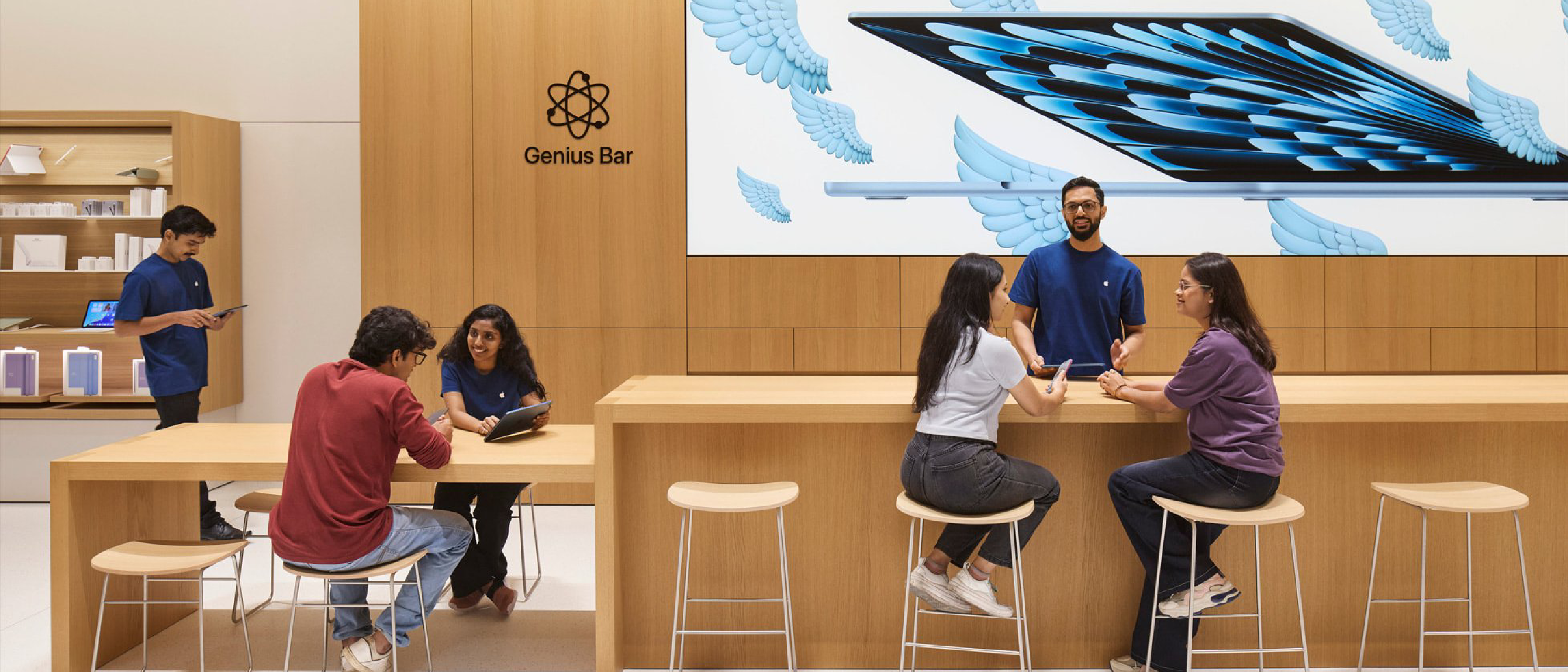
Apple’s Genius Bar has long been the public face of the company’s after‑sales support, where technicians diagnose hardware issues and walk customers through repairs. In a move that blends the company’s retail experience with its burgeoning AI ambitions, Bloomberg reporter Mark Gurman revealed that Apple is piloting an AI‑driven “Live Notes” feature in a handful of stores. The system listens to the conversation between a technician and a customer, generates a real‑time transcript, and automatically attaches that transcript to the employee’s iPad as part of the official repair record.
The feature is opt‑in, meaning it only activates when both the employee and the customer agree to its use. According to the report, the goal is simple: save workers time and let them focus more on the customer, rather than taking notes throughout the appointment. While the headline sounds straightforward, the underlying technical stack, operational implications, and privacy considerations are anything but trivial.
Technical Breakdown: How Live Notes Works Under the Hood
Speech‑to‑Text Engine Integration
At the core of Live Notes is a speech‑to‑text (STT) engine that can handle a noisy retail environment. Apple likely leverages its own on‑device machine‑learning frameworks—such as the Neural Engine and Core ML—to run inference locally on the iPad. Running the model on‑device reduces latency, ensures that transcription happens in real time, and mitigates the need to stream raw audio to Apple’s servers, a crucial factor for privacy.
Contextual Understanding and Formatting
Beyond raw transcription, the system must understand the context of a repair conversation. When a technician says “I’m going to replace the battery,” the AI must tag that as a service action, associate it with the specific device serial number, and format it in a way that integrates seamlessly with Apple’s existing repair workflow software. This requires a combination of natural‑language processing (NLP) pipelines: entity extraction (device parts, issue codes), intent classification (repair vs. diagnostic), and structured data generation (check‑list items).
Syncing With Apple’s Backend
Once the transcript is generated, it is attached to the employee’s iPad record. Apple’s internal repair management system likely consumes this data via a secure API, updating the ticket in real time. The opt‑in mechanism ensures that the transcript is only stored when consent is granted, and the data flow is encrypted end‑to‑end, aligning with Apple’s broader privacy‑first stance.
Why It Matters: Operational Efficiency and Employee Experience
Reducing Cognitive Load
Technicians currently juggle hardware diagnostics, parts inventory checks, and customer communication—all while trying to keep accurate notes. Manual note‑taking fragments attention, potentially lengthening appointment times. By offloading transcription to AI, technicians can maintain eye contact, ask follow‑up questions, and demonstrate expertise without the distraction of a pen or keyboard.
Faster Turn‑around Times
A typical repair appointment can last anywhere from 15 to 45 minutes, depending on complexity. If Live Notes cuts note‑taking time by even 30 seconds per appointment, the cumulative effect across hundreds of daily repairs is substantial. Shorter appointments translate to higher throughput, reduced wait times for customers, and better utilization of Genius Bar floor space.
Consistency and Accuracy
Human note‑taking is prone to errors—missed words, ambiguous phrasing, or transcription fatigue. An AI system provides a consistent record, preserving exact wording and timestamps. This improves downstream processes such as warranty validation, parts ordering, and post‑service analytics, where precise data is essential.
Industry Impact: AI Meets Retail Service
Setting a New Standard for In‑Store AI
Apple’s move signals a broader trend of embedding AI directly into brick‑and‑mortar experiences. While many retailers experiment with AI for inventory forecasting or chatbots, Live Notes is one of the first publicly known implementations that uses AI to augment human‑to‑human interactions in real time. Competitors in consumer electronics and automotive service centers may feel pressure to adopt similar solutions to stay competitive.
Influence on Apple’s AI Roadmap
Apple has been quietly integrating AI across its ecosystem—Siri, on‑device translation, and the recent generative‑AI features in iOS 17. Live Notes demonstrates that Apple is comfortable deploying AI in high‑stakes, privacy‑sensitive contexts. Success in the Genius Bar pilot could accelerate the rollout of AI‑assisted features in other Apple services, such as Apple Store sales assistance or Apple Care phone support.
Cross‑Industry Learnings
The live‑transcription model could be repurposed for other service industries: medical clinics (patient‑doctor notes), legal consultations, or even education (lecture transcription). Apple’s approach—opt‑in, on‑device processing, seamless integration with existing workflow tools—offers a blueprint for responsible AI deployment in regulated environments.
Privacy, Ethics, and Legal Considerations
Consent‑Based Data Capture
Live Notes is explicitly opt‑in, meaning both parties must agree before recording begins. This aligns with Apple’s longstanding emphasis on user consent, echoing policies seen in Apple Wallet Insights (see Apple Wallet Insights ). By making the feature optional, Apple mitigates concerns about surreptitious recording and complies with jurisdictional privacy laws such as GDPR and CCPA.
Data Retention and Security
Even with consent, Apple must define how long transcripts are retained. Likely, the data is stored only as long as the repair ticket remains open, after which it is purged or anonymized. Encryption at rest and in transit, combined with on‑device processing, reduces the attack surface. Nonetheless, any breach could expose sensitive device information, making robust security practices essential.
Ethical Use of AI
The AI must be transparent about its limitations. Mis‑recognition of technical terminology could lead to inaccurate records. Apple should provide technicians with a quick editing interface to correct errors before final submission, preserving human oversight. This mirrors best practices discussed in the AI safety community, such as those highlighted in Anthropic’s Fable 5: The AI Safety Crisis (see Anthropic’s Fable 5 ).
Future Outlook: From Pilot to Global Rollout
Scaling Across Apple Stores
If the pilot demonstrates measurable efficiency gains and negligible privacy complaints, Apple will likely expand Live Notes to all Genius Bars worldwide. Scaling introduces challenges: multilingual support for non‑English markets, varied acoustic environments, and differing local privacy regulations. Apple’s existing Core ML multilingual models can be adapted, but each locale may require fine‑tuning.
Integration with Other Apple Services
A logical next step is linking Live Notes transcripts to Apple Support chat logs or the Apple Care app, providing a unified view of a customer’s service history. This would enable predictive maintenance alerts—if a transcript repeatedly mentions “battery draining quickly,” the system could proactively suggest a battery replacement before the next failure.
Potential for Consumer‑Facing Features
While currently limited to employee‑customer interactions, the underlying technology could be repurposed for consumer use. Imagine an iPhone app that records and transcribes a user’s own tech support calls for personal record‑keeping, or a HomePod feature that captures troubleshooting sessions for future reference. However, such expansions would need even stricter consent mechanisms.
Frequently Asked Questions (FAQ)
Q1: Will Live Notes be available on all Apple devices?
A: The pilot is limited to iPads used by Genius Bar staff. Expansion to other devices would depend on the outcome of the test and Apple’s internal rollout strategy.
Q2: How does Apple ensure the transcription is accurate?
A: Apple employs on‑device Core ML models trained on large corpora of technical language. Technicians can edit the transcript before it is saved, providing a human‑in‑the‑loop safeguard.
Q3: Is my conversation recorded without my knowledge?
A: No. Live Notes is opt‑in; both the technician and the customer must explicitly agree before recording begins. Apple displays a clear prompt and respects any refusal.
Q4: Will the transcripts be stored indefinitely?
A: Transcripts are tied to the repair ticket and are likely retained only for the duration of the service process. Apple’s privacy policy mandates data minimization and secure deletion after the ticket is closed.
Q5: Could this technology be used for other Apple services?
A: Potentially. Apple’s broader AI strategy hints at cross‑service integration, but any extension will follow the same consent‑first model demonstrated in the Live Notes pilot.
Conclusion: A Subtle Yet Significant Step Forward
Apple’s Live Notes pilot may not carry the fanfare of a new product launch, but it represents a pivotal convergence of AI, retail service, and privacy‑centric design. By automating a mundane yet essential part of the repair workflow, Apple not only improves employee efficiency but also sets a benchmark for how AI can be responsibly embedded in face‑to‑face service encounters. The success of this experiment will likely ripple across Apple’s ecosystem and influence how other industries think about AI‑augmented human interaction.
Related reading:
- Apple’s broader AI initiatives are explored in the Apple Wallet Insights article ( link ).
- For a perspective on AI safety considerations, see Anthropic’s Fable 5 ( link ).
- Security implications for Apple devices are discussed in Mac Antivirus Intego One ( link ).
As Apple continues to weave AI into its hardware and services, the Live Notes trial offers a concrete glimpse of a future where intelligent assistants work side‑by‑side with human experts, enhancing productivity while respecting user privacy.
Source: Original Article