




The Last Chapter of the Mac Pro Line
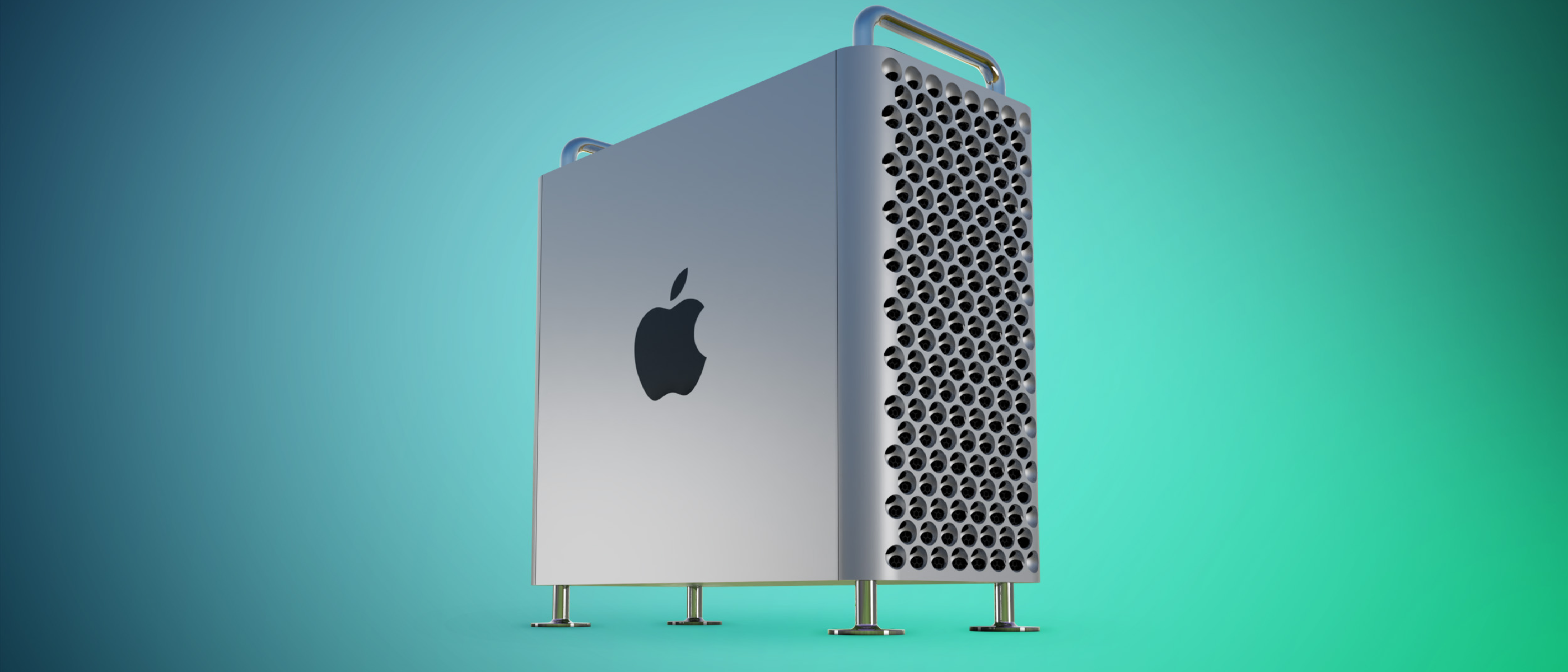
Apple’s Mac Pro has been the flagship of its professional desktop lineup since 2006, evolving from the original tower to the modular “cheese grater” design and, most recently, the M‑series silicon‑based machines. In 2024, Bloomberg’s Mark Gurman revealed that Apple had been developing two additional Mac Pro variants—codenamed J170 (Intel‑based) and J190 (M3 Ultra‑powered)—but both were shelved before reaching the market. The decision coincides with Apple’s formal discontinuation of the Mac Pro this year, effectively closing a two‑decade chapter of high‑end desktop computing.
The cancellation is more than a footnote; it signals a shift in Apple’s hardware strategy, the economics of ultra‑high‑performance desktops, and the broader expectations of professional creators. Below we dissect the technical ambitions of the unreleased models, why Apple pulled the plug, and what this means for the industry.
Technical Breakdown of J170 and J190
J170 – The Intel‑Based “Last Stand”
- Processor Architecture: J170 would have used a high‑core‑count Intel Xeon platform, likely the 4th‑generation Sapphire Rapids silicon that Apple was already evaluating for other pro‑grade products.
- GPU Options: Early schematics suggested dual AMD Radeon Pro W6800X cards, delivering up to 64 compute units per GPU.
- Memory & Storage: Configurable up to 1.5 TB of DDR5 ECC RAM and four NVMe slots, mirroring the existing Mac Pro’s expandability.
- Form Factor: Retained the classic tower chassis, preserving the modular PCIe expansion slots that have been a hallmark for audio, video, and scientific workloads.
The J170 would have positioned itself as a “premium‑plus” workstation, priced roughly twice the cost of a similarly specced Mac Studio. Its existence hinted that Apple was still hedging on Intel’s raw core count for workloads that demand massive parallelism, such as large‑scale simulation or legacy software that has not yet migrated to Apple silicon.
J190 – The M3 Ultra Dream Machine
- Apple Silicon Core: The J190 was slated to house the M3 Ultra SoC, an evolution of the M2 Ultra architecture introduced in 2023. The M3 Ultra would have doubled the CPU and GPU cores compared to the M2 Ultra, effectively creating an “Extreme” variant.
- Performance Targets: Benchmarks projected a 30‑40 % uplift over the 2023 M2 Ultra Mac Pro in multi‑threaded tasks, while maintaining the power efficiency Apple silicon is known for.
- Thermal Design: Apple reportedly explored a new liquid‑cooling solution to keep the chip within safe operating temperatures, a departure from the fan‑centric cooling of earlier Mac Pros.
- Expansion: Unlike the Intel‑based J170, the J190 would have limited PCIe slots, relying on external Thunderbolt 4 enclosures for additional peripherals—a design choice that aligns with Apple’s broader move toward a more closed ecosystem.
Both prototypes shared a common “Extreme” chip family concept—processors with twice the CPU and GPU cores of Apple’s standard Ultra chips. The “Extreme” line was ultimately canceled due to cost concerns and an uncertain demand curve for such over‑kill hardware.
Pricing, Market Position, and the Cost‑Benefit Equation
Apple’s pricing strategy for the Mac Pro has always been premium, targeting studios, post‑production houses, and scientific labs that can justify the expense with tangible productivity gains. The J170’s projected price tag—about double a comparable Mac Studio—would have placed it well above the $10,000 mark, edging into the territory traditionally occupied by workstations from Dell’s Precision line or HP’s Z series.
The J190, while leveraging Apple silicon’s efficiency, would still have commanded a high price due to the “Extreme” SoC and the bespoke cooling solution. Early estimates placed it near the $12,000‑$15,000 range, depending on configuration.
When Apple released the M3 Ultra Mac Studio in early 2025, it offered a comparable performance envelope at a lower price point, effectively undercutting the value proposition of a high‑end Mac Pro. The M2 Ultra Mac Pro (2023) and the upcoming M5 Ultra Mac Studio (expected fall 2026) further compress the market space, making a separate, ultra‑premium desktop harder to justify.
Why Apple Shelved the Projects: Strategic Considerations
1. Cost vs. Demand
Developing a custom “Extreme” silicon variant and a new liquid‑cooling architecture required substantial R&D investment. Apple’s internal modeling, as reported by Gurman, indicated that the incremental performance would not translate into sufficient sales volume to recoup the costs.
2. Shift Toward Integrated Ecosystem
Apple has been steadily moving away from modular, user‑upgradeable hardware. The J190’s limited PCIe expansion reflects this trend. By focusing on the Mac Studio line—compact, powerful, and less service‑intensive—Apple can streamline manufacturing, reduce warranty complexity, and maintain tighter control over the user experience.
3. Intel‑Apple Silicon Transition
The J170 represented a potential last gasp for Intel in Apple’s desktop lineup. With the successful rollout of M‑series silicon across the MacBook, iMac, and Mac Studio families, Apple’s roadmap no longer required a parallel Intel path. Maintaining two distinct CPU ecosystems would have added supply‑chain friction and software compatibility headaches.
4. Market Signals from Competitors
High‑end workstation sales have been under pressure as cloud‑based rendering farms and GPU‑as‑a‑service platforms gain traction. Companies like NVIDIA and AMD are focusing on data‑center GPUs rather than consumer‑grade workstation cards, reducing the incentive for a niche desktop that relies on discrete GPUs.
Mark Gurman summed it up succinctly: “I do not expect Apple to bring back the Mac Pro ‘anytime soon — if ever.’” The statement underscores Apple’s confidence that its current silicon roadmap can satisfy the professional market without a dedicated Mac Pro.
Industry Impact and Future Outlook
Professional Creative Workflows
For video editors, 3D artists, and audio engineers, the Mac Pro has been a status symbol as much as a tool. Its removal may push some high‑end users toward Windows‑based workstations or specialized Linux rigs. However, the M3 Ultra Mac Studio and the forthcoming M5 Ultra Mac Studio provide comparable raw compute, especially when paired with external GPU (eGPU) solutions—though Apple has limited eGPU support on Apple silicon, third‑party adapters are emerging.
Apple’s Hardware Narrative
Apple’s decision reinforces a narrative that performance can be delivered in a smaller footprint. The company’s recent hardware announcements, such as the M5 Ultra Mac Studio slated for this fall, illustrate a continued emphasis on scaling silicon rather than scaling chassis size. This aligns with Apple’s broader product philosophy seen in devices like the Apple Watch Ultra and the iPad Pro—maximizing capability while minimizing bulk.
Competitive Landscape
The cancellation also opens a window for competitors. Dell’s Precision 8000 series and HP’s Z8 G5 continue to offer modular, upgradeable workstations with Xeon CPUs and professional GPUs. These platforms may capture the niche market that once gravitated toward the Mac Pro. Additionally, the rise of cloud‑rendering services could further erode the need for on‑premise ultra‑high‑performance desktops.
Related Reading
- For a look at how Apple’s security ecosystem adapts to new hardware, see our coverage of Mac Antivirus Intego One .
- Apple’s broader software‑hardware integration strategy is highlighted in Apple Wallet Insights .
- The trend toward DIY high‑performance rigs is explored in Valve Enables DIY Steam Machines with SteamOS Desktop Release , offering a contrast to Apple’s closed‑system approach.
Frequently Asked Questions
Q: Will Apple ever revive the Mac Pro line?
A: While Apple has not ruled out a future return, current statements from Mark Gurman and Apple’s product roadmap suggest no immediate plans. The company appears focused on expanding the Mac Studio family.
Q: How does the performance of the M3 Ultra Mac Studio compare to the rumored J190?
A: The J190’s “Extreme” M3 Ultra chip was projected to deliver roughly 30‑40 % more multi‑core performance than the standard M3 Ultra. The Mac Studio’s current M3 Ultra configuration sits below that threshold, but external GPU options and software optimizations can narrow the gap for many workloads.
Q: Are there upgrade paths for existing Mac Pro owners?
A: Existing 2019‑2023 Mac Pro owners can still upgrade RAM, storage, and GPUs within the limits of the current chassis. However, the lack of a newer Intel‑based or “Extreme” Apple silicon model means future performance gains will rely on third‑party components.
Q: Does the cancellation affect Apple’s warranty or support for current Mac Pros?
A: No. Apple will continue to honor warranty and service agreements for all currently sold Mac Pro units. The discontinuation only impacts future sales.
Q: Could external enclosures bridge the gap left by the Mac Pro’s absence?
A: Yes. Thunderbolt 4 eGPU enclosures and external SSD arrays can augment Mac Studio performance, though they cannot fully replicate the internal expandability that the Mac Pro offered.
Conclusion
Apple’s decision to shelve the J170 and J190 prototypes marks the end of an era for the Mac Pro, a product that defined professional desktop computing for two decades. By consolidating its high‑performance offerings into the Mac Studio line and focusing on Apple silicon’s scalability, the company is betting that power, efficiency, and a streamlined ecosystem will satisfy the majority of creative and scientific users.
The move also reshapes the professional workstation market, nudging some users toward alternative platforms or cloud‑based solutions. As Apple continues to push the limits of its silicon roadmap—evidenced by the upcoming M5 Ultra Mac Studio—the industry will watch closely to see whether a new form factor can replace the iconic tower that once stood at the heart of countless studios.
Source: Original Article