

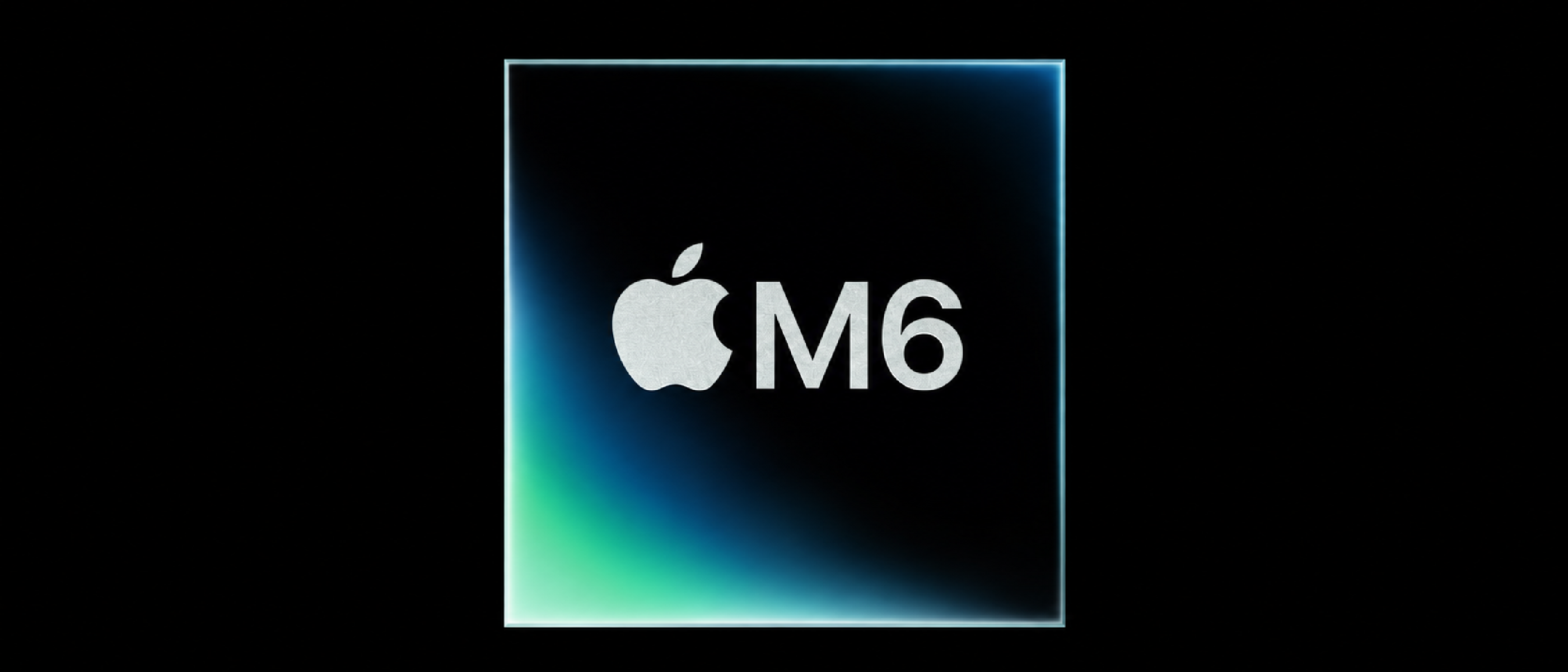
Apple has once again shifted the landscape of semiconductor engineering with the announcement of the M6 chip. This is not merely an incremental update in clock speeds or core counts; it represents a fundamental leap in fabrication technology. The M6 is Apple’s first chip built using a 2-nanometer (2nm) process, marking a significant milestone in the pursuit of transistor density and power efficiency.
The M6 arrives at a critical juncture where the demand for on-device Artificial Intelligence (AI) is skyrocketing. By shrinking the process node, Apple has managed to pack more transistors into a smaller die, allowing for a more aggressive architecture that prioritizes both raw compute power and the specialized throughput required for Large Language Models (LLMs).
Technical Breakdown: The 2nm Advantage
The transition to a 2nm process is the headline feature of the M6. In the world of silicon, smaller nodes generally translate to lower power leakage and higher efficiency, allowing the chip to run faster without hitting a “thermal wall.” This architectural headroom has allowed Apple to expand the CPU and GPU configurations significantly.
CPU Architecture and Performance
The M6 features a 12-core CPU, an increase of two cores over the M5. The core configuration is strategically split to handle diverse workloads:
- 2 Super Cores: Designed for maximum single-threaded bursts, delivering what Apple claims is the world’s fastest single-threaded performance.
- 4 Performance Cores: Optimized for sustained heavy lifting.
- 6 Efficiency Cores: Handling background tasks to preserve battery and thermal overhead.
In terms of raw benchmarks, the M6 is 1.2x faster in multithreaded tasks compared to the M5. When looking back at the legacy of Apple Silicon, the jump is even more staggering: the M6 is 2.4x faster than the original M1, illustrating the rapid evolution of the ARM-based ecosystem.
GPU Evolution and AI Integration
While the CPU handles the logic, the M6 GPU is designed for the modern era of generative AI and complex 3D rendering. The 12-core GPU (up from 10 cores in the M5) is no longer just about pixels; it is now a hybrid compute engine.
The Neural Accelerator
One of the most sophisticated additions is the integration of a Neural Accelerator directly into each GPU core. This allows the GPU to assist the Neural Engine in AI-specific workloads, resulting in a 30% increase in peak GPU compute for AI compared to the M5. For those upgrading from the M1, AI workloads are now 8x faster.
This hardware synergy directly impacts the user experience through faster prompt processing for on-device LLMs. By reducing the latency between a user’s input and the AI’s response, Apple is positioning the M6 as a powerhouse for local, private AI execution.
Graphics and Rendering
Beyond AI, the M6 introduces several critical updates to its graphics pipeline:
- Shader Core Improvements: Enhanced architecture for more efficient pixel shading.
- Dynamic Caching: Optimizing memory allocation in real-time to reduce GPU idle time.
- Hardware-Accelerated Ray Tracing: Providing cinematic lighting and reflections in professional apps and games.
- Geometry Rates: A 50% increase in geometry rates, allowing the chip to render significantly more complex 3D models without dropping frames.
The Dual 16-Core Neural Engine
Perhaps the most disruptive change in the M6 is the introduction of the Dual 16-core Neural Engine. This is the first time Apple has implemented a dual-engine setup in a single chip.
The impact here is twofold. First, it provides 2x the peak compute compared to previous generations. Second, and more importantly, Apple has updated its system frameworks to allow both engines to be utilized simultaneously. This means that heavy AI models—such as real-time video transcription or complex image generation—can be split across both engines, drastically reducing execution time.
This level of AI integration complements the broader ecosystem of high-performance hardware, such as the Apple Unveils Next‑Gen Mac mini with M6 & M5 Pro Chips and the extreme power found in the Apple Unveils M5 Ultra: Quad‑Die Power for Mac Studio .
Memory Bandwidth and the Mac mini Debut
To feed this massive amount of compute power, the M6 utilizes a high-speed unified memory architecture. While the maximum capacity remains at 32GB (matching the M5), the efficiency of the data movement has improved. The M6 supports up to 170GB/s of unified memory bandwidth. This is a 10% increase over the M5 and a massive 2.5x increase over the M1, ensuring that the CPU and GPU are never starved for data.
The first device to showcase this silicon is the redesigned Mac mini, which is set to launch on Tuesday, September 22. By placing the M6 in the Mac mini, Apple is signaling that the “entry-level” desktop experience is now capable of professional-grade AI development and high-end content creation.
Industry Impact and Future Outlook
The move to 2nm is a clear signal that Apple is attempting to widen the gap between its silicon and the competition. By controlling the entire stack—from the 2nm fabrication process to the system frameworks that manage the dual Neural Engines—Apple can achieve a level of optimization that is nearly impossible for companies relying on off-the-shelf components.
The M6 sets a new baseline for what “on-device AI” means. Instead of relying on the cloud, the M6 allows for sophisticated LLMs to run locally, enhancing privacy and reducing latency. As we move toward a future where AI is integrated into every OS function, the M6 provides the necessary hardware foundation to support that transition.
FAQ
When does the M6 Mac mini release? The Mac mini featuring the M6 chip launches on Tuesday, September 22.
How much faster is the M6 than the M1? The M6 offers up to 2.4x faster multithreaded performance and 8x faster AI workload performance compared to the M1.
What is the significance of the 2nm process? The 2nm process allows for higher transistor density, which improves power efficiency and enables more cores and accelerators to fit within the same physical footprint.
Does the M6 support ray tracing? Yes, the M6 features hardware-accelerated ray tracing and a 50% increase in geometry rates for complex graphics.
Source: Original Article