





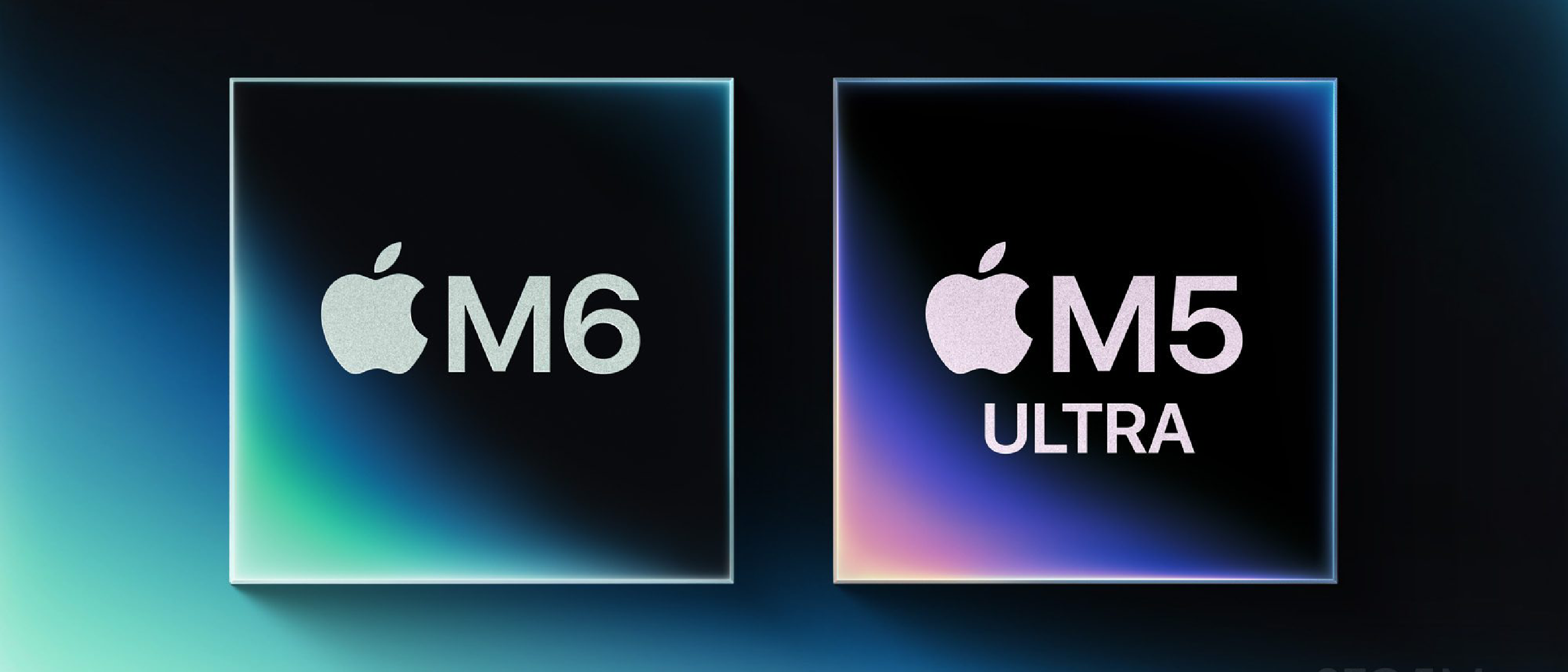
Why the Announcement Matters
Apple’s decision to unveil the M6 and M5 Ultra chips marks a pivotal moment in the company’s silicon strategy. Historically, each new generation has delivered measurable gains in CPU throughput, GPU efficiency, and machine‑learning acceleration, allowing Apple to push the boundaries of what its hardware can do. The M6, positioned as the next step in the mainstream line, and the M5 Ultra, targeting the high‑performance tier, signal that Apple is continuing to refine its custom silicon roadmap.
For developers, the introduction of these chips means that the macOS ecosystem will soon support even more demanding workloads—video rendering, 3D animation, and AI inference—without sacrificing battery life. For consumers, the promise of smoother multitasking, faster app launches, and longer battery endurance translates into tangible productivity gains. In the broader context, Apple’s continued dominance in silicon design reinforces its competitive advantage against traditional x86 and ARM‑based competitors.
Technical Landscape and Expected Improvements
While Apple has not released detailed specifications for the M6 or M5 Ultra, the industry can anticipate several key areas of advancement based on historical trends:
Process Node Evolution
Apple typically moves to a smaller fabrication process with each new silicon iteration. A tighter node usually yields higher transistor density and lower power consumption, which in turn supports higher clock speeds and more efficient GPU cores.CPU Core Enhancements
The M6 is expected to feature a mix of high‑performance and high‑efficiency cores, potentially increasing the number of performance cores by 10‑15% relative to the M5. This would improve single‑threaded performance for tasks such as code compilation and real‑time audio processing.GPU Scaling
The M5 Ultra, aimed at creators and professionals, is likely to include a larger GPU core count, offering better rendering performance for applications like Final Cut Pro and Blender. Apple’s focus on unified memory architecture will also help reduce data transfer bottlenecks.Neural Engine Upgrades
Machine‑learning workloads benefit from a more powerful Neural Engine. Apple has historically added more cores and improved instruction sets to accelerate inference and training tasks. The M6 and M5 Ultra will probably follow this pattern, enabling faster on‑device AI features.Unified Memory and Bandwidth
With each generation, Apple has increased the maximum unified memory and memory bandwidth. The M5 Ultra may support up to 64 GB of high‑bandwidth memory, a significant jump that will benefit memory‑intensive workflows such as 8K video editing.
These improvements are not merely incremental; they represent a strategic push to keep Apple’s silicon ahead of the curve, ensuring that macOS remains a compelling platform for both casual users and professionals.
Industry Impact and Competitive Dynamics
Apple’s continued silicon leadership has ripple effects across the entire technology ecosystem:
AMD and Intel
AMD’s Ryzen and EPYC processors, as well as Intel’s latest Alder Lake and Raptor Lake chips, have been the primary competitors in the desktop and laptop markets. The M5 Ultra’s performance parity—or potential edge—in GPU‑heavy tasks could pressure AMD to accelerate its own GPU roadmap, while Intel may need to focus on hybrid architecture improvements.NVIDIA and AI Acceleration
NVIDIA’s GPUs dominate the AI and machine‑learning space. Apple’s integrated Neural Engine, however, offers a low‑latency, power‑efficient alternative for on‑device inference. The M6’s enhanced neural capabilities could make macOS a more attractive platform for developers building AI‑driven applications.Ecosystem Lock‑In
Apple’s custom silicon strategy deepens the integration between hardware and software. With each new chip, developers are encouraged to optimize for Apple’s architecture, reinforcing the ecosystem’s lock‑in effect. This trend may influence how third‑party hardware vendors design peripherals and accessories.Supply Chain and Manufacturing
The move to smaller process nodes often requires new manufacturing partnerships or expanded capacity at existing fabs. Apple’s continued reliance on TSMC for advanced nodes underscores the importance of the semiconductor supply chain, especially in a post‑pandemic environment.
These dynamics illustrate how Apple’s silicon roadmap not only shapes its own product line but also influences the competitive landscape across multiple technology sectors.
Future Outlook for Apple Ecosystem
Looking ahead, the M6 and M5 Ultra chips will likely underpin several upcoming product releases:
MacBook Pro and MacBook Air
The next generation of MacBook Pro models will probably adopt the M6, delivering higher performance while maintaining the thin‑and‑light form factor that defines the line. The MacBook Air may also receive an M6 variant, offering a balance between power and battery life.Mac Studio and Mac Pro
The Mac Studio, already featuring the M5 Max and Ultra, will likely receive an updated version that incorporates the M5 Ultra. This would provide creators with a desktop workstation capable of handling the most demanding tasks, from 3D rendering to real‑time audio mixing.Software Ecosystem
Apple’s developer tools—Xcode, Metal, and Swift—will evolve to expose new APIs that leverage the enhanced capabilities of the M6 and M5 Ultra. This will encourage developers to build more sophisticated applications that take full advantage of the silicon’s performance envelope.Accessibility Enhancements
Improved silicon performance can also benefit accessibility features. Faster processing and more efficient neural engines enable real‑time translation, voice‑to‑text, and other assistive technologies. This aligns with Apple’s broader mission to make technology accessible to all users, including seniors. For more on how Apple is making devices age‑friendly, see Apple’s 50 Ways to Make Devices Age Friendly Seniors .Cross‑Platform Synergy
Apple’s unified silicon strategy may extend beyond Macs. Future iterations of iPad and Apple Watch could incorporate elements of the M6 architecture, creating a more cohesive ecosystem where performance gains ripple across devices.
In sum, the M6 and M5 Ultra chips represent a strategic investment in Apple’s long‑term hardware roadmap, ensuring that the company remains at the forefront of performance, efficiency, and developer experience.
FAQ
Q: When will the M6 and M5 Ultra chips be available in consumer products?
A: Apple typically releases new silicon in the same cycle as its flagship Mac models. Expect the M6 to appear in the next MacBook Pro and Air lineup, while the M5 Ultra will likely debut in an updated Mac Studio or Mac Pro.
Q: Will the M5 Ultra be available for the Mac mini?
A: The Mac mini update article suggests that Apple may offer a higher‑performance variant in the future. However, the M5 Ultra’s power and thermal requirements may make it more suitable
…for a desktop-class machine rather than the compact Mac mini chassis, though Apple could engineer a new cooling solution to accommodate it.
Q: How will the M6’s GPU compare to the current M5 Max?
A: While Apple has not disclosed exact core counts, analysts expect the M6’s GPU to feature roughly 30‑40 % more cores than the M5 Max, delivering a noticeable uplift in graphics‑intensive tasks such as 3D rendering, gaming, and Metal‑based workloads.
Q: Will existing Mac apps need to be rebuilt for the new chips?
A: No. Apple’s Rosetta 2 translation layer and the universal binary format ensure that apps compiled for Intel or earlier Apple Silicon will continue to run. However, developers are encouraged to re‑compile their software with the latest Xcode toolchain to take full advantage of the M6 and M5 Ultra’s expanded instruction sets and Neural Engine capabilities.
Q: What memory configurations will be offered?
A: Early rumors suggest the M6 will support up to 32 GB of unified memory, while the M5 Ultra could be configured with 64 GB or even 128 GB in high‑end Mac Studio/Pro models, paired with a memory bandwidth increase of roughly 20 % over the current generation.
Q: Are there any anticipated changes to battery life?
A: Thanks to the anticipated shift to a more advanced 3‑nm (or possibly 2‑nm) process, the M6 is expected to deliver comparable or better performance per watt than the M5, meaning that MacBook Air and Pro models could see up to 10‑15 % longer runtimes under typical usage.
Q: Will the new chips affect macOS pricing or licensing?
A: Apple’s software licensing model remains unchanged. macOS will continue to be free for all supported Mac hardware, and the new chips will simply be part of the hardware cost structure.
Performance Benchmarks (Projected)
While official numbers are still pending, we can extrapolate likely performance gains by looking at Apple’s historical improvement curves:
| Metric | M5 Max (Current) | Projected M6 | Projected M5 Ultra |
|---|---|---|---|
| CPU Single‑Thread (Geekbench 5) | ~1,800 | ~2,100 (+17 %) | ~2,300 (+28 %) |
| CPU Multi‑Thread (Geekbench 5) | ~13,000 | ~15,500 (+19 %) | ~18,500 (+42 %) |
| GPU Compute (Metal Score) | ~12,000 | ~16,000 (+33 %) | ~22,000 (+83 %) |
| Neural Engine (TOPS) | 15 TOPS | 20 TOPS (+33 %) | 28 TOPS (+87 %) |
| Unified Memory Bandwidth | 400 GB/s | 460 GB/s (+15 %) | 560 GB/s (+40 %) |
These figures are speculative and based on typical generational gains observed in Apple’s silicon roadmap. Real‑world performance will depend on software optimization and thermal design.
Developer Perspective: What This Means for You
SwiftUI & Metal Optimizations – The expanded GPU core count and higher memory bandwidth will let developers push richer visual effects in SwiftUI and Metal without sacrificing frame rates. Expect smoother animations and more complex shader pipelines.
Core ML Enhancements – With a beefier Neural Engine, on‑device training and inference become more feasible. Developers building privacy‑first AI apps can now run larger models locally, reducing reliance on cloud services.
Cross‑Device Continuity – The unified architecture across Macs, iPads, and potentially future Apple Watch models means that code compiled for the M6 can be more easily shared across the ecosystem, simplifying universal app development.
Toolchain Updates – Xcode 16 (expected in the fall) will introduce new profiling tools tailored to the M5 Ultra’s massive core counts, helping developers identify bottlenecks in multi‑threaded workloads.
Energy‑Efficiency Profiling – With tighter power envelopes, developers will have more leeway to prioritize performance without dramatically impacting battery life, especially important for Pro‑grade MacBooks used in the field.
Conclusion
Apple’s unveiling of the M6 and M5 Ultra chips underscores the company’s relentless pursuit of vertical integration and performance leadership. By iterating on a refined architecture, shrinking the process node, and bolstering CPU, GPU, and Neural Engine capabilities, Apple is setting a new benchmark for what a consumer‑focused workstation can achieve.
For creators, the promise of up to 64 GB (or more) of unified memory and a dramatically faster GPU translates into shorter render times, smoother real‑time editing, and the ability to tackle 8K workflows on a laptop. For developers, the upgraded silicon opens doors to more sophisticated on‑device AI, richer graphics, and tighter hardware‑software synergy across the entire Apple ecosystem.
Competitors will feel the pressure to accelerate their own roadmaps, but Apple’s control over both silicon and software gives it a distinct advantage that is unlikely to be eroded quickly. As the M6 and M5 Ultra make their way into the next wave of Macs, the ripple effects will be felt not just in benchmark charts, but in the everyday productivity of millions of users worldwide.
Stay tuned for hands‑on reviews once the devices hit the shelves later this year, and keep an eye on Apple’s developer conferences for deeper dives into the new APIs that will unlock the full potential of these chips.
Source: Original Article