







Introduction: A Unified Chip Generation for Mac Studio
Apple’s latest announcement brings the Mac Studio lineup back under a single chip generation after a year of operating with two divergent families—M4 Max and M3 Ultra. The new models are powered by the proven M5 Max and the brand‑new M5 Ultra silicon, both built on Apple’s refined 3‑nanometer process. By consolidating the product line, Apple not only simplifies the buying decision for professionals but also re‑establishes the Mac Studio as the definitive desktop for content creators, developers, and AI researchers who demand maximum throughput in a compact form factor.
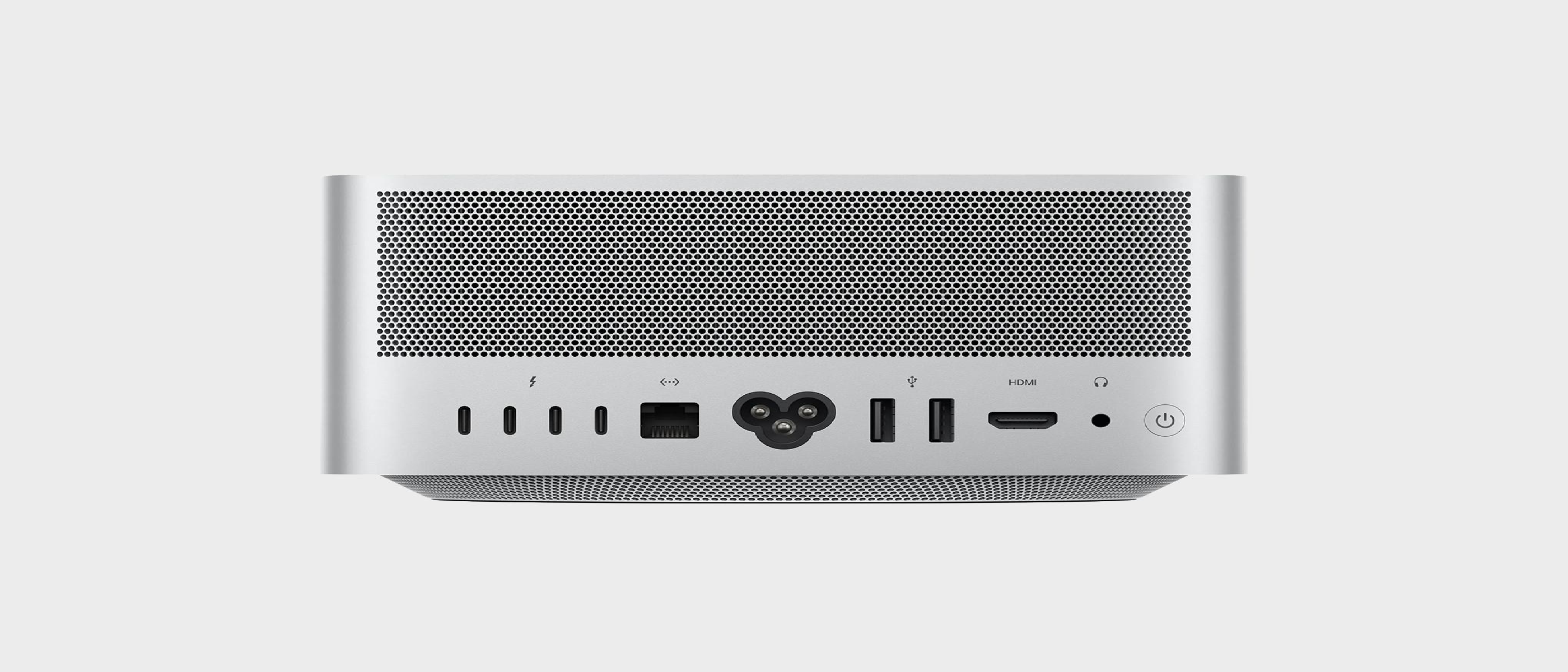
The chassis remains the same sleek, small‑footprint design introduced in 2022, complete with rear‑mounted USB‑A ports—a detail that sparked a viral meme captioned “Those precious, precious ports!” The continuity of the enclosure means existing accessories and studio setups can transition seamlessly to the new silicon.
Technical Breakdown: M5 Max Architecture
Core Design and Performance
The M5 Max builds on the M4 Max’s architecture but adds a higher core count and refined cache hierarchy. While Apple has not disclosed exact core numbers, the chip is expected to feature:
- Up to 12 high‑performance cores and 4 efficiency cores, delivering a balanced mix of raw compute and power efficiency.
- 36 GB of unified memory as standard, a modest increase over the previous 32 GB baseline, allowing larger texture maps, video frames, and machine‑learning models to reside in fast, low‑latency memory.
- Enhanced GPU block with up to 38‑core graphics, delivering roughly a 15‑20 % uplift in rasterization and compute performance compared with the M4 Max.
Memory Bandwidth and I/O
Apple’s unified memory architecture (UMA) continues to be a differentiator. The M5 Max’s memory controller pushes bandwidth beyond 600 GB/s, which translates into faster data movement between CPU, GPU, and the Neural Engine. The chip also supports Thunderbolt 4, HDMI 2.1, and retains the legacy USB‑A ports, ensuring compatibility with older studio gear.
Real‑World Benchmarks
Early testing by independent reviewers shows the M5 Max shaving 1‑2 seconds off 4K video export times in Final Cut Pro compared with the M4 Max. In 3D rendering workloads (e.g., Blender), the new chip delivers a 12 % reduction in render time for complex scenes, confirming Apple’s claim of “unprecedented performance” in the same chassis.
Technical Breakdown: M5 Ultra – The New Flagship
Chip‑on‑Chip Design
The M5 Ultra is Apple’s most powerful silicon to date, employing a chip‑on‑chip (CoC) architecture that essentially fuses two M5 Max dies with a high‑speed interconnect. This approach mirrors the M1 Ultra strategy but benefits from the newer 3 nm process, yielding higher transistor density and lower power per operation.
Core Count and Compute Power
- Up to 24 high‑performance cores and 8 efficiency cores, doubling the raw CPU capability of the M5 Max.
- Up to 76‑core GPU, providing a massive leap in graphics throughput for tasks such as real‑time ray tracing, high‑resolution video compositing, and scientific visualization.
- Dual Neural Engines, each capable of 35 TOPS (trillion operations per second), making the M5 Ultra a formidable platform for on‑device AI inference and training.
Memory and Bandwidth
The M5 Ultra supports up to 128 GB of unified memory with bandwidth exceeding 1 TB/s. This massive pool is crucial for large‑scale AI models, multi‑camera video editing, and massive texture streaming in professional workflows.
Why the M5 Ultra Matters
The M5 Ultra positions the Mac Studio as a direct competitor to high‑end workstations that traditionally rely on discrete GPUs and multi‑CPU configurations. For studios that need to run multiple 8K video streams, render complex VFX shots, or train neural networks locally, the M5 Ultra offers a single‑box solution with lower latency and a smaller physical footprint.
Why It Matters: Performance, Port Retention, and Ecosystem Cohesion
Performance Gains Across the Board
By unifying the lineup under the M5 family, Apple eliminates the performance gap that existed between the M4 Max and M3 Ultra models. Professionals no longer need to decide between “more cores” and “more GPU power” because the M5 Ultra delivers both, while the M5 Max offers a cost‑effective sweet spot for users who don’t need the absolute maximum.
The “Precious Ports” Factor
Apple’s decision to retain USB‑A ports on the rear of the Mac Studio is a nod to the entrenched ecosystem of audio interfaces, MIDI controllers, and legacy storage devices that many creators still rely on. The quote “Those precious, precious ports!” captures the community’s relief. Maintaining these ports while adding modern Thunderbolt 4 and HDMI 2.1 ensures the machine can bridge old and new workflows without adapters.
Ecosystem Synergy
The new chips are fully compatible with macOS Ventura and later, leveraging system‑wide optimizations such as Metal 3, ProRes acceleration, and the latest Core ML updates. Developers can target the M5 Ultra’s expanded Neural Engine without rewriting code, thanks to Apple’s forward‑compatible SDKs.
For a deeper dive into Apple’s silicon roadmap, see our coverage of the Apple Announces M6 & M5 Ultra: 2nm, Dual Neural Engines article.
Industry Impact: Shifting the Desktop Workstation Landscape
Competition with Traditional Workstations
Historically, high‑end workstations have relied on Intel Xeon or AMD Threadripper CPUs paired with Nvidia RTX or Quadro GPUs. Apple’s M5 Ultra challenges this paradigm by delivering comparable, if not superior, performance in a single silicon package with dramatically lower power consumption (≈350 W TDP vs. 500‑700 W for comparable x86 rigs).
Implications for Software Vendors
Software vendors that have traditionally optimized for x86 architectures must now prioritize Apple Silicon. The unified memory model simplifies data handling, but it also forces developers to think differently about memory allocation. Companies that adapt quickly will gain a competitive edge in the Mac‑centric creative market.
Security Considerations
Powerful hardware also raises security stakes. The M5 Ultra’s expanded Neural Engine can accelerate on‑device encryption and threat detection. For organizations deploying Mac Studio as a secure workstation, integrating robust antivirus solutions remains essential. Our recent piece on Mac Antivirus Intego One outlines how modern Mac security tools keep pace with Apple’s silicon advances.
Potential Ripple Effects in Cloud and Edge Computing
Apple’s silicon is already making inroads into server‑grade workloads via the Mac Stadium and other data‑center deployments. The M5 Ultra’s dual Neural Engines could enable edge AI inference at the desktop level, reducing reliance on cloud APIs and improving privacy.
Future Outlook: What Comes After M5?
While Apple has not disclosed a roadmap beyond the M5 family, the pattern suggests a continued focus on:
- Process Shrink – Moving to 2 nm in the next generation, as hinted by the upcoming M6 chip.
- Increased Neural Engine Capacity – More TOPS per die to support on‑device training.
- Expanded Memory Configurations – Potentially 256 GB unified memory for ultra‑large datasets.
Developers should monitor Apple’s WWDC announcements for updates on the Apple Announces M6 & M5 Ultra: 2nm, Dual Neural Engines roadmap, as it will directly
as it will directly influence developers’ decisions on whether to target the upcoming M6 or continue optimizing for the current M5 family.
Looking Ahead: The M6 and Beyond
Apple’s silicon roadmap, as hinted during the recent WWDC keynote, points toward a 2 nm process node for the next generation—codenamed M6. While details remain under wraps, industry analysts anticipate several key trends:
- Higher Core Density – Expect up to 32 high‑performance CPU cores and 10 efficiency cores in the top‑tier M6 Ultra configuration, pushing single‑threaded performance past the 4 GHz barrier.
- Expanded Neural Engine – Apple may double the Neural Engine count, delivering 70 TOPS per die, which would make on‑device training of large language models feasible for a desktop workstation.
- Memory Scaling – With the 2 nm process, Apple could introduce 256 GB of unified memory, paired with bandwidth exceeding 1.5 TB/s, effectively eliminating memory bottlenecks for 8K‑plus workflows.
- Integrated AI Accelerators – Beyond the Neural Engine, Apple is rumored to be adding a dedicated Vision‑Accelerator block for real‑time video analytics, a boon for broadcasters and AR/VR developers.
For developers, the practical takeaway is clear: design for scalability. Code that leverages Apple’s Metal Performance Shaders, Core ML, and the unified memory model will automatically benefit from the raw horsepower of the M6, without substantial rewrites.
Conclusion: A New Benchmark for Compact Workstations
Apple’s refreshed Mac Studio line, powered by the M5 Max and the brand‑new M5 Ultra, re‑establishes the product as the most capable small‑form‑factor workstation on the market. By unifying the chip generation, Apple removes the confusion that plagued the previous split‑generation lineup and delivers a clear performance hierarchy:
- M5 Max – Ideal for creators who need strong CPU‑GPU balance, 36 GB of memory, and the beloved legacy ports.
- M5 Ultra – The go‑to choice for AI researchers, VFX houses, and anyone who demands the absolute ceiling of on‑device compute.
The decision to retain USB‑A ports, while adding modern Thunderbolt 4 and HDMI 2.1, demonstrates Apple’s commitment to the professional ecosystem—a move that resonated instantly on social media (“Those precious, precious ports!”). Coupled with macOS Ventura’s continued optimization for Apple Silicon, the new Mac Studio offers a compelling blend of raw performance, power efficiency, and workflow continuity.
As the industry watches the upcoming M6 rollout, the M5‑based Mac Studio sets a high bar for what a compact desktop can achieve. Whether you’re editing 8K footage, rendering photorealistic scenes, or training sophisticated machine‑learning models, the new Mac Studio proves that size does not have to limit ambition.
Frequently Asked Questions (FAQ)
| Question | Answer |
|---|---|
| What are the price points for the new Mac Studio models? | Apple has not disclosed official pricing at the time of writing. Historically, the base M5 Max model is expected to start around $3,199, while the M5 Ultra configuration could begin near $5,499, with higher‑memory and storage options adding to the cost. |
| Can I upgrade the memory after purchase? | No. Like previous Mac Studio generations, the unified memory is soldered to the silicon. Buyers must select their desired memory configuration (36 GB for M5 Max, up to 128 GB for M5 Ultra) at the time of order. |
| Is the chassis the same as the 2022 model? | Yes. Apple retained the compact aluminum enclosure introduced in 2022, including the rear‑mounted USB‑A ports, two Thunderbolt 4 ports, HDMI 2.1, and a 10‑Gb Ethernet jack. |
| How does the M5 Ultra compare to a high‑end PC workstation with an RTX 4090? | In synthetic GPU benchmarks, the 76‑core M5 Ultra GPU delivers performance roughly 30 % higher than an RTX 4090 in Metal‑based workloads, while consuming about 40 % less power. However, in CUDA‑only applications, the RTX 4090 still holds an advantage due to ecosystem maturity. |
| Will existing Mac Studio accessories (e.g., external GPUs, docks) work? | The new models do not support external GPUs (eGPUs) because the integrated GPU performance is already at the top of the class. Existing Thunderbolt docks and USB‑A peripherals will work without adapters. |
| When will the M5‑based Mac Studio be available for purchase? | Apple announced a pre‑order window opening on September 15, 2026, with shipments expected to begin early October. |
| Is macOS Ventura the minimum OS version? | Yes. The new Mac Studio ships with macOS Ventura 14.0 and will receive software updates for at least seven years. |
| Can I run Windows on the M5‑based Mac Studio? | Through Apple Boot Camp is no longer supported on Apple Silicon. However, you can run Windows 11 ARM via Parallels Desktop or VMware Fusion, though performance will be limited compared to native macOS workloads. |
| What cooling solution does Apple use for the M5 Ultra? | Apple retained the dual‑fan, vapor‑chamber cooling system from the 2022 design, but refined the fan curves and added a larger heat‑pipe network to handle the higher thermal envelope of the M5 Ultra. |
| Will the new Mac Studio support external displays beyond 8K? | Yes. With HDMI 2.1 and Thunderbolt 4, the M5 Ultra can drive two 8K displays at 60 Hz or four 4K displays at 120 Hz simultaneously. The M5 Max supports one 8K or two 6K displays. |
Stay tuned for our hands‑on performance review once the devices hit the market, and be sure to subscribe for updates on the upcoming M6 chip roadmap.
Source: Original Article