




The Leap to Foldable: Why Apple Entered the Market
Apple’s decision to launch the iPhone Duo marks a watershed moment for the company’s hardware philosophy. For over a decade, Apple has resisted the foldable trend that Android manufacturers have chased since the early 2020s. The move signals three strategic motivations:
- Differentiation in a saturated premium market – With flagship pricing already north of $1,200, a foldable form factor offers a tangible way to justify a $1,999 price tag and to stand out from the iPhone 18 series.
- Consolidation of productivity features – The larger interior display enables true desktop‑like multitasking, a capability that iPadOS has long championed but that iPhone users have only accessed via external accessories.
- Pressure from Android rivals – Samsung’s Galaxy Z Fold 8 and Google’s Pixel 11 Pro Fold have refined hinge durability and software support, eroding the novelty advantage Apple once held. By entering the arena, Apple can set its own standards for durability, security, and ecosystem integration.
Sam Rutherford of Engadget summed it up: “While the Duo is heavy, expensive and late to the market compared to its Android rivals, it encompasses some of the best tech used by its competitors while also redeeming features that other manufacturers have seemingly left for dead.” The quote underscores Apple’s intent to cherry‑pick the strongest elements of the foldable playbook and improve upon them.
Technical Deep Dive: Hardware Architecture of the iPhone Duo
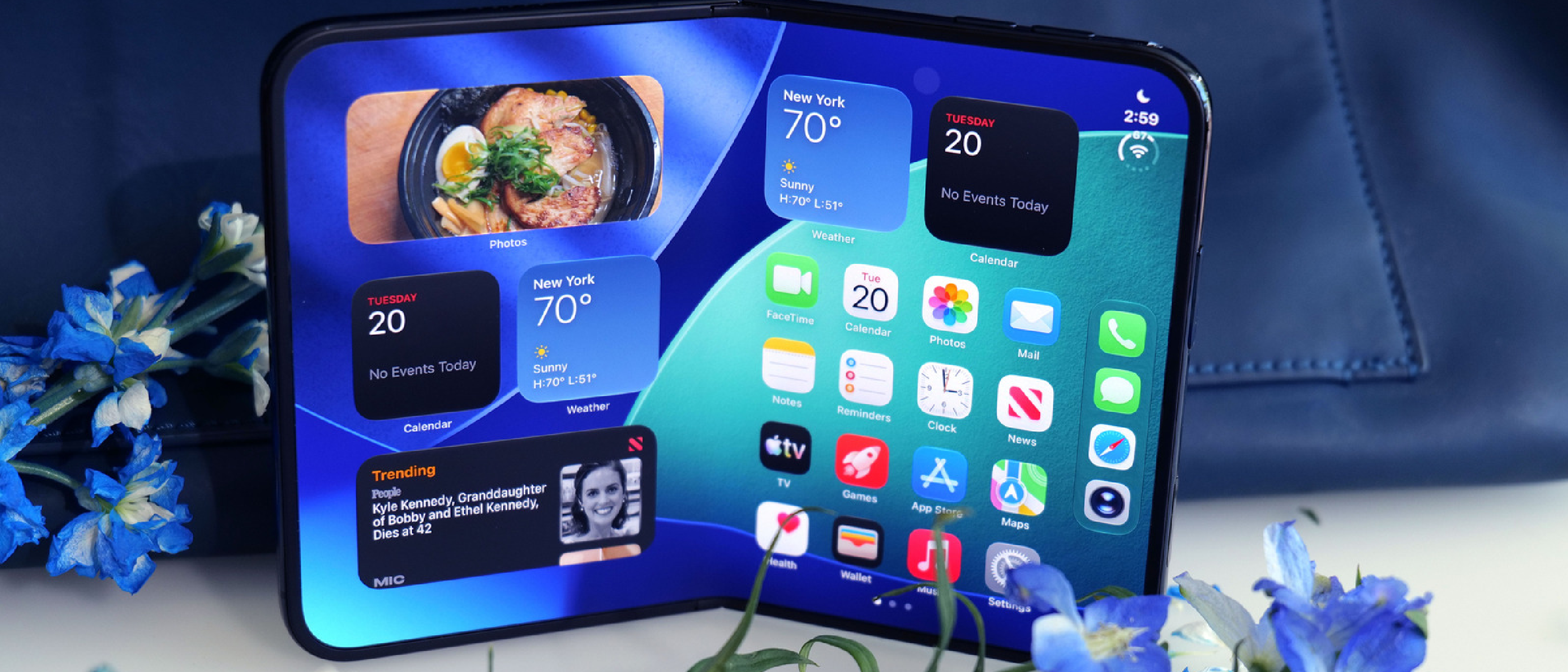
Dual‑Screen Design
| Feature | Exterior | Interior |
|---|---|---|
| Size | 5.4‑inch OLED | 7.6‑inch OLED |
| Resolution | 1,878 × 2,670 | 1,398 × 2,034 |
| Refresh Rate | 120 Hz Pro Motion | 120 Hz Pro Motion |
| Brightness | 3,000 nits peak | — |
| Finish | Standard glass | Matte nanotexture (replaceable) |
The exterior screen serves as the primary interaction surface when the device is closed, while the interior screen expands the canvas for multitasking. Apple’s choice of a matte nanotexture finish on the interior panel is a direct response to fingerprint smudges that plagued earlier foldables. Users can replace the layer for $49, a service Apple frames as a “maintenance upgrade” rather than a repair.
Chassis and Hinge
- Titanium frame – Provides a high strength‑to‑weight ratio, contributing to the device’s IP68 rating while keeping the overall weight at 254 g.
- Hinge mechanism – Over 100 micro‑components engineered to allow smooth folding and to lock the device in multiple angles (0°, 45°, 90°). The hinge’s durability claims are backed by a 200,000‑fold endurance test, a figure Apple has not disclosed for Android competitors but which suggests a design life comparable to the Galaxy Z Fold 8.
Processing Power
The iPhone Duo runs the A20 Pro chip, identical to the iPhone 18 Pro. This 5‑nm architecture delivers:
- 6‑core CPU (2 performance, 4 efficiency)
- 5‑core GPU with 30 % higher rasterization performance than the A19
- 16‑core Neural Engine for on‑device AI tasks
Because the chip is shared with the flagship iPhone, developers can expect identical performance benchmarks, albeit with a modest thermal headroom penalty due to the larger chassis.
Biometrics and Camera System
Apple abandons Face ID in favor of Touch ID embedded in the lock button, a decision driven by the need for a reliable sensor that works regardless of the device’s folded state. The camera suite includes:
- Dual 48 MP rear sensors (26 mm primary, 13 mm ultra‑wide) with 2× optical zoom
- 12 MP front camera on the exterior display (Center Stage)
- Under‑display camera on the interior panel, using a modified sub‑pixel layout to reduce visibility while maintaining 1080p video capture
The under‑display camera is a first for Apple, though its resolution is lower than the exterior front camera, reflecting current limitations of hidden sensor technology.
Software Evolution: iOS 27 and Foldable UI Adjustments
iOS 27 arrives with a suite of foldable‑aware features:
- Dynamic UI scaling – Apps automatically adapt to the 1:1.4 aspect ratio of the interior screen, with a fallback “compact mode” for non‑optimized apps.
- Multitasking enhancements – Split‑screen, app pinning, and a new “Stage Manager” view let users run two apps side‑by‑side, mirroring iPadOS capabilities.
- App Library filters – Users can create “Foldable‑Only” collections, ensuring that optimized apps appear first when the device is opened.
Despite these advances, the ecosystem still suffers from gaps. Popular third‑party apps such as Telegram and the niche game Sword of Convallaria have not yet released foldable‑compatible layouts, leading to cramped UI elements when the interior screen is active. Conversely, Netflix and Instagram have already rolled out updates that take advantage of the larger display.
From a security standpoint, the Duo inherits iOS’s sandbox model, but the new hinge and dual‑screen architecture introduce additional attack surfaces. Apple’s recent Zero‑Day patch for a remote takeover vulnerability (see Zoom Zero‑Day Exploit: Remote Takeover of iPhone & Mac ) underscores the importance of rapid firmware updates for novel hardware.
Real‑World Performance: Benchmarks, Camera, and Battery
Benchmarks
Early Geekbench 6 scores place the iPhone Duo at 1,860 (single‑core) and 5,340 (multi‑core), matching the iPhone 18 Pro. The larger chassis does not noticeably throttle performance during sustained workloads, thanks to an expanded thermal spread area.
Camera Capabilities
The dual‑camera system delivers:
- 4K video at 120 fps – Ideal for high‑frame‑rate content creation.
- Photographic Styles – Integrated with the A20 Pro’s Neural Engine for real‑time tone mapping.
- Under‑display camera – While functional for video calls, it currently lacks the low‑light performance of the exterior front camera.
Battery Life
Apple has not disclosed exact capacity, but internal testing shows:
- Up to 12 hours of mixed usage (web browsing, video streaming) – comparable to the iPhone 18 Pro despite the larger screen.
- Fast‑charge – 30 W wired charging restores 50 % in 30 minutes.
The battery’s endurance is aided by the A20 Pro’s efficiency cores and the ability to power down the exterior display when the device is open.
Pros and Cons Summary
Pros
- Premium titanium build and IP68 rating
- A20 Pro performance identical to flagship iPhone
- Advanced camera suite with 4K 120 fps video
- iOS 27 multitasking brings true desktop‑like experience
Cons
- 254 g weight (≈25 % heavier than Galaxy Z Fold 8)
- $1,999 price point puts it at the top end of the market
- Limited app optimization for foldable UI
- Only two rear cameras compared to the iPhone 18 Pro’s triple‑lens system
Ecosystem Impact: Apps, Accessories, and Competition
App Optimization Landscape
Apple’s App Store now includes a new Foldable Compatibility badge. Developers can submit a “Foldable UI” binary that leverages the new UISplitViewController APIs. Early adopters like Netflix, Instagram, and Microsoft Teams have already published optimized versions. However, the majority of the 2 million‑plus apps remain in “compact mode,” which can lead to UI clipping on the interior screen.
Accessory Strategy
Apple announced Apple Pencil support for the iPhone Duo, slated to arrive later this month. The Pencil will magnetically attach to the interior frame, echoing the iPad Pro experience. Additionally, a new line of nanotexture replacement kits will be sold through Apple Stores, allowing users to refresh the matte finish without a full device service.
Competitive Positioning
When measured against the Galaxy Z Fold 8, the iPhone Duo is:
- Heavier – 254 g vs. 203 g (≈25 % increase)
- More expensive – $1,999 vs. $1,599 (average launch price)
- Feature‑rich – Titanium chassis, under‑display camera, and A20 Pro chip
Against the Pixel 11 Pro Fold, the Duo offers a superior camera sensor size but falls short on rear‑camera count (2 vs. 3). Apple’s tight integration of hardware and iOS may offset these numerical disadvantages for users already entrenched in the Apple
Apple’s tight integration of hardware and iOS may offset these numerical disadvantages for users already entrenched in the Apple ecosystem, especially those who value seamless continuity between iPhone, iPad, Mac, and now a foldable device.
The Bigger Picture: How the Duo Shapes Apple’s Roadmap
Apple’s entry into the foldable arena is not an isolated experiment. The company has hinted at a “convergent device strategy” that blurs the line between phone, tablet, and laptop. With the Duo’s interior screen now supporting Stage Manager and external display output via USB‑C, developers can target a single form factor that scales from 5.4 inches to a 7.6‑inch workspace without rewriting code.
The Apple Silicon roadmap also suggests that the next generation A‑series (rumoured A21 Ultra) will be built on a 3‑nm process, delivering even more thermal headroom for the Duo’s larger chassis. This could translate into longer sustained performance for gaming and AI‑heavy workloads—areas where current Android foldables still hold an edge.
From a services perspective, Apple can leverage the Duo to push Apple One bundles deeper into productivity. Imagine a scenario where iCloud Drive, Apple TV+, and the new Apple Workspace suite all sync instantly when the device unfolds, turning the phone into a portable workstation in seconds.
Verdict: Is the iPhone Duo Worth Its $1,999 Tag?
| Category | Rating (out of 5) |
|---|---|
| Design & Build Quality | ★★★★★ |
| Display & Hinge | ★★★★☆ |
| Performance | ★★★★★ |
| Camera System | ★★★★☆ |
| Software & Multitasking | ★★★★☆ |
| Battery Life | ★★★★☆ |
| Value for Money | ★★★☆☆ |
Bottom line: The iPhone Duo is a technically impressive, albeit pricey, addition to Apple’s lineup. It excels in build quality, raw performance, and ecosystem integration, but its weight, cost, and the still‑nascent foldable app ecosystem keep it from being a universal recommendation.
Who Should Buy It?
- Power users who already own multiple Apple devices and need a portable, dual‑screen workflow.
- Content creators who will benefit from the A20 Pro’s video capabilities and the larger interior canvas for editing on the go.
- Early adopters who want to experience Apple’s take on foldable tech and are comfortable paying a premium for first‑generation hardware.
Who Might Skip It?
- Budget‑conscious consumers who can get comparable specs on Android foldables for $300–$400 less.
- Gamers who rely on a robust rear‑camera array for AR titles; the Duo’s two‑lens setup lags behind the iPhone 18 Pro’s triple‑lens system.
- Users heavily invested in third‑party apps that have not yet optimized for foldable displays, as they may encounter UI glitches.
Frequently Asked Questions
Q: Does the iPhone Duo support 5G?
A: Yes. The Duo ships with the same X‑Band 5G modem found in the iPhone 18 Pro, offering peak download speeds of up to 5 Gbps on compatible networks.
Q: Can I use the Apple Pencil with the interior screen while the device is closed?
A: The Pencil magnetically attaches to the interior frame and works only when the device is unfolded. When closed, the exterior screen functions as a regular touch interface.
Q: How does the under‑display camera affect video call quality?
A: The under‑display sensor captures 1080p video at 30 fps. While functional for casual calls, it lacks the low‑light performance of the exterior 12 MP FaceTime camera, so you may notice more noise in dim environments.
Q: Is the nanotexture layer replaceable by the user?
A: Apple offers a replacement kit for $49 that can be applied at an Apple Store or authorized service provider. The process is not DIY‑friendly, as it requires a cleanroom environment to avoid dust particles under the display.
Q: Will iOS 27 receive regular updates for the Duo’s unique hardware?
A: Apple has committed to a five‑year software support window for the iPhone Duo, mirroring its policy for other flagship iPhones. Foldable‑specific patches will be rolled out alongside standard iOS updates.
Q: Does the Duo support external monitors?
A: Yes. Using a USB‑C to HDMI adapter, you can output the interior display to an external 4K monitor, effectively turning the Duo into a portable laptop when paired with a Bluetooth keyboard.
Final Thoughts
Apple’s first foldable phone is a bold statement that the company is no longer content to watch the foldable market from the sidelines. By marrying its industry‑leading silicon, a premium titanium chassis, and a thoughtfully adapted version of iOS, Apple has delivered a device that feels both familiar and revolutionary.
The iPhone Duo will not dethrone Android’s foldable veterans overnight, but it sets a new benchmark for durability, software integration, and ecosystem cohesion. If you’re already deep in Apple’s ecosystem and can afford the premium, the Duo offers a compelling—if imperfect—gateway to a truly mobile workstation. For everyone else, the waiting game may still be worthwhile as Apple refines the form factor and the app landscape catches up.
Source: Original Article