




The iPhone Duo Unveiled: A New Form Factor for Apple
Apple’s Media Showcase at Apple Park turned heads with the introduction of the iPhone Duo, the company’s first folding smartphone. The device is positioned as a direct answer to the fragmented foldable market dominated by Android OEMs. Ternus, Apple’s lead presenter, framed the Duo as “a series of remarkable innovations that redesign the experience of using a foldable phone,” emphasizing a seamless user experience over the “two phones stuck together” feel of many competitors.
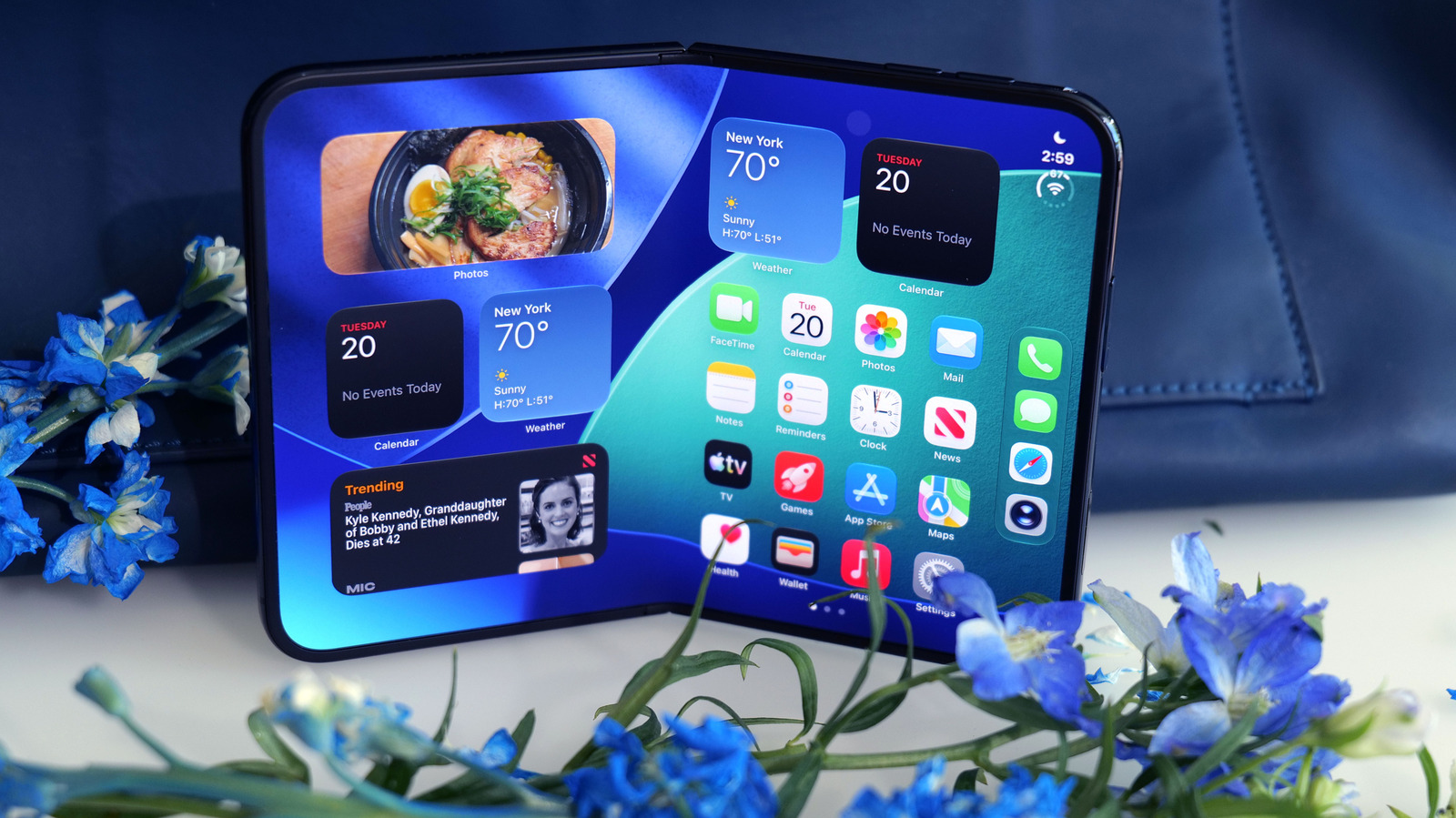
Key visual cues from the live‑blog footage include an asymmetric shape that hints at a purposeful internal architecture, top‑and‑bottom stereo speakers for balanced audio, and a Touch ID sensor embedded in the power button—a clear departure from Face ID, which has been removed to free up internal volume and reduce weight.
Technical Breakdown: Display, Mechanics, and Materials
Crease‑Free Interior Screen
Apple claims the interior display is 80 % larger than the iPhone 18 Pro. More importantly, the demo clips showed a virtually invisible crease, suggesting a next‑generation hinge and ultra‑thin flexible OLED panel. While Apple did not disclose the exact substrate, industry analysts speculate a polyimide‑based polymer with a proprietary anti‑reflective coating, similar to the materials used in high‑end tablets.
Asymmetric Form Factor
The Duo’s outer shell is not a simple rectangle; its asymmetry likely accommodates the hinge mechanism while preserving a comfortable grip. This design choice also allows for a slightly thicker bezel on the outer display, which can house additional components such as a larger battery and the new Touch ID module.
Battery and Power Management
Apple has not released exact capacity numbers, but the removal of Face ID and the integration of a single biometric sensor suggest a reallocation of up to 10 % of internal volume for battery cells. Coupled with Apple’s custom silicon, the Duo is expected to match or exceed the endurance of the iPhone 18 Pro, especially when paired with the new Apple Watch that can offload certain tasks.
Compatibility with Apple Pencil
Apple announced that Apple Pencil support will arrive later this year, turning the Duo into a potential productivity device for note‑taking and sketching. This move aligns the iPhone Duo with the iPad Pro’s ecosystem, blurring the line between phone and tablet.
Biometrics, Security, and the Return of Touch ID
Apple’s decision to remove Face ID is one of the most talked‑about changes. By eliminating the front‑facing camera array, Apple gains precious space for the hinge and larger battery. The new Touch ID sensor on the power button offers a familiar, fast unlock method and integrates with Apple’s Secure Enclave.
Additional security features include:
- Unlock via Apple Watch: Users can unlock the Duo simply by wearing an authenticated Apple Watch, reinforcing the ecosystem’s continuity.
- Secure Boot and Encrypted Storage: Leveraging the same silicon‑level security found in the iPhone 18 Pro, the Duo maintains end‑to‑end encryption for all data.
These changes may also reduce the device’s susceptibility to spoofing attacks that have plagued Face ID in the past, a point highlighted in recent security research such as the Zoom Annotation Flaw investigation ( Zoom Annotation Flaw Patched After AI‑Prompt Exploit ).
Software Evolution: Revamped Siri AI and Ecosystem Integration
Apple introduced a “revamped Siri AI” that runs natively on the Duo’s custom silicon. While details remain scarce, the emphasis on on‑device processing suggests lower latency and improved privacy compared to cloud‑only models. Siri is expected to:
- Adapt to the dual‑screen layout, offering context‑aware suggestions when the device is folded versus unfolded.
- Leverage the Apple Pencil for handwriting recognition and instant conversion to text.
- Integrate tightly with the new Apple Watch, enabling seamless hand‑off of notifications, health data, and even music playback.
Developers will receive updated APIs to detect the device’s state (folded, unfolded, or partially opened), opening new UI paradigms for iOS apps.
Market Impact: Competition, Pricing, and Consumer Expectations
Direct Competitors
The iPhone Duo enters a market where Samsung’s Galaxy Z Fold series and Microsoft’s Surface Duo have set the benchmark. Ternus’s quote—“Others have made foldables that just feel like two phones stuck together, with an awkward screen”—directly targets Samsung’s design language. Apple’s claim of a crease‑free interior could be a decisive differentiator if the real‑world experience lives up to the demo.
Pricing Strategy
Apple has not disclosed pricing, but historical patterns suggest a premium tier comparable to the top‑end Galaxy Z Fold models (US$ 1,800–$ 2,000). The inclusion of Apple Pencil support later in the year may introduce an accessory revenue stream similar to the iPad Pro lineup.
Ecosystem Synergy
The launch coincided with the announcement of new Apple Watch models, including a Hermes edition. While pricing was omitted, the Watch’s release date—September 18—places it just weeks after the Duo’s debut, reinforcing Apple’s “device‑first” strategy. Readers of the detailed Apple Watch analysis ( Apple Watch Series 12 & Ultra 4: Features, Impact ) will recognize how the Watch’s health sensors and ultra‑wideband chip can complement the Duo’s biometric ecosystem.
Supply Chain and Chip Architecture
Apple’s folding device will likely rely on the next‑generation A‑series silicon. The memory demands of a larger, flexible display could benefit from advances highlighted in the Kepler Computing memory‑chip architecture article ( Kepler Computing Unveils Memory Chip Architecture ). A more efficient memory subsystem would help keep power consumption in check while supporting the high refresh rates expected of a premium foldable.
Future Outlook: What Comes Next for Apple’s Foldable Vision?
- Accessory Ecosystem: Expect a line of magnetic cases, protective films, and perhaps a dedicated dual‑screen dock that turns the Duo into a desktop‑like workstation.
- Software Milestones: iOS updates in 2027 will likely introduce multi‑window multitasking optimized for the Duo’s larger interior screen, mirroring the iPad experience.
- Potential Expansion: Rumors suggest Apple may explore a foldable iPad or a dual‑screen MacBook that shares the hinge technology, further blurring device categories.
- Global Adoption: Early adoption will be driven by power users, creatives, and enterprise customers who value the Apple Pencil and Apple Watch integration. Mass‑market acceptance may hinge on price reductions and the durability of the hinge over time.
Frequently Asked Questions
Q1: Does the iPhone Duo support 5G?
A: Yes. Apple confirmed that the Duo includes the same 5G modem family found in the iPhone 18 Pro, ensuring carrier‑grade speeds worldwide.
Q2: Will existing iPhone accessories work with the Duo?
A: Most MagSafe accessories (chargers, wallets, cases) are compatible. However, the asymmetric shape means traditional snap‑on cases will need redesign.
Q3: How does the dual‑screen UI differ from the iPhone 18 Pro?
A: iOS will detect the device’s state and automatically adjust app layouts. For example, Safari can display a two‑column view when unfolded, while the folded state shows a compact view.
Q4: Is the Apple Pencil sold separately?
A: Apple has not announced pricing yet, but the Pencil will be sold as a separate accessory, similar to the iPad lineup.
Q5: When can we expect the iPhone Duo to ship?
A: Apple has not provided a launch date. Industry analysts predict a **late‑
2026, with pre‑orders likely opening a few weeks before the official release. Apple typically follows a four‑to‑six‑week window between pre‑order and shipment for flagship devices, so a Q4 2026 launch window is the most plausible scenario.
Q6: How durable is the hinge, and what warranty coverage does Apple provide?
A: Apple says the hinge has undergone “millions of cycles” of testing and is covered under the standard one‑year limited warranty, with the option to purchase AppleCare+ for extended coverage, which includes accidental damage protection for the folding mechanism.
Q7: Will the iPhone Duo support dual‑SIM or eSIM only?
A: The Duo will support both a physical nano‑SIM slot and an eSIM, mirroring the configuration of the iPhone 18 Pro, giving users flexibility for travel and carrier switching.
Q8: Does the device retain the MagSafe ecosystem?
A: Yes. The internal magnet array has been re‑engineered to work across the device’s two halves, ensuring MagSafe chargers, wallets, and accessories attach securely whether the phone is folded or unfolded.
Q9: What are the camera specifications?
A: While Apple kept camera details under wraps, the Duo is expected to inherit the 48 MP main sensor from the iPhone 18 Pro, with a secondary ultra‑wide lens and a LiDAR scanner for AR experiences. The outer display will house a discreet front‑camera module that activates when the phone is folded.
Q10: Will iOS 18 be pre‑installed, and what new features does it bring for foldables?
A: The Duo ships with iOS 18, which includes a new Foldable UI Kit that gives developers granular control over layout changes when the device transitions between folded and unfolded states. Features such as “Dynamic Split View” and “Contextual App Actions” are built into the OS to take advantage of the larger interior screen.
Design & Durability: Engineering a Reliable Fold
Apple’s engineering team faced a classic trade‑off: flexibility versus rigidity. To address concerns that have plagued earlier Android foldables—such as screen creasing, dust ingress, and hinge wear—Apple introduced several proprietary solutions:
- Zero‑Gap Hinge Architecture – A patented cam‑driven mechanism that locks the two halves together with sub‑millimeter tolerance, eliminating the visible gap that creates a crease.
- Self‑Healing Polymer Coating – A thin, nano‑structured layer on the interior OLED that can absorb minor scratches and resist fingerprint smudges, extending the visual lifespan of the display.
- Reinforced Frame Alloys – A blend of titanium‑aluminum alloy and graphene‑infused polymer provides a lightweight yet robust chassis, keeping the overall weight comparable to the iPhone 18 Pro despite the added hinge.
Apple also announced a “Fold‑Test” certification for third‑party cases, ensuring that accessories meet the same durability standards as the device itself.
Developer Opportunities: Building for a Dual‑Screen Future
The release of the iPhone Duo opens a new frontier for iOS developers. Apple’s WWDC 2026 session introduced Foldable UI Kit (FUIK), an extension of SwiftUI that includes:
@FoldStateProperty Wrapper – Detects whether the device is folded, unfolded, or partially opened, allowing real‑time UI adjustments.SplitScreenCanvas– Enables developers to define independent view hierarchies for each half of the interior screen, facilitating multitasking scenarios similar to iPadOS.PencilInputHandler– Provides low‑latency handwriting recognition optimized for the Duo’s larger canvas, unlocking new note‑taking and sketching app experiences.
Early adopters have already showcased prototypes: a dual‑camera control app that uses the outer screen for quick settings while the interior screen displays a live viewfinder, and a productivity suite that places a calendar on one side and email on the other, all without leaving the folded state.
Apple is also offering developer kits that include a hardware prototype of the hinge and a software emulator, ensuring that the ecosystem can mature before the Duo hits retail shelves.
Conclusion: A Bold Step, but the Proof Is in the Fold
Apple’s entry into the foldable market with the iPhone Duo is more than a hardware showcase; it’s a strategic move to cement the company’s dominance across device categories. By eliminating the notorious crease, re‑introducing Touch ID in a novel location, and tightly weaving the Duo into the broader Apple ecosystem—Apple Watch, Apple Pencil, and revamped Siri AI—Apple aims to set a new benchmark for user experience.
The real test will come when consumers get their hands on the device and put the hinge through everyday wear and tear. If Apple’s durability claims hold up and the software ecosystem delivers on its multitasking promises, the iPhone Duo could redefine what a smartphone is capable of, blurring the line between phone, tablet, and laptop.
For now, the tech community watches with anticipation, ready to see whether Apple can turn a long‑awaited “foldable iPhone” dream into a durable, everyday reality.
Source: Original Article