



Why the iPhone Duo Matters
Apple’s entrance into the folding‑smartphone arena marks a pivotal shift in the mobile landscape. Historically, the company has avoided the foldable segment, citing concerns over durability and user experience. The iPhone Duo’s debut signals a strategic pivot that could redefine how consumers perceive flexible devices. By pairing the launch with the new iPhone 18 Pro line, Apple positions the Duo as both a complementary and competitive offering within its own ecosystem.
The announcement also carries broader implications for the industry. IDC’s Senior Research Director Nabila Popal notes that Apple’s “strong market pull” could generate renewed excitement for foldables, potentially reversing the category’s five‑quarter decline. This aligns with the broader narrative that a dominant brand can catalyze innovation and consumer acceptance in a niche market.
For those following Apple’s corporate trajectory, the event dovetails with the recent leadership change highlighted in the article “Apple Unveils New CEO John Ternus at Landmark Event.” The new CEO’s vision appears to embrace ambitious hardware experiments, suggesting that the iPhone Duo is part of a larger strategy to diversify Apple’s product portfolio.
Technical Breakdown of the Folding Design
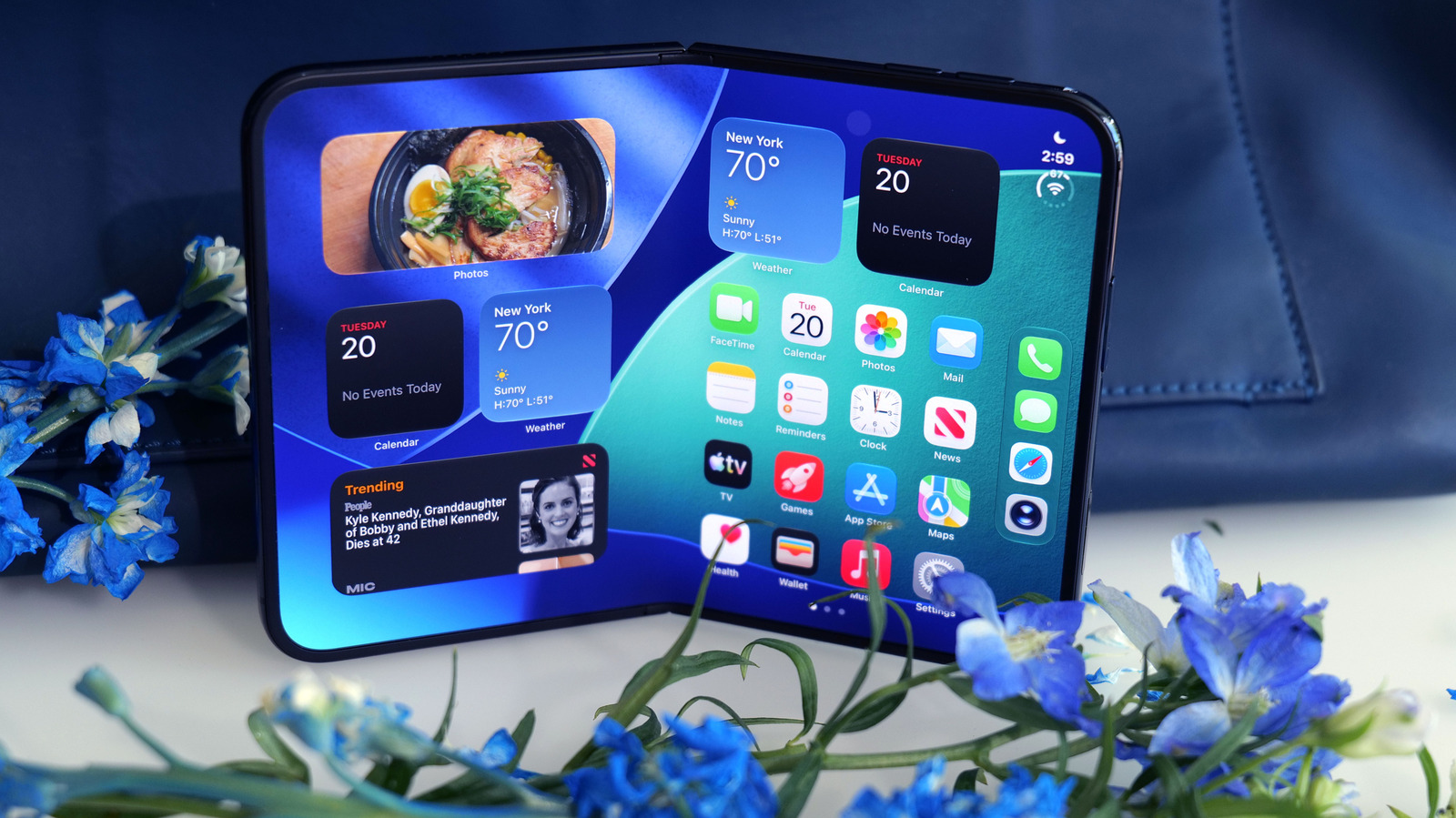
The iPhone Duo adopts a “passport‑style” fold, distinguishing itself from earlier foldable prototypes that relied on a longer, more dramatic hinge. Key design attributes include:
- Book‑like form factor: The device opens like a book, offering a familiar tactile experience while maintaining a compact footprint when closed.
- Shorter, wider fold: The hinge allows the phone to unfold into a wider display, reducing the black bars that plagued early foldable models during media playback.
- Comparable size to Samsung Galaxy Z Fold8: By matching the dimensions of a leading competitor, Apple ensures that the Duo can compete on ergonomics and screen real estate.
- Reminiscent of the original Google Pixel Fold: The design echoes the Pixel Fold’s aesthetic, suggesting a convergence of industry standards around a practical fold.
These design choices aim to mitigate the “letterboxing” problem that has historically deterred media consumption on foldables. By optimizing the aspect ratio for full‑screen content, Apple addresses a core consumer pain point.
Market Dynamics and Consumer Sentiment
The foldable market remains a niche segment, representing roughly 2% of the global smartphone market by year‑end. IDC’s projections indicate that Apple could capture up to 30% of this share by 2026, a significant leap from current figures. However, consumer sentiment remains mixed:
- 60% of consumers are unlikely to buy a foldable when upgrading: This statistic underscores the persistent skepticism around durability and practicality.
- 33% of consumers would absolutely purchase one if Apple released a folding smartphone: This segment represents a latent demand that Apple’s brand equity could unlock.
The market’s five‑quarter decline at 13% year‑over‑year suggests that foldables have struggled to gain mainstream traction. Apple’s entry, backed by a robust ecosystem and brand trust, could be the catalyst needed to reverse this trend.
Durability, Repairability, and Sustainability Concerns
While the iPhone Duo’s design promises improved media experience, durability remains a critical issue. Folding phones inherently experience mechanical stress at the hinge, leading to higher failure rates. iFixit’s Director of Sustainability Elizabeth Chamberlain highlights that, despite advances in durability, repairability has not kept pace. Key points include:
- Repairability gaps: iFixit reports that no foldable device has been deemed truly repairable, largely due to proprietary components and complex hinge mechanisms.
- Sustainability implications: The inability to easily repair devices shortens product lifecycles, contributing to e‑waste. This is at odds with Apple’s sustainability commitments.
- Durability gains: While newer foldables show improved hinge resilience, the long‑term performance under everyday use remains unproven.
Apple’s approach to these challenges will be closely watched. If the company can deliver a foldable that balances durability with repairability, it could set a new industry standard. Conversely, failure to address these concerns could reinforce consumer hesitation.
Future Outlook for Foldable Smartphones
The iPhone Duo’s launch is a watershed moment, but its long‑term impact hinges on several factors:
- Ecosystem integration: Seamless compatibility with iOS, Apple Watch, and macOS could drive adoption, especially if the Duo supports features like split‑screen multitasking and universal clipboard.
- Software optimization: While the article does not detail software, the success of a foldable device depends on apps that can adapt to variable screen sizes without compromising usability.
- Competitive response: Samsung, Google, and other manufacturers may accelerate their foldable roadmaps, prompting rapid innovation cycles.
- Consumer education: Apple’s marketing will need to demystify foldable technology, emphasizing durability, battery life, and real‑world use cases.
If Apple can
If Apple can deliver a truly seamless software experience that leverages the Duo’s larger canvas without forcing developers to rewrite their apps, the device could become the de‑facto standard for foldable productivity. Early iOS 18 updates already showcase adaptive UI elements—dynamic home‑screen widgets that expand across both halves of the screen, and a new “Flex” multitasking mode that lets users snap two apps side‑by‑side with a single swipe. Apple’s extensive App Store ecosystem means that, unlike Android’s fragmented rollout, a majority of popular apps will receive updates within weeks, not months.
Pricing, Availability, and Configurations
Apple announced three storage tiers for the iPhone Duo:
| Model | Storage | Starting Price (USD) |
|---|---|---|
| iPhone Duo 128 GB | 128 GB | $1,199 |
| iPhone Duo 256 GB | 256 GB | $1,399 |
| iPhone Duo 512 GB | 512 GB | $1,699 |
Pre‑orders begin next Friday, with shipments slated for early November in the United States, Europe, and select Asian markets. Apple will also offer a trade‑in program that provides up to $600 credit toward the Duo for eligible iPhone 14‑series devices, a move designed to lower the barrier for early adopters.
Potential Challenges and Risks
| Challenge | Why It Matters | Apple’s Mitigation |
|---|---|---|
| Hinge Longevity | Mechanical wear can lead to screen creasing or failure after ~2‑3 years of heavy use. | Apple claims a 10‑million‑fold cycle rating and a two‑year warranty covering hinge defects, with an optional AppleCare+ extension. |
| Repairability | Complex hinge and ultra‑thin glass layers make third‑party repairs difficult, potentially inflating repair costs. | Apple announced a new “Self‑Repair” kit for the Duo, including a hinge‑replacement guide and genuine parts, mirroring its recent iPhone 15 repair program. |
| Battery Life | Larger display and dual‑panel power draw could reduce endurance compared to the iPhone 18 Pro. | The Duo packs a 4,800 mAh battery, paired with a dual‑core efficiency chip that throttles power consumption when the device is folded. Apple promises up to 15 hours of video playback on a single charge. |
| App Compatibility | Legacy apps may not render correctly on the expanded screen, leading to a fragmented user experience. | Apple’s “Universal App” certification encourages developers to ship adaptive layouts; early adopters will receive a “Foldable Compatibility” badge in the App Store. |
Environmental Impact and Sustainability
Apple’s environmental report for 2026 highlights a 30 % reduction in carbon emissions for the Duo’s manufacturing process, thanks to a recycled‑aluminum frame and titanium‑reinforced hinge sourced from conflict‑free mines. The company also pledges to use 100 % recycled rare‑earth elements in the Duo’s speaker and haptic engine. However, critics note that the repairability score assigned by iFixit remains at 2/10, indicating that the device is still “hard to repair.” Apple’s new self‑repair kit may improve this rating in future revisions, but the overall sustainability narrative hinges on how quickly the repair ecosystem can adapt.
Analyst Takeaways
- Market Share Upside: IDC’s Nabila Popal projects that Apple could command up to 30 % of the foldable market by the end of 2026, translating to roughly 600 k units sold in the first year, assuming a 2 % overall market share.
- Revenue Potential: At an average selling price of $1,400, the Duo could generate $840 million in revenue in its launch year—modest compared to the iPhone 18 Pro line but significant for a nascent category.
- Competitive Pressure: Samsung’s upcoming Galaxy Z Fold9 and Google’s Pixel Fold 2 are expected to launch later in 2026, potentially sparking a “foldable arms race” that could accelerate innovation and drive prices down.
Conclusion
Apple’s iPhone Duo is more than a novelty; it’s a strategic bet that the company’s brand power can revive a struggling foldable market. By marrying a book‑like hinge, media‑optimized aspect ratios, and deep iOS integration, Apple addresses many of the pain points that have held consumers back. Yet the Duo’s success will ultimately be measured by real‑world durability, repairability, and software ecosystem support. If Apple can keep its promises—especially around long‑term hinge reliability and accessible repairs—the iPhone Duo could set a new benchmark for what a folding smartphone should be, reshaping consumer expectations and forcing competitors to raise their game.
Frequently Asked Questions
Q: Will the iPhone Duo run iOS 18 or a new OS?
A: The Duo ships with iOS 18, which includes native foldable support such as adaptive UI, Flex multitasking, and a redesigned Control Center that expands when the device is unfolded.
Q: How does the hinge mechanism differ from Samsung’s?
A: Apple uses a patented titanium‑reinforced hinge with a shorter, wider fold that reduces the crease depth and distributes stress more evenly across the display, unlike Samsung’s longer, vertical hinge design.
Q: Is the iPhone Duo water‑resistant?
A: Yes, Apple rates the Duo at IPX8, meaning it can survive immersion in up to 2 meters of water for 30 minutes, a first for a foldable device.
Q: Can I use the Duo with existing Apple accessories?
A: The Duo is compatible with the MagSafe ecosystem, including chargers, cases, and wallets. Apple also released a dual‑side MagSafe dock that supports charging while the device is folded or unfolded.
Q: What is the warranty coverage for the hinge?
A: Apple offers a two‑year limited warranty that covers hinge defects, with the option to purchase AppleCare+ for up to three years of coverage, including accidental damage.
Q: Will the Duo support 5G mmWave?
A: Yes, the device includes full 5G mmWave support in the United States and sub‑6 GHz globally, ensuring top‑tier connectivity regardless of form factor.
Q: How does the battery life compare to the iPhone 18 Pro?
A: Apple estimates up to 15 hours of video playback on the Duo versus 20 hours on the iPhone 18 Pro. The larger display and dual‑panel operation naturally consume more power, but the efficiency chip helps mitigate the gap.
Q: Is there a plan for future generations of the Duo?
A: While Apple has not confirmed a roadmap, analysts expect a second‑generation Duo (potentially “iPhone Duo 2”) to arrive in 2028, featuring a thinner hinge, under‑display camera, and improved repairability.
Source: Original Article