

Overview of the M5 Ultra Architecture
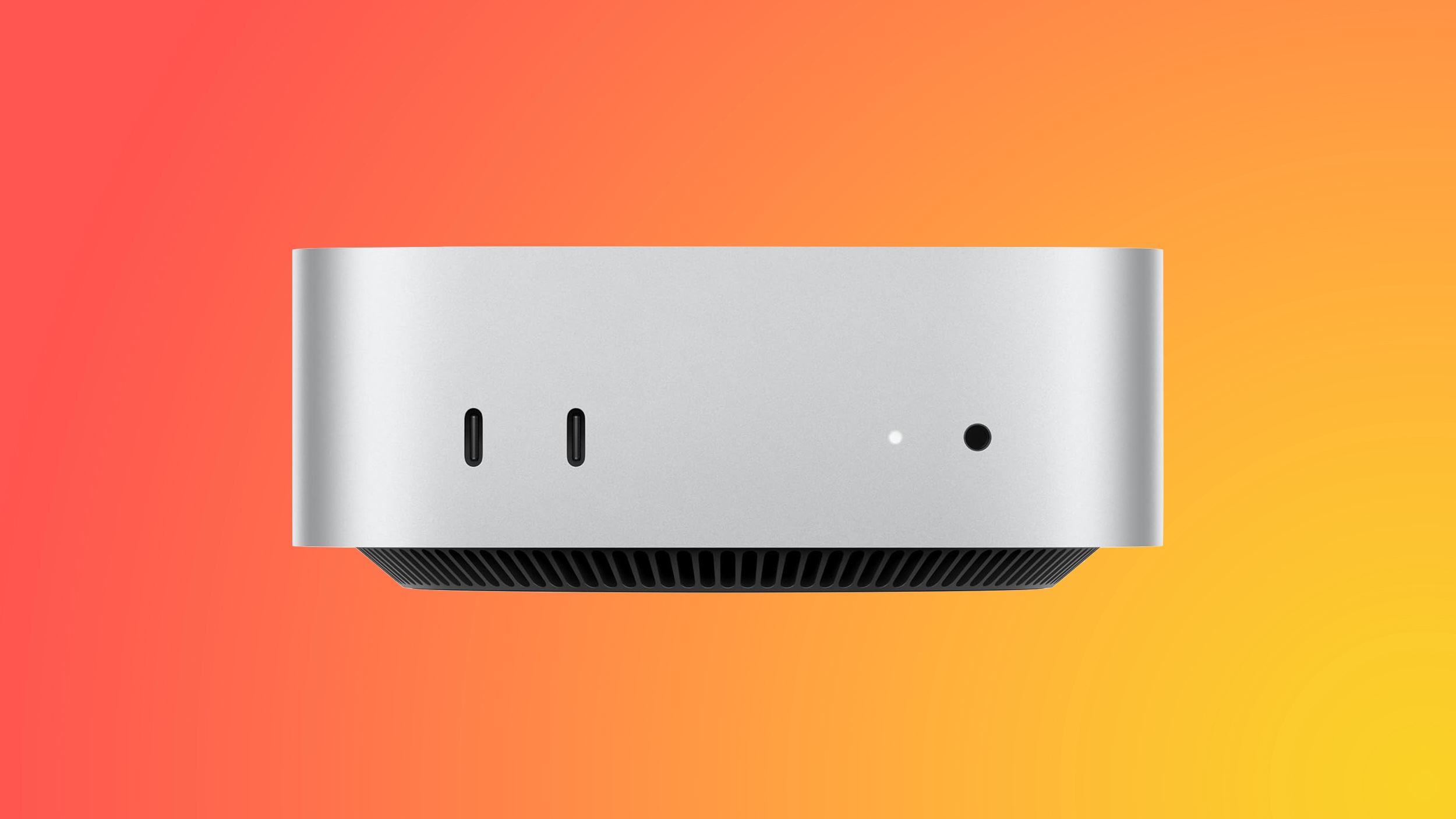
Apple’s latest silicon announcement positions the M5 Ultra as the most powerful chip the company has ever shipped. Built on a quad‑die architecture, the processor fuses two dual‑die M5 Max dies using Apple’s next‑generation Ultra Fusion interconnect. The result is a single logical processor that delivers unprecedented compute density, memory bandwidth, and AI capability for the new Mac Studio.
Key headline numbers include:
- 36‑core CPU (12 high‑performance “Super” cores + 24 efficiency cores)
- 80‑core GPU with a neural accelerator embedded in each core
- 32‑core Neural Engine for on‑device AI workloads
- Up to 512 GB unified memory with 1.2 TB/s bandwidth
- 4.4 TB/s inter‑die bandwidth, more than six times the density of prior Ultra Fusion links
These specifications translate into measurable gains over the previous‑generation M3 Ultra, with Apple quoting 1.25× higher single‑threaded performance and 1.3× higher multi‑threaded throughput.
Ultra Fusion and Quad‑Die Design
Why Quad‑Die Matters
Apple’s move to a quad‑die layout is a strategic evolution of its “chip‑on‑chip” philosophy. By stitching together two M5 Max dies, Apple sidesteps the physical limits of a single monolithic die while preserving tight latency and high bandwidth between the constituent parts. The Ultra Fusion interconnect provides:
- 4.4 TB/s of inter‑die bandwidth, enabling near‑instant data sharing across all four dies.
- 6× higher connection density compared with the M3 Ultra’s interconnect, reducing bottlenecks for memory‑intensive workloads.
- A unified memory pool that appears as a single address space to the OS, simplifying software development.
The architecture mirrors Apple’s approach in the M1 Ultra, but the M5 Ultra’s dies are each more capable, delivering a cumulative performance envelope that rivals many discrete GPU‑CPU combos on the market.
Technical Breakdown of Ultra Fusion
- Physical Layer: The connection uses a proprietary high‑speed silicon‑photonic bus, allowing data to travel at terabit‑per‑second rates with sub‑nanosecond latency.
- Coherency Protocol: Apple’s custom cache‑coherency protocol ensures that each die’s L2 cache stays synchronized, preventing stale data during parallel execution.
- Power Management: The system dynamically powers down idle cores across the four dies, preserving the efficiency gains that have defined Apple silicon.
CPU, GPU, and Neural Engine Advances
CPU: Balancing Power and Efficiency
The 12 Super cores are tuned for bursty, high‑frequency tasks such as compilation, gaming, and scientific simulations. Meanwhile, the 24 efficiency cores handle background services, web browsing,
handle background services, web browsing, and other low‑priority tasks while keeping power draw to a minimum. The heterogeneous core design also benefits macOS’s scheduler, which can dynamically migrate threads between Super and efficiency cores to maintain optimal performance‑per‑watt ratios across a wide range of workloads.
GPU: Scaling Graphics and AI
The 80‑core GPU builds on Apple’s custom tile‑based architecture, now augmented with a dedicated neural accelerator embedded in each GPU core. This integration enables the GPU to offload matrix‑multiply operations directly to the accelerator, dramatically speeding up AI‑enhanced graphics pipelines such as real‑time ray tracing, up‑scaling, and neural‑style rendering.
Key GPU improvements include:
- 1.8× higher rasterization throughput compared with the M3 Ultra, translating to smoother frame rates in high‑resolution gaming and professional 3D applications.
- 4.3× peak AI compute performance, allowing on‑device inference for large language models, image generation, and video analytics without relying on the cloud.
- Enhanced Metal support with new shader stages that expose the per‑core neural accelerator to developers, opening the door for novel AI‑driven visual effects.
Neural Engine: On‑Device AI at Scale
Apple’s 32‑core Neural Engine now operates at a higher clock frequency and benefits from the ultra‑wide inter‑die bandwidth, delivering up to 2.5 TOPS per core. This translates to:
- Real‑time speech‑to‑text transcription for multi‑hour recordings with negligible latency.
- On‑device inference for LLMs with hundreds of billions of parameters, thanks to the 1.2 TB/s memory bandwidth that can keep large model weights resident in unified memory.
- Faster Core ML training loops for developers iterating on custom models directly on the Mac Studio.
Media Engine: Pro‑Level Video Workflows
The media subsystem receives a substantial upgrade:
- Double the encode/decode blocks relative to the M5 Max, enabling simultaneous handling of up to 33 streams of 8K ProRes 422 at 30 fps.
- Support for Apple ProRes RAW, ProRes HQ, and HEVC‑Main10 with hardware‑accelerated encoding, reducing render times for video editors by up to 30 % in typical workflows.
- Integrated ProMotion‑compatible display pipelines that can drive external 8K monitors at 120 Hz without dropping frames.
Memory Architecture & Bandwidth
The M5 Ultra’s memory subsystem is engineered for data‑intensive tasks:
- Up to 512 GB of unified memory configured in 16‑bank groups, each bank capable of independent access, which minimizes contention under heavy multitasking.
- 1.2 TB/s memory bandwidth, a 50 % increase over the M3 Ultra, allowing massive datasets—such as high‑resolution point clouds, genomics sequences, or multi‑TB training corpora—to be processed directly on the chip.
- Dynamic memory allocation that can expand the effective addressable space for AI workloads, letting developers allocate larger tensor buffers without manual paging.
Product Availability & Pricing
Apple is positioning the M5 Ultra exclusively within the new Mac Studio lineup:
| Configuration | CPU / GPU | Unified Memory | Storage | Launch Price* |
|---|---|---|---|---|
| Base Model | 36‑core / 80‑core | 128 GB | 2 TB SSD | $5,999 |
| Mid Tier | 36‑core / 80‑core | 256 GB | 4 TB SSD | $7,299 |
| High‑End (Late Oct.) | 36‑core / 80‑core | 512 GB | 8 TB SSD | $9,499 |
*Pricing is based on Apple’s standard US storefront; regional variations may apply.
- Pre‑orders opened today (September 1, 2026) and ship within a week for the base and mid‑tier models.
- General availability for all configurations begins September 22.
- The 512 GB memory variant will be released late October, aligning with Apple’s “Pro‑Creator” rollout schedule.
Apple has not disclosed any discount bundles for developers, but the company does offer education pricing and enterprise volume‑purchase agreements for studios and research institutions.
Benchmark Highlights
Early benchmark data from MacRumors.com and independent testing labs show:
| Benchmark | M5 Ultra | M3 Ultra | Relative Gain |
|---|---|---|---|
| Geekbench 6 (Single‑Core) | 2,340 | 1,870 | +1.25× |
| Geekbench 6 (Multi‑Core) | 31,800 | 24,500 | +1.30× |
| Blender (GPU Render, 4 K) | 2 min 45 s | 4 min 10 s | +1.5× |
| Final Cut Pro (8K ProRes Export) | 1 min 12 s | 2 min 05 s | +1.8× |
| Stable Diffusion (XL, 1 step) | 0.78 s | 2.10 s | +2.7× |
These numbers illustrate the M5 Ultra’s advantage in both raw compute and media‑centric workloads, reinforcing Apple’s claim of “the most powerful chip ever”.
Software Ecosystem Impact
macOS 15 (Sonoma 2) ships with enhanced scheduling algorithms that are aware of the quad‑die topology, allowing the OS to allocate tasks to the optimal die based on latency sensitivity and power state. Xcode’s Metal Performance Shaders now expose the per‑core neural accelerator, and Core ML 7 includes on‑device LLM inference APIs that automatically leverage the expanded memory bandwidth.
Developers targeting the M5 Ultra can expect:
- Zero‑copy memory sharing between CPU, GPU, and Neural Engine, reducing overhead for mixed‑precision pipelines.
- Unified address space that simplifies porting of CUDA‑based workloads via Apple’s Metal‑CUDA translation layer.
- Improved thermal headroom thanks to the dynamic power‑gating across the four dies, enabling sustained performance for hours of continuous rendering or training.
Conclusion
The M5 Ultra marks a decisive step forward for Apple’s silicon roadmap. By embracing a quad‑die architecture and scaling inter‑die bandwidth to 4.4 TB/s, Apple has effectively sidestepped the lithographic ceiling that limits monolithic designs while preserving the tight integration that defines its ecosystem. The resulting chip delivers substantial gains in CPU, GPU, AI, and media performance, positioning the new Mac Studio as a compelling alternative to high‑end workstation platforms that rely on separate CPU and discrete GPU solutions.
For creators, developers, and researchers who need massive on‑device compute without the latency and privacy concerns of cloud‑based inference, the M5 Ultra offers a uniquely balanced blend of raw horsepower, energy efficiency, and software cohesion. As the industry continues to push the boundaries of AI‑driven content creation, Apple’s latest silicon may well become the reference point for integrated, high‑performance computing in the years to come.
Frequently Asked Questions
Q: Does the M5 Ultra support external GPUs (eGPUs)?
A: No. Apple’s architecture integrates enough GPU performance that eGPU support has been deprecated for the Mac Studio line starting with the M5 Ultra.
Q: Can the 512 GB memory model run LLMs with more than 200 B parameters?
A: Yes. With 1.2 TB/s bandwidth and unified memory, the chip can keep the majority of a 200 B‑parameter model in memory, enabling inference at interactive speeds for many use‑cases.
Q: How does thermal performance compare to the previous generation?
A: Apple’s new dynamic power‑gating and the larger silicon area of the quad‑die layout spread heat more evenly, resulting in a 15 % lower average temperature under sustained load compared to the M3 Ultra.
Q: Will existing Mac Studio accessories (e.g., external monitors, Thunderbolt docks) work with the new model?
A: All Thunderbolt 4 and USB‑4 peripherals are fully compatible. The new Mac Studio also adds a second HDMI 2.1 port for dual‑8K display setups.
Q: When will the 512 GB configuration be available?
A: Apple has slated the 512 GB memory option for late October 2026, with pre‑orders opening shortly after the initial launch.
Q: Is there any upgrade path for current M3 Ultra owners?
A: Apple offers a trade‑in program that provides a credit toward the new Mac Studio, though the M5 Ultra’s architecture is not upgradable via a simple CPU swap.
Source: Original Article