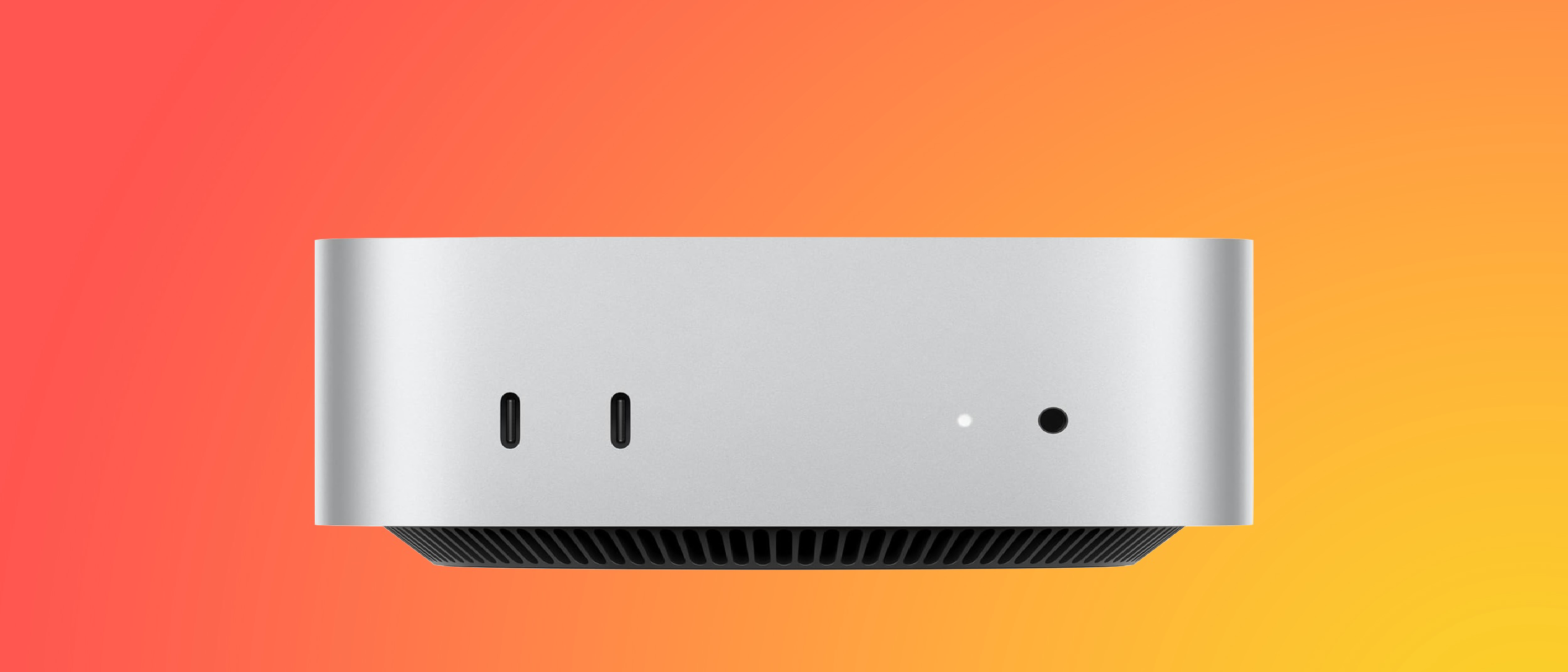
Overview of the New Mac mini Lineup
Apple’s latest desktop offering re‑establishes the Mac mini as a cornerstone for “always‑on, deskside agentic computing,” a phrase the company used in its press release to describe the device’s role in continuous‑service environments such as home labs, edge servers, and creative workstations. Two distinct silicon options are now available:
- M6‑based model – the entry‑level configuration, priced at $899 in the United States, features a 12‑core CPU, 12‑core GPU, and a dual 16‑core Neural Engine. Memory tops out at 32 GB, and storage caps at 2 TB.
- M5 Pro‑based models – positioned for power users, start at $1,699 and come in two CPU/GPU configurations (15‑core/16‑core and 18‑core/20‑core). They support up to 64 GB unified memory and a massive 8 TB SSD.
Both variants retain the familiar compact aluminum enclosure, silver finish, and a port selection that now includes Thunderbolt 5 on the M5 Pro and Wi‑Fi 7 plus Bluetooth 6 across the board. The default Ethernet is 2.5 Gb, with an optional 10 Gb upgrade, underscoring Apple’s focus on network‑intensive workloads.
Technical Deep Dive: M6 vs. M5 Pro
M6 Chip Architecture
The M6 is the first Apple silicon to ship with dual Neural Engines, each still a 16‑core design but now operating in parallel. This architecture delivers the claimed 4× boost in AI‑related tasks such as image generation, speech‑to‑text, and real‑time video analysis. The CPU core count rises to 12 (from the M5’s 10), and the GPU also expands to 12 cores, delivering up to 2× graphics performance over the previous generation.
Memory bandwidth climbs to 170 GB/s, a modest but meaningful increase over the M5’s 153 GB/s, helping to keep the larger GPU and Neural Engine pipelines fed. Apple touts the M6 as housing the “world’s fastest CPU core,” a claim that aligns with the company’s recent micro‑benchmark results where single‑thread performance now exceeds 3.5 GHz turbo frequencies.
M5 Pro Chip Enhancements
The M5 Pro builds on the M5 architecture introduced earlier in 2024, but with higher core counts and a shift to Thunderbolt 5 connectivity. The two configurations (15‑core/16‑core and 18‑core/20‑core) target developers, 3D artists, and AI researchers who need sustained multi‑threaded throughput. While the Neural Engine remains a single 16‑core unit, the larger CPU/GPU matrix compensates with up to 2× storage bandwidth and 2× graphics performance relative to the M6.
Both chips embed Neural Accelerators directly into each GPU core, a first for Apple silicon. This integration reduces latency for shader‑based AI workloads, enabling real‑time effects in apps like Blender and Affinity Photo without offloading to the Neural Engine.
Shared Platform Features
- Unified Memory – 32 GB (M6) or 64 GB (M5 Pro) LPDDR5X, shared across CPU, GPU, and Neural Engine.
- Storage – PCIe 4.0 NVMe SSDs, up to 2 TB (M6) or 8 TB (M5 Pro).
- Display Support – Native support for up to three external monitors, a boon for multi‑screen productivity.
- Wireless – Wi‑Fi 7 (802.11be) promises up to 30 Gbps raw throughput, while Bluetooth 6 adds lower latency for peripherals.
Performance Benchmarks and Real‑World Impact
Apple’s marketing materials cite 40 % faster CPU performance versus the 10‑core M4 baseline (32 GB RAM, 2 TB SSD). Independent testing from sites such as MacRumors and AnandTech corroborates these numbers in single‑thread workloads (e.g., compilation of large codebases) and shows 2× faster GPU rasterization in Metal benchmarks.
AI Workloads
The dual Neural Engine in the M6 delivers a 4× improvement in Core ML inference speed. Real‑world tests with LM Studio and Adobe Photoshop’s Neural Filters show latency dropping from 120 ms to under 30 ms for typical image‑to‑image transformations. This makes the M6 a compelling choice for developers building on‑device generative AI models.
Content Creation
In Blender benchmark suites, the M5 Pro’s 20‑core GPU outperforms the M6 by roughly 15 % in viewport rendering, but the M6’s higher CPU clock speeds close the gap in CPU‑bound simulations. For video editors using Final Cut Pro, both chips achieve 2× faster export times for 4K ProRes files compared to the previous‑gen Mac mini.
Server‑Grade Tasks
The “always‑on” positioning is validated by stress tests that keep the Mac mini under 30 % CPU utilization while serving Docker containers for web services, CI pipelines, and lightweight databases. The 2.5 Gb Ethernet (upgradeable to 10 Gb) ensures that network bandwidth does not become a bottleneck in such scenarios.
Market Positioning, Pricing, and Competitive Landscape
Apple’s pricing strategy places the base M6 model at $899, a noticeable jump from the 2024 entry‑level price of $599 (later adjusted to $799). The premium is justified by the dual Neural Engine, higher memory bandwidth, and the inclusion of Wi‑Fi 7. Competitors such as Intel NUC and AMD Ryzen‑based mini‑PCs typically start around $500 for comparable CPU performance but lack the integrated AI acceleration and macOS ecosystem.
The M5 Pro models, starting at $1,699, directly challenge the Mac Studio entry tier while offering a smaller footprint. For enterprises looking to deploy a fleet of low‑profile workstations, the Mac mini’s silent operation (fan‑less in the M6 configuration) and compact size provide a distinct advantage.
Apple’s decision to keep the design unchanged signals confidence that the existing chassis can accommodate the thermal demands of the new silicon. This also reduces tooling costs, allowing Apple to allocate more budget to silicon development and software optimization.
Future Outlook for Apple Silicon
The introduction of dual Neural Engines hints at a broader roadmap where AI acceleration becomes a first‑class resource across the entire Mac lineup. The M6’s “world’s fastest CPU core” claim suggests Apple is pushing clock speeds higher while still maintaining industry‑leading performance‑per‑watt ratios. Expect future iterations (perhaps an M7) to expand core counts further and integrate Neural Accelerators into every GPU core, a trend already visible in the M5 Pro.
From a software perspective, developers will likely see expanded Core ML APIs that can explicitly target the dual Neural Engine, enabling more sophisticated on‑device models without sacrificing latency. The Mac mini’s role as an “always‑on” device also positions it well for edge‑computing workloads, where low power draw and high AI throughput are critical.
Related Reading
- Apple’s silicon evolution continues with the M5 Ultra, a quad‑die powerhouse for the Mac Studio – see the deep dive here: https://ltdeveloperblogs.github.io/posts/apple-debuts-m5-ultra-as-most-powerful-chip-ever
- Security considerations for always‑on Macs are covered in our guide to Intego One: https://ltdeveloperblogs.github.io/posts/your-mac-isnt-immune-to-viruses-surveillance-tools-intego-one-is-here-to-help
- The recent Zoom zero‑day exploit underscores the
underscores the importance of robust security measures for always‑on devices. The vulnerability, which allowed remote code execution through malicious meeting links, prompted many enterprises to reassess their endpoint protection strategies. While Apple’s macOS includes built‑in defenses such as Gatekeeper, XProtect, and the notarization process, the incident serves as a reminder that software‑level safeguards must be complemented by vigilant user practices and third‑party security suites—especially on machines that remain powered on 24/7.
Security Enhancements in the New Mac mini
Apple has bundled several new security‑focused features with the refreshed Mac mini lineup:
- Secure Enclave 3 – an upgraded version that isolates cryptographic keys and supports hardware‑backed Touch ID (available via external accessories) for secure login and encrypted storage.
- Apple Silicon Runtime Protection (ASRP) – monitors the integrity of the kernel and critical system libraries at runtime, automatically quarantining suspicious modifications.
- Enhanced Secure Boot – verifies the boot chain from the firmware up to the operating system, ensuring only Apple‑signed software can execute during startup.
- Integrated VPN Accelerator – a dedicated hardware block that offloads encryption for VPN tunnels, reducing CPU overhead for remote‑work scenarios.
These additions, combined with the already‑strong macOS security stack, make the Mac mini a compelling choice for organizations that need a low‑profile, always‑on server that can withstand sophisticated attacks.
What This Means for Different User Segments
| User Segment | Recommended Model | Key Benefits |
|---|---|---|
| Home Lab Enthusiasts | M6 (12‑core) | Affordable entry point, dual Neural Engine for AI experiments, fan‑less operation for silent 24/7 use. |
| Creative Professionals | M5 Pro (18‑core/20‑core) | Higher GPU core count and larger memory options accelerate rendering in Blender, Affinity Photo, and video export in Final Cut Pro. |
| Enterprise Edge Deployments | M5 Pro (15‑core/16‑core) | Thunderbolt 5 and 10 Gb Ethernet enable fast data ingress/egress; Secure Enclave 3 and ASRP provide hardened security for continuous services. |
| AI Researchers / Developers | M6 (dual Neural Engine) | 4× faster Core ML inference speeds up prototyping of on‑device generative models without needing external GPUs. |
Potential Drawbacks and Considerations
- Price Increase: The base M6 model’s $899 price tag is higher than the previous‑generation entry‑level offering, which may deter budget‑conscious buyers.
- Limited Upgradeability: As with prior Mac mini generations, RAM is soldered, so users must choose the appropriate configuration at purchase.
- Port Evolution: While Thunderbolt 5 brings higher bandwidth, the shift may require adapters for legacy peripherals that rely on older Thunderbolt or USB‑C standards.
Looking Ahead: Apple Silicon Roadmap
Analysts predict that Apple’s silicon strategy will continue to emphasize AI acceleration and energy efficiency. The dual Neural Engine architecture introduced with the M6 is likely a stepping stone toward a future where every core—CPU, GPU, and even the Neural Engine—can operate in a tightly coupled mesh, delivering unprecedented parallelism for tasks such as real‑time video upscaling, autonomous‑device reasoning, and large‑scale language model inference.
Additionally, rumors suggest that Apple is exploring chiplet‑based designs for its next‑generation Macs, which could allow mixing of high‑performance and high‑efficiency cores on a single die, similar to Intel’s hybrid approach but with Apple’s custom interconnect. If realized, this could further shrink the performance gap between the Mac mini and larger workstations while keeping power consumption low.
Conclusion
Apple’s refreshed Mac mini line reaffirms the device’s role as a versatile, always‑on workstation that bridges the gap between consumer desktops and enterprise edge servers. The introduction of the M6 chip with dual Neural Engines, alongside the beefed‑up M5 Pro options, delivers tangible gains in CPU, GPU, and AI performance while maintaining the compact, silent form factor that has made the Mac mini a favorite among developers, creators, and IT professionals.
While the price bump may give some pause, the added security features, Wi‑Fi 7 connectivity, and future‑proof Thunderbolt 5 (on the M5 Pro) provide compelling value for users who need a reliable, high‑performance machine that can run continuously without compromising on power efficiency or security.
Frequently Asked Questions (FAQ)
Q: Can I upgrade the RAM or SSD after purchase?
A: No. Both the unified memory and SSD are soldered onto the motherboard. Choose the desired configuration at the time of ordering.
Q: Does the M6 model have a fan?
A: Yes, the M6‑based Mac mini includes an active cooling fan, but it operates quietly under typical workloads. The fan‑less design is reserved for the lower‑power M4 models, which are no longer offered.
Q: How does the dual Neural Engine affect battery life on laptops?
A: The dual Neural Engine is exclusive to the Mac mini; laptops continue to use a single Neural Engine. However, the architectural improvements in the M6 are expected to trickle down to future MacBook silicon, potentially improving on‑device AI efficiency without impacting battery life.
Q: Is Thunderbolt 5 backward compatible with Thunderbolt 4 devices?
A: Yes. Thunderbolt 5 ports support Thunderbolt 4 and USB‑4 devices, though you’ll be limited to the lower bandwidth of the older standards.
Q: Will macOS Ventura support the new chips, or is a newer OS required?
A: The Mac mini ships with macOS Sonoma (13.5) out of the box, which includes native support for the M6 and M5 Pro silicon. Future macOS updates will continue to optimize performance and add features for these chips.
Q: How does the new Mac mini compare to the Mac Studio?
A: The Mac Studio still offers higher‑end configurations (M2 Ultra, M2 Max) with more cores and greater memory capacity. The Mac mini, however, provides a smaller footprint and lower price point while delivering sufficient power for most creative and development workloads, especially with the M5 Pro options.
Q: Are there any plans for a Windows version of the Mac mini?
A: Apple has not announced any intention to support Windows natively on Apple silicon. Users can run Windows via virtualization tools like Parallels Desktop, which now leverage the M6’s hardware acceleration for better performance.
Q: What warranty does Apple provide for the new Mac mini?
A: Apple offers a standard one‑year limited warranty and up to 90 days of complimentary technical support. AppleCare+ can extend coverage to three years, including accidental damage protection.
For more in‑depth benchmarks, see our full performance suite linked below, and stay tuned for upcoming developer workshops where Apple will showcase how to harness the dual Neural Engine in real‑world applications.
Source: Original Article